
White paper on Communication Skills
COURTESY :- vrindawan.in
Wikipedia
Communication (from Latin: communicare, meaning “to share” or “to be in relation with”) is usually defined as the transmission of information. The term can also refer just to the message communicated or to the field of inquiry studying such transmissions. There are many disagreements about its precise definition. John Peters argues that the difficulty of defining communication emerges from the fact that communication is both a universal phenomenon (because everyone communicates) and a specific discipline of institutional academic study. One definitional strategy involves limiting what can be included in the category of communication (for example, requiring a “conscious intent” to persuade). By this logic, one possible definition of communication is the act of developing meaning among entities or groups through the use of sufficiently mutually understood signs, symbols, and semiotic conventions.
An important distinction is between verbal communication, which happens through the use of a language, and non-verbal communication, for example, through gestures or facial expressions. Models of communication try to provide a detailed explanation of the different steps and entities involved. An influential model is given by Claude Shannon and Warren Weaver, who argue that communicative motivation prompts the sender to compose a message, which is then encoded and transmitted. Once it has reached its destination, it is decoded and interpreted by the receiver. Communication is studied in various fields. Information theory investigates the quantification, storage, and communication of information in general. Communication studies is concerned with human communication while the science of bio communication is interested in any form of communication between living organisms.
Communication can be realized visually (through images and written language), through auditory, tactile/haptic (e.g. Braille or other physical means), olfactory, electromagnetic, or biochemical means (or any combination thereof). Human communication is unique for its extensive use of abstract language.
Communication is usually understood as the transmission of information. In this regard, a message is conveyed from a sender to a receiver using some form of medium, such as sound, paper, bodily movements, or electricity. In a different sense, the term “communication” can also refer just to the message that is being communicated or to the field of inquiry studying such transmissions. There is a lot of disagreement concerning the precise characterization of communication and various scholars have raised doubts that any single definition can capture the term accurately. These difficulties come from the fact that the term is applied to diverse phenomena in different contexts, often with slightly different meanings. Despite these problems, the question of the right definition is of great theoretical importance since it affects the research process on all levels. This includes issues like which empirical phenomena are observed, how they are categorized, which hypotheses and laws are formulated as well as how systematic theories based on these steps are articulated. The word “communication” has its root in the Latin verb “communicare”, which means “to share” or “to make common”.
Some theorists give very broad definitions of communication that encompass unconscious and non-human behavior. In this regard, many animals communicate within their own species and even plants like flowers may be said to communicate by attracting bees. Other researchers restrict communication to conscious interactions among human beings. Some definitions focus on the use of symbols and signs while others emphasize the role of understanding, interaction, power, or transmission of ideas. Various characterizations see the communicator’s intent to send a message as a central component. On this view, the transmission of information is not sufficient for communication if it happens unintentionally. An important version of this view is given by Paul Grice, who identifies communication with actions that aim to make the recipient aware of the communicator’s intention. One question in this regard is whether only the successful transmission of information should be regarded as communication. For example, distortion may interfere and change the actual message from what was originally intended. A closely related problem is whether acts of deliberate deception constitute communication.
According to an influential and broad definition by I. A. Richards, communication happens when one mind acts upon its environment in order to transmit its own experience to another mind. Another important characterization is due to Claude Shannon and Warren Weaver. On their view, communication involves the interaction of several components, such as a source, a message, an encoder, a channel, a decoder, and a receiver. The paradigmatic form of communication happens between two or several individuals. However, it can also take place on a larger level, for example, between organizations, social classes, or nations. Niklas Luhmann rejects the view that communication is, on its most fundamental level, an interaction between two distinct parties. Instead, he holds that “only communication can communicate” and tries to provide a conceptualization in terms of auto poietic systems without any reference to consciousness or life. John Peters sees communication as “an apparent answer to the painful divisions between self and other, private and public, and inner thought and outer world.
Verbal communication is the spoken or written conveyance of a message. Human language can be defined as a system of symbols (also known as lexemes) and the grammars (rules) by which the symbols are manipulated. The word “language” also refers to common properties of languages. Language learning normally occurs most intensively during human childhood. Most of the large number of human languages use patterns of sound or gesture for symbols which enable communication with others around them. Languages tend to share certain properties, although there are exceptions. Constructed languages such as Esperanto, programming languages, and various mathematical formalisms are not necessarily restricted to the properties shared by human languages.
Communicators’ diverse efforts to produce and interpret meaning in language are functionally constrained by that language’s prototypical phonology (sounds that typically appear in a language), morphology (what counts as a word), syntax (word-order), semantics (conventional meaning of words), and pragmatics (which meanings are conventional to which contexts).
The meanings that are attached to words can be literal, or otherwise known as denotative; relating to the topic being discussed, or, the meanings take context and relationships into account, otherwise known as connotative; relating to the feelings, history, and power dynamics of the communicators.
Contrary to popular belief, signed languages of the world (e.g., American Sign Language) are considered to be verbal communication because their sign vocabulary, grammar, and other linguistic structures abide by all the necessary classifications as spoken languages. There are however, nonverbal elements to signed languages, such as the speed, intensity, and size of signs that are made. A signer might sign “yes” in response to a question, or they might sign a sarcastic-large slow yes to convey a different nonverbal meaning. The sign yes is the verbal message while the other movements add nonverbal meaning to the message.
Over time the forms of and ideas about communication have evolved through the continuing progression of technology. Advances include communications psychology and media psychology, an emerging field of study.
The progression of written communication can be divided into three “information communication revolutions”:
- Written communication first emerged through the use of pictographs. The pictograms were made in stone, hence written communication was not yet mobile. Pictograms began to develop standardized and simplified forms.
- The next step occurred when writing began to appear on paper, papyrus, clay, wax, and other media with commonly shared writing systems. Communication became mobile.
- The final stage is characterized by the transfer of information through controlled waves of electromagnetic radiation (i.e., radio, microwave, infrared) and other electronic signals.
Communication is thus a process by which meaning is assigned and conveyed in an attempt to create shared understanding. Gregory Bateson called it “the replication of tautologies in the universe. This process, which requires a vast repertoire of skills in interpersonal processing, listening, observing, speaking, questioning, analyzing, gestures, and evaluating enables collaboration and cooperation.
Nonverbal communication explains the processes that convey a type of information in a form of non-linguistic representations. Examples of nonverbal communication include haptic communication, chronemic communication, gestures, body language, facial expressions, eye contact etc. Nonverbal communication also relates to the intent of a message. Examples of intent are voluntary, intentional movements like shaking a hand or winking, as well as involuntary, such as sweating. Speech also contains nonverbal elements known as para language, e.g. rhythm, intonation, tempo, and stress. It affects communication most at the subconscious level and establishes trust. Likewise, written texts include nonverbal elements such as handwriting style, the spatial arrangement of words and the use of emoticons to convey emotion.
Nonverbal communication demonstrates one of Paul Watzlawick’s laws: you cannot not communicate. Once proximity has formed awareness, living creatures begin interpreting any signals received. Some of the functions of nonverbal communication in humans are to complement and illustrate, to reinforce and emphasize, to replace and substitute, to control and regulate, and to contradict the denotative message.
Nonverbal cues are heavily relied on to express communication and to interpret others’ communication and can replace or substitute verbal messages.
There are several reasons as to why non-verbal communication plays a vital role in communication:
- “Non-verbal communication is omnipresent. They are included in every single communication act. To have total communication, all non-verbal channels such as the body, face, voice, appearance, touch, distance, timing, and other environmental forces must be engaged during face-to-face interaction. Written communication can also have non-verbal attributes. E-mails, web chats, and the social media have options to change text font colours, stationery, add emoticons, capitalization, and pictures in order to capture non-verbal cues into a verbal medium.
- “Non-verbal behaviours are multi functional. Many different non-verbal channels are engaged at the same time in communication acts and allow the chance for simultaneous messages to be sent and received.
- “Non-verbal behaviours may form a universal language system. Smiling, crying, pointing, caressing, and glaring are non-verbal behaviours that are used and understood by people regardless of nationality. Such non-verbal signals allow the most basic form of communication when verbal communication is not effective due to language barriers.
When verbal messages contradict non-verbal messages, observation of non-verbal behaviour is relied on to judge another’s attitudes and feelings, rather than assuming the truth of the verbal message alone.
Non verbal communication can take the following forms:
- Paralinguistics are the elements other than language where the voice is involved in communication and includes tones, pitch, vocal cues etc. It also includes sounds from throat and all these are greatly influenced by cultural differences across borders.
- Proxe mics deals with the concept of the space element in communication. Proxe mics explains four zones of spaces, namely intimate, personal, social and public. This concept differs from culture to culture as the permissible space varies in different countries.
- Arti factics studies the non verbal signals or communication which emerges from personal accessories such as the dress or fashion accessories worn and it varies with culture as people of different countries follow different dress codes.
- Chronemics deals with the time aspects of communication and also includes the importance given to time. Some issues explaining this concept are pauses, silences and response lag during an interaction. This aspect of communication is also influenced by cultural differences as it is well known that there is a great difference in the value given by different cultures to time.
- Kinesics mainly deals with body language such as postures, gestures, head nods, leg movements, etc. In different countries, the same gestures and postures are used to convey different messages. Sometimes even a particular kinesic indicating something good in a country may have a negative meaning in another culture.
Harold Lasswell is considered to be one of the primary founders of communication theories and he helped communications become a respected and legitimate study. He developed the Lasswell Model of communication of communication during his professorship at Yale. It is now used as an umbrella term for other models of communication due to its simplicities to allow for multiple and very different interpretations to theorize with. It was published in “The Structure and Function of Communication in Society” essay in 1948. Lasswell was thinking about mass media and the role radio played in the 1930s. It was extremely popular after the second world war.
The Lasswell model is broken into five parts-the five W’s, it focuses on the “who”, “what”, “whom”, “which Channel” and “what effect”. Lasswell brings up that there is three functions of communication, there is surveillance of the environment, correlation of components of society and cultural transmission between generation.
- Who, Communication is not only one person, it is newspapers, websites, television stations and radio stations. This communication is developed by people who run this organized institutions, reporters, editors etc.
- Says What, refers to analyzing and identifying the content that was given.
- To Whom, who is the audience and how does the audience receive this information,
- Which Channel, refers to the media and how it is going to analyzed. The interactivity of Media
- What effect, refers to what is taken from this piece of information
There are advantages as well as some critiques mentioned about the Lass well Model. Some of the advantages are that the concept is easy and simple, it suits most types of communication and its the main concept of effect.
Some scholars believe that the Lass well model of communication is no longer relevant, although at the time it was extremely significant. The critiques that have been brought up for the Lass well model is the concept of feedback not mention, and the concept of noise is not mentioned. It was there where other theories started to come out to make up for the Lass wells method not having these factors in it, specially the Shannon and Weaver model. Another critique was that the Lass well model is a linear model, it goes against other types of communications that show that it is more of a back and forth experience. It also does not mention power in the communication process. Power was highlighted specially in Sturat Halls methods and concepts. Hall took parts from the Lass well method and started reworking it to fit the idea of power in media, who has power and what message are they putting out. Hall examines how we view organizations and mass media and how they enforce certain meanings to appease their agenda.
A social skill is any competence facilitating interaction and communication with others where social rules and relations are created, communicated, and changed in verbal and nonverbal ways. The process of learning these skills is called socialization. Lack of such skills can cause social awkwardness.
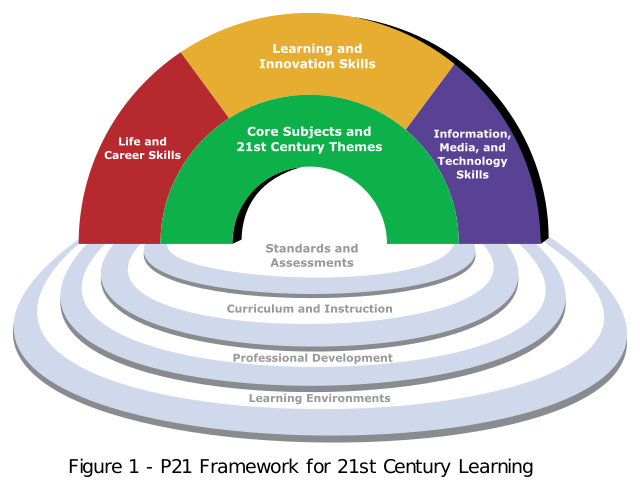
Interpersonal skills are actions used to effectively interact with others. Interpersonal skills relate to categories of dominance vs. submission, love vs. hate, affiliation vs. aggression, and control vs. autonomy (Leary, 1957). Positive interpersonal skills include persuasion, active listening, delegation, and stewardship, among others. Social psychology, an academic discipline focused on research relating to social functioning, studies how interpersonal skills are learned through societal-based changes in attitude, thinking, and behavior.
Social skills are the tools that enable people to communicate, learn, ask for help, get needs met in appropriate ways, get along with others, make friends, develop healthy relationships, protect themselves, and in general, be able to interact with the society harmoniously. Social skills build essential character traits like trustworthiness, respectfulness, responsibility, fairness, caring, and citizenship. These traits help build an internal moral compass, allowing individuals to make good choices in thinking and behavior, resulting in social competence.