
White Paper on KLiC 3D Modeling, 3D Texturing &KLiC 3D Lighting
COURTESY :- vrindawan.in
Wikipedia
In 3D computer graphics, 3D modeling is the process of developing a mathematical coordinate-based representation of any surface of an object (inanimate or living) in three dimensions via specialized software by manipulating edges, vertices, and polygons in a simulated 3D space.
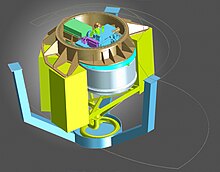
Three-dimensional (3D) models represent a physical body using a collection of points in 3D space, connected by various geometric entities such as triangles, lines, curved surfaces, etc. Being a collection of data (points and other information), 3D models can be created manually, algorithmically (procedural modeling), or by scanning. Their surfaces may be further defined with texture mapping.

The product is called a 3D model. Someone who works with 3D models may be referred to as a 3D artist or a 3D modeler.
A 3D Model can also be displayed as a two-dimensional image through a process called 3D rendering or used in a computer simulation of physical phenomena.
3D Models may be created automatically or manually. The manual modeling process of preparing geometric data for 3D computer graphics is similar to plastic arts such as sculpting. The 3D model can be physically created using 3D printing devices that form 2D layers of the model with three-dimensional material, one layer at a time. Without a 3D model, a 3D print is not possible.
3D modeling software is a class of 3D computer graphics software used to produce 3D models. Individual programs of this class, such as Sketch Up, are called modeling applications.
3D models are now widely used anywhere in 3D graphics and CAD but their history predates the widespread use of 3D graphics on personal computers.
In the past, many computer games used pre-rendered images of 3D models as sprites before computers could render them in real-time. The designer can then see the model in various directions and views, this can help the designer see if the object is created as intended to compared to their original vision. Seeing the design this way can help the designer or company figure out changes or improvements needed to the product.
Almost all 3D models can be divided into two categories:
- Solid – These models define the volume of the object they represent (like a rock). Solid models are mostly used for engineering and medical simulations, and are usually built with constructive solid geometry
- Shell or boundary – These models represent the surface, i.e. the boundary of the object, not its volume (like an infinitesimally thin eggshell). Almost all visual models used in games and film are shell models.
Solid and shell modeling can create functionally identical objects. Differences between them are mostly variations in the way they are created and edited and conventions of use in various fields and differences in types of approximations between the model and reality.
Shell models must be manifold (having no holes or cracks in the shell) to be meaningful as a real object. In a shell model of a cube, the bottom and top surface of the cube must have a uniform thickness with no holes or cracks in the first and last layer printed. Polygonal meshes (and to a lesser extent subdivision surfaces) are by far the most common representation. Level sets are a useful representation for deforming surfaces which undergo many topological changes such as fluids.
The process of transforming representations of objects, such as the middle point coordinate of a sphere and a point on its circumference into a polygon representation of a sphere, is called tessellation. This step is used in polygon-based rendering, where objects are broken down from abstract representations (“primitives”) such as spheres, cones etc., to so-called meshes, which are nets of interconnected triangles. Meshes of triangles (instead of e.g. squares) are popular as they have proven to be easy to rasterize (the surface described by each triangle is planar, so the projection is always convex); . Polygon representations are not used in all rendering techniques, and in these cases the tessellation step is not included in the transition from abstract representation to rendered scene.
Image-based lighting (IBL) is a 3D rendering technique which involves capturing an omnidirectional representation of real-world light information as an image, typically using a 360° camera. This image is then projected onto a dome or sphere analogously to environment mapping, and this is used to simulate the lighting for the objects in the scene. This allows highly detailed real-world lighting to be used to light a scene, instead of trying to accurately model illumination using an existing rendering technique.
Image-based lighting often uses high-dynamic-range imaging for greater realism, though this is not universal.
According to Fxguide, “Almost all modern rendering software offers some type of image-based lighting, though the exact terminology used in the system may vary.
Motion picture production makes use of image-based lighting, and it can be seen in movies like Monsters University, The Great Gatsby, and Iron Man 2.
One reference capture technique, sometimes referred to as “wick mania” by camera technicians and VFX supervisors, involves shooting footage of two small spheres (one matte, one of a light-reflective material) on a physical set. This is used when the IBL will be later applied to an animated object or character that interacts with live objects or characters under the same lighting conditions.
Image-based lighting is also used in some video games as video game consoles and personal computers start to have the computational resources to render scenes in real time using this technique. This technique is used in:
- Forza Motorsport 4
- Rise of the Tomb Raider
- Into the Stars
- SuperTuxKart
Image-based lighting is also a built-in feature of the Crytek Cry Engine video game engine.
3D Systems, headquartered in Rock Hill, South Carolina, is a company that engineers, manufactures, and sells 3D printers, 3D printing materials, 3D scanners, and offers a 3D printing service. Chuck Hull, the CTO and former president, pioneered stereo lithography and obtained a patent for the technology in 1986. The company creates product concept models, precision and functional prototypes, master patterns for tooling, as well as production parts for direct digital manufacturing. It uses proprietary processes to fabricate physical objects using input from computer-aided design and manufacturing software, or 3D scanning and 3D sculpting devices.
3D Systems’ technologies and services are used in the design, development, and production stages of many industries, including aerospace, automotive, healthcare, dental, entertainment, and durable goods. The company offers a range of professional- and production-grade 3D printers as well as software, materials, and the online rapid part printing service On Demand. It is notable within the 3D printing industry for developing stereo lithography and the STL file format.
As of 2020, 3D Systems employed over 2400 people in 25 offices worldwide.
3D Systems was founded in Valencia, California by Chuck Hull, the inventor and patent-holder of the first stereo lithography (SLA) rapid prototyping system. Prior to Hull’s introduction of SLA rapid prototyping, concept models required extensive time and money to produce. The innovation of SLA reduced these resource expenditures while increasing the quality and accuracy of the resulting model. Early SLA systems were complex and costly, and required extensive redesign before achieving commercial viability. Primary issues concerned hydrodynamic and chemical complications. In 1996, the introduction of solid-state lasers permitted Hull and his team to reformulate their materials. Engineers in transportation, healthcare, and consumer products helped fuel early phases of 3D Systems’ rapid prototyping research and development. These industries remain key followers of 3D Systems’ technology.
In late 2001, 3D Systems began an acquisitions program that expanded the company’s technology through ownership of software, materials, printers, and printable content, as well as access to the skills of engineers and designers. The rate of 3D Systems’ acquisitions (16 in 2011) raised some eyebrows with regard to the task facing the company’s management team. Other onlookers pointed to the encompassing scope of the acquisitions as indicating calculated steps by 3D Systems to consolidate the 3D printing industry under one roof and logo, to become a comprehensive one-stop-shop capable of servicing each link in the scan/create-to-print chain.
In 2003, Hull was succeeded by Avi Reichental. Both Reichental and Hull are listed among the top twenty most influential people in rapid technologies by TCT Magazine. Hull remains an active member of 3D Systems’ board and serves as the company’s Chief Technology Officer and Executive Vice President. In 2005, 3D Systems relocated its headquarters to Rock Hill, South Carolina, citing a favorable business climate, a sustained lower cost of doing business, and significant investment and tax benefits as reasons for the move.
In May 2011, 3D Systems transferred from NASDAQ (TDSC) to the New York Stock Exchange (DDD). In 2012, a Gray Wolf Report predicted 3D Systems’ rate of growth to be unsustainable, pointing to inflated impressions from acquisitions as a corporate misstatement of organic growth. 3D Systems responded to this article on November 19, 2012, claiming it to “contain materially false statements and erroneous conclusions that we believe defamed the company and its reputation and resulted in losses to our shareholders.”
In January 2014 it was announced that 3D Systems had acquired the Burbank, CA-based collectibles company Gentle Giant LTD. Gentle Giant Ltd. designs, develops, and manufactures three-dimensional representations of characters from a variety of franchise properties with worldwide name recognition, including Star Wars, The Matrix, Harry Potter, The Simpsons, Hell boy Animated, Disney Dragon kind, Animated Pirates of the Caribbean, Lord of the Rings, Red Star, Terminator, Charlie and the Chocolate Factory and Corpse Bride. Gentle Giant Ltd. produces a wide range of products including mini busts, statues, Bust-Ups, action figures, 12″ figures and models.
In July 2014, 3D Systems announced an acquisition of Israeli medical imaging company Sim bio nix for US$120,000,000.
In September 2014, 3D Systems acquired the Belgian company Layer Wise. The terms of the acquisition were not disclosed by the companies. The company is based in Leuven, a town in Belgium close to Brussels. It is a principal provider of services in the area of direct metal 3D printing and manufacturing. The company was a spin-off of the KU Leuven. The takeover added Belgium to the list of countries where 3D Systems has active locations.
In January 2015, 3D Systems acquired the 3D printer manufacturer bot Objects, the first company to commercialize a full-color printer using the fused deposition modeling technique. bot Objects was founded by Martin Warner (CEO) and Mike Duma (CTO). bot Objects created a desktop 3D printer for the consumer which used Fused filament fabrication to create full-color 3D printing. bot Objects’ proprietary 5-color CMYKW cartridge system could generate color combinations and gradients by mixing primary printing colors. There was some skepticism about botObjects’ claims.
In April 2015, 3D Systems announced it acquired the Easyway Group of companies in China, creating 3D Systems China. Easyway is a Chinese 3D printing sales and service provider with key operations in Shanghai, Wuxi, Beijing, Guangdong and Chongqing.