
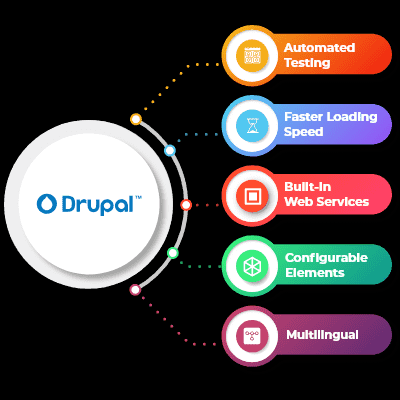
Drupal developer
As a Drupal developer, you would be responsible for creating and maintaining websites built on the Drupal content management system (CMS). This would involve using your knowledge of Drupal’s architecture, functionality, and module ecosystem to design and develop custom solutions that meet the needs of clients or stakeholders.
Your responsibilities as a Drupal developer may include:
- Developing custom modules and themes: This involves writing code to extend Drupal’s functionality or create custom themes that define the look and feel of a website.
- Customizing existing modules: Drupal has a wide range of pre-built modules that can be customized to meet specific requirements. As a Drupal developer, you would be expected to know how to modify and extend these modules to achieve desired functionality.
- Creating custom content types and fields: Drupal’s flexibility allows you to create custom content types with specific fields that match the needs of a particular project.
- Integrating with third-party systems: Many Drupal projects require integration with external systems, such as CRMs or marketing automation platforms. As a Drupal developer, you may need to integrate with these systems via APIs or other means.
- Performance optimization: Drupal sites can become slow if not optimized properly. You may be responsible for optimizing the site’s performance through caching, server optimization, and other techniques.
- Troubleshooting and bug fixing: As with any software development project, there may be bugs or issues that arise during development or after launch. You would be responsible for identifying and fixing these issues.
Overall, a Drupal developer should have a strong understanding of web development principles, Drupal architecture and functionality, and possess programming skills in PHP, JavaScript, and other relevant technologies.
What is required Drupal developer
To become a Drupal developer, you will typically need a combination of education, technical skills, and work experience. Here are some of the requirements you may need:
- Education: A degree in computer science, software engineering, or a related field may be preferred, but is not always required. Some employers may accept candidates with other technical degrees or relevant experience.
- Technical skills: Drupal developers must be proficient in PHP, MySQL, and JavaScript. They should have a solid understanding of web development principles, including HTML, CSS, and responsive design. Experience with Drupal’s core functionality and module ecosystem is also necessary.
- Experience: Employers typically prefer candidates with at least 2-3 years of relevant work experience in web development or Drupal development specifically. Candidates should have a portfolio of projects that demonstrate their skills and experience.
- Communication skills: Drupal developers must be able to work collaboratively with other developers, designers, and stakeholders. They must have strong verbal and written communication skills to explain technical concepts to non-technical team members.
- Problem-solving skills: Drupal developers must be able to identify and solve technical problems quickly and efficiently. They must be able to analyze complex systems and identify the root cause of issues.
- Passion for learning: Drupal is a rapidly evolving platform, and developers must be willing to learn and adapt to new technologies and techniques. Continuous learning and keeping up to date with the latest trends and developments is essential for a Drupal developer.
Overall, a successful Drupal developer should have a strong technical background, be passionate about Drupal and web development, and possess excellent communication and problem-solving skills.
To become a Drupal developer, you will typically need a combination of education, technical skills, and work experience. Here are some of the requirements you may need:
- Education: A degree in computer science, software engineering, or a related field may be preferred, but is not always required. Some employers may accept candidates with other technical degrees or relevant experience.
- Technical skills: Drupal developers must be proficient in PHP, MySQL, and JavaScript. They should have a solid understanding of web development principles, including HTML, CSS, and responsive design. Experience with Drupal’s core functionality and module ecosystem is also necessary.
- Experience: Employers typically prefer candidates with at least 2-3 years of relevant work experience in web development or Drupal development specifically. Candidates should have a portfolio of projects that demonstrate their skills and experience.
- Communication skills: Drupal developers must be able to work collaboratively with other developers, designers, and stakeholders. They must have strong verbal and written communication skills to explain technical concepts to non-technical team members.
- Problem-solving skills: Drupal developers must be able to identify and solve technical problems quickly and efficiently. They must be able to analyze complex systems and identify the root cause of issues.
- Passion for learning: Drupal is a rapidly evolving platform, and developers must be willing to learn and adapt to new technologies and techniques. Continuous learning and keeping up to date with the latest trends and developments is essential for a Drupal developer.
Overall, a successful Drupal developer should have a strong technical background, be passionate about Drupal and web development, and possess excellent communication and problem-solving skills.
To become a Drupal developer, you will typically need a combination of education, technical skills, and work experience. Here are some of the requirements you may need:
- Education: A degree in computer science, software engineering, or a related field may be preferred, but is not always required. Some employers may accept candidates with other technical degrees or relevant experience.
- Technical skills: Drupal developers must be proficient in PHP, MySQL, and JavaScript. They should have a solid understanding of web development principles, including HTML, CSS, and responsive design. Experience with Drupal’s core functionality and module ecosystem is also necessary.
- Experience: Employers typically prefer candidates with at least 2-3 years of relevant work experience in web development or Drupal development specifically. Candidates should have a portfolio of projects that demonstrate their skills and experience.
- Communication skills: Drupal developers must be able to work collaboratively with other developers, designers, and stakeholders. They must have strong verbal and written communication skills to explain technical concepts to non-technical team members.
- Problem-solving skills: Drupal developers must be able to identify and solve technical problems quickly and efficiently. They must be able to analyze complex systems and identify the root cause of issues.
- Passion for learning: Drupal is a rapidly evolving platform, and developers must be willing to learn and adapt to new technologies and techniques. Continuous learning and keeping up to date with the latest trends and developments is essential for a Drupal developer.
Overall, a successful Drupal developer should have a strong technical background, be passionate about Drupal and web development, and possess excellent communication and problem-solving skills.
Drupal developers are typically needed by companies or organizations that require custom website or application development using the Drupal content management system (CMS). Some examples of industries that may require Drupal developers include:
- Non-profit organizations: Non-profits often need websites that can handle complex donation processing and member management systems, and Drupal’s flexible architecture is well-suited for these needs.
- Government agencies: Government agencies often require websites with advanced security features and complex data management capabilities. Drupal’s ability to integrate with external systems and handle large amounts of data makes it a popular choice for government websites.
- Education: Many universities and educational institutions use Drupal to manage their websites, course catalogs, and student portals.
- E-commerce: Drupal has robust e-commerce capabilities, including integration with payment gateways and shipping providers. E-commerce companies may require Drupal developers to build custom online stores or integrate Drupal with their existing e-commerce systems.
- Healthcare: Healthcare providers may require Drupal developers to build custom patient portals, appointment scheduling systems, or electronic medical record (EM R) integrations.
Overall, any organization that requires a flexible and custom izable website or application may require the services of a Drupal developer.
When is required Drupal developer
A Drupal developer is required when an organization or company needs to create or maintain a website or application using the Drupal content management system (CMS). Here are some common scenarios in which a Drupal developer may be required:
- New website development: When a company needs a new website developed from scratch, a Drupal developer can help create a custom design and implement the necessary functionality using Drupal.
- Website redesign: If a company’s existing website needs a redesign, a Drupal developer can help create a new design and implement it in Drupal.
- Module customization: Drupal has a wide range of pre-built modules that can be customized to meet specific needs. A Drupal developer can help customize these modules or develop new ones to extend Drupal’s functionality.
- Integrations: Drupal can integrate with many third-party systems, such as CRMs or marketing automation platforms. A Drupal developer can help integrate Drupal with these systems using APIs or other methods.
- Maintenance and support: Drupal websites require ongoing maintenance and support to ensure they are secure and functioning properly. A Drupal developer can provide ongoing support and maintenance services to ensure the website is up-to-date and running smoothly.
Overall, a Drupal developer is required when an organization needs a custom website or application developed using the Drupal CMS, or when they need to customize an existing Drupal site or integrate it with other systems.
A Drupal developer is required when an organization or company needs to create or maintain a website or application using the Drupal content management system (CMS). Here are some common scenarios in which a Drupal developer may be required:
- New website development: When a company needs a new website developed from scratch, a Drupal developer can help create a custom design and implement the necessary functionality using Drupal.
- Website redesign: If a company’s existing website needs a redesign, a Drupal developer can help create a new design and implement it in Drupal.
- Module customization: Drupal has a wide range of pre-built modules that can be customized to meet specific needs. A Drupal developer can help customize these modules or develop new ones to extend Drupal’s functionality.
- Integrations: Drupal can integrate with many third-party systems, such as CRMs or marketing automation platforms. A Drupal developer can help integrate Drupal with these systems using APIs or other methods.
- Maintenance and support: Drupal websites require ongoing maintenance and support to ensure they are secure and functioning properly. A Drupal developer can provide ongoing support and maintenance services to ensure the website is up-to-date and running smoothly.
Overall, a Drupal developer is required when an organization needs a custom website or application developed using the Drupal CMS, or when they need to customize an existing Drupal site or integrate it with other systems.
A Drupal developer may be required in a variety of settings, including:
- Web development agencies: Many web development agencies specialize in Drupal development and may employ Drupal developers to work on client projects.
- In-house development teams: Companies and organizations that have in-house development teams may hire Drupal developers to work on internal projects.
- Freelance work: Some Drupal developers may work as freelancers and take on projects for multiple clients.
- Non-profit organizations: Non-profits often have unique website requirements and may hire Drupal developers to build custom solutions.
- Government agencies: Government agencies may need Drupal developers to build and maintain their websites or web-based applications.
- Education institutions: Universities and colleges often use Drupal for their websites and may hire Drupal developers to work on their websites and internal applications.
Overall, Drupal developers may be required in a variety of settings, including web development agencies, in-house development teams, non-profit organizations, government agencies, and educational institutions.
How is required Drupal developer
A Drupal developer should have a combination of technical and soft skills to be effective in their role. Here are some of the key skills that a Drupal developer should have:
- Proficiency in Drupal: A Drupal developer should have a strong understanding of the Drupal CMS, including its architecture, module development, them ing, and configuration.
- Knowledge of web technologies: A Drupal developer should have a solid understanding of web development technologies, such as HTML, CSS, JavaScript, and PHP.
- Experience with Drupal modules: A Drupal developer should have experience working with Drupal modules, including customizing existing modules and creating new ones.
- Familiarity with version control systems: A Drupal developer should be comfortable using version control systems such as Git, to manage code repositories.
- Problem-solving skills: A Drupal developer should be able to analyze problems and develop effective solutions to them.
- Attention to detail: A Drupal developer should be detail-oriented and have a strong commitment to quality assurance.
- Good communication skills: A Drupal developer should be able to communicate technical information effectively to non-technical stakeholders and work collaboratively with other team members.
- Project management skills: A Drupal developer should be able to manage their workload effectively and prioritize tasks to meet project deadlines.
Overall, a Drupal developer should have a strong technical background in web development and a deep understanding of the Drupal CMS, as well as strong soft skills such as problem-solving, attention to detail, communication, and project management.
Here is an example case study of how a Drupal developer might be involved in a website development project:
Company X is a small business that provides home cleaning services. They want to create a new website to attract more customers and improve their online presence. The website should include information about their services, pricing, and customer reviews, as well as a booking system that allows customers to schedule appointments online.
To develop the website, Company X hires a Drupal developer who is responsible for implementing the necessary functionality and customizing the design of the website. Here is how the Drupal developer might be involved in the project:
- Requirements gathering: The Drupal developer meets with Company X to gather requirements for the website, including the desired functionality and design.
- CMS selection: Based on the requirements, the Drupal developer recommends using Drupal as the CM S for the website.
- Custom theme development: The Drupal developer creates a custom theme for the website based on the design provided by Company X.
- Module customization: The Drupal developer customizes existing Drupal modules or creates new ones to implement the required functionality, such as the online booking system.
- Integration with third-party systems: The Drupal developer integrates the website with third-party systems, such as a payment gateway and a customer relationship management (CRM) system.
- Testing and debugging: The Drupal developer tests the website to ensure that it is functioning properly and free of bugs.
- Deployment and maintenance: The Drupal developer deploys the website to the production server and provides ongoing maintenance and support to ensure that the website remains up-to-date and secure.
Throughout the project, the Drupal developer works closely with Company X to ensure that the website meets their requirements and is delivered on time and within budget. By using Drupal as the CMS, the developer is able to create a custom website that meets Company X’s needs while providing the flexibility and scalability of the Drupal platform.
Here is a white paper that oviprdes an overview of Drupal development and the role of a Drupal developer:
Introduction:
Drupal is an open-source content management system (CM S) that is widely used for building websites and web-based applications. Drupal provides a flexible and scalable platform for building websites of all sizes, from small business websites to large-scale enterprise solutions. Drupal development requires a combination of technical and soft skills to be effective, and Drupal developers play a critical role in building and maintaining Drupal-based websites and applications.
What is Drupal development?
Drupal development is the process of building websites and web-based applications using the Drupal CMS. Drupal development involves a wide range of activities, including:
- Requirements gathering: Gathering requirements from clients or stakeholders to understand their needs and objectives.
- CMS selection: Selecting Drupal as the CM S based on the requirements of the project.
- Custom theme development: Developing custom themes to achieve the desired look and feel of the website.
- Module customization: Customizing Drupal modules or creating new ones to implement required functionality.
- Integration with third-party systems: Integrating the website with third-party systems, such as payment gateways or CRM systems.
- Testing and debugging: Testing the website to ensure that it is functioning properly and free of bugs.
- Deployment and maintenance: Deploying the website to the production server and providing ongoing maintenance and support.
What skills are required for Drupal development?
Drupal development requires a combination of technical and soft skills, including:
- Proficiency in Drupal: A strong understanding of the Drupal CMS, including its architecture, module development, theming, and configuration.
- Knowledge of web technologies: A solid understanding of web development technologies, such as HTML, CSS, JavaScript, and PHP.
- Experience with Drupal modules: Experience working with Drupal modules, including customizing existing modules and creating new ones.
- Familiarity with version control systems: Comfort using version control systems such as Git, to manage code repositories.
- Problem-solving skills: The ability to analyze problems and develop effective solutions to them.
- Attention to detail: Being detail-oriented and having a strong commitment to quality assurance.
- Good communication skills: The ability to communicate technical information effectively to non-technical stakeholders and work collaboratively with other team members.
- Project management skills: The ability to manage workload effectively and prioritize tasks to meet project deadlines.
What is the role of a Drupal developer?
The role of a Drupal developer is to build and maintain Drupal-based websites and applications. A Drupal developer is responsible for implementing the necessary functionality and customizing the design of the website. This includes developing custom themes, customizing existing modules or creating new ones, integrating the website with third-party systems, testing and debugging, and providing ongoing maintenance and support.
A Drupal developer works closely with clients or stakeholders to gather requirements and ensure that the website meets their needs and objectives. The Drupal developer also works closely with other team members, such as designers and project managers, to ensure that the project is completed on time and within budget.