
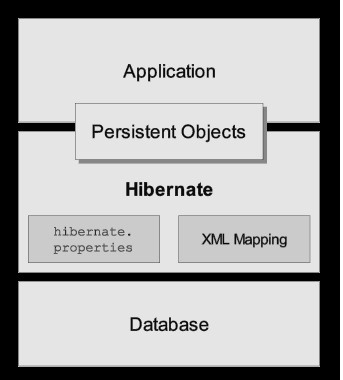
Data persistence with hibernate
Data persistence with Hibernate refers to the process of storing and retrieving data from a relational database using the Hibernate framework. Hibernate is an open-source Object-Relational Mapping (ORM) tool that simplifies database interactions by allowing developers to work with Java objects instead of writing SQL queries directly. Here’s how data persistence with Hibernate works:
1. Entity Mapping:
- Define Java classes (entities) that represent your data model. Each class maps to a table in the database.
- Annotate these classes with Hibernate annotations to define the mapping between the Java objects and the database tables.
2. Configuration:
- Configure Hibernate by providing necessary connection information to the database in a configuration file (usually named hibernate.cfg.xml).
- Configure database connection properties such as the database URL, username, password, and dialect.
3. Session Factory:
- Hibernate ‘s Session Factory is responsible for creating sessions, which are used to interact with the database.
- The Session Factory is created based on the configuration and mapping information provided.
4. Data Persistence:
- Create or retrieve Java objects (entities) in your application.
- Use Hibernate sessions to persist these objects to the database. This can be done using methods like
session. save(),session. update(),session. saveOr Update(), etc.
5. Retrieval of Data:
- Use Hibernate ‘s Query Language (HQL) or Criteria API to retrieve data from the database.
- HQL is an object-oriented query language that is similar to SQL but operates on Java objects.
6. Transaction Management:
- Wrap database operations within transactions to ensure data integrity.
- Use Hibernate’ s transaction management mechanisms or integrate with Java EE or Spring frameworks for transaction handling.
7. Lazy Loading and Eager Loading:
- Hibernate supports lazy loading, which means related objects are loaded from the database only when needed.
- Eager loading fetches related objects along with the main object during the initial query.
8. Caching:
- Hibernate provides caching mechanisms to improve performance.
- It can cache query results, entities, and collections to reduce the number of database queries.
9. Annotations and XML Mapping:
- Hibernate allows you to use annotations (like
@Entity,@Table, etc.) for mapping, or you can use XML mapping files for configuration.
10. Integration with Spring:
- Many projects integrate Hibernate with the Spring Framework for enhanced transaction management and dependency injection.
Benefits of Data Persistence with Hibernate:
- Simplified database interaction by using Java objects and annotations.
- Reduction in SQL boilerplate code.
- Improved code maintainability and readability.
- Database portability as Hibernate generates SQL specific to the database dialect.
- Caching and performance optimizations.
Challenges and Considerations:
- Learning curve: Hibernate has its own set of concepts and can be complex for newcomers.
- Query performance: Inefficient queries can still arise if not properly optimized.
- Overhead: In some cases, the overhead of the ORM layer might impact performance.
Overall, Hibernate simplifies the process of data persistence by abstracting away many of the complexities of SQL queries and database interactions, allowing developers to focus on their application’s business logic.
What is required Data persistence with hibernate
To work with data persistence using Hibernate, there are certain requirements and steps you need to follow. Here’s what is generally required to implement data persistence with Hibernate:
- Java Development Environment:
- You need a Java Development Kit (JDK) installed on your machine.
- Hibernate Framework JARs:
- Download the Hibernate framework JAR files or use a dependency management tool like Maven or Gradle to include Hibernate dependencies in your project.
- Database:
- You should have a relational database (e.g., MySQL, PostgreSQL, Oracle) installed and accessible.
- Entity Classes:
- Create Java classes that correspond to database tables. These are your entity classes.
- Annotate these classes with Hibernate annotations to define the mapping between Java objects and database tables.
- Hibernate Configuration:
- Create a configuration file (usually named hibernate.cfg.xml) that specifies database connection properties.
- Configure the Session Factory, which is responsible for creating sessions.
- Session Management:
- Use Hibernate sessions to interact with the database. A session represents a single unit of work.
- Sessions are usually managed within a transaction.
- Data Persistence:
- Use Hibernate ‘s APIs to persist Java objects to the database.
- Hibernate provides methods like
session. save(),session. update(),session.saveOrUpdate(), etc., to perform data persistence.
- Query Language or Criteria API:
- Hibernate offers HQL (Hibernate Query Language) and the Criteria API for querying the database using Java-like syntax.
- Learn how to construct queries to retrieve data from the database.
- Transaction Management:
- Implement transaction management to ensure data consistency and integrity.
- Use Hibernate’ s transaction management mechanisms or integrate with other frameworks like Java EE or Spring.
- Caching:
- Learn about caching mechanisms in Hibernate to improve performance.
- Hibernate can cache query results, entities, and collections to reduce database round-trips.
- Mapping Relationships:
- If your data model involves relationships (one-to-one, one-to-many, many-to-many), learn how to map these relationships using Hibernate annotations.
- Testing and Debugging:
- Set up testing environments to ensure your Hibernate-powered data persistence works as expected.
- Use debugging tools to troubleshoot issues and optimize queries.
- Integration with Application:
- Integrate Hibernate into your application codebase and layer architecture.
- This might involve setting up service classes, repositories, and controllers based on your application’s design.
- Optional: Spring Integration:
- Consider integrating Hibernate with the Spring Framework for enhanced transaction management and dependency injection.
It’s important to note that learning Hibernate requires understanding various concepts, including entity mapping, session management, querying, and transaction handling. Additionally, setting up the required environment and configurations might vary based on your specific project and environment. Tutorials, documentation, and online resources are valuable assets when starting with data persistence using Hibernate.
Who is required Data persistence with hibernate
Implementing data persistence with Hibernate involves several roles and individuals who contribute to the development and maintenance of the system. Here are the key roles that are typically required when working with data persistence using Hibernate:
- Developers/Programmers:
- Java Developers: These developers create the Java classes (entities) that represent the data model and are mapped to database tables.
- Hibernate Developers: They work on integrating Hibernate into the application, configuring Hibernate properties, and using Hibernate APIs for data persistence and retrieval.
- Database Administrators (DBAs):
- DBAs are responsible for managing and maintaining the relational database used by the application.
- They collaborate with developers to ensure proper database schema design, indexing, and optimization for efficient data persistence.
- Architects/Designers:
- Solution architects and system designers are involved in designing the overall application architecture, including how Hibernate integrates into the system.
- They define guidelines for mapping entities to database tables, handling relationships, and optimizing performance.
- Quality Assurance (QA) Testers:
- QA testers verify that data persistence operations work as expected.
- They create test cases to ensure that data is correctly stored and retrieved from the database using Hibernate.
- Business Analysts:
- Business analysts gather requirements from stakeholders and define the data model that needs to be persisted.
- They collaborate with developers to ensure that the implemented solution meets the business needs.
- Project Managers:
- Project managers oversee the development process, timelines, and coordination among different team members.
- They ensure that data persistence using Hibernate aligns with the project goals and meets deadlines.
- System Administrators/DevOps:
- System administrators or DevOps engineers handle the deployment and maintenance of the application.
- They might configure the application server, manage database connections, and ensure that the deployed system functions smoothly.
- Documentation Writers:
- Technical writers create documentation that explains how Hibernate is integrated into the application, including configuration, data mapping, and usage of Hibernate APIs.
- Trainers/Educators:
- In organizations where Hibernate is introduced or adopted, trainers or educators might be required to provide training to developers and other team members on Hibernate concepts and best practices.
- Collaboration and Communication:
- Effective communication and collaboration among all team members are essential to ensure that data persistence with Hibernate aligns with the project’s requirements and objectives.
It’s important to note that the extent of each role’s involvement can vary based on the size of the project, the organization’s structure, and the complexity of the application. Successful implementation of data persistence with Hibernate requires close coordination and collaboration among these roles.
WHEN is required Data persistence using hibernate
Data persistence using Hibernate is required in various scenarios where you need to store, retrieve, and manage data in a relational database using Java-based object-oriented programming. Here are some common situations where data persistence using Hibernate is necessary:
- Application Development:
- When developing Java applications that need to store and manage data in a relational database.
- When you want to use an ORM tool to simplify the interaction between Java objects and the database.
- Web Applications:
- Web applications that require user registration, login, and data storage, such as social media platforms, e-commerce websites, and online forums.
- Enterprise Applications:
- Enterprise-level systems like Customer Relationship Management (CRM) systems, Enterprise Resource Planning (ERP) systems, and Supply Chain Management (SCM) systems that deal with complex data structures.
- Data-Intensive Applications:
- Applications that handle large volumes of data, such as analytics platforms, data warehouses, and reporting systems.
- Content Management Systems (CMS):
- Systems that manage and organize digital content, such as articles, images, and multimedia files, and need to store this content in a database.
- Financial Applications:
- Applications that deal with financial transactions, account management, and auditing, requiring secure and accurate data persistence.
- Healthcare Systems:
- Healthcare applications that store patient records, medical histories, and treatment information in a secure and organized manner.
- Gaming Applications:
- Gaming platforms that save user progress, achievements, and game-related data for online and offline games.
- Education Management Systems:
- Educational platforms that manage student information, course materials, and assessment results.
- E-Commerce Applications:
- Online shopping platforms that store product information, customer orders, and transaction history.
- Booking and Reservation Systems:
- Systems that manage bookings, reservations, and scheduling, such as hotel booking systems, flight reservation systems, and event ticketing platforms.
- IoT (Internet of Things) Applications:
- Applications that collect and manage data from connected devices, sensors, and IoT devices.
In summary, data persistence using Hibernate is required in scenarios where you need to store, manage, and retrieve data from a relational database in a Java-based application. It provides an efficient and convenient way to interact with the database while abstracting the complexities of SQL queries and database interactions.
Where is required Data persistence using hibernate
Data persistence using Hibernate is required in various software development projects and applications where there’s a need to interact with a relational database using Java-based object-oriented programming. Here are some contexts where data persistence using Hibernate is required:
- Web Applications:
- Web applications that require storing and retrieving user data, such as user profiles, preferences, and authentication details.
- Enterprise Applications:
- Complex enterprise-level systems that need to manage and store business-related data, such as customer records, orders, and inventory.
- Content Management Systems (CMS):
- CMS platforms that manage digital content like articles, images, videos, and need to organize and retrieve content efficiently.
- E-Commerce Platforms:
- Online shopping websites that handle product information, customer orders, shopping carts, and payment details.
- Financial Applications:
- Financial systems that store transaction data, account information, and financial records.
- Healthcare Systems:
- Medical record systems that manage patient data, medical history, treatment plans, and diagnostics.
- Educational Software:
- Educational platforms that store student information, course materials, assignments, and grading records.
- Gaming Applications:
- Video games that save player progress, scores, achievements, and game state.
- IoT (Internet of Things) Applications:
- Applications that collect and analyze data from IoT devices, sensors, and connected devices.
- Data Analytics and Reporting Systems:
- Systems that require storing and analyzing large volumes of data for generating reports, charts, and insights.
- Booking and Reservation Systems:
- Platforms that manage reservations for hotels, flights, events, and appointments.
- Collaboration Tools:
- Applications that facilitate collaboration among users, such as project management tools, communication platforms, and shared document systems.
- Social Media Platforms:
- Social networking sites that store user profiles, posts, comments, and interactions.
- Supply Chain Management:
- Systems that track and manage the flow of goods, materials, and information across the supply chain.
- Data Warehousing:
- Applications that consolidate and manage data from various sources for reporting and analysis.
In these contexts and more, Hibernate provides an abstraction layer that simplifies the process of storing and retrieving data from relational databases. It allows developers to focus on business logic and Java objects, while Hibernate handles the underlying database interactions and SQL generation.
How is required Data persistence using hibernate
The process of implementing data persistence using Hibernate involves several steps and considerations. Here’s how data persistence using Hibernate is typically required:
- Setting Up Environment:
- Install the Java Development Kit (JDK) on your machine.
- Obtain the Hibernate framework JAR files or set up dependency management using tools like Maven or Gradle.
- Database Configuration:
- Set up and configure a relational database (e.g., MySQL, PostgreSQL) that you’ll be using for data storage.
- Entity Mapping:
- Define Java classes (entities) that correspond to database tables.
- Annotate entity classes with Hibernate annotations to specify the mapping between Java objects and database tables.
- Hibernate Configuration:
- Create a Hibernate configuration file (usually named hibernate.cfg.xml) to provide database connection information and other configurations.
- Configure the Session Factory, which is responsible for creating sessions.
- Session Management:
- Use Hibernate sessions to interact with the database.
- A session represents a single unit of work and provides methods to perform CRUD (Create, Read, Update, Delete) operations.
- Data Persistence:
- Create or load Java objects (entities) in your application.
- Use Hibernate’s session methods (e.g.,
session. save(),session.update()) to persist these objects to the database.
- Query Language or Criteria API:
- Hibernate provides HQL (Hibernate Query Language) and the Criteria API for querying the database using Java-like syntax.
- Write queries to retrieve data based on specific criteria.
- Transaction Management:
- Wrap database operations within transactions to ensure data integrity.
- Use Hibernate ‘s transaction management mechanisms or integrate with other frameworks like Java EE or Spring.
- Relationship Mapping:
- If your data model involves relationships (one-to-one, one-to-many, many-to-many), use Hibernate annotations to map these relationships.
- Caching and Optimization:
- Learn about Hibernate caching mechanisms to improve query performance and reduce database round-trips.
- Testing and Debugging:
- Write unit tests to verify that data persistence operations work as expected.
- Debug and optimize queries and database interactions for efficiency.
- Integration with Application:
- Integrate Hibernate into your application’s codebase and architecture.
- Organize data access and business logic using appropriate design patterns.
- Transaction Handling:
- Implement proper transaction management to ensure data consistency, rollback on failure, and commit on success.
- Error Handling and Exception Management:
- Handle exceptions that may occur during data persistence, such as database connection failures or query errors.
- Documentation and Maintenance:
- Document your data persistence strategy using Hibernate, including configuration, entity mapping, and usage examples.
- Maintain and update the Hibernate-related components as your application evolves.
Overall, data persistence using Hibernate involves understanding Hibernate ‘s concepts, configuring the framework, mapping entities, managing sessions and transactions, writing queries, and integrating these components into your application’s architecture.
Case study on Data persistence using hibernate
Case Study: Enhancing E-Commerce Platform with Data Persistence Using Hibernate
Background: An established e-commerce company, “Shop Easy,” operates a large online shopping platform. As the company expanded, they faced challenges with data management, scalability, and code complexity. They decided to implement data persistence using Hibernate to streamline their data operations and enhance their platform’s performance.
Challenges:
- Data Complexity: Shop Easy had numerous data entities like products, customers, orders, and reviews, making manual SQL management complex.
- Scalability: As the number of customers and transactions increased, the existing data storage approach struggled to handle the load efficiently.
- Maintenance: Frequent changes in the data model and relationships led to manual database schema updates and data migration challenges.
- Code Clutter: Embedded SQL queries in the codebase made it difficult to maintain and understand.
Solution: Shop Easy embarked on a project to implement data persistence using Hibernate to address these challenges.
Implementation Steps:
- Entity Mapping and Annotations:
- Defined entity classes for products, customers, orders, reviews, and other core entities.
- Annotated these classes with Hibernate annotations to specify relationships, mappings, and constraints.
- Hibernate Configuration:
- Created a Hibernate configuration file with database connection details, dialect, and other configuration settings.
- Configured the Session Factory to manage sessions and provide connections.
- Session Management:
- Utilized Hibernate’ s session management to encapsulate database operations.
- Implemented a session-per-request approach to ensure each user request had its own session.
- Data Persistence and Retrieval:
- Refactored existing SQL queries into Hibernate ‘s HQL (Hibernate Query Language) and Criteria API.
- Used Hibernate sessions to persist new data, update existing data, and retrieve information from the database.
- Relationship Mapping:
- Mapped relationships such as one-to-many (product to reviews) and many-to-one (order to customer) using Hibernate annotations.
- Transaction Handling:
- Implemented transaction management to ensure data consistency and integrity during operations like order placement and payment processing.
- Caching and Optimization:
- Leveraged Hibernate’ s caching mechanisms to store frequently accessed data in memory, reducing database round-trips and enhancing performance.
Results and Benefits:
- Simplified Data Management:
- Hibernate’ s annotation-based approach eliminated the need for manual SQL queries, reducing code complexity.
- Scalability and Performance:
- Improved database interaction efficiency led to better performance and scalability as customer traffic increased.
- Reduced Maintenance Efforts:
- Hibernate’ s automatic schema generation and update capabilities reduced the need for manual database schema changes.
- Enhanced Code Readability:
- Clear separation between business logic and data access improved code readability and maintainability.
- Faster Development:
- The abstraction provided by Hibernate allowed developers to focus on business logic rather than database intricacies.
Conclusion: By implementing data persistence using Hibernate, Shop Easy successfully streamlined their data management, improved performance, and reduced maintenance challenges. The platform became more scalable, and the development process became more efficient, allowing Shop Easy to focus on delivering an enhanced shopping experience for their customers.
White paper on Data persistence using hibernate
White Paper: Data Persistence Using Hibernate in Modern Software Development
Abstract: This white paper explores the role of Hibernate in modern software development, focusing on data persistence and its significance in building robust and scalable applications. We delve into the challenges that developers face with traditional data access methods and how Hibernate addresses these challenges. Through real-world examples, case studies, and considerations, we provide insights into the benefits of adopting Hibernate for efficient and maintainable data persistence.
1. Introduction: 1.1. The Importance of Data Persistence: Understand why data persistence is crucial in software applications and how it affects data integrity and user experience. 1.2. The Role of Hibernate: Introduce Hibernate as an ORM framework that simplifies data persistence and improves developer productivity.
2. Challenges in Traditional Data Access: 2.1. SQL Complexity: Discuss the complexities of writing SQL queries and maintaining database schemas manually. 2.2. Object-Relational Mismatch: Explore the challenges of mapping object-oriented programming languages to relational databases.
3. Introduction to Hibernate: 3.1. Hibernate Overview: Explain what Hibernate is, its history, and its core features. 3.2. Advantages of Hibernate: Discuss the benefits of using Hibernate, including abstraction, productivity, and reduced boilerplate code.
4. Getting Started with Hibernate: 4.1. Setting Up Hibernate: Walk through the steps of setting up Hibernate, including configuring the Hibernate configuration file and mapping entities. 4.2. Entity Mapping: Explain how to map Java objects to database tables using Hibernate annotations.
5. Data Persistence and Retrieval: 5.1. CRUD Operations: Explore how Hibernate simplifies Create, Read, Update, and Delete operations through its APIs. 5.2. Querying with HQL: Introduce Hibernate Query Language (HQL) as a powerful and flexible alternative to SQL for querying data.
6. Relationship Mapping: 6.1. One-to-One, One-to-Many, Many-to-Many: Discuss how Hibernate supports mapping various types of relationships between entities. 6.2. Cascading Operations: Explain cascading and how it simplifies managing related entities.
7. Transaction Management: 7.1. ACID Properties: Highlight the importance of transactions in maintaining data consistency and integrity. 7.2. Transactional Support in Hibernate: Show how Hibernate handles transactions and how to manage them effectively.
8. Performance and Optimization: 8.1. Caching Mechanisms: Explore Hibernate’ s caching strategies for improving performance. 8.2. Lazy Loading and Eager Loading: Discuss the concepts of loading related entities and their impact on performance.
9. Real-World Case Studies: 9.1. E-Commerce Platform Enhancement: Present a case study of how Hibernate transformed an e-commerce platform’s data persistence strategy. 9.2. Enterprise Application Upgrade: Describe how an enterprise application overcame data management challenges using Hibernate.
10. Considerations and Best Practices: 10.1. Choosing Between Annotations and XML Mapping: Discuss the pros and cons of using annotations versus XML mapping files. 10.2. Design Patterns and Architecture: Explore how Hibernate fits within different software architectures and design patterns.
11. Conclusion: 11.1. Benefits of Hibernate: Summarize the advantages of adopting Hibernate for data persistence. 11.2. Future Trends: Discuss potential developments in Hibernate and its relevance in the evolving landscape of software development.
References: A compilation of academic research, technical documentation, and industry reports that contribute to the understanding of Hibernate and its impact on data persistence.
This white paper aims to provide developers, architects, and decision-makers with a comprehensive understanding of Hibernate’ s role in modern software development and its significance in achieving efficient, scalable, and maintainable data persistence solutions.