
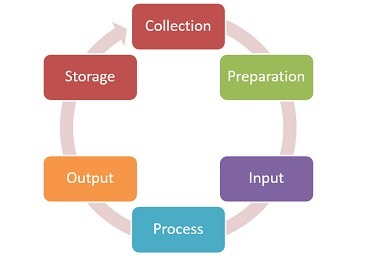
Concept of Data Processing
Data processing is a broad term that encompasses the collection, manipulation, and interpretation of data to extract meaningful information. It involves a series of operations performed on data to convert it into a more useful form for decision-making, analysis, or communication. The concept of data processing includes several key elements:
- Data Collection:
- The process begins with the collection of raw data from various sources. This can include structured data from databases, unstructured data from text documents, images, videos, or data generated by sensors and IoT devices.
- Data Entry:
- Once collected, data needs to be entered into a system for processing. This can involve manual data entry, automated data capture technologies, or data ingestion from external sources.
- Data Cleaning and Validation:
- Raw data is often imperfect, containing errors, inconsistencies, or missing values. Data processing involves cleaning and validating the data to ensure accuracy and reliability.
- Data Transformation:
- Data transformation involves converting data into a suitable format for analysis or storage. This can include normalizing data, converting units, or transforming data into a structured format.
- Data Storage:
- Processed data is stored in databases, data warehouses, or other storage systems for future retrieval and analysis. Efficient data storage is crucial for quick and reliable access.
- Data Analysis:
- The heart of data processing lies in analyzing the data to extract meaningful insights. This can involve statistical analysis, machine learning algorithms, data mining, or other analytical techniques depending on the goals of the processing.
- Data Visualization:
- To make the insights more understandable, data is often presented visually through charts, graphs, dashboards, or other visualization tools. Visualization enhances communication and aids in decision-making.
- Information Retrieval:
- Processed data is retrieved as needed for various purposes such as reporting, decision-making, or further analysis. Efficient retrieval systems ensure timely access to relevant information.
- Data Security:
- Throughout the entire process, ensuring the security and privacy of the data is paramount. This involves implementing measures to protect data from unauthorized access, modification, or loss.
- Feedback Loop:
- Data processing is often an iterative process. Insights gained from the analysis may lead to adjustments in the data collection or processing methods, creating a continuous feedback loop for improvement.
- Real-Time Processing:
- In some applications, especially in fields like finance, healthcare, or IoT, data processing needs to occur in real-time. Real-time processing allows for immediate responses and decision-making based on current data.
The concept of data processing is fundamental in various domains, including business, science, healthcare, finance, and more. As technology evolves, data processing methods continue to advance, incorporating artificial intelligence, machine learning, and other innovations to extract valuable insights from increasingly complex and large datasets.
What is required Concept of Data Processing
The required concepts of data processing form the foundation for understanding how data is collected, transformed, and analyzed to derive meaningful insights. Here are key concepts associated with data processing:
- Data:
- Data refers to raw facts, figures, and symbols. It can take various forms, such as text, numbers, images, or multimedia. Data is the input for the entire data processing cycle.
- Data Processing Cycle:
- The data processing cycle consists of stages like data collection, data entry, data cleaning, data transformation, storage, analysis, visualization, retrieval, and feedback. This cyclical process is fundamental to deriving valuable information.
- Data Collection:
- The process of gathering raw data from various sources. This can include manual data entry, automated data capture, or data ingestion from sensors and other devices.
- Data Entry:
- The inputting of raw data into a system for processing. This can involve manual data entry by humans, automated data entry from devices, or importing data from external sources.
- Data Cleaning and Validation:
- The process of identifying and correcting errors, inconsistencies, or missing values in the raw data to ensure accuracy and reliability.
- Data Transformation:
- Converting raw data into a suitable format for analysis or storage. Transformation may involve normalizing data, converting units, or reshaping data to fit a specific structure.
- Data Storage:
- The organized and secure storage of processed data in databases, data warehouses, or other storage systems for future retrieval and analysis.
- Data Analysis:
- The examination of processed data to discover patterns, relationships, and trends. Analysis involves using statistical methods, machine learning algorithms, or other analytical techniques.
- Data Visualization:
- The presentation of analyzed data in a visual format, such as charts, graphs, or dashboards. Visualization aids in communicating insights and making complex information more understandable.
- Information Retrieval:
- The process of accessing and retrieving processed data as needed for reporting, decision-making, or further analysis. Efficient retrieval systems ensure timely access to relevant information.
- Data Security:
- Implementing measures to protect data from unauthorized access, modification, or loss. This includes encryption, access controls, and other security protocols.
- Feedback Loop:
- The continuous improvement process where insights gained from data analysis may lead to adjustments in the data collection or processing methods, creating a feedback loop for refinement.
- Real-Time Processing:
- The ability to process and analyze data in real-time, enabling immediate responses and decision-making based on current information.
Understanding these concepts is essential for individuals and organizations involved in handling and utilizing data. Whether in business, science, healthcare, or other fields, a solid grasp of data processing concepts is crucial for effective decision-making and innovation.
Who is required Concept of Data Processing
The concept of data processing is essential for various individuals, professionals, and organizations across different sectors. Here are some key stakeholders who require an understanding of the concept of data processing:
- Data Scientists and Analysts:
- Professionals responsible for analyzing and interpreting data to extract meaningful insights. They use data processing techniques to clean, transform, and analyze data for decision-making.
- Database Administrators:
- Individuals managing databases and data storage systems. They need to understand data processing concepts for efficient data storage, retrieval, and maintenance.
- IT Professionals:
- IT specialists and system administrators need to comprehend data processing to ensure the smooth functioning of data processing systems, networks, and servers.
- Business Analysts:
- Professionals analyzing business data to support decision-making processes. They require knowledge of data processing concepts to extract relevant information for strategic planning.
- Software Developers:
- Those involved in creating applications and systems that process data. Understanding data processing concepts helps developers design efficient algorithms and structures for data handling.
- Data Entry Operators:
- Individuals responsible for inputting data into systems. They should be aware of data processing concepts to ensure accurate and consistent data entry.
- Managers and Decision-Makers:
- Executives and managers need to understand data processing to make informed decisions based on data-driven insights. This includes setting strategies, allocating resources, and assessing performance.
- Researchers and Scientists:
- Professionals in research and scientific fields use data processing to analyze experimental results, conduct statistical analyses, and draw conclusions.
- Data Privacy and Security Professionals:
- Individuals working in data security and privacy roles need to understand data processing concepts to implement measures that protect sensitive information from unauthorized access or misuse.
- Educators and Students:
- Teachers and students in fields related to computer science, information technology, business analytics, and data science need to grasp data processing concepts as part of their curriculum and skill development.
- Healthcare Professionals:
- In the healthcare sector, clinicians, researchers, and administrators use data processing to manage patient records, conduct medical research, and optimize healthcare operations.
- Financial Analysts:
- Professionals in finance use data processing for tasks such as risk assessment, fraud detection, and financial modeling to support investment decisions and financial planning.
- Government and Policy Makers:
- Public sector officials and policymakers use data processing for evidence-based decision-making, policy formulation, and program evaluation.
- Manufacturing and Operations Managers:
- Professionals in manufacturing and operations rely on data processing to optimize supply chain management, production processes, and quality control.
In today’s data-driven world, virtually anyone interacting with information, technology, or decision-making processes benefits from a fundamental understanding of data processing concepts. It is a crucial skill set that spans various industries and roles.
When is required Concept of Data Processing
The concept of data processing is required in various scenarios and industries whenever there is a need to handle, analyze, or derive insights from data. Here are some common situations where the understanding of data processing is crucial:
- Business Operations:
- Businesses use data processing to manage customer information, analyze sales data, optimize supply chains, and make informed decisions to improve overall operations.
- Financial Management:
- Financial institutions use data processing for tasks like transaction processing, risk management, fraud detection, and financial reporting.
- Healthcare:
- In healthcare, data processing is essential for managing patient records, conducting medical research, and optimizing healthcare delivery.
- Research and Academia:
- Researchers and academics use data processing for scientific experiments, statistical analyses, and drawing conclusions from research data.
- Government and Public Services:
- Governments use data processing for citizen services, public policy analysis, crime statistics, and other administrative tasks.
- Education:
- Educational institutions use data processing for student information management, grading, and educational research.
- Manufacturing and Supply Chain:
- Manufacturers leverage data processing for inventory management, production planning, quality control, and supply chain optimization.
- E-commerce and Retail:
- Retailers use data processing for inventory management, customer relationship management (CRM), and analyzing sales data to improve marketing strategies.
- Marketing and Advertising:
- Marketing professionals utilize data processing for customer segmentation, targeted advertising, and analyzing campaign performance.
- Telecommunications:
- Telecommunication companies use data processing for network management, customer billing, and analyzing call data records for network optimization.
- Energy and Utilities:
- The energy sector employs data processing for managing energy consumption data, optimizing grid operations, and monitoring equipment health.
- Human Resources:
- HR departments use data processing for employee management, payroll processing, and workforce analytics.
- Social Media and Online Platforms:
- Social media platforms utilize data processing for user analytics, content recommendation, and personalized user experiences.
- Cybersecurity:
- In the realm of cybersecurity, data processing is critical for analyzing network traffic, detecting anomalies, and identifying potential security threats.
- IoT and Smart Devices:
- With the rise of the Internet of Things (IoT), data processing is essential for handling the vast amounts of data generated by connected devices, enabling smart applications and services.
- Emergency Services:
- Emergency services use data processing for analyzing data from various sources to respond to incidents, predict trends, and allocate resources efficiently.
In summary, the concept of data processing is required whenever there is a need to collect, organize, analyze, and derive insights from data, which spans across numerous industries and applications. It plays a crucial role in improving efficiency, making informed decisions, and driving innovation in various fields.
Where is required Concept of Data Processing
The concept of data processing is required in numerous fields and industries where handling and interpreting data are integral to various functions. Here are several specific areas where the concept of data processing is essential:
- Business and Finance:
- Businesses rely on data processing for tasks such as financial transactions, budgeting, payroll processing, and sales analysis. Financial institutions use data processing for risk management, fraud detection, and customer transactions.
- Healthcare:
- In healthcare, data processing is crucial for managing patient records, medical billing, analyzing medical images, and conducting clinical research. Electronic Health Records (EHRs) involve extensive data processing.
- Education:
- Educational institutions use data processing for student enrollment, grading, attendance tracking, and educational research. Learning management systems also involve data processing.
- Research and Academia:
- Researchers use data processing for analyzing experimental results, conducting statistical analyses, and drawing conclusions from research data. Scientific studies often involve complex data processing.
- Government and Public Services:
- Governments use data processing for citizen services, managing public records, tax collection, and policy analysis. Public safety agencies rely on data processing for crime analysis and emergency response.
- Manufacturing and Supply Chain:
- Manufacturers use data processing for inventory management, quality control, production planning, and supply chain optimization. Sensors and IoT devices contribute to data processing in smart manufacturing.
- Retail and E-commerce:
- Retailers use data processing for inventory management, customer relationship management (CRM), and analyzing consumer behavior for personalized marketing strategies.
- Marketing and Advertising:
- Marketing professionals leverage data processing for customer segmentation, targeted advertising, and analyzing the performance of marketing campaigns.
- Telecommunications:
- Telecommunication companies use data processing for network management, billing systems, and analyzing call data records for network optimization.
- Energy and Utilities:
- The energy sector employs data processing for monitoring energy consumption, managing grid operations, and optimizing the distribution of energy resources.
- Human Resources:
- HR departments use data processing for employee management, payroll processing, talent acquisition, and workforce analytics.
- Social Media and Online Platforms:
- Social media platforms use data processing for user analytics, content recommendation, and enhancing user experiences through personalized content.
- Cybersecurity:
- In cybersecurity, data processing is crucial for analyzing network traffic, detecting security threats, and responding to incidents through threat intelligence.
- Transportation and Logistics:
- Transportation companies use data processing for route optimization, vehicle tracking, and managing logistics. Smart transportation systems rely on data processing for real-time traffic analysis.
- Environmental Monitoring:
- Environmental agencies use data processing for analyzing climate data, monitoring pollution levels, and managing natural resources.
- Emergency Services:
- Emergency services use data processing for analyzing data from various sources to respond to incidents, predict trends, and allocate resources efficiently.
In essence, the concept of data processing is required in virtually every industry where information is collected, analyzed, and utilized to make informed decisions, improve efficiency, and drive innovation. The specific applications vary across industries, but the underlying principles of data processing remain fundamental.
How is required Concept of Data Processing
The concept of data processing is required in various ways across different industries and applications. Here’s a breakdown of how the concept of data processing is essential:
- Business and Decision-Making:
- How: Businesses utilize data processing to analyze sales figures, customer feedback, and market trends. This information aids in strategic decision-making, product development, and market positioning.
- Finance and Banking:
- How: Financial institutions process vast amounts of data for transactions, risk analysis, fraud detection, and compliance. This enables secure and efficient financial operations.
- Healthcare:
- How: Data processing in healthcare involves managing patient records, processing medical imaging data, and analyzing clinical information. It is critical for diagnosis, treatment planning, and medical research.
- Education:
- How: Educational institutions use data processing for student enrollment, grading, and academic research. Learning platforms rely on data processing for managing coursework and student progress.
- Research and Academia:
- How: Researchers process data for experiments, simulations, and analyses. This contributes to scientific discoveries, academic publications, and advancements in various fields.
- Government and Public Services:
- How: Governments process data for citizen services, policy analysis, public safety, and administrative tasks. Data processing enhances efficiency and supports evidence-based decision-making.
- Manufacturing and Supply Chain:
- How: Manufacturers use data processing for inventory management, quality control, and production optimization. Supply chain operations rely on data processing for efficient logistics and distribution.
- Retail and E-commerce:
- How: Retailers leverage data processing for inventory tracking, customer relationship management (CRM), and personalized marketing. E-commerce platforms analyze user behavior for targeted recommendations.
- Marketing and Advertising:
- How: Marketing professionals use data processing for market segmentation, campaign analysis, and customer profiling. Targeted advertising relies on processing data to deliver personalized content.
- Telecommunications:
- How: Telecommunication companies process data for network optimization, billing, and customer service. Data processing contributes to the efficient functioning of communication networks.
- Energy and Utilities:
- How: The energy sector processes data for grid management, resource optimization, and monitoring energy consumption. This supports sustainability efforts and ensures efficient energy distribution.
- Human Resources:
- How: HR departments use data processing for employee management, payroll processing, and workforce analytics. This streamlines HR operations and enhances talent management.
- Social Media and Online Platforms:
- How: Social media platforms process user data for content recommendation, user engagement analysis, and targeted advertising. This enhances user experiences and supports platform monetization.
- Cybersecurity:
- How: In cybersecurity, data processing is vital for monitoring network traffic, detecting anomalies, and responding to security threats. It strengthens the overall security posture of organizations.
- Transportation and Logistics:
- How: Transportation companies use data processing for route optimization, vehicle tracking, and logistics management. Smart transportation systems rely on data processing for real-time traffic analysis.
- Environmental Monitoring:
- How: Environmental agencies process data for climate analysis, pollution monitoring, and natural resource management. Data processing supports environmental conservation efforts.
- Emergency Services:
- How: Emergency services process data for incident response, resource allocation, and predictive analysis. This aids in efficient emergency management and enhances public safety.
In summary, the concept of data processing is required in various industries to extract insights, enhance operational efficiency, support decision-making, and drive innovation across diverse applications. The methods and tools used for data processing may vary based on the specific needs and goals of each industry.
Case Study on Concept of Data Processing
Case Study: Optimizing Supply Chain with Advanced Data Processing
Background:
XYZ Corporation, a global manufacturing company, faced challenges in its supply chain management. With a complex network of suppliers, distributors, and production facilities, the company aimed to enhance efficiency, reduce costs, and improve overall supply chain performance. The solution involved leveraging advanced data processing techniques to gain actionable insights and streamline operations.
Objectives:
- Data Collection and Integration:
- Collect data from diverse sources, including suppliers, production lines, logistics, and market trends. Integrate this data into a unified platform for comprehensive analysis.
- Real-Time Monitoring:
- Implement a real-time monitoring system to track inventory levels, order fulfillment, and transportation logistics. Enable quick decision-making based on up-to-the-minute data.
- Predictive Analytics:
- Develop predictive analytics models to forecast demand, identify potential supply chain disruptions, and optimize inventory levels. This would reduce excess inventory and minimize stockouts.
- Supplier Performance Analysis:
- Evaluate supplier performance through data analysis, identifying key metrics such as on-time delivery, quality control, and cost-effectiveness. Use this information for strategic supplier management.
- Cost Optimization:
- Analyze cost structures at each stage of the supply chain. Identify areas for cost optimization, such as route planning, warehouse utilization, and production efficiency.
Implementation:
- Unified Data Platform:
- Implemented a centralized data platform that aggregated data from ERP systems, IoT devices on production lines, GPS trackers on transportation vehicles, and external market data. This platform facilitated a holistic view of the supply chain.
- Real-Time Monitoring System:
- Integrated sensors and IoT devices to enable real-time monitoring of inventory levels, production output, and transportation status. The system provided alerts for potential issues, enabling proactive responses.
- Predictive Analytics Models:
- Developed machine learning models for demand forecasting, production planning, and inventory optimization. These models utilized historical data and external factors, improving accuracy over time.
- Supplier Performance Dashboard:
- Implemented a supplier performance dashboard that tracked key metrics for each supplier. This allowed the company to identify high-performing suppliers, address issues with underperforming ones, and negotiate contracts based on data-driven insights.
- Cost Optimization Strategies:
- Conducted a comprehensive cost analysis of the supply chain. Identified inefficient routes, excess inventory costs, and areas where technology upgrades could improve efficiency. Implemented cost-saving measures based on the analysis.
Results:
- Improved Efficiency:
- Real-time monitoring and predictive analytics led to a significant improvement in supply chain efficiency. The company could proactively address issues, reducing downtime and improving overall productivity.
- Cost Reduction:
- The implementation of cost optimization strategies resulted in a noticeable reduction in operational costs. This included savings in transportation, inventory holding costs, and production efficiency improvements.
- Enhanced Supplier Relationships:
- The supplier performance analysis allowed the company to strengthen relationships with high-performing suppliers and address issues with others. This led to better collaboration, improved product quality, and reduced lead times.
- Accurate Demand Forecasting:
- Predictive analytics models improved the accuracy of demand forecasting, reducing excess inventory and minimizing stockouts. This optimized inventory levels and improved customer satisfaction.
- Data-Driven Decision-Making:
- The adoption of a data-driven approach transformed decision-making processes. Managers could now make informed decisions based on real-time data and predictive insights, leading to more strategic and proactive actions.
Future Considerations:
Continuing to harness the power of data processing, XYZ Corporation planned to explore emerging technologies such as blockchain for enhanced transparency and security in the supply chain. The success of this case study demonstrated the significant impact that advanced data processing can have on optimizing complex business processes.
White Paper on Concept of Data Processing
White Paper: Unleashing Potential through Advanced Data Processing
Executive Summary:
In an era dominated by information, the concept of data processing has evolved into a transformative force, reshaping industries, enhancing decision-making, and driving innovation. This white paper explores the fundamental principles of data processing, delves into advanced techniques, and highlights the profound impact it has across various domains. As organizations navigate a data-driven landscape, understanding and harnessing the power of data processing become paramount for success.
1. Introduction:
1.1 The Data Revolution:
The exponential growth of data and technological advancements have ushered in a data revolution. Organizations worldwide are leveraging data processing to extract meaningful insights, optimize operations, and gain a competitive edge.
2. Foundations of Data Processing:
2.1 Data Lifecycle:
Explore the stages of the data processing lifecycle, from data collection and entry to storage, analysis, and visualization. Understanding this lifecycle is fundamental to efficient and effective data processing.
2.2 Key Components:
Examine the essential components of data processing, including data cleaning, transformation, and storage. Learn how each component contributes to the overall data processing ecosystem.
3. Advanced Data Processing Techniques:
3.1 Real-Time Processing:
Delve into the importance of real-time data processing in today’s fast-paced business environment. Explore applications in finance, healthcare, and logistics where real-time insights drive critical decision-making.
3.2 Predictive Analytics:
Understand how predictive analytics, powered by data processing, enables organizations to anticipate future trends, forecast demand, and make proactive decisions for enhanced strategic planning.
3.3 Machine Learning and AI:
Explore the integration of machine learning and artificial intelligence in data processing. Learn how these technologies automate decision-making processes and uncover patterns within vast datasets.
4. Industry Applications:
4.1 Healthcare:
Discover how data processing is revolutionizing healthcare, from patient care and diagnostics to drug discovery and epidemiological research.
4.2 Finance:
Explore applications of data processing in the financial sector, including algorithmic trading, risk management, fraud detection, and personalized banking experiences.
4.3 Manufacturing:
Learn how data processing optimizes supply chain management, improves production efficiency, and enables predictive maintenance in the manufacturing industry.
5. Challenges and Considerations:
5.1 Data Security and Privacy:
Address the critical considerations around data security and privacy in the context of increased data processing capabilities.
5.2 Ethical Use of Data:
Examine the ethical implications of data processing and the responsible use of data in decision-making.
6. Future Trends and Innovations:
6.1 Edge Computing:
Explore the rise of edge computing and its impact on data processing, enabling faster and more efficient data analysis at the source.
6.2 Quantum Computing:
Anticipate the transformative potential of quantum computing in data processing, unlocking new frontiers in computational capabilities.
7. Conclusion:
Summarize the key takeaways from the exploration of data processing concepts, advanced techniques, industry applications, challenges, and future trends. Emphasize the imperative for organizations to continually adapt and innovate in the evolving landscape of data processing.
8. Recommendations:
Provide actionable recommendations for organizations looking to leverage data processing effectively, including investing in talent, adopting emerging technologies, and prioritizing ethical considerations.
9. References:
Cite relevant research, case studies, and sources that informed the content of this white paper.
This white paper aims to serve as a comprehensive guide for organizations and professionals seeking to navigate the complexities of data processing, harness its potential, and stay at the forefront of technological innovation in the data-driven era.