
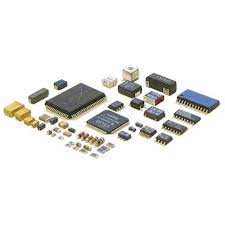
Mobile chip components
Mobile chips, also known as system-on-chip (So C) or processor, contain several components that are essential for the functioning of a mobile device, such as a smartphone or tablet. Some of the most important mobile chip components are:
- CPU (Central Processing Unit): The CPU is the brain of the mobile device, responsible for executing instructions and performing calculations. It is usually composed of several cores, which work together to improve performance and power efficiency.
- GPU (Graphics Processing Unit): The GPU is responsible for rendering graphics, images, and videos on the mobile device’s display. It helps improve the device’s graphics performance, which is essential for gaming, video playback, and other visual applications.
- Memory: Mobile chips contain several types of memory, including RAM (Random Access Memory) and ROM (Read-Only Memory). RAM is used for temporarily storing data that the CPU needs to access quickly, while ROM is used for storing system files and software.
- Modem: The modem is responsible for connecting the mobile device to the internet and other wireless networks, such as cellular networks, Wi-F i, and Bluetooth.
- Power Management: Mobile chips include power management components, such as voltage regulators and battery management systems, to help extend the battery life of the device and improve power efficiency.
- Sensor Hub: The sensor hub is a component that collects data from various sensors in the device, such as the accelero meter, gyroscope, and compass. It helps improve the device’s performance by providing more accurate sensor data to applications.
- Security Hardware: Mobile chips may also contain hardware security components, such as a Trusted Execution Environment (TEE) and secure boot, to help protect the device from security threats and ensure the integrity of the device’s software.