

MVC developer
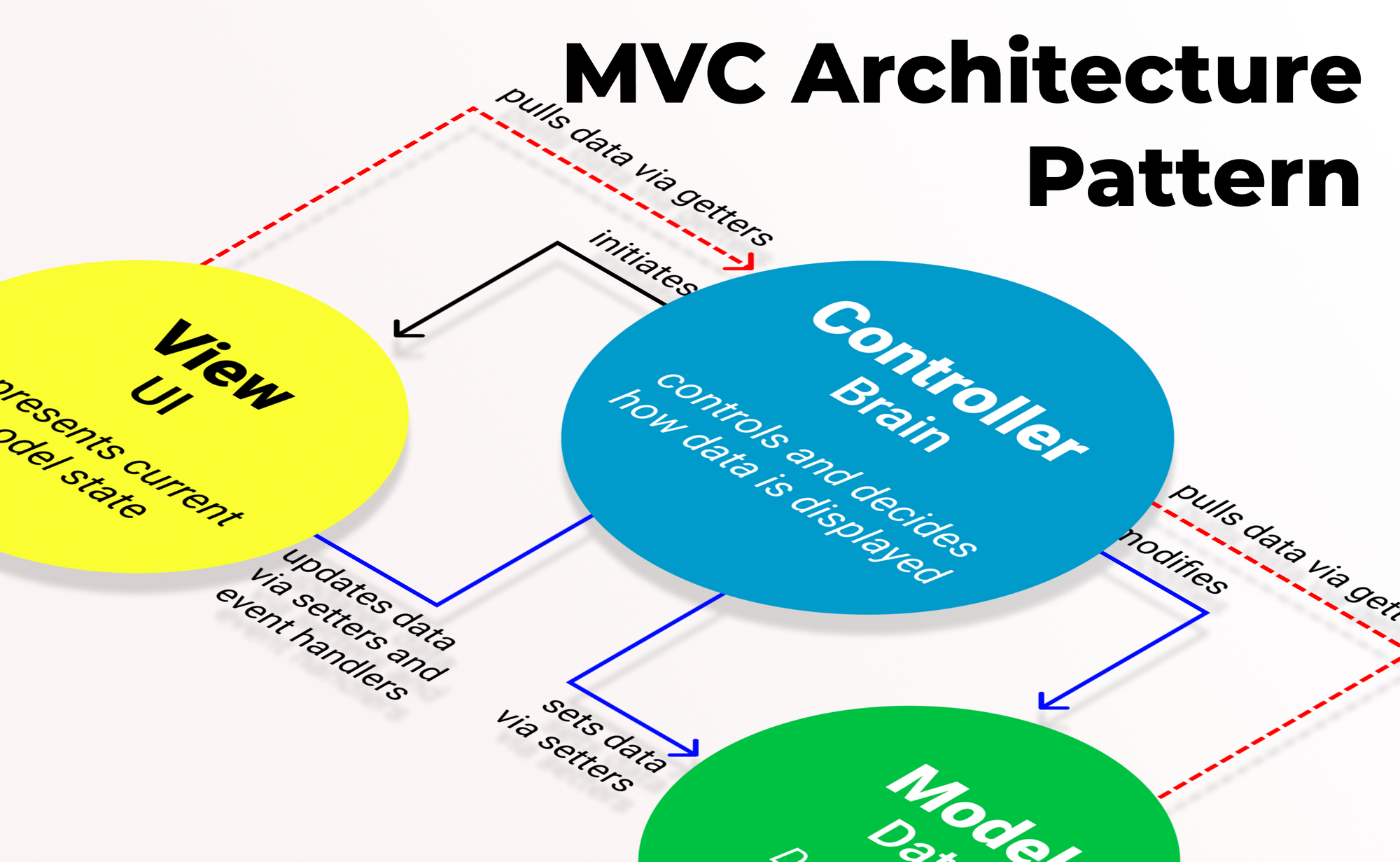
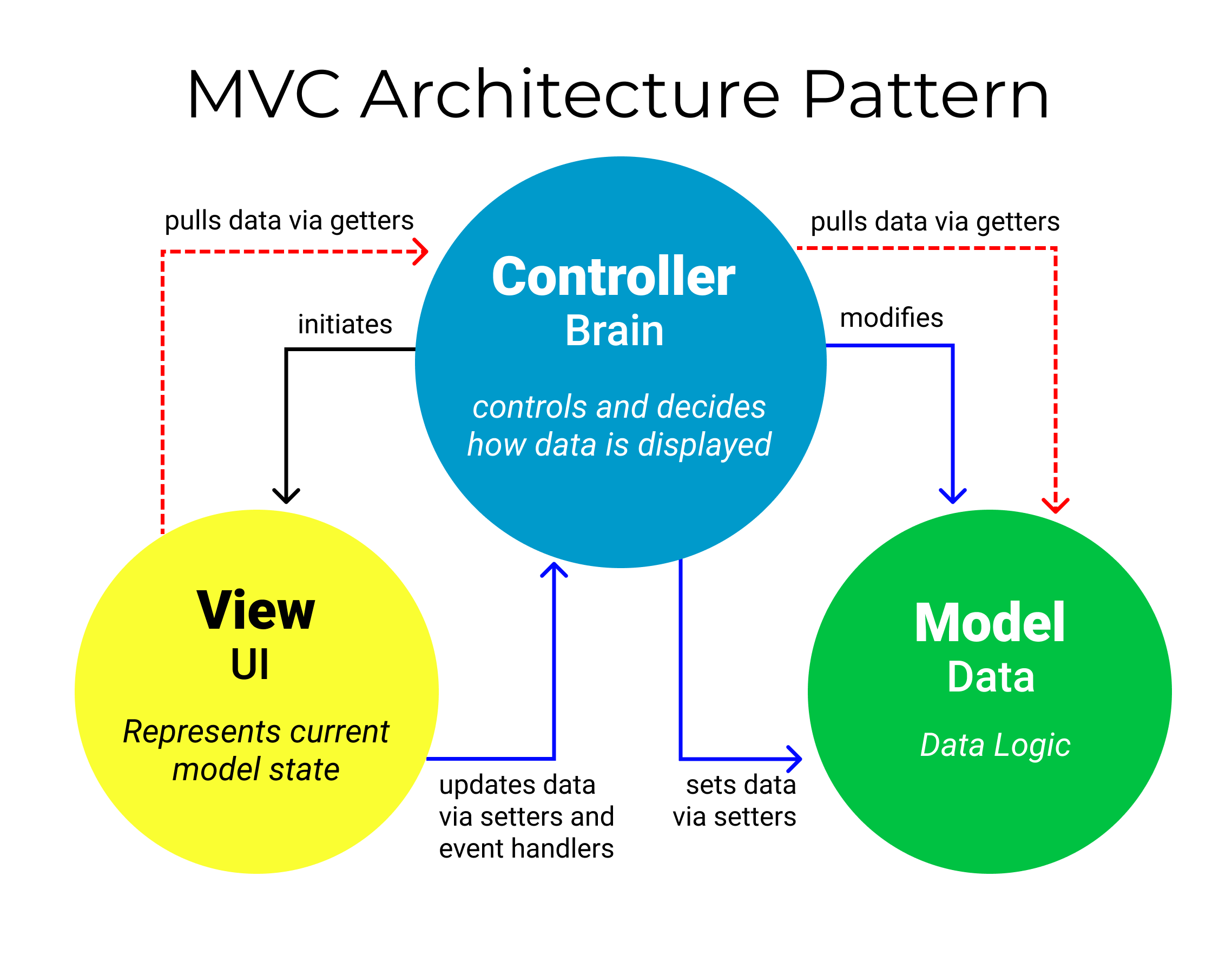
It seems like you’re interested in learning about MVC (Model-View-Controller) development. MVC is a software architectural pattern commonly used in web and application development to separate the concerns of an application into three main components: Model, View, and Controller. Each component has a distinct role in the overall structure of the application:
- Model: The Model represents the application’s data and business logic. It is responsible for managing data, processing user input, performing calculations, and interacting with the database or external services. In essence, the Model is the core of the application’s functionality.
- View: The View is responsible for presenting the data to the user and rendering the user interface. It displays the information provided by the Model in a format that is easily understandable to the user. Views can be anything from web pages to user interfaces in desktop applications.
- Controller: The Controller acts as an intermediary between the Model and the View. It handles user input, processes requests, and updates the Model accordingly. The Controller ensures that the appropriate response is generated based on user actions and updates the View with the latest data from the Model.
The MVC pattern promotes separation of concerns, making it easier to manage, maintain, and scale applications. Developers who work with MVC need to have a strong understanding of the roles and responsibilities of each component and how they interact with each other.
If you’re looking to become an MVC developer, here are some steps you can consider:
- Learn the Basics: Start by understanding the core concepts of MVC, including the responsibilities of each component. Study how data flows between the Model, View, and Controller.
- Choose a Technology Stack: MVC can be implemented in various programming languages and frameworks. Choose a technology stack that aligns with your interests and goals. Common choices include:
- Web Development: ASP.NET MVC, Ruby on Rails, Django, Laravel, Spring MVC, etc.
- Desktop Applications: JavaFX, Qt, Cocoa MVC (for macOS), etc.
- Hands-on Practice: Build simple projects to practice implementing the MVC pattern. This will help you grasp the practical aspects of separating concerns and managing application components.
- Explore Advanced Concepts: Dive deeper into topics like routing, middleware, data binding, and authentication within the context of MVC development.
- Version Control: Learn to use version control systems like Git to manage your codebase effectively.
- Design Patterns: Gain familiarity with other design patterns commonly used in conjunction with MVC, such as Factory, Observer, and Singleton patterns.
- Testing: Understand the importance of testing and how to write unit tests and integration tests for your MVC applications.
- Real-world Projects: As you become more comfortable, work on larger and more complex projects to solidify your skills.
Remember that becoming proficient in MVC development takes time and practice. Continuously seek to expand your knowledge, stay updated with the latest trends, and be open to learning from others’ code and experiences.
1.What is MVC developer?
An “MVC developer” refers to a software developer who specializes in designing, implementing, and maintaining applications using the Model-View-Controller (MVC) architectural pattern. MVC developers are skilled in creating software that adheres to the principles of the MVC pattern to achieve separation of concerns, modularity, and maintainability.
Here’s a breakdown of what an MVC developer does:
- Designing Applications: MVC developers are responsible for designing the overall architecture of an application using the MVC pattern. They decide how data will be structured (Model), how it will be presented to users (View), and how user interactions will be handled (Controller).
- Developing Models: Models represent the core data and logic of an application. MVC developers create models that handle data storage, retrieval, and manipulation. This may involve working with databases, APIs, or other data sources.
- Creating Views: Views are responsible for rendering data to the user interface. MVC developers design and implement views that display information in a user-friendly and visually appealing manner. This often involves working with HTML, CSS, and frontend frameworks.
- Implementing Controllers: Controllers manage user interactions and act as intermediaries between models and views. MVC developers write controller code that receives user input, processes it, and updates the model or view accordingly.
- Maintaining and Testing: MVC developers ensure that the application remains maintainable and functional over time. They write unit tests to validate the behavior of models, views, and controllers, making it easier to catch and fix issues during development.
- Collaboration: MVC developers often work in collaboration with other team members, such as frontend and backend developers, UI/UX designers, and project managers, to bring the application to fruition.
- Optimization and Scalability: Experienced MVC developers focus on optimizing application performance and scalability. They may identify bottlenecks, improve database queries, and enhance user experience based on MVC best practices.
- Staying Current: Technology evolves rapidly, and MVC developers need to stay up-to-date with the latest frameworks, tools, and best practices related to the MVC pattern and software development in general.
MVC developers can work on a variety of projects, including web applications, mobile apps, desktop software, and more. Their expertise lies in building well-structured, maintainable, and efficient applications by adhering to the principles of the MVC pattern.
when is required MVC developer


An MVC (Model-View-Controller) developer is typically required when developing applications that follow the MVC architectural pattern. The MVC pattern is commonly used in various types of software projects, especially in web development and graphical user interface (GUI) applications. Here are some scenarios when an MVC developer is required:
- Web Development: MVC is widely used in web development to build dynamic and interactive websites and web applications. If you are developing a web application that requires a separation of concerns between data handling, user interface, and user interactions, hiring an MVC developer would be beneficial. They can work on designing the database structure (Model), creating user interfaces (View), and handling user interactions and routing (Controller).
- GUI Applications: For desktop or mobile applications that have complex user interfaces, data management, and user interactions, using the MVC pattern can help improve code organization and maintainability. An MVC developer can ensure that the application’s logic is separated into distinct components for easier management and updates.
- Complex Business Logic: When an application involves intricate business logic, data processing, and validation, an MVC developer can help design and implement the Model layer to handle these tasks effectively. This ensures that the business logic is encapsulated and can be reused across different parts of the application.
- Scalability and Maintainability: If you anticipate that your application will need to scale over time or undergo frequent updates, an MVC developer can help create a structured architecture that makes it easier to maintain and expand the application without introducing significant code complexity.
- Collaborative Development: When multiple developers are working on different aspects of an application, following the MVC pattern can provide a clear structure that allows developers to work on different components without stepping on each other’s toes. This can lead to better collaboration and more efficient development.
- Code Reusability: If you want to build an application where certain components, such as data handling or user interface elements, can be reused across different sections or even different projects, an MVC developer can help design and implement these reusable components within the MVC architecture.
- Testing and Debugging: The separation of concerns in MVC makes it easier to write unit tests and perform debugging, as each component’s functionality is isolated and can be tested independently. An MVC developer can ensure that proper testing practices are implemented.
In general, an MVC developer is required when there is a need for clear separation of concerns, efficient code organization, and the ability to manage and maintain different aspects of an application independently. The specific requirements will depend on the nature of the project and the goals of the development team.
who is required MVC developer
T
An MVC (Model-View-Controller) developer is a software professional who specializes in designing, implementing, and maintaining applications using the MVC architectural pattern. This role is typically required in various software development scenarios, particularly when the application’s architecture and design call for the separation of concerns provided by the MVC pattern. Here are some situations where a company or project might require an MVC developer:
- Web Development: In web development, an MVC developer is often required when building dynamic and interactive websites, web applications, or web services. They are responsible for creating the Model to manage data, designing the View to display information to users, and implementing the Controller to handle user interactions and manage the flow of data.
- GUI Application Development: When developing graphical user interface (GUI) applications, such as desktop or mobile apps, an MVC developer can help ensure that the application’s logic, user interface, and data management are properly separated. This separation leads to better code organization and easier maintenance.
- Framework-Based Development: Many web frameworks and libraries are based on the MVC pattern. If a project is using a framework like Ruby on Rails, Django, Laravel, or ASP.NET MVC, an MVC developer is crucial for leveraging the framework’s architecture effectively and customizing it to meet the project’s requirements.
- Complex Business Logic: Applications with complex business logic, extensive data processing, and validation requirements can benefit from the expertise of an MVC developer. They can design the Model to handle intricate data interactions while ensuring that the Controller manages the associated logic.
- Team Collaboration: In larger development teams or projects involving multiple developers, an MVC developer can contribute to better collaboration by focusing on specific components of the application. This allows for parallel development with reduced chances of code conflicts.
- Scalability and Maintainability: If the project’s goal is to build a scalable and maintainable application that can evolve over time, an MVC developer can help establish a clear architectural foundation that supports these objectives.
- Code Reusability: An MVC developer is valuable when there’s a need to create reusable components or modules that can be applied across different parts of the application or even shared between different projects.
- Testing and Debugging: The separation of concerns in MVC makes testing and debugging more manageable. An MVC developer can write unit tests, integration tests, and perform debugging on individual components, leading to a more stable and reliable application.
In summary, an MVC developer is required in situations where an application’s architecture can benefit from the separation of concerns, clear organization, maintainability, and scalability provided by the MVC pattern. The specific need for an MVC developer will depend on the nature of the project, its goals, and the technical requirements of the development team.
how is required MVC developer

To become a required MVC (Model-View-Controller) developer, you need to follow a structured path of learning, practice, and experience. Here’s a step-by-step guide on how to become an MVC developer:
- Foundation Skills:
- Programming Languages: Start by becoming proficient in a programming language commonly used in MVC development. Popular choices include C#, Java, Ruby, Python, and PHP.
- Web Technologies: Learn HTML, CSS, and JavaScript, as they form the basis of web development, which often complements MVC architecture.
- Understand MVC:
- Study MVC Concepts: Gain a deep understanding of the MVC architectural pattern, including the roles of Model, View, and Controller, and how they interact.
- Explore Design Patterns: Learn about other design patterns frequently used in conjunction with MVC, such as Factory, Observer, and Dependency Injection.
- Frameworks and Tools:
- Select a Framework: Choose a web framework that supports the MVC pattern. Examples include ASP.NET MVC, Ruby on Rails, Django, Laravel, and Spring MVC.
- Learn Framework Features: Study the features and capabilities of your chosen framework, including routing, data binding, templating, and authentication.
- Hands-on Projects:
- Build Simple Apps: Start with small projects that implement the MVC pattern. Create a basic CRUD (Create, Read, Update, Delete) application to practice data handling, views, and user interactions.
- Expand Complexity: Gradually work on more complex projects that involve multiple components, user authentication, data validation, and API integrations.
- Deepen Your Knowledge:
- Database Management: Learn about relational databases and how to interact with them from your chosen MVC framework. Understand database design, querying, and ORM (Object-Relational Mapping).
- Front-end Development: Enhance your skills in front-end technologies such as JavaScript frameworks (React, Angular, Vue.js) to create dynamic user interfaces that interact seamlessly with the MVC backend.
- Version Control: Master version control systems like Git to collaborate effectively and manage your codebase.
- Testing and Debugging:
- Testing Strategies: Learn how to write unit tests, integration tests, and end-to-end tests for your MVC application to ensure its stability and reliability.
- Debugging Skills: Develop strong debugging techniques to identify and resolve issues within different components of the MVC architecture.
- Real-world Experience:
- Work on Projects: Join open-source projects or collaborate with others on real-world applications. Gain practical experience in solving challenges and collaborating in a team.
- Freelancing or Employment: Consider freelancing, internships, or full-time positions to gain professional experience and exposure to real client needs and project requirements.
- Continuous Learning:
- Stay Updated: Keep up with the latest developments in MVC frameworks, web technologies, and software design principles.
- Explore Advanced Topics: Delve into advanced topics like security best practices, performance optimization, and scaling techniques.
Remember, becoming a proficient MVC developer takes time and dedication. Continuous learning, practice, and staying adaptable to new technologies and trends are essential to excel in this role.
case study of MVC developer
Certainly! Let’s consider a case study of an MVC developer working on a web application for an e-commerce platform. The developer’s role involves designing and implementing the application using the MVC architectural pattern.
Case Study: E-Commerce Web Application
Background: A company wants to create an e-commerce platform to sell products online. The platform needs to handle user registrations, product listings, shopping carts, order processing, and user authentication.
Role of the MVC Developer: The MVC developer is responsible for structuring and developing the e-commerce web application following the MVC pattern.
Implementation Steps:
- Model (Data and Logic):
- Design the database schema to store product information, user profiles, orders, and other relevant data.
- Implement the Model layer by creating classes and methods to interact with the database, handle data validation, and process orders.
- Set up an ORM (Object-Relational Mapping) framework to facilitate communication between the application and the database.
- View (User Interface):
- Design the user interfaces for the e-commerce platform, including product listings, shopping cart, user registration, and order history.
- Implement HTML templates, CSS styling, and JavaScript for interactivity and dynamic content presentation.
- Ensure responsive design to provide a seamless experience across different devices and screen sizes.
- Controller (User Interactions):
- Develop the Controller layer to handle user actions and route requests appropriately.
- Implement routing logic to map URLs to specific Controller actions, such as displaying product details or processing orders.
- Use server-side scripting (e.g., PHP, Python, Ruby) to process user input, validate data, and update the Model accordingly.
- Integration:
- Implement user authentication and authorization using the Controller layer to restrict access to certain features.
- Integrate payment gateways to handle secure online payments.
- Utilize APIs to fetch real-time shipping information and update order statuses.
- Testing and Debugging:
- Write unit tests to ensure the correctness of Model and Controller components.
- Perform integration tests to verify the interactions between different parts of the application.
- Debug and resolve issues related to data handling, user interactions, and user interface rendering.
- Optimization and Scalability:
- Implement caching mechanisms to improve application performance, especially for frequently accessed data.
- Optimize database queries to reduce response times and enhance scalability.
- Consider implementing a Content Delivery Network (CDN) for serving static assets.
- Deployment:
- Deploy the application to a web server or a cloud platform.
- Configure web server settings and domain routing to make the application accessible to users.
- Monitor application performance and address any issues that arise in the live environment.
Outcome: The MVC developer successfully designs and develops the e-commerce web application using the MVC pattern. Users can browse products, add items to their carts, place orders, and manage their profiles. The application provides a seamless and user-friendly experience, and the modular architecture makes it easier to maintain, update, and scale as the business grows.
This case study showcases the role of an MVC developer in creating a complex web application while adhering to the principles of the Model-View-Controller architectural pattern.
white paper of MVC developer
Title: The Role and Responsibilities of an MVC Developer
Abstract: Provide a brief overview of the importance of the MVC pattern in modern software development and introduce the role of an MVC developer.
1. Introduction: Explain the context of MVC architecture in software development and how it helps in separating concerns within an application.
2. The MVC Developer Role: Outline the primary responsibilities and tasks of an MVC developer, including:
- Understanding the MVC architectural pattern and its components (Model, View, Controller).
- Collaborating with UI/UX designers, backend developers, and other team members.
- Implementing and maintaining the application’s logic, user interface, and data management.
3. Key Skills and Knowledge: Highlight the essential skills and knowledge that an MVC developer should possess:
- Proficiency in programming languages (e.g., C#, Java, Ruby, Python).
- Front-end technologies (HTML, CSS, JavaScript) and relevant frameworks (React, Angular, Vue.js).
- Back-end development, including frameworks that support MVC (ASP.NET MVC, Ruby on Rails, Django, Laravel).
- Database design and management, data modeling, and SQL.
- Version control systems (e.g., Git) and collaborative development practices.
4. Responsibilities by MVC Component: Detail the responsibilities of an MVC developer within each component of the MVC architecture:
4.1 Model:
- Designing and implementing the application’s data structure and business logic.
- Interacting with databases, data validation, and storage.
- Implementing APIs for data access and manipulation.
4.2 View:
- Creating user interfaces and layouts that align with design and usability standards.
- Implementing responsive and accessible design principles.
- Handling user input, form validation, and rendering dynamic content.
4.3 Controller:
- Processing user requests and managing routing.
- Implementing authentication and authorization mechanisms.
- Orchestrating interactions between the Model and the View.
5. Real-world Scenarios: Provide examples of real-world projects or applications that demonstrate how MVC developers contribute to different industries and sectors.
6. Best Practices: Offer recommendations and best practices for becoming an effective MVC developer:
- Emphasize the importance of adhering to the separation of concerns principle.
- Encourage test-driven development (TDD) and writing unit tests.
- Highlight the significance of code readability, maintainability, and scalability.
7. Conclusion: Summarize the key takeaways from the white paper and emphasize the pivotal role of MVC developers in creating well-structured, maintainable, and user-friendly applications.
References: Cite sources, research, and relevant materials used in the white paper.
Remember to expand each section with detailed explanations, examples, case studies, and any other relevant information to create a comprehensive white paper on the role and responsibilities of an MVC developer.