

White Paper on Recovery & Trouble Shooting
COURTESY :- vrindawan.in
Wikipedia
Recovery boiler is the part of kraft process of pulping where chemicals for white liquor are recovered and reformed from black liquor, which contains lignin from previously processed wood. The black liquor is burned, generating heat, which is usually used in the process of making electricity, much as in a conventional steam power plant. The invention of the recovery boiler by G.H. Tomlinson in the early 1930s was a milestone in the advancement of the kraft process.
Recovery boilers are also used in the (less common) sulfite process of wood pulping; this article deals only with recovery boiler use in the kraft process.
Concentrated black liquor contains organic dissolved wood residue in addition to sodium sulfate from the cooking chemicals added at the digester. Combustion of the organic portion of chemicals produces heat. In the recovery boiler, heat is used to produce high pressure steam, which is used to generate electricity in a turbine. The turbine exhaust, low pressure steam is used for process heating.
Combustion of black liquor in the recovery boiler furnace needs to be controlled carefully. High concentration of sulfur requires optimum process conditions to avoid production of sulfur dioxide and reduced sulfur gas emissions. In addition to environmentally clean combustion, reduction of inorganic sulfur must be achieved in the char bed.
Several processes occur in the recovery boiler:
- Combustion of organic material in black liquor to generate heat.
- Reduction of inorganic sulfur compounds to sodium sulfide, which exits at the bottom as smelt
- Production of molten inorganic flow of mainly sodium carbonate and sodium sulfide, which is later recycled to the digester after being re-dissolved
- Recovery of inorganic dust from flue gas to save chemicals
- Production of sodium fume to capture combustion residue of released sulfur compounds

Black liquor
Some features of the original recovery boiler have remained unchanged to this day. It was the first recovery equipment type where all processes occurred in a single vessel. The drying, combustion and subsequent reactions of black liquor all occur inside a cooled furnace. This is the main idea in Tomlinson’s work.
Secondly the combustion is aided by spraying the black liquor into small droplets. Controlling process by directing spray proved easy. Spraying was used in early rotary furnaces and with some success adapted to stationary furnace by H. K. Moore. Thirdly one can control the char bed by having primary air level at char bed surface and more levels above. Multiple-level air system was introduced by C. L. Wagner.
Recovery boilers also improved the smelt removal. It is removed directly from the furnace through smelt spouts into a dissolving tank. Some of the first recovery units employed the use of Cottrell’s electrostatic precipitator for dust recovery.
Bab cock & Wilcox was founded in 1867 and gained early fame with its water tube boilers. The company built and put into service the first black liquor recovery boiler in the world in 1929. This was soon followed by a unit with completely water cooled furnace at Windsor Mills in 1934. After rever beratory and rotating furnaces the recovery boiler was on its way.
The second early pioneer, Combustion Engineering (now GE) based its recovery boiler design on the work of William M. Cary, who in 1926 designed three furnaces to operate with direct liquor spraying and on work by Adolph W. Waern and his recovery units.
Recovery boilers were soon licensed and produced in Scandinavia and Japan. These boilers were built by local manufacturers from drawings and with instructions of licensors. One of the early Scandinavian Tomlinson units employed an 8.0 m high furnace that had 2.8×4.1 m furnace bottom which expanded to 4.0×4.1 m at super heater entrance.
This unit stopped production for every weekend. In the beginning economizers had to be water washed twice every day, but after installation of shot soot blowing in the late 1940s the economizers could be cleaned at the regular weekend stop.
The construction utilized was very successful. One of the early Scandinavian boilers 160 t/day at Korsnäs, operated still almost 50 years later.
The use of kraft recovery boilers spread fast as functioning chemical recovery gave kraft pulping an economic edge over sulfite pulping.
The first recovery boilers had horizontal evaporator surfaces, followed by super heaters and more evaporation surfaces. These boilers resembled the state-of-the-art boilers of some 30 years earlier. This trend has continued until today. Since a halt in the production line will cost a lot of money the adopted technology in recovery boilers tends to be conservative.
The first recovery boilers had severe problems with fouling.
Tube spacing wide enough for normal operation of a coal-fired boiler had to be wider for recovery boilers. This gave satisfactory performance of about a week before a water wash. Mechanical soot blowers were also quickly adopted. To control chemical losses and lower the cost of purchased chemicals electrostatic precipitators were added. Lowering dust losses in flue gases has more than 60 years of practice.
One should also note square headers in the 1940 recovery boiler. The air levels in recovery boilers soon standardized to two: a primary air level at the char bed level and a secondary above the liquor guns.
In the first tens of years, the furnace lining was of refractory brick. The flow of smelt on the walls causes extensive replacement and soon designs that eliminated the use of bricks were developed.
To achieve solid operation and low emissions the recovery boiler air system needs to be properly designed. Air system development continues and has been continuing as long as recovery boilers have existed. As soon as the target set for the air system has been met new targets are given. Currently the new air systems have achieved low NOx, but are still working on lowering fouling. Table 1 visualizes the development of air systems.
The first generation air system in the 1940s and 1950s consisted of a two level arrangement; primary air for maintaining the reduction zone and secondary air below the liquor guns for final oxidation. The recovery boiler size was 100 – 300 TDS (tons of dry solids) per day. and black liquor concentration 45 – 55%. Frequently to sustain combustion auxiliary fuel needed to be fired. Primary air was 60 – 70% of total air with secondary the rest. In all levels openings were small and design velocities were 40 – 45 m/s. Both air levels were operated at 150 °C. Liquor gun or guns were oscillating. Main problems were high carryover, plugging and low reduction. But the function, combustion of black liquor, could be filled.
The second generation air system targeted high reduction. In 1954 CE moved their secondary air from about 1 m below the liquor guns to about 2 m above them. The air ratios and temperatures remained the same, but to increase mixing 50 m/s secondary air velocities were used. CE changed their frontwall/backwall secondary to tangential firing at that time. In tangential air system the air nozzles are in the furnace corners. The preferred method is to create a swirl of almost the total furnace width. In large units the swirl caused left and right imbalances. This kind of air system with increased dry solids managed to increase lower furnace temperatures and achieve reasonable reduction. B&W had already adopted the three-level air feeding by then.
Third generation air system was the three level air. In Europe the use of three levels of air feeding with primary and secondary below the liquor guns started about 1980. At the same time stationary firing gained ground. Use of about 50% secondary seemed to give hot and stable lower furnace. Higher black liquor solids 65 – 70% started to be in use. Hotter lower furnace and improved reduction were reported. With three level air and higher dry solids the sulfur emissions could be kept in place.
Fourth generation air systems are the multilevel air and the vertical air. As the feed of black liquor dry solids to the recovery boiler have increased, achieving low sulfur emissions is not anymore the target of the air system. Instead low NOx and low carryover are the new targets.
The three-level air system was a significant improvement, but better results were required. Use of CFD models offered a new insight of air system workings. The first to develop a new air system was Kvaerner (Tampella) with their 1990 multilevel secondary air in Kemi, Finland, which was later adapted to a string of large recovery boilers. Kvaerner also patented the four level air system, where additional air level is added above the tertiary air level. This enables significant NOx reduction.
Vertical air mixing was invented by Erik Uppstu. His idea is to turn traditional vertical mixing to horizontal mixing. Closely spaced jets will form a flat plane. In traditional boilers this plane has been formed by secondary air. By placing the planes to 2/3 or 3/4 arrangement improved mixing results. Vertical air has a potential to reduce NOx as staging air helps in decreasing emissions. In vertical air mixing, primary air supply is arranged conventionally. Rest of the air ports are placed on interlacing 2/3 or 3/4 arrangement.
As fired black liquor is a mixture of organics, inorganics and water. Typically the amount of water is expressed as mass ratio of dried black liquor to unit of black liquor before drying. This ratio is called the black liquor dry solids.
If the black liquor dry solids is below 20% or water content in black liquor is above 80% the net heating value of black liquor is negative. This means that all heat from combustion of organics in black liquor is spent evaporating the water it contains. The higher the dry solids, the less water the black liquor contains and the hotter the adiabatic combustion temperature.
Black liquor dry solids have always been limited by the ability of available evaporation. Virgin black liquor dry solids of recovery boilers is shown as a function of purchase year of that boiler.
When looking at the virgin black liquor dry solids we note that on average dry solids has increased. This is especially true for latest very large recovery boilers. Design dry solids for green field mills have been either 80 or 85% dry solids. 80% (or before that 75%) dry solids has been in use in Asia and South America. 85% (or before that 80%) has been in use in Scandinavia and Europe.
Development of recovery boiler main steam pressure and temperature was rapid at the beginning. By 1955, not even 20 years from birth of recovery boiler highest steam pressures were 10.0 MPa and 480 °C. The pressures and temperatures used then backed downward somewhat due to safety. By 1980 there were about 700 recovery boilers in the world.
Development of recovery boiler pressure, temperature and capacity.
One of the main hazards in operation of recovery boilers is the smelt-water explosion. This can happen if even a small amount of water is mixed with the solids in high temperature. Smelt-water explosion is purely a physical phenomenon. The smelt water explosion phenomena have been studied by Grace. By 1980 there were about 700 recovery boilers in the world. The liquid – liquid type explosion mechanism has been established as one of the main causes of recovery boiler explosions.
In the smelt water explosion even a few liters of water, when mixed with molten smelt can violently turn to steam in few tenths of a second. Char bed and water can coexist as steam blanketing reduces heat transfer. Some trigger event destroys the balance and water is evaporated quickly through direct contact with smelt. This sudden evaporation causes increase of volume and a pressure wave of some 10 000 – 100 000 Pa. The force is usually sufficient to cause all furnace walls to bend out of shape. Safety of equipment and personnel requires an immediate shutdown of the recovery boiler if there is a possibility that water has entered the furnace. All recovery boilers have to be equipped with special automatic shutdown sequence.
The other type of explosions is the combustible gases explosion. For this to happen the fuel and the air have to be mixed before the ignition. Typical conditions are either a blackout (loss of flame) without purge of furnace or continuous operation in a subs toichio metric state. To detect blackout flame monitoring devices are installed, with subsequent interlocked purge and startup. Combustible gas explosions are connected with oil/gas firing in the boiler. As also continuous O2 monitoring is practiced in virtually every boiler the noncombustible gas explosions have become very rare.
Troubleshooting is a form of problem solving, often applied to repair failed products or processes on a machine or a system. It is a logical, systematic search for the source of a problem in order to solve it, and make the product or process operational again. Troubleshooting is needed to identify the symptoms. Determining the most likely cause is a process of elimination—eliminating potential causes of a problem. Finally, troubleshooting requires confirmation that the solution restores the product or process to its working state.
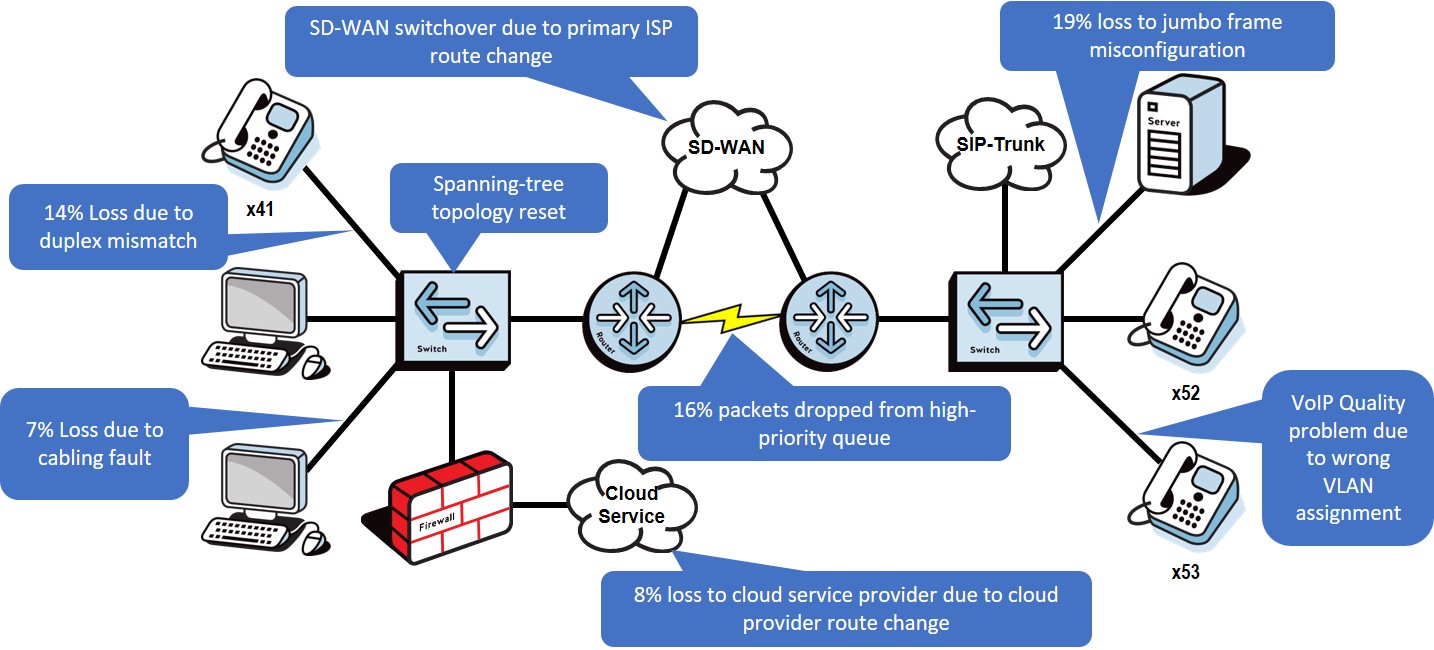
In general, troubleshooting is the identification or diagnosis of “trouble” in the management flow of a system caused by a failure of some kind. The problem is initially described as symptoms of malfunction, and troubleshooting is the process of determining and remedying the causes of these symptoms.
A system can be described in terms of its expected, desired or intended behavior (usually, for artificial systems, its purpose). Events or inputs to the system are expected to generate specific results or outputs. (For example, selecting the “print” option from various computer applications is intended to result in a hard copy emerging from some specific device). Any unexpected or undesirable behavior is a symptom. Troubleshooting is the process of isolating the specific cause or causes of the symptom. Frequently the symptom is a failure of the product or process to produce any results. (Nothing was printed, for example). Corrective action can then be taken to prevent further failures of a similar kind.
The methods of forensic engineering are useful in tracing problems in products or processes, and a wide range of analytical techniques are available to determine the cause or causes of specific failures. Corrective action can then be taken to prevent further failure of a similar kind. Preventive action is possible using failure mode and effects (FMEA) and fault tree analysis (FTA) before full-scale production, and these methods can also be used for failure analysis.
Usually troubleshooting is applied to something that has suddenly stopped working, since its previously working state forms the expectations about its continued behavior. So the initial focus is often on recent changes to the system or to the environment in which it exists. (For example, a printer that “was working when it was plugged in over there”). However, there is a well known principle that correlation does not imply causality. (For example, the failure of a device shortly after it has been plugged into a different outlet doesn’t necessarily mean that the events were related. The failure could have been a matter of coincidence.) Therefore, troubleshooting demands critical thinking rather than magical thinking.
It is useful to consider the common experiences we have with light bulbs. Light bulbs “burn out” more or less at random; eventually the repeated heating and cooling of its filament, and fluctuations in the power supplied to it cause the filament to crack or vaporize. The same principle applies to most other electronic devices and similar principles apply to mechanical devices. Some failures are part of the normal wear-and-tear of components in a system.
The first basic principle in troubleshooting is to be able to reproduce the problem, at wish. Second basic principle in troubleshooting is to reduce the “system” to its simplest form that still show the problem. Third basic principle in troubleshooting is to “know what you are looking for. In other words, to fully understand the way the system is supposed to work, so you can “spot” the error when it happens.
A troubleshooter could check each component in a system one by one, substituting known good components for each potentially suspect one. However, this process of “serial substitution” can be considered degenerate when components are substituted without regard to a hypothesis concerning how their failure could result in the symptoms being diagnosed.
Simple and intermediate systems are characterized by lists or trees of dependencies among their components or subsystems. More complex systems contain cyclical dependencies or interactions (feedback loops). Such systems are less amenable to “bisection” troubleshooting techniques.
It also helps to start from a known good state, the best example being a computer reboot. A cognitive walk through is also a good thing to try. Comprehensive documentation produced by proficient technical writers is very helpful, especially if it provides a theory of operation for the subject device or system.
A common cause of problems is bad design, for example bad human factors design, where a device could be inserted backward or upside down due to the lack of an appropriate forcing function (behavior-shaping constraint), or a lack of error-tolerant design. This is especially bad if accompanied by habituation, where the user just doesn’t notice the incorrect usage, for instance if two parts have different functions but share a common case so that it is not apparent on a casual inspection which part is being used.
Troubleshooting can also take the form of a systematic checklist, troubleshooting procedure, flowchart or table that is made before a problem occurs. Developing troubleshooting procedures in advance allows sufficient thought about the steps to take in troubleshooting and organizing the troubleshooting into the most efficient troubleshooting process. Troubleshooting tables can be computerized to make them more efficient for users.
Some computerized troubleshooting services (such as Primefax, later renamed MaxServ), immediately show the top 10 solutions with the highest probability of fixing the underlying problem. The technician can either answer additional questions to advance through the troubleshooting procedure, each step narrowing the list of solutions, or immediately implement the solution he feels will fix the problem. These services give a rebate if the technician takes an additional step after the problem is solved: report back the solution that actually fixed the problem. The computer uses these reports to update its estimates of which solutions have the highest probability of fixing that particular set of symptoms.