

White Paper on Preventive Maintenance & Anti-Virus
COURTESY :- vrindawan.in
Wikipedia
Predictive maintenance techniques are designed to help determine the condition of in-service equipment in order to estimate when maintenance should be performed. This approach promises cost savings over routine or time-based preventive maintenance, because tasks are performed only when warranted. Thus, it is regarded as condition-based maintenance carried out as suggested by estimations of the degradation state of an item.
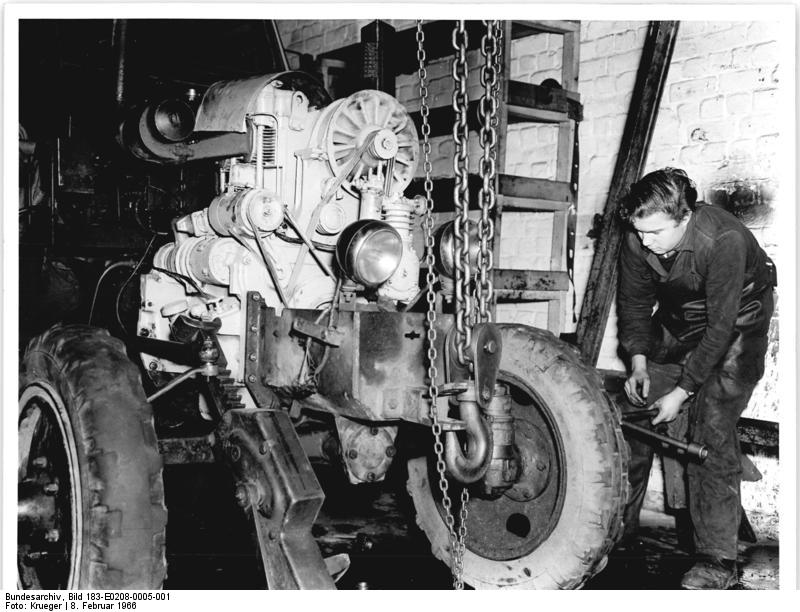
The main promise of predictive maintenance is to allow convenient scheduling of corrective maintenance, and to prevent unexpected equipment failures. The key is “the right infor equipment lifetime, increased plant safety, fewer accidents with negative impact on environment, and optimized spare parts handling.
Predictive maintenance differs from preventive maintenance because it relies on the actual condition of equipment, rather than average or expected life statistics, to predict when maintenance will be required. Typically, Machine Learning approaches are adopted for the definition of the actual condition of the system and for forecasting its future states.
Some of the main components that are necessary for implementing predictive maintenance are data collection and preprocessing, early fault detection, fault detection, time to failure prediction, maintenance scheduling and resource optimization. Predictive maintenance has also been considered to be one of the driving forces for improving productivity and one of the ways to achieve “just-in-time” in manufacturing.
Predictive maintenance evaluates the condition of equipment by performing periodic (offline) or continuous (online) equipment condition monitoring. The ultimate goal of the approach is to perform maintenance at a scheduled point in time when the maintenance activity is most cost-effective and before the equipment loses performance within a threshold. This results in a reduction in unplanned downtime costs because of failure, where costs can be in the hundreds of thousands per day depending on industry. In energy production, in addition to loss of revenue and component costs, fines can be levied for non-delivery, increasing costs even further. This is in contrast to time- and/or operation count-based maintenance, where a piece of equipment gets maintained whether it needs it or not. Time-based maintenance is labor intensive, ineffective in identifying problems that develop between scheduled inspections, and therefore is not cost-effective.
The “predictive” component of predictive maintenance stems from the goal of predicting the future trend of the equipment’s condition. This approach uses principles of statistical process control to determine at what point in the future maintenance activities will be appropriate.
Most predictive inspections are performed while equipment is in service, thereby minimizing disruption of normal system operations. Adoption of predictive maintenance can result in substantial cost savings and higher system reliability.
Reliability-centered maintenance emphasizes the use of predictive maintenance techniques in addition to traditional preventive measures. When properly implemented, it provides companies with a tool for achieving lowest asset net present costs for a given level of performance and risk.
One goal is to transfer the predictive maintenance data to a computerized maintenance management system so that the equipment condition data is sent to the right equipment object to trigger maintenance planning, work order execution, and reporting. Unless this is achieved, the predictive maintenance solution is of limited value, at least if the solution is implemented on a medium to large size plant with tens of thousands pieces of equipment. In 2010, the mining company Boliden, implemented a combined Distributed Control System and predictive maintenance solution integrated with the plant computerized maintenance management system on an object to object level, transferring equipment data using protocols like Highway Addressable Remote Transducer Protocol, IEC61850 and OLE for process control.
Antivirus software (abbreviated to AV software), also known as anti-malware, is a computer program used to prevent, detect, and remove malware.
Antivirus software was originally developed to detect and remove computer viruses, hence the name. However, with the proliferation of other malware, antivirus software started to protect from other computer threats. In particular, modern antivirus software can protect users from malicious browser helper objects (BHOs), browser hijackers, ransomware, key loggers, back doors, rootkits, trojan horses, worms, malicious LSPs, dialers, fraud tools, adware, and spyware. Some products also include protection from other computer threats, such as infected and malicious URLs, spam, scam and phishing attacks, online identity (privacy), online banking attacks, social engineering techniques, advanced persistent threat (APT), and botnet DDoS attacks.

Although the roots of the computer virus date back as early as 1949, when the Hungarian scientist John von Neumann published the “Theory of self-reproducing auto mata”, the first known computer virus appeared in 1971 and was dubbed the “Creeper virus”. This computer virus infected Digital Equipment Corporation’s (DEC) PDP-10 mainframe computers running the TENEX operating system.
The Creeper virus was eventually deleted by a program created by Ray Tomlinson and known as “The Reaper”. Some people consider “The Reaper” the first antivirus software ever written – it may be the case, but it is important to note that the Reaper was actually a virus itself specifically designed to remove the Creeper virus.
The Creeper virus was followed by several other viruses. The first known that appeared “in the wild” was “Elk Cloner”, in 1981, which infected Apple II computers.
In 1983, the term “computer virus” was coined by Fred Cohen in one of the first ever published academic papers on computer viruses. Cohen used the term “computer virus” to describe programs that: “affect other computer programs by modifying them in such a way as to include a (possibly evolved) copy of itself.” (note that a more recent definition of computer virus has been given by the Hungarian security researcher Péter Szőr: “a code that recursively replicates a possibly evolved copy of itself”).
The first IBM PC compatible “in the wild” computer virus, and one of the first real widespread infections, was “Brain” in 1986. From then, the number of viruses has grown exponentially. Most of the computer viruses written in the early and mid-1980s were limited to self-reproduction and had no specific damage routine built into the code. That changed when more and more programmers became acquainted with computer virus programming and created viruses that manipulated or even destroyed data on infected computers.
Before internet connectivity was widespread, computer viruses were typically spread by infected floppy disks. Antivirus software came into use, but was updated relatively infrequently. During this time, virus checkers essentially had to check executable files and the boot sectors of floppy disks and hard disks. However, as internet usage became common, viruses began to spread online.
There are competing claims for the innovator of the first antivirus product. Possibly, the first publicly documented removal of an “in the wild” computer virus (i.e. the “Vienna virus”) was performed by Bernd Fix in 1987.
In 1987, Andreas Lüning and Kai Figge, who founded G Data Software in 1985, released their first antivirus product for the Atari ST platform. In 1987, the Ultimate Virus Killer (UVK) was also released. This was the de facto industry standard virus killer for the Atari ST and Atari Falcon, the last version of which (version 9.0) was released in April 2004. In 1987, in the United States, John McAfee founded the McAfee company (was part of Intel Security) and, at the end of that year, he released the first version of Virus Scan. Also in 1987 (in Czechoslovakia), Peter Paško, Rudolf Hrubý, and Miro slav Trnka created the first version of NOD antivirus.
In 1987, Fred Cohen wrote that there is no algorithm that can perfectly detect all possible computer viruses.
Finally, at the end of 1987, the first two heuristic antivirus utilities were released: Flushot Plus by Ross Greenberg and Anti4us by Erwin Lanting. In his O’Reilly book, Malicious Mobile Code: Virus Protection for Windows, Roger Grimes described Flushot Plus as “the first holistic program to fight malicious mobile code (MMC).”
However, the kind of heuristic used by early AV engines was totally different from those used today. The first product with a heuristic engine resembling modern ones was F-PROT in 1991. Early heuristic engines were based on dividing the binary into different sections: data section, code section (in a legitimate binary, it usually starts always from the same location). Indeed, the initial viruses re-organized the layout of the sections, or overrode the initial portion of a section in order to jump to the very end of the file where malicious code was located—only going back to resume execution of the original code. This was a very specific pattern, not used at the time by any legitimate software, which represented an elegant heuristic to catch suspicious code. Other kinds of more advanced heuristics were later added, such as suspicious section names, incorrect header size, regular expressions, and partial pattern in-memory matching.