
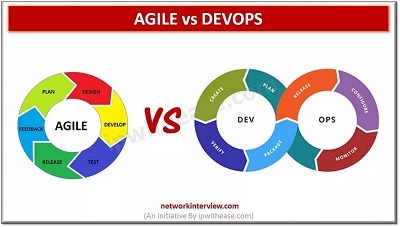
Agile and DevOps are two approaches in software development that aim to improve collaboration, efficiency, and the overall delivery of high-quality software. While they are distinct concepts, they are often used together to create a streamlined and iterative software development and delivery process.
Agile:
Definition: Agile is an iterative and incremental approach to software development that emphasizes flexibility, collaboration, and customer satisfaction. It is based on the Agile Manifesto, which values individuals and interactions, working software, customer collaboration, and responding to change.
Key Principles:
- Customer Collaboration Over Contract Negotiation:
- Agile emphasizes regular and close collaboration with customers to understand their needs and preferences.
- Responding to Change Over Following a Plan:
- Agile embraces change and prioritizes responding to changing requirements even late in the development process.
- Individuals and Interactions Over Processes and Tools:
- People and their interactions are considered more important than strict adherence to processes and tools.
- Working Software Over Comprehensive Documentation:
- The primary measure of progress is the working software, with a focus on delivering functional software at regular intervals.
Methodologies/Frameworks:
- Scrum
- Kanban
- Extreme Programming (XP)
- Lean Software Development
DevOps:
Definition: DevOps is a set of practices that aims to automate and improve the collaboration between software development (Dev) and IT operations (Ops). It seeks to break down silos between development and operations teams, fostering a culture of collaboration, shared responsibilities, and continuous improvement.
Key Principles:
- Collaboration and Communication:
- DevOps emphasizes communication and collaboration between development and operations teams, ensuring a shared understanding of goals and processes.
- Automation:
- Automation of repetitive tasks, such as building, testing, and deployment, is a key principle of DevOps, aiming to increase efficiency and reduce errors.
- Continuous Integration and Continuous Delivery (CI/CD):
- CI/CD practices involve regularly integrating code changes into a shared repository, followed by automated testing and deployment.
- Infrastructure as Code (IaC):
- Treating infrastructure as code allows for the automated provisioning and management of infrastructure resources.
Benefits:
- Faster delivery of software updates and features.
- Improved collaboration between development and operations teams.
- Increased efficiency through automation.
- Enhanced reliability and stability of software applications.
Agile and DevOps Integration:
The integration of Agile and DevOps creates a seamless and efficient end-to-end software development and delivery process. Agile principles guide the development of features, while DevOps practices automate the deployment and operations aspects. This integration enables teams to deliver high-quality software more frequently, respond to customer feedback rapidly, and adapt to changing requirements efficiently.
Key Integration Points:
- Collaborative Planning:
- Agile practices guide the planning and development of features, with a focus on user stories and prioritized backlogs.
- Continuous Integration:
- CI practices ensure that code changes are regularly integrated, tested, and verified.
- Automated Testing:
- Automated testing is a shared responsibility between development and operations teams, ensuring the reliability of software.
- Continuous Deployment:
- CD practices automate the deployment process, allowing for rapid and reliable releases.
- Monitoring and Feedback:
- Continuous monitoring provides feedback on the performance and stability of the application in production, informing further development and operational improvements.
In summary, Agile and DevOps, when integrated effectively, create a collaborative and efficient software development lifecycle, from ideation to delivery and operations. This integration is crucial in today’s fast-paced and dynamic technological landscape
Implementing Agile and DevOps requires a combination of cultural, organizational, and technical changes. Here’s an overview of the key requirements for successful adoption of Agile and DevOps practices:
Agile:
- Organizational Commitment:
- Requirement: Strong commitment from leadership to embrace Agile principles and values.
- Team Collaboration:
- Requirement: Encourage cross-functional teams with members representing different skills, including development, testing, and business analysis.
- Iterative Development:
- Requirement: Adopt an iterative development approach with short, time-boxed iterations or sprints.
- User Involvement:
- Requirement: Regular involvement of end-users or stakeholders in the development process to gather feedback and adjust priorities.
- Backlog Management:
- Requirement: Maintain a prioritized backlog of features or user stories that can be continuously refined.
- Continuous Integration:
- Requirement: Implement continuous integration practices to merge code changes frequently, ensuring early detection of integration issues.
- Automated Testing:
- Requirement: Emphasize automated testing to validate that new features work as intended and to support continuous integration.
- Adaptability to Change:
- Requirement: Foster a culture that embraces change and welcomes adjustments to requirements even late in the development process.
- Daily Standups:
- Requirement: Conduct regular daily stand-up meetings to enhance communication and collaboration within the team.
- Retrospectives:
- Requirement: Regularly conduct retrospectives to reflect on the team’s performance and identify areas for improvement.
DevOps:
- Cultural Shift:
- Requirement: Cultivate a culture of collaboration and shared responsibility between development and operations teams.
- Automation:
- Requirement: Automate repetitive tasks in the development and deployment pipeline, including building, testing, and deployment.
- Continuous Integration/Continuous Deployment (CI/CD):
- Requirement: Establish CI/CD pipelines to enable automated and continuous delivery of software changes to production.
- Infrastructure as Code (IaC):
- Requirement: Treat infrastructure as code, enabling the automation of provisioning and managing infrastructure resources.
- Monitoring and Logging:
- Requirement: Implement robust monitoring and logging solutions to gain insights into application and infrastructure performance.
- Collaborative Tools:
- Requirement: Utilize collaborative tools for communication, version control, issue tracking, and documentation.
- Security Integration:
- Requirement: Integrate security practices into the development and deployment processes to address vulnerabilities early.
- Feedback Loops:
- Requirement: Establish feedback loops across development, operations, and end-users to continuously improve processes.
- Cross-Functional Teams:
- Requirement: Encourage cross-functional teams where members possess a mix of development and operations skills.
- Risk Management:
- Requirement: Implement risk management practices to identify and mitigate potential issues in the deployment pipeline.
Integration of Agile and DevOps:
- Unified Approach:
- Requirement: Ensure alignment between Agile development practices and DevOps operational practices, creating a seamless end-to-end process.
- Communication and Collaboration:
- Requirement: Foster strong communication and collaboration between development and operations teams to address challenges jointly.
- Agile DevOps Tools Integration:
- Requirement: Integrate tools that support both Agile development and DevOps operations, facilitating collaboration and information sharing.
- Continuous Improvement:
- Requirement: Establish a culture of continuous improvement, where teams regularly reflect on their processes and seek opportunities for enhancement.
- Shared Metrics:
- Requirement: Define and track shared metrics that measure the success and efficiency of both Agile and DevOps practices.
- Automated Testing in Deployment:
- Requirement: Extend automated testing practices from development to deployment, ensuring the reliability of the entire pipeline.
- Cross-Functional Training:
- Requirement: Encourage cross-functional training to enhance the skills of team members in both development and operations domains.
Successful implementation of Agile and DevOps requires a holistic approach, involving people, processes, and technology. The organizational culture, leadership support, and a commitment to continuous improvement are critical factors in realizing the benefits of these methodologies.
The successful implementation of Agile and DevOps requires the involvement and collaboration of various stakeholders across the organization. Here are key roles and individuals who are typically required in Agile and DevOps initiatives:
Agile:
- Product Owner:
- Role: Represents the business and defines the product features and priorities. Works closely with the development team to ensure the product meets business goals.
- Scrum Master:
- Role: Facilitates the Scrum process, removes impediments, and ensures that the Scrum team adheres to Agile principles. Acts as a servant-leader for the team.
- Development Team:
- Role: Cross-functional team members responsible for designing, coding, testing, and delivering increments of a product. Collaborates closely with stakeholders and follows Agile practices.
- Stakeholders/Customers:
- Role: Those who have an interest in the product or project. Provide feedback, attend Sprint Reviews, and actively engage with the development team.
- Business Analysts:
- Role: Collaborates with the Product Owner to define and prioritize user stories, ensuring that they align with business objectives.
- Quality Assurance/Testers:
- Role: Responsible for ensuring the quality of the product through testing. Involved in the development process from the beginning to catch defects early.
DevOps:
- DevOps Engineers:
- Role: Individuals responsible for bridging the gap between development and operations. Focus on automating processes, building CI/CD pipelines, and ensuring smooth deployments.
- System Administrators/Operations:
- Role: Manage and maintain the infrastructure and ensure that applications run smoothly in production. Collaborate with DevOps engineers for automation.
- Release Managers:
- Role: Oversee the planning, scheduling, and controlling of software releases. Work with development and operations teams to ensure a smooth release process.
- Security Professionals:
- Role: Integrate security practices into the DevOps pipeline, focusing on identifying and addressing security vulnerabilities early in the development process.
- Database Administrators (DBAs):
- Role: Manage and maintain databases, ensuring optimal performance and reliability. Collaborate with DevOps for database automation.
- Network Engineers:
- Role: Responsible for designing and managing the network infrastructure. Collaborate with DevOps for networking automation and infrastructure as code.
- IT Managers/Directors:
- Role: Provide leadership and support for the adoption of DevOps practices. Ensure that organizational goals align with DevOps principles.
Cross-Functional Collaboration:
- Agile Coaches:
- Role: Provide guidance and coaching to teams transitioning to Agile. Facilitate Agile ceremonies and promote Agile principles.
- Scrum of Scrums:
- Role: In larger organizations, representatives from individual Scrum teams meet to discuss cross-team coordination and dependencies.
- Enterprise Architects:
- Role: Provide architectural guidance for large-scale applications and systems. Collaborate with development teams to ensure architectural integrity.
- Product Managers:
- Role: Define product strategy, roadmap, and features. Collaborate with Agile teams to ensure that development aligns with product goals.
Overall Leadership and Support:
- C-Level Executives (CEO, CTO, CIO):
- Role: Provide executive support for Agile and DevOps initiatives. Align organizational goals with Agile and DevOps principles.
- Project Managers:
- Role: Adapt their roles to support Agile practices, providing support for Scrum Masters and Product Owners.
- Human Resources:
- Role: Support Agile teams by adapting HR practices to align with Agile principles, such as performance reviews and career development.
- Finance:
- Role: Align financial processes with Agile, ensuring budgeting and financial reporting support Agile practices.
Continuous Improvement:
- Continuous Improvement Teams:
- Role: Formed to identify areas of improvement in Agile and DevOps practices. Implement changes and optimize processes continuously.
- Learning and Development:
- Role: Provide training programs for teams and individuals to acquire the necessary skills for Agile and DevOps practices.
In summary, the successful implementation of Agile and DevOps is a collaborative effort involving various stakeholders, including product owners, Scrum masters, development teams, operations teams, security professionals, and leadership across different levels of the organization. Continuous collaboration, communication, and a cultural shift towards agility and efficiency are crucial for success.
Agile and DevOps methodologies are typically required in scenarios where organizations aim to enhance their software development and delivery processes to meet the demands of a rapidly changing business landscape. Here are common situations where the adoption of Agile and DevOps is beneficial:
Agile:
- Dynamic Business Requirements:
- Scenario: When business requirements are subject to frequent changes, Agile provides a flexible framework that allows teams to adapt and respond quickly to evolving needs.
- Customer-Centric Development:
- Scenario: When the focus is on delivering value to customers and receiving continuous feedback, Agile’s iterative and incremental approach ensures customer satisfaction.
- Complex Projects:
- Scenario: For complex projects where the entire scope is not fully understood upfront, Agile allows for breaking down the project into manageable iterations with feedback loops.
- Cross-Functional Collaboration:
- Scenario: In environments where collaboration between different functional teams (development, testing, business analysis) is crucial, Agile principles promote close cooperation and communication.
- Faster Time-to-Market:
- Scenario: When there is a need to bring products or features to market quickly, Agile’s incremental delivery approach allows for earlier releases and faster time-to-market.
- Innovation and Creativity:
- Scenario: In situations where fostering innovation and creativity is essential, Agile principles encourage experimentation, learning, and continuous improvement.
DevOps:
- Frequent and Reliable Releases:
- Scenario: In environments where there is a requirement for frequent and reliable software releases, DevOps practices streamline the deployment pipeline, reducing manual interventions.
- Automation Potential:
- Scenario: When there is a need to automate repetitive and time-consuming tasks such as code integration, testing, and deployment, DevOps practices provide automation solutions.
- Cross-Functional Collaboration:
- Scenario: In organizations where breaking down silos between development and operations is crucial, DevOps fosters collaboration and shared responsibility.
- Infrastructure Scalability:
- Scenario: In situations where there is a need to scale infrastructure up or down rapidly based on demand, DevOps practices, including Infrastructure as Code (IaC), support scalability.
- Reducing Time-to-Recovery:
- Scenario: In environments where minimizing downtime and quickly recovering from failures are critical, DevOps practices improve incident response and recovery times.
- Continuous Monitoring and Feedback:
- Scenario: When there is a focus on continuous monitoring of applications and infrastructure for performance and security, DevOps practices facilitate feedback loops for improvement.
Agile and DevOps Together:
- End-to-End Software Delivery:
- Scenario: In organizations seeking a holistic approach to software development, Agile and DevOps together create an end-to-end process—from ideation and development to deployment and operations.
- Cultural Transformation:
- Scenario: When there is a need for a cultural shift towards collaboration, transparency, and continuous improvement, the combined adoption of Agile and DevOps supports a cultural transformation.
- Improved Customer Satisfaction:
- Scenario: In situations where customer satisfaction is a priority, Agile focuses on delivering value, while DevOps ensures the reliability and rapid delivery of software.
- Competitive Edge:
- Scenario: In competitive markets, organizations adopting both Agile and DevOps gain a competitive edge by delivering high-quality software faster and more reliably than their peers.
- Digital Transformation:
- Scenario: In the context of digital transformation initiatives, where organizations aim to become more agile, responsive, and technology-driven, the combined adoption of Agile and DevOps aligns with these goals.
In summary, Agile and DevOps are required when organizations seek agility, faster delivery, and improved collaboration to address dynamic business needs, changing customer expectations, and the complexities of modern software development and operations. The decision to adopt these methodologies depends on the specific challenges and goals of the organization
Agile and DevOps are beneficial in various industries and contexts where there is a need for improved software development and delivery practices. Here are some scenarios and industries where the adoption of Agile and DevOps is particularly advantageous:
Agile:
- Software Development and IT:
- Scenario: Agile methodologies are widely used in traditional software development and IT organizations. They are effective in managing projects with evolving requirements and ensuring customer satisfaction through iterative development.
- Product Development:
- Scenario: Organizations developing new products or features benefit from Agile, as it allows for quick iterations, frequent feedback, and the ability to adapt to changing market demands.
- Digital Marketing:
- Scenario: Agile practices can be applied in digital marketing to manage campaigns, content creation, and website development, providing flexibility and responsiveness to market trends.
- E-Learning and Training:
- Scenario: In the development of e-learning courses and training materials, Agile allows for iterative development, incorporating feedback from learners and trainers.
- Research and Development:
- Scenario: Agile principles can be applied in R&D projects, where requirements may evolve based on research findings. It provides a flexible framework for adapting to emerging insights.
- Non-Profit and Government Projects:
- Scenario: Agile methodologies are effective in non-profit and government sectors where project requirements may change, and stakeholders require transparency and collaboration.
DevOps:
- IT Operations:
- Scenario: DevOps practices are crucial in IT operations for automating infrastructure provisioning, managing configurations, and ensuring the reliability and scalability of systems.
- E-commerce and Online Retail:
- Scenario: In the e-commerce industry, where online platforms require continuous availability and rapid updates, DevOps practices support efficient and reliable deployments.
- Finance and Banking:
- Scenario: DevOps is essential in the finance sector for automating transaction processing, ensuring security, and maintaining high availability of banking systems.
- Healthcare IT:
- Scenario: DevOps is valuable in healthcare IT for managing electronic health records, ensuring data security, and facilitating the rapid deployment of healthcare applications.
- Telecommunications:
- Scenario: In the telecommunications industry, DevOps practices support the management of complex network infrastructure, ensuring efficient operations and quick response to issues.
- Gaming Industry:
- Scenario: DevOps is widely used in the gaming industry for continuous integration, rapid deployment of game updates, and ensuring a seamless gaming experience.
Agile and DevOps Together:
- Startups and Innovation Hubs:
- Scenario: Agile and DevOps practices are common in startup environments and innovation hubs, where speed, flexibility, and rapid adaptation are essential for success.
- Digital Transformation Initiatives:
- Scenario: Organizations undergoing digital transformation benefit from the combined adoption of Agile and DevOps, ensuring agility in software development and efficient operations.
- Cloud Computing Environments:
- Scenario: In cloud-based environments, Agile and DevOps practices support the dynamic scaling of infrastructure and efficient management of cloud resources.
- Cross-Functional Collaboration Projects:
- Scenario: Projects that require collaboration between development, operations, security, and other cross-functional teams benefit from the integrated practices of Agile and DevOps.
- Customer-Facing Web and Mobile Applications:
- Scenario: Agile and DevOps are essential for organizations delivering customer-facing applications, ensuring quick feature releases, reliability, and a positive user experience.
- Large Enterprise IT:
- Scenario: Agile and DevOps principles are applicable in large enterprises, promoting collaboration, efficiency, and faster time-to-market for software products and services.
In summary, Agile and DevOps practices are applicable across various industries and contexts where there is a need for agility, collaboration, and efficient software development and operations. The specific application depends on the nature of the projects, organizational goals, and the industry’s unique requirements.
Implementing Agile and DevOps involves a combination of cultural, organizational, and technical changes. Here’s how the adoption of Agile and DevOps is typically approached:
Implementing Agile:
- Educate Teams:
- How: Provide training and workshops to teams on Agile principles and practices. Ensure that team members understand the values of collaboration, flexibility, and customer focus.
- Form Cross-Functional Teams:
- How: Organize teams that consist of cross-functional members, including developers, testers, business analysts, and other necessary roles. Encourage shared responsibility.
- Adopt an Agile Framework:
- How: Choose an Agile framework that suits the organization’s needs, such as Scrum, Kanban, or a hybrid approach. Define roles, ceremonies, and artifacts accordingly.
- Create a Product Backlog:
- How: Establish a product backlog that represents the prioritized list of features, enhancements, and fixes. Collaborate with stakeholders to define and refine backlog items.
- Implement Iterative Development:
- How: Break down projects into iterations (Sprints) with a defined duration. Deliver increments of the product at the end of each iteration, incorporating feedback for continuous improvement.
- Facilitate Regular Feedback:
- How: Conduct regular Sprint Reviews and Retrospectives to gather feedback from stakeholders and the team. Use this feedback to make adjustments to future iterations.
- Emphasize Continuous Learning:
- How: Foster a culture of continuous learning and improvement. Encourage teams to reflect on their processes, discuss challenges openly, and experiment with new practices.
Implementing DevOps:
- Cultural Transformation:
- How: Foster a cultural shift that emphasizes collaboration, shared responsibility, and a focus on end-to-end delivery. Break down silos between development and operations teams.
- Automate Everything:
- How: Identify repetitive, manual tasks in the development and operations lifecycle and automate them. This includes code integration, testing, deployment, and infrastructure provisioning.
- Implement Continuous Integration/Continuous Deployment (CI/CD):
- How: Establish CI/CD pipelines to automate the building, testing, and deployment of software changes. Aim for a continuous and reliable delivery process.
- Infrastructure as Code (IaC):
- How: Treat infrastructure as code by using IaC tools to automate the provisioning and configuration of infrastructure resources. This ensures consistency and scalability.
- Implement Monitoring and Logging:
- How: Integrate robust monitoring and logging solutions to track application and infrastructure performance. Use this data to identify issues early and improve system reliability.
- Security Integration:
- How: Embed security practices throughout the development and deployment process. Conduct regular security assessments and integrate security tools into the CI/CD pipeline.
- Collaborative Tools:
- How: Utilize collaborative tools for version control, issue tracking, and communication. Foster transparency and information sharing among development and operations teams.
- Cross-Functional Collaboration:
- How: Encourage cross-functional collaboration by ensuring that development, operations, and other relevant teams work together from the early stages of a project.
Integration of Agile and DevOps:
- Unified Approach:
- How: Ensure alignment between Agile development practices and DevOps operational practices. Create a seamless end-to-end process from development to deployment.
- Agile DevOps Tools Integration:
- How: Integrate tools that support both Agile and DevOps practices, facilitating collaboration and information sharing between development and operations teams.
- Cross-Functional Training:
- How: Provide training programs that enhance the skills of team members in both development and operations domains. Encourage a cross-functional skill set.
- Shared Metrics:
- How: Define and track shared metrics that measure the success and efficiency of both Agile and DevOps practices. Use these metrics for continuous improvement.
- Continuous Improvement:
- How: Establish a culture of continuous improvement where teams regularly reflect on their processes and seek opportunities for enhancement. Encourage experimentation.
In summary, the successful implementation of Agile and DevOps involves a cultural shift, process adjustments, and the adoption of relevant tools and practices. Organizations need to emphasize collaboration, automation, and a commitment to continuous improvement to realize the full benefits of Agile and DevOps
Case Study: Transformation to Agile and DevOps in a Financial Services Company
Background: A large financial services company, XYZ Financial, faced challenges in adapting to rapidly changing customer needs, long release cycles, and operational inefficiencies. To address these issues, they embarked on a comprehensive transformation journey to adopt Agile and DevOps practices.
Challenges:
- Slow Time-to-Market:
- XYZ Financial struggled with slow time-to-market for new features and updates, hindering their ability to respond quickly to changing market demands.
- Lack of Collaboration:
- Silos between development and operations teams led to communication gaps, resulting in delays and increased error rates during deployments.
- Manual Processes:
- Manual and error-prone processes for code integration, testing, and deployment were causing bottlenecks and hindering overall efficiency.
- Resistance to Change:
- There was resistance to change within the organization due to a traditional project management mindset and a lack of experience with Agile and DevOps practices.
Transformation Initiatives:
- Agile Adoption:
- Approach: XYZ Financial started by implementing Scrum as the Agile framework. Cross-functional teams were formed, consisting of developers, testers, business analysts, and other necessary roles.
- Results: The adoption of Scrum facilitated better collaboration, shorter development cycles, and regular feedback from stakeholders, enabling the team to prioritize and adapt to changing requirements.
- DevOps Implementation:
- Approach: DevOps practices were introduced to automate manual processes, including code integration, testing, and deployment. CI/CD pipelines were established to achieve continuous integration and delivery.
- Results: Automation reduced deployment times significantly, decreased error rates, and improved overall system reliability. The integration of security practices into the DevOps pipeline enhanced the organization’s security posture.
- Cultural Transformation:
- Approach: XYZ Financial invested in cultural transformation initiatives, conducting training programs, workshops, and team-building activities to foster a collaborative and innovation-driven culture.
- Results: The cultural shift led to improved communication, shared responsibility, and a greater emphasis on continuous learning. Teams became more adaptive and resilient to change.
- Infrastructure as Code (IaC):
- Approach: Infrastructure as Code (IaC) principles were introduced to automate infrastructure provisioning and management. Cloud services were leveraged to scale resources dynamically.
- Results: IaC improved consistency and scalability, allowing for more efficient management of infrastructure resources. Cloud services provided flexibility and cost optimization.
- Metrics and Monitoring:
- Approach: Shared metrics were defined to measure the success of Agile and DevOps practices. Monitoring and logging solutions were implemented to track application and infrastructure performance.
- Results: The organization gained insights into the performance of development and operational processes. Metrics provided valuable feedback for continuous improvement initiatives.
Outcomes:
- Accelerated Time-to-Market:
- The adoption of Agile and DevOps practices significantly reduced the time-to-market for new features and updates. The organization became more responsive to customer needs.
- Improved Collaboration:
- Collaboration between development and operations teams improved, leading to smoother deployments, reduced downtime, and increased overall efficiency.
- Automated and Reliable Processes:
- Automation of manual processes, coupled with CI/CD pipelines, resulted in more reliable and error-free deployments. The organization experienced a decrease in post-deployment issues.
- Cultural Shift and Employee Engagement:
- The cultural transformation initiatives increased employee engagement, creativity, and collaboration. Teams were more empowered to take ownership of their work.
- Cost Optimization:
- Leveraging cloud services and implementing cost optimization strategies resulted in more efficient use of resources, contributing to overall cost savings.
Key Learnings:
- Continuous Learning and Adaptation:
- Emphasizing a culture of continuous learning and adaptation was crucial for the success of the transformation. Teams that embraced change and experimentation saw the most significant improvements.
- Cross-Functional Collaboration:
- Breaking down silos between development, operations, and other functional areas was essential for achieving seamless end-to-end delivery. Cross-functional collaboration led to holistic improvements.
- Leadership Support:
- Strong leadership support and commitment to the cultural shift were instrumental in overcoming resistance to change. Leaders actively participated in transformation initiatives and provided direction.
- Metrics-Driven Improvement:
- Defining and tracking shared metrics allowed the organization to objectively measure the success of Agile and DevOps practices. Metrics provided valuable insights for continuous improvement efforts.
- Security Integration:
- Integrating security practices into the DevOps pipeline early in the transformation process ensured that security considerations were addressed proactively, enhancing the organization’s overall security posture.
In conclusion, the transformation to Agile and DevOps at XYZ Financial resulted in a more agile, collaborative, and efficient organization. The case study illustrates that successful adoption of Agile and DevOps requires a holistic approach, including cultural transformation, process automation, and a commitment to continuous improvement.
White Paper on Agile and DevOps
White Paper: Accelerating Software Delivery through Agile and DevOps Practices
Abstract: This white paper explores the synergies between Agile and DevOps methodologies, showcasing how organizations can achieve faster and more reliable software delivery by integrating these practices. It delves into the principles, benefits, and implementation strategies for Agile and DevOps, highlighting real-world case studies and industry best practices.
Table of Contents:
- Introduction
- 1.1 Background and Rationale
- 1.2 Objectives of the White Paper
- Understanding Agile Methodologies
- 2.1 Agile Principles and Values
- 2.2 Agile Frameworks (Scrum, Kanban, XP)
- 2.3 Benefits of Agile in Software Development
- Key Components of DevOps
- 3.1 DevOps Culture and Collaboration
- 3.2 Automation in DevOps
- 3.3 Continuous Integration and Continuous Deployment (CI/CD)
- 3.4 Infrastructure as Code (IaC)
- 3.5 Monitoring, Logging, and Feedback Loops
- 3.6 Security in DevOps
- The Agile DevOps Connection
- 4.1 Aligning Agile and DevOps Objectives
- 4.2 Overcoming Silos and Enhancing Collaboration
- 4.3 Integrating Agile and DevOps Tools
- 4.4 Shared Metrics for Success
- Benefits of Integrated Agile and DevOps Practices
- 5.1 Faster Time-to-Market
- 5.2 Improved Collaboration and Communication
- 5.3 Higher Quality Software
- 5.4 Enhanced Security and Compliance
- 5.5 Efficient Resource Utilization
- 5.6 Customer Satisfaction
- Implementation Strategies
- 6.1 Creating a Culture of Continuous Improvement
- 6.2 Training and Skill Development
- 6.3 Leadership Support and Change Management
- 6.4 Case Studies: Successful Agile and DevOps Implementations
- Challenges and Mitigation Strategies
- 7.1 Cultural Resistance and Change Management
- 7.2 Integration Complexity
- 7.3 Security Concerns
- 7.4 Scaling Agile and DevOps for Large Organizations
- Future Trends in Agile and DevOps
- 8.1 Emerging Technologies and Their Impact
- 8.2 Evolution of Agile and DevOps Practices
- Conclusion
- 9.1 Key Takeaways
- 9.2 Recommendations for Organizations
Appendices:
- Appendix A: Glossary of Agile and DevOps Terms
- Appendix B: Recommended Reading and Resources
- Appendix C: Checklist for Agile and DevOps Adoption
Acknowledgments: The authors would like to express their gratitude to the individuals and organizations that contributed insights, case studies, and expertise to the development of this white paper.