
Basics of computer networks
Computer networks are essential for connecting devices and facilitating communication and data sharing between them. They enable the exchange of information and resources, such as files, printers, and internet access. Here are some basics of computer networks:
- Network Components: Computer networks consist of various hardware and software components. The key components include:
- Devices: Computers, laptops, servers, routers, switches, modems, and other devices that connect to the network.
- Cables and Connectors: Ethernet cables (e.g., Cat5 e or Cat 6) or fiber optic cables that physically connect devices.
- Network Interface Cards (NIC s): Hardware adapters that allow devices to connect to the network.
- Network Protocols: Set of rules governing how devices communicate and exchange data.
- Network Software: Operating systems, network drivers, and applications that enable network functionality.
- Network Topo logies: Network topology refers to the physical or logical layout of devices in a network. Common topo logies include:
- Bus Topology: All devices are connected to a central cable (the bus).
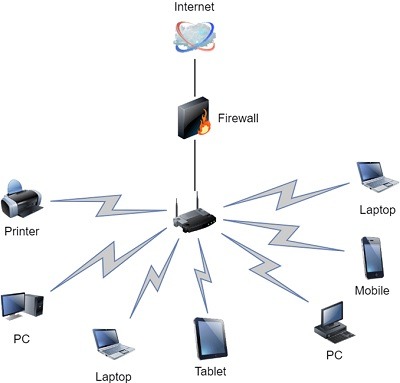
- Star Topology: All devices connect to a central hub or switch.
- Ring Topology: Devices form a closed loop, with each device connecting to the adjacent devices.
- Mesh Topology: Devices are interconnected with multiple redundant paths.
- Network Protocols: Protocols define the rules and conventions for communication within a network. They ensure that devices can understand each other and exchange data effectively. Some important network protocols include:
- Transmission Control Protocol (TCP) and Internet Protocol (IP): Core protocols of the internet, where TC P provides reliable, connection-oriented communication, and IP handles addressing and routing.
- Hypertext Transfer Protocol (HTTP): Protocol for transmitting web pages and other resources over the internet.
- File Transfer Protocol (FTP): Protocol for transferring files between computers.
- Simple Mail Transfer Protocol (SMT P): Protocol for sending and receiving email.
- Domain Name System (DN S): Resolves human-readable domain names to IP addresses.
- Network Models: Network models provide a conceptual framework for understanding and designing computer networks. The two most widely used models are:
- Open Systems Interconnection (OS I) Model: It divides network communication into seven layers, each with specific functions (e.g., physical, data link, network, transport, session, presentation, and application layers).
- Transmission Control Protocol/Internet Protocol (TC P/IP) Model: A four-layer model that encompasses the link, internet, transport, and application layers. It is widely used on the internet.
- Network Security: Network security aims to protect networks and the data they transmit from unauthorized access, attacks, and data breaches. It involves measures such as:
- Firewalls: Security devices that monitor and control network traffic.
- Encryption: Converting data into an unreadable format to prevent unauthorized access.
- Virtual Private Networks (VP N s): Securely extend private networks over public networks (e.g., the internet).
- Intrusion Detection Systems (IDS) and Intrusion Prevention Systems (IPS): Monitor network traffic for suspicious activity and take appropriate actions.
These basics provide a foundation for understanding computer networks, and there is much more to explore in terms of network design, protocols, technologies, and network administration.
What is required Basis of computer networks
To establish and maintain a computer network, several fundamental requirements must be met. Here are the key basis or prerequisites for computer networks:
- Hardware Components:
- Computers or devices: Each device participating in the network, such as desktop computers, laptops, servers, routers, switches, or wireless access points, must be present.
- Network Interface Cards (NIC s): Each device needs a NI C, either built-in or external, to connect to the network. NIC s facilitate the transmission and reception of data over the network.
- Transmission Media:
- Cables: Ethernet cables (e.g., Cat 5 e, Cat 6) are commonly used for wired networks. Fiber optic cables offer higher bandwidth and are used for long-distance and high-speed connections.
- Wireless: Wi-Fi technology allows devices to connect to the network wire lessly, utilizing radio waves for data transmission.
- Network Protocols:
- Protocols are sets of rules and conventions that define how devices communicate and exchange data in a network. Common protocols include TC P/IP (Transmission Control Protocol/Internet Protocol), Ethernet, Wi-Fi (IEEE 802.11), and DN S (Domain Name System).
- Network Addressing:
- Each device on a network requires a unique address to identify and communicate with other devices. IP (Internet Protocol) addresses are used to assign logical addresses to devices. I p v 4 (32-bit addresses) and IP v 6 (128-bit addresses) are the most commonly used addressing schemes.
- Network Services:
- Services and applications enable different functionalities and resource sharing in a network. Examples include file sharing, printing, email, web browsing, and video conferencing. These services often utilize specific protocols to operate.
- Network Security Measures:
- Security is crucial to protect the network and its data from unauthorized access, breaches, or attacks. Measures include firewalls, encryption, authentication mechanisms (e.g., passwords, certificates), and intrusion detection/prevention systems (IDS/IP S).
- Network Administration:
- Proper administration and management are required for network setup, configuration, monitoring, and troubleshooting. Network administrators are responsible for tasks such as IP address assignment, device configuration, access control, and network performance optimization.
- Network Planning and Design:
- Before implementing a network, planning and design are essential. Factors such as network size, scalability, bandwidth requirements, traffic patterns, and future growth must be considered. This includes designing network topo logies, sub netting, and selecting appropriate equipment.
It is important to note that these requirements may vary depending on the specific network type (local area network, wide area network, wireless network, etc.), scale, and intended purpose. Professional expertise and best practices should be employed to ensure a robust and efficient network infrastructure.
Who is required Basics of computer Networks
The knowledge of basics of computer networks is required by various individuals and professionals, including:
- Network Administrators and Engineers: Network administrators and engineers are responsible for the design, implementation, and maintenance of computer networks. They need a solid understanding of network fundamentals to configure network devices, troubleshoot issues, optimize network performance, and ensure reliable network connectivity.
- IT Support and Help Desk Personnel: IT support staff, including help desk personnel, deal with end-user network-related issues. They need to possess basic network knowledge to diagnose and resolve common network connectivity problems, assist with network configurations, and provide guidance on network usage to end-users.
- Network Security Professionals: Network security specialists, analysts, and cyber security professionals require a strong foundation in computer networks to design and implement effective security measures. They need to understand network vulnerabilities, security protocols, encryption, firewalls, and intrusion detection systems to protect networks from unauthorized access, data breaches, and cyber threats.
- System Administrators: System administrators often work closely with network infrastructure as they manage servers, storage systems, and other network-dependent resources. Understanding computer networks helps system administrators effectively configure network settings, ensure connectivity between systems, and troubleshoot network-related issues that affect system performance.
- Software Developers and Programmers: Software developers and programmers who build network-dependent applications, web services, or software solutions must understand the basics of computer networks. They need to incorporate network protocols, APIs, and network communication mechanisms into their code to facilitate data transmission and interaction over networks.
- IT Managers and Decision Makers: IT managers and decision-makers in organizations require a foundational knowledge of computer networks to make informed decisions about network infrastructure, security investments, and technology upgrades. Understanding network basics helps them assess the feasibility of network projects, evaluate network performance, and allocate resources effectively.
- Network Consultants and Engineers: Network consultants and engineers work with organizations to design, optimize, and troubleshoot network infrastructures. They need a deep understanding of computer networks to assess business requirements, propose network architectures, and recommend network solutions that align with organizational goals.
- IT Education and Training Professionals: Instructors, trainers, and educators involved in IT education and training programs require a strong understanding of computer networks to deliver comprehensive and up-to-date curriculum to students pursuing network-related certifications or degrees. They equip students with the foundational knowledge needed to succeed in network-related careers.
- Business Professionals: Even non-technical business professionals benefit from a basic understanding of computer networks. It enables them to effectively communicate with IT teams, understand network-related challenges and opportunities, and make informed decisions regarding network-dependent technologies and solutions.
In summary, a wide range of individuals and professionals in IT and related fields require a solid foundation in computer networks. Whether it’s network administrators, IT support staff, network security professionals, system administrators, software developers, IT managers, network consultants, or business professionals, understanding the basics of computer networks is essential for effective network management, security, troubleshooting, and decision-making.
When is required Basics of Computer Networks
Basics of computer networks are required in various scenarios, including:
- Setting up a New Network:
- When establishing a new network, whether it’s a home network, small office network, or enterprise-level network, understanding the basics is crucial. This includes planning the network layout, selecting appropriate network equipment, configuring network devices, and ensuring connectivity and security.
- Network Administration and Management:
- Network administrators and IT professionals involved in network management need a solid foundation in computer networks. They must understand network protocols, address allocation, troubleshooting techniques, security measures, and performance optimization to effectively manage and maintain the network infrastructure.
- Network Troubleshooting and Problem Resolution:
- When network issues arise, individuals responsible for troubleshooting and resolving problems need a fundamental understanding of computer networks. This includes diagnosing connectivity issues, identifying network bottlenecks, analyzing network traffic, and applying appropriate troubleshooting techniques to resolve problems.
- Network Security and Risk Management:
- In today’s interconnected world, network security is paramount. Professionals involved in network security must possess a strong grasp of network basics to implement effective security measures. This includes securing network devices, configuring firewalls, implementing access controls, and detecting and mitigating network threats.
- Network Expansion and Upgrades:
- As businesses grow or technology advances, network expansion and upgrades become necessary. Understanding the basics of computer networks is vital when expanding an existing network, integrating new technologies, or upgrading network infrastructure to ensure smooth transitions and optimal performance.
- Network Support and Help Desk Roles:
- Individuals in support roles, such as help desk technicians or technical support personnel, need a solid foundation in computer networks to assist end-users with network-related issues. This includes troubleshooting connectivity problems, providing basic network configurations, and offering guidance on network usage.
- Network Design and Consultation:
- Network designers and consultants are responsible for designing network architectures that meet specific requirements and goals. They need a comprehensive understanding of computer networks to design scal able, secure, and efficient network solutions that align with organizational needs.
- IT Education and Training:
- Basics of computer networks are required in IT education and training programs. Students pursuing degrees or certifications in networking, information technology, or computer science must learn the foundational concepts, principles, and protocols that form the basis of computer networks.
In summary, a grasp of the basics of computer networks is required in various scenarios involving network setup, administration, troubleshooting, security, expansion, support, and education. Whether you are a network administrator, IT professional, support technician, or involved in network-related roles, understanding the fundamentals is essential for effective network management and operations.
Where is required Basics of Computer Networks
Basics of computer networks are required in various professional fields and industries where networking plays a significant role. Here are some key areas where a solid understanding of computer networks is necessary:
- Information Technology (IT) Departments:
- IT departments in organizations of all sizes require professionals with a strong foundation in computer networks. Network administrators, system administrators, network engineers, and IT support personnel need to possess knowledge of network basics to effectively manage and maintain the organization’s network infrastructure.
- Networking and Telecommunications Companies:
- Networking and telecommunications companies that provide networking solutions, infrastructure, and services rely on professionals who understand computer networks. Network engineers, technicians, and consultants in these companies require a solid understanding of network basics to design, deploy, and support network solutions for their clients.
- Internet Service Providers (ISP s):
- ISP s are responsible for providing internet connectivity to homes, businesses, and other organizations. Professionals working in ISP s need a strong grasp of computer networks to manage their network infrastructure, troubleshoot connectivity issues, optimize network performance, and ensure reliable internet services.
- Network Security and Cyber security:
- In the realm of cyber security, professionals dealing with network security must have a solid understanding of computer networks. This includes network security specialists, cyber security analysts, and ethical hackers who need to identify vulnerabilities, implement security measures, and protect networks from threats and attacks.
- Cloud Computing and Data Centers:
- Cloud service providers and data centers rely on robust network infrastructure to deliver their services. Professionals working in these environments require a strong foundation in computer networks to design, implement, and manage the networking aspects of cloud platforms and data center operations.
- Software Development and Web Development:
- Software developers and web developers often work with network-related technologies. Understanding computer networks allows them to develop applications, websites, and services that can communicate over networks, integrate with APIs, or utilize network protocols for data transmission.
- Network Consulting and Integration:
- Network consultants and integration specialists work with organizations to design, plan, and implement network solutions tailored to their specific requirements. They need a solid understanding of computer networks to analyze business needs, recommend network architectures, and ensure seamless integration of networking components.
- IT Education and Training Institutions:
- Colleges, universities, and technical institutes offering IT education and training programs include computer networks as a foundational component. Professors, instructors, and trainers teaching networking courses need to possess a thorough understanding of network basics to effectively deliver the curriculum and equip students with essential knowledge and skills.
These are just a few examples of where a solid understanding of computer networks is required. With the increasing reliance on technology and connectivity in various industries, the demand for professionals with network expertise continues to grow.
How is required Basics of computer Networks
The requirement for a strong foundation in computer networks is evident in several ways:
- Network Design and Implementation:
- When designing a network, understanding the basics is crucial. This includes selecting the appropriate network topology, choosing the right network equipment, addressing and sub netting, and configuring network protocols. Without a solid understanding of computer networks, it would be challenging to design an efficient and functional network.
- Network Troubleshooting and Problem Resolution:
- Network issues are inevitable, and professionals need to troubleshoot and resolve them promptly. A strong understanding of computer networks enables network administrators and technicians to identify the root causes of problems, diagnose connectivity issues, analyze network traffic, and apply appropriate troubleshooting techniques to resolve the issues effectively.
- Network Security:
- In an increasingly connected world, network security is of utmost importance. Having a solid grasp of computer networks allows professionals to implement robust security measures. This includes configuring firewalls, setting up secure access controls, implementing encryption protocols, and detecting and mitigating network threats. Without a foundational knowledge of computer networks, it would be challenging to develop and maintain a secure network infrastructure.
- Network Optimization and Performance:
- Efficient network performance is essential for organizations to operate smoothly. Understanding computer networks helps professionals optimize network performance by analyzing network traffic patterns, identifying bottlenecks, and implementing quality of service (Qo S) measures. This knowledge allows them to fine-tune network settings, allocate bandwidth appropriately, and ensure optimal network performance.
- Network Collaboration and Integration:
- Computer networks enable collaboration and integration among various devices, systems, and services. Professionals who understand the basics of computer networks can effectively integrate different technologies, such as cloud computing, Internet of Things (Io T) devices, and unified communications systems, into a network infrastructure. They can also ensure seamless communication and data exchange between different devices and platforms.
- Network Documentation and Documentation:
- Proper documentation is essential for network management and maintenance. Professionals with a solid foundation in computer networks can accurately document network configurations, IP addressing schemes, network diagrams, and troubleshooting procedures. This documentation helps ensure consistency, facilitates troubleshooting, and provides valuable references for future network modifications or upgrades.
- Career Advancement and Specialization:
- In the field of IT, a strong understanding of computer networks opens doors to various career opportunities and specializations. Professionals can specialize in network administration, network engineering, network security, or network consulting. They can pursue certifications such as Cisco Certified Network Associate (CCN A) or Certified Network Security Professional (CNS P), which require a deep understanding of network basics.
In summary, a solid understanding of computer networks is required to design, implement, troubleshoot, secure, optimize, and integrate networks effectively. It enables professionals to ensure network reliability, security, and performance, and opens up numerous career opportunities in the field of networking and IT.
Case study on Basics of computer Networks
Case Study: Small Business Network Setup
Background: ABC Company is a small business specializing in digital marketing services. With a growing team and increasing client demands, they realize the need to establish a reliable and secure computer network. They have limited technical expertise in-house but are eager to understand the basics of computer networks to make informed decisions.
Requirements:
- Network Infrastructure: Design and set up a local area network (LAN) that can connect all computers and devices within the office.
- Internet Connectivity: Establish a reliable and high-speed internet connection for the office.
- Network Security: Implement security measures to protect the network from unauthorized access and potential threats.
- Resource Sharing: Enable file sharing and printer sharing among employees for seamless collaboration.
- Remote Access: Allow employees to securely access the office network from outside locations.
- Scalability: Design the network to accommodate future growth and additional devices.
Solution:
- Network Design:
- Evaluate the office layout and identify the optimal network topology. In this case, a star topology with a central network switch is suitable.
- Determine the network addressing scheme, such as using IPv 4 addresses and sub netting to ensure efficient IP allocation.
- Select and acquire network equipment, including a router, switch, network cables, and wireless access points (if needed).
- Internet Connectivity:
- Research and select an internet service provider (ISP) that offers reliable and high-speed internet connectivity.
- Install the ISP-provided modem/router and configure it to establish the internet connection.
- Network Security:
- Configure the router’s firewall to block unauthorized access and enable secure remote administration.
- Implement Wi-Fi security protocols (e.g., WPA 2/WP A 3) and set a strong password for wireless access points.
- Educate employees about network security best practices, such as using strong passwords, avoiding suspicious links, and practicing safe browsing habits.
- Resource Sharing:
- Set up a file server or network-attached storage (NAS) device to centralize file storage and enable file sharing among employees.
- Connect the printer to the network and configure it to allow printing from any connected device.
- Remote Access:
- Implement a virtual private network (VP N) solution to provide secure remote access to the office network. Configure VP N clients on employee devices and establish VPN policies for secure remote connectivity.
- Scalability:
- Allocate sufficient IP address ranges to accommodate future device additions.
- Use network switches and routers that have additional ports or expansion capabilities to handle increased network traffic.
- Plan for potential future upgrades, such as higher-speed internet connections or additional network security measures.
Outcome: By understanding the basics of computer networks and implementing the above solutions, ABC Company successfully establishes a reliable and secure computer network. Employees can easily collaborate through file sharing and printer sharing, ensuring efficient workflows. The implemented network security measures protect sensitive data and mitigate potential risks. With remote access enabled, employees can work from outside the office securely. The scal able network design allows for future growth and expansion as the company continues to thrive.
Through this case study, ABC Company demonstrates how a small business can leverage the basics of computer networks to establish a functional and secure network infrastructure that meets their specific requirements.
Case Study: Small Business Network Setup
Background: ABC Company is a small business specializing in digital marketing services. With a growing team and increasing client demands, they realize the need to establish a reliable and secure computer network. They have limited technical expertise in-house but are eager to understand the basics of computer networks to make informed decisions.
Requirements:
- Network Infrastructure: Design and set up a local area network (LAN) that can connect all computers and devices within the office.
- Internet Connectivity: Establish a reliable and high-speed internet connection for the office.
- Network Security: Implement security measures to protect the network from unauthorized access and potential threats.
- Resource Sharing: Enable file sharing and printer sharing among employees for seamless collaboration.
- Remote Access: Allow employees to securely access the office network from outside locations.
- Scalability: Design the network to accommodate future growth and additional devices.
Solution:
- Network Design:
- Evaluate the office layout and identify the optimal network topology. In this case, a star topology with a central network switch is suitable.
- Determine the network addressing scheme, such as using IPv 4 addresses and sub netting to ensure efficient IP allocation.
- Select and acquire network equipment, including a router, switch, network cables, and wireless access points (if needed).
- Internet Connectivity:
- Research and select an internet service provider (ISP) that offers reliable and high-speed internet connectivity.
- Install the ISP-provided modem/router and configure it to establish the internet connection.
- Network Security:
- Configure the router’s firewall to block unauthorized access and enable secure remote administration.
- Implement Wi-Fi security protocols (e.g., WPA 2/WPA 3) and set a strong password for wireless access points.
- Educate employees about network security best practices, such as using strong passwords, avoiding suspicious links, and practicing safe browsing habits.
- Resource Sharing:
- Set up a file server or network-attached storage (NAS) device to centralize file storage and enable file sharing among employees.
- Connect the printer to the network and configure it to allow printing from any connected device.
- Remote Access:
- Implement a virtual private network (VP N) solution to provide secure remote access to the office network. Configure VP N clients on employee devices and establish VP N policies for secure remote connectivity.
- Scalability:
- Allocate sufficient IP address ranges to accommodate future device additions.
- Use network switches and routers that have additional ports or expansion capabilities to handle increased network traffic.
- Plan for potential future upgrades, such as higher-speed internet connections or additional network security measures.
Outcome: By understanding the basics of computer networks and implementing the above solutions, ABC Company successfully establishes a reliable and secure computer network. Employees can easily collaborate through file sharing and printer sharing, ensuring efficient workflows. The implemented network security measures protect sensitive data and mitigate potential risks. With remote access enabled, employees can work from outside the office securely. The scal able network design allows for future growth and expansion as the company continues to thrive.
Through this case study, ABC Company demonstrates how a small business can leverage the basics of computer networks to establish a functional and secure network infrastructure that meets their specific requirements.
White paper on Basics of computer Networks
Title: Basics of Computer Networks: A Comprehensive White Paper
Abstract: This white paper provides an in-depth overview of the basics of computer networks. It aims to equip readers with a solid foundation in networking concepts, protocols, and technologies. Starting with an introduction to networks and their importance in today’s digital world, this white paper explores key components of computer networks, network topo logies, network protocols, and network devices. It also covers important topics such as network addressing, sub netting, network security, network troubleshooting, and network performance optimization. By understanding the basics of computer networks, readers will be empowered to design, implement, manage, and secure network infrastructures effectively.
Table of Contents:
- Introduction
- Importance of Computer Networks
- Evolution of Networking Technologies
- Fundamentals of Computer Networks
- Basic Definitions and Concepts
- Types of Networks (LAN, WAN, MAN, PAN, W LAN)
- Network Topo logies (Bus, Star, Ring, Mesh)
- Network Protocols and Communication
- Introduction to Protocols
- TC P/IP Protocol Suite
- OSI Model and Layered Communication
- Common Network Protocols (TC P, UD P, IP, AR P, ICM P)
- Network Devices and Components
- Network Switches and Routers
- Network Interface Cards (NI C s)
- Modems and Gateways
- Wireless Access Points
- Network Addressing and Sub netting
- IP Addressing (IPv 4 and IPv 6)
- Sub netting and Sub net Masks
- Address Resolution Protocol (AR P)
- Domain Name System (DN S)
- Network Security
- Importance of Network Security
- Network Security Threats and Vulnerabilities
- Firewalls and Intrusion Detection Systems
- Virtual Private Networks (VPN s)
- Secure Socket Layer/Transport Layer Security (SS L/TL S)
- Network Troubleshooting
- Common Network Issues
- Network Troubleshooting Methodology
- Network Monitoring and Diagnostic Tools
- Troubleshooting Network Connectivity Problems
- Network Performance Optimization
- Bandwidth and Latency
- Quality of Service (Qo S)
- Traffic Analysis and Optimization
- Network Load Balancing
- Future Trends and Emerging Technologies
- Software-Defined Networking (SD N)
- Network Function Virtualization (NF V)
- Internet of Things (IoT) and Networking
- 5G Networks and Beyond
- Conclusion
- Summary of Key Concepts
- Importance of Continual Learning in Networking
Throughout the white paper, real-world examples, diagrams, and case studies are used to illustrate concepts and reinforce understanding. This comprehensive resource serves as a valuable reference for professionals, students, and anyone seeking a solid understanding of the basics of computer networks. It aims to empower individuals to effectively navigate and contribute to the evolving world of networking.