
Communication Skills
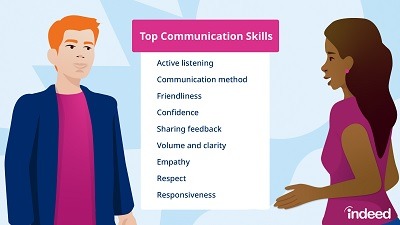
Communication skills are essential abilities that allow individuals to convey information, thoughts, ideas, and emotions effectively to others. These skills play a vital role in personal relationships, professional success, and everyday interactions. Effective communication is a combination of verbal and non-verbal techniques, and it includes various aspects such as listening, speaking, writing, and body language. Here are some key components of communication skills:
- Verbal Communication:
- Clarity: The ability to express thoughts and ideas clearly and understandably.
- Conciseness: Using as few words as necessary to convey a message without unnecessary elaboration.
- Tone: Adjusting the tone and pitch of your voice to match the situation and your audience.
- Non-Verbal Communication:
- Body Language: Using gestures, facial expressions, and posture to support or enhance the verbal message.
- Eye Contact: Maintaining appropriate eye contact to convey interest, attentiveness, and confidence.
- Personal Space: Being aware of and respecting the personal space of others, which varies by culture and context.
- Listening Skills:
- Active Listening: Paying full attention to the speaker, showing engagement through nods, verbal cues (e.g., “I see,” “Tell me more”), and body language.
- Empathy: Understanding and empathizing with the speaker’s feelings and perspective, even if you don’t agree with them.
- Avoiding Interruptions: Allowing the speaker to finish their thoughts before responding.
- Writing Skills:
- Clarity and Conciseness: Writing in a way that is clear and to the point, avoiding jargon or unnecessary complexity.
- Grammar and Spelling: Ensuring proper use of grammar and spelling to maintain professionalism and credibility.
- Audience Awareness: Tailoring the message to the needs and expectations of the audience.
- Adaptability:
- Adjusting your communication style based on the audience, context, and purpose. For instance, the way you communicate with colleagues may differ from how you communicate with clients or friends.
- Feedback: The ability to provide constructive feedback in a way that is helpful and respectful, and the willingness to accept feedback from others.
- Conflict Resolution:
- Addressing and resolving conflicts or disagreements through effective communication and problem-solving.
- Maintaining composure and avoiding aggressive or defensive communication during conflicts.
- Cultural Sensitivity:
- Understanding and respecting cultural differences in communication styles, customs, and norms.
- Time Management:
- Being mindful of time when communicating, ensuring that conversations or presentations are neither too brief nor excessively long.
- Presentation Skills:
- Effective delivery of information in a clear, engaging, and organized manner during presentations and public speaking.
- Negotiation Skills:
- The ability to communicate and reach agreements in a diplomatic and mutually beneficial way during negotiations.
- Digital Communication:
- Proficiency in written digital communication, such as email etiquette, online messaging, and social media interactions.
Effective communication skills are invaluable in personal and professional life. They contribute to building strong relationships, resolving conflicts, making informed decisions, and advancing in careers. Developing and honing these skills is an ongoing process that can lead to improved interpersonal and professional interactions.
What is required Communication Skills
“Required communication skills” refer to the essential abilities and qualities that individuals need in various contexts, such as personal relationships, the workplace, and social interactions. These skills are crucial for effective and meaningful communication. Here are some of the required communication skills:
- Clarity: The ability to express thoughts and ideas clearly and understandably. Avoiding vague or ambiguous language helps ensure that your message is accurately received.
- Active Listening: Actively and attentively listening to others when they speak. This involves not only hearing words but also understanding the speaker’s perspective and showing engagement through non-verbal cues.
- Empathy: The capacity to understand and share the feelings and perspectives of others. Empathetic communication helps build rapport and establish connections.
- Respect: Treating others with respect, irrespective of their background, beliefs, or opinions. Respectful communication is essential for maintaining positive relationships.
- Tone: Using a tone and manner of speech that is appropriate for the context and the audience. Adjusting your tone can convey empathy, authority, or friendliness, depending on the situation.
- Non-Verbal Communication: Understanding and using body language, facial expressions, gestures, and eye contact to convey additional information beyond words. Effective non-verbal communication reinforces the message you’re delivering.
- Feedback: Giving and receiving feedback constructively. Providing feedback that is specific, actionable, and respectful, and being open to receiving feedback to improve communication and relationships.
- Adaptability: Adapting your communication style to the audience and context. Effective communicators are versatile and can communicate in ways that best suit the situation.
- Conflict Resolution: The ability to address and resolve conflicts or disagreements through effective communication and problem-solving. Maintaining composure and avoiding aggressive or defensive communication during conflicts is important.
- Cultural Sensitivity: Understanding and respecting cultural differences in communication styles, customs, and norms, especially in a diverse and multicultural environment.
- Negotiation Skills: The capacity to communicate and reach agreements in a diplomatic and mutually beneficial way during negotiations. Negotiation involves active listening, empathy, and problem-solving.
- Time Management: Being mindful of time when communicating, ensuring that conversations or presentations are neither too brief nor excessively long, and respecting others’ time.
- Digital Communication: Proficiency in written digital communication, such as email etiquette, online messaging, and social media interactions. This includes clarity in written communication and understanding the implications of digital interactions.
- Presentation Skills: The ability to deliver information in a clear, engaging, and organized manner during presentations and public speaking. Effective presentation skills can make complex information more accessible to others.
- Conflict Management: Handling conflicts and disputes within a team or organization effectively, seeking resolutions that are in the best interest of all parties involved.
- Leadership and Influence: Communicating with authority and the ability to persuade, motivate, and inspire others in leadership and management roles.
These required communication skills are valuable in different aspects of life, and their application may vary depending on the situation and your role. Developing and enhancing these skills can lead to more effective and harmonious interactions in both personal and professional settings.
Who is required Communication Skills
Communication skills are required by individuals in various roles and across different contexts. Effective communication is a fundamental skill that is essential for success in personal and professional life. Here are some groups of people who require strong communication skills:
- Leaders and Managers: Leaders and managers need strong communication skills to convey their vision, goals, and expectations to their teams. They must also be adept at providing feedback, resolving conflicts, and motivating their employees.
- Sales and Marketing Professionals: Those working in sales and marketing rely on communication skills to engage with clients, convey the value of products or services, and build customer relationships.
- Customer Service Representatives: Customer service professionals require strong communication skills to listen to customer concerns, provide solutions, and maintain positive interactions with clients.
- Teachers and Educators: Educators use communication skills to explain complex topics, engage students, and create an effective learning environment.
- Healthcare Providers: Healthcare professionals, including doctors and nurses, need strong communication skills to convey medical information, provide emotional support to patients, and collaborate with colleagues.
- Scientists and Researchers: Scientists and researchers must effectively communicate their findings and insights to peers, the public, and funding agencies.
- Entrepreneurs and Business Owners: Entrepreneurs and business owners require communication skills to pitch their ideas to investors, negotiate with partners, and interact with clients and employees.
- IT and Technology Professionals: Professionals in the tech industry must communicate complex technical concepts to non-technical stakeholders and collaborate with team members.
- Public Speakers and Presenters: Public speakers, presenters, and public figures need strong communication skills to engage audiences, deliver persuasive speeches, and convey their messages effectively.
- Parents and Caregivers: Effective communication is crucial for parents and caregivers to raise and educate their children, resolve conflicts, and maintain positive family relationships.
- Job Seekers: Job seekers need communication skills to create compelling resumes and cover letters, perform well in interviews, and network effectively in their job search.
- Team Members: Effective communication is vital within teams and organizations to ensure that members understand their roles, collaborate, share ideas, and resolve issues.
- Conflict Resolution Specialists: Professionals who specialize in conflict resolution require advanced communication skills to facilitate productive discussions and negotiations.
- Legal Professionals: Lawyers and legal experts use strong communication skills to present their cases, negotiate settlements, and interact with clients and colleagues.
- Human Resources (HR) Professionals: HR specialists rely on communication skills to interview job candidates, manage employee relations, and address workplace issues.
- Journalists and Media Personnel: Media professionals need to ask insightful questions, conduct interviews, and report news stories accurately, often in high-pressure situations.
- Foreign Language Interpreters: Interpreters and translators require not only fluency in multiple languages but also strong communication skills to convey messages accurately and with cultural sensitivity.
- Community Leaders and Activists: Those advocating for change in their communities rely on communication skills to mobilize support, raise awareness, and drive social or political change.
In essence, strong communication skills are valuable in nearly every profession and play a crucial role in everyday life, from personal relationships to community engagement. Effective communication fosters understanding, collaboration, and success in various roles and contexts.
When is required Communication Skills
Effective communication skills are required in a wide range of situations and contexts. They are essential whenever people need to exchange information, ideas, or emotions to achieve understanding, collaboration, and positive outcomes. Here are some common situations and scenarios in which communication skills are required:
- In the Workplace:
- When communicating with colleagues, superiors, or subordinates to convey work-related information, instructions, and updates.
- During meetings, presentations, and negotiations.
- When providing feedback, discussing performance, and addressing workplace conflicts.
- Job Interviews:
- When applying for a job, candidates must effectively communicate their qualifications, experiences, and suitability for the role.
- Customer Service and Sales:
- In customer service roles, effective communication is essential to understand and address customer concerns.
- In sales, professionals must communicate the value of products or services to potential clients.
- Education:
- Teachers require strong communication skills to convey knowledge and engage students effectively.
- Students need communication skills to participate in classroom discussions, ask questions, and seek clarification.
- Healthcare:
- Healthcare providers must communicate medical information, diagnoses, and treatment options to patients.
- Patients need to express their symptoms and concerns to healthcare professionals.
- Personal Relationships:
- Effective communication is vital in personal relationships to express feelings, resolve conflicts, and maintain healthy connections with family, friends, and partners.
- Networking and Socializing:
- When meeting new people, networking, and building social connections, effective communication helps create positive first impressions and build relationships.
- Public Speaking and Presentations:
- Public speakers, presenters, and educators require strong communication skills to engage audiences and convey information persuasively.
- Legal Proceedings:
- Lawyers and legal professionals must effectively communicate their arguments and present evidence in legal cases.
- Community Engagement:
- When participating in community activities or advocacy efforts, effective communication helps raise awareness, mobilize support, and drive change.
- Conflict Resolution:
- In situations of conflict, whether at work or in personal relationships, strong communication skills are required to facilitate productive discussions and reach resolutions.
- Emergency Situations:
- First responders and emergency personnel need effective communication to coordinate responses and provide critical information during crises.
- Leadership and Management:
- Leaders and managers use communication skills to guide and inspire their teams, set goals, and provide feedback.
- Online and Digital Communication:
- In an increasingly digital world, effective written communication is necessary for emails, text messages, social media interactions, and online collaborations.
- Cross-Cultural and Multilingual Contexts:
- When interacting with individuals from diverse cultural backgrounds or in multilingual environments, communication skills should be used with cultural sensitivity and language proficiency.
- Problem Solving and Decision-Making:
- Effective communication is crucial when working as part of a team to identify problems, brainstorm solutions, and make decisions.
In essence, effective communication skills are required in virtually every aspect of life, from personal interactions to professional settings. They are essential for building relationships, resolving conflicts, conveying information, and achieving positive outcomes in various situations.
Where is required Communication Skills
Communication skills are required in various locations and settings, as effective communication is vital in nearly every aspect of life. Here are some common places and contexts where communication skills are essential:
- Workplace: Communication skills are essential in the workplace, whether you’re in an office, factory, retail store, or any other work environment. You need them to interact with colleagues, superiors, and subordinates, collaborate on projects, provide updates, and resolve workplace issues.
- School and Educational Institutions: Students, teachers, and administrators all require communication skills for effective learning and teaching. This includes classroom discussions, parent-teacher meetings, and administrative interactions.
- Hospitals and Healthcare Facilities: Effective communication is crucial in healthcare settings. Healthcare professionals must communicate with patients, colleagues, and support staff to provide quality care and ensure patient safety.
- Customer Service and Retail: In these roles, strong communication skills are required to understand and address customer inquiries, complaints, and needs effectively.
- Social Gatherings: Whether it’s a family gathering, a social event, or a party, effective communication helps people connect, enjoy each other’s company, and maintain positive relationships.
- Business Meetings: Meetings are a common part of professional life. Good communication skills are essential for presenting ideas, participating in discussions, and making decisions during meetings.
- Public Places: In crowded or public places, being able to ask for information, make inquiries, and give or follow directions relies on communication skills.
- Online and Digital Platforms: With the growth of online communication, strong written communication skills are necessary for emails, social media, instant messaging, and online collaboration.
- Nonprofit and Community Organizations: Individuals involved in community service and nonprofit work rely on communication skills to raise awareness, mobilize support, and advocate for various causes.
- Emergency and Crisis Situations: First responders, emergency personnel, and crisis hotline operators require effective communication skills to coordinate responses, provide information, and offer support during emergencies.
- Retail and Customer Service Environments: In retail stores and customer service roles, employees need communication skills to assist customers, explain products or services, and address concerns.
- Legal Proceedings: Lawyers, judges, and legal professionals must have strong communication skills to argue cases, present evidence, and communicate with clients in legal proceedings.
- Multinational and Cross-Cultural Environments: Communication skills are crucial when interacting with individuals from diverse cultural backgrounds, as they require cultural sensitivity and language proficiency.
- Educational Workshops and Seminars: Those leading educational workshops or seminars need to communicate their knowledge effectively to participants.
- Sports and Entertainment: Athletes, coaches, actors, and performers all rely on effective communication to convey ideas, strategies, and emotions to their teams or audiences.
- Social Media and Online Forums: Engaging in discussions, debates, and networking on social media platforms and online forums requires effective written communication skills.
In summary, communication skills are a fundamental aspect of human interaction and are needed in various places and contexts. They are essential for building relationships, conveying information, resolving conflicts, and achieving positive outcomes in diverse settings.
How is required Communication Skills
Required communication skills encompass a range of behaviors and practices that facilitate effective and meaningful communication. These skills are essential for conveying information, ideas, and emotions in a way that leads to understanding and productive interactions. Here’s how communication skills are applied and required:
- Verbal Communication:
- Speaking Clearly: Articulating words and sentences clearly and with appropriate pronunciation.
- Conciseness: Expressing thoughts and ideas in a straightforward and succinct manner, avoiding unnecessary repetition or wordiness.
- Tone of Voice: Adjusting the tone, pitch, and volume of one’s voice to match the context and convey the intended message.
- Non-Verbal Communication:
- Body Language: Using gestures, facial expressions, and posture to support or enhance verbal communication.
- Eye Contact: Maintaining appropriate eye contact to convey interest, attentiveness, and confidence.
- Personal Space: Understanding and respecting personal space, physical boundaries, and cultural norms during interactions.
- Active Listening:
- Attentiveness: Paying full attention to the speaker and demonstrating engagement through non-verbal cues and verbal acknowledgments.
- Empathy: Understanding the speaker’s feelings and perspective, even if you don’t agree with them.
- Avoiding Interruptions: Allowing the speaker to finish their thoughts before responding.
- Written Communication:
- Clarity and Conciseness: Writing in a clear and concise manner, using proper grammar and sentence structure.
- Audience Awareness: Tailoring the written message to the needs and expectations of the audience.
- Adaptability:
- Adjusting to the Audience: Tailoring communication style to the needs and preferences of the audience, whether speaking with colleagues, clients, or friends.
- Context Sensitivity: Recognizing the appropriate communication style for various situations, such as formal meetings, casual gatherings, or crisis situations.
- Feedback:
- Constructive Feedback: Providing feedback that is specific, actionable, and respectful to help others improve their performance or understanding.
- Receiving Feedback: Being open to receiving feedback from others and using it as an opportunity for growth.
- Conflict Resolution:
- Effective Communication During Conflict: Keeping composure and using communication to resolve conflicts or disagreements constructively.
- Negotiation Skills: Applying communication skills to reach agreements and compromises that are mutually beneficial.
- Cultural Sensitivity:
- Understanding Cultural Differences: Being aware of and respecting cultural variations in communication styles, customs, and norms.
- Avoiding Cultural Insensitivity: Avoiding language or behaviors that might be offensive or disrespectful in a particular cultural context.
- Digital Communication:
- Email Etiquette: Using appropriate email etiquette for professional and personal correspondence.
- Online Interaction: Engaging in respectful and constructive online discussions and social media interactions.
- Presentation Skills:
- Effective Delivery: Delivering information in an organized, engaging, and clear manner during presentations, public speaking, or educational sessions.
- Leadership and Influence:
- Motivational Communication: Using communication skills to inspire and motivate others in leadership and management roles.
- Problem Solving and Decision-Making:
- Collaborative Communication: Collaborating with others to identify problems, generate solutions, and make informed decisions through effective communication.
Effective communication skills are not only about what you say but also how you say it and how you engage with others. These skills are required in various situations and interactions to ensure that messages are conveyed clearly, relationships are maintained, and productive outcomes are achieved.
Case Study on Communication Skills
Certainly! Here’s a hypothetical case study that illustrates the importance of communication skills in a professional setting:
Case Study: Enhancing Team Collaboration through Effective Communication Skills
Background: Tech Solutions Inc. is a growing technology company with teams working on various projects. Despite their expertise in software development and engineering, the company was facing challenges in team collaboration, which affected project timelines and overall productivity. The leadership identified that improving communication skills was vital for overcoming these challenges.
Challenges:
- Cross-Functional Teams: Tech Solutions Inc. had cross-functional teams, including developers, designers, and quality assurance professionals. Effective communication among these teams was essential for successful project outcomes.
- Remote Work: The COVID-19 pandemic had forced many employees to work remotely. Remote work required an additional layer of communication skills to maintain collaboration and clarity.
- Project Delays: Missed deadlines, misunderstandings, and miscommunications had caused delays in project deliveries and strained client relationships.
Solution:
Tech Solutions Inc. implemented a comprehensive approach to improving communication skills among its teams:
- Communication Training: The company provided communication training workshops to all employees. These workshops covered active listening, empathy, conflict resolution, and effective email and digital communication.
- Regular Team Meetings: Cross-functional teams began holding regular meetings, both in person and virtually. These meetings allowed team members to discuss project progress, clarify requirements, and share ideas.
- Clear Documentation: Employees were encouraged to document project details, requirements, and decisions made during meetings. This documentation helped reduce misunderstandings and provided a reference point for all team members.
- Remote Work Guidelines: With the shift to remote work, Tech Solutions Inc. developed guidelines for remote communication. These guidelines emphasized the importance of clear and concise written communication, scheduling virtual meetings, and using collaboration tools effectively.
Results:
The efforts to enhance communication skills yielded several positive outcomes:
- Improved Collaboration: Cross-functional teams started collaborating more effectively, reducing misunderstandings and aligning on project objectives.
- Fewer Project Delays: With better communication, projects were completed closer to the originally planned timelines, improving client satisfaction and revenue.
- Enhanced Remote Work Productivity: Employees working remotely found it easier to maintain communication and stay connected with their colleagues. This led to continued productivity even in a remote work environment.
- Conflict Resolution: Employees became more adept at addressing and resolving conflicts in a respectful and productive manner, leading to healthier work relationships.
- Client Satisfaction: With projects delivered on time and with fewer hiccups, client satisfaction scores improved significantly.
Conclusion:
Tech Solutions Inc. recognized that improving communication skills was a critical factor in achieving successful project outcomes and maintaining a healthy work environment. By investing in training and implementing clear communication strategies, the company was able to overcome challenges related to cross-functional teams, remote work, and project delays. These improvements not only benefited the employees but also enhanced client satisfaction and overall company performance.
This case study underscores the significance of effective communication skills in addressing common workplace challenges and achieving better outcomes in a professional setting.
White Paper on Communication Skills
Creating a comprehensive white paper on communication skills involves discussing the importance of effective communication, explaining the key components of communication skills, and providing strategies for improving these skills. Below is an outline for a white paper on communication skills that you can expand upon:
White Paper: Mastering Effective Communication Skills
Table of Contents
- Executive Summary
- A brief overview of the content and the importance of effective communication skills in various aspects of life.
- Introduction
- An introduction to the significance of effective communication skills in personal, professional, and social contexts.
- The objectives and scope of the white paper.
- Understanding Effective Communication
- Defining effective communication and its impact on relationships, teamwork, and personal growth.
- The role of empathy, active listening, and feedback in communication.
- Key Components of Communication Skills
- Verbal Communication: Explaining the importance of clarity, tone, and conciseness in spoken communication.
- Non-Verbal Communication: Discussing the significance of body language, eye contact, and gestures.
- Written Communication: Addressing clarity, grammar, and audience awareness in written communication.
- Adaptability: Emphasizing the need to adjust communication styles based on the audience and context.
- Conflict Resolution: Exploring conflict resolution through effective communication and negotiation skills.
- The Role of Digital Communication
- Digital Communication: Discussing the impact of digital communication tools, including email, social media, and instant messaging.
- Email Etiquette: Providing best practices for clear and professional email communication.
- Online Interaction: Addressing the importance of respectful and constructive online interactions.
- Training and Development for Communication Skills
- Communication Workshops: Exploring the benefits of communication training and workshops.
- Case Studies: Sharing real-life examples of organizations that improved performance through communication skill development.
- Personal Development: Discussing how individuals can enhance their communication skills through self-improvement strategies.
- Cultural Sensitivity
- Cultural Differences in Communication: Explaining the need for cultural sensitivity in global interactions.
- Avoiding Cultural Insensitivity: Providing guidance on avoiding language or behaviors that may be culturally insensitive.
- The Impact of Communication on Leadership
- Leadership and Communication: Discussing how effective communication is a cornerstone of leadership.
- Leadership Styles: Exploring different leadership styles and their communication strategies.
- Future Trends and Challenges
- Emerging Trends: Addressing the impact of technology, remote work, and multicultural interactions on communication skills.
- Future Challenges: Discussing potential challenges in maintaining effective communication in an evolving world.
- Conclusion
- Summarizing the key points and the continued importance of developing and mastering effective communication skills.
- References
- Citing sources and references used in the white paper.
This outline provides a structured framework for your white paper on communication skills. You can expand each section with detailed explanations, examples, case studies, and illustrations to create an informative and comprehensive document on this crucial topic.