
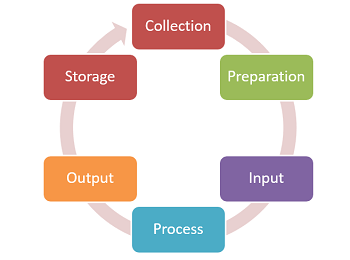
Concept of data processing
Data processing refers to the manipulation and transformation of raw data into meaningful information. It involves a series of steps and techniques applied to data to extract insights, generate reports, and facilitate decision-making. The concept of data processing encompasses various operations, such as data collection, storage, organization, analysis, and presentation. Here’s a breakdown of the key components involved:
- Data Collection: This step involves gathering raw data from various sources, such as databases, files, sensors, or external systems. Data can be collected through manual entry, automated processes, or real-time streaming.
- Data Storage: Once collected, data needs to be stored in a structured manner for easy retrieval and analysis. Common storage options include databases, data warehouses, or cloud-based storage solutions.
- Data Organization: Data needs to be organized and structured to make it more manageable and accessible. This can involve tasks like data cleaning, formatting, integration, and normalization. Data is typically organized into tables, rows, and columns.
- Data Analysis: In this step, data is examined to discover patterns, relationships, and insights. Various techniques are employed, such as statistical analysis, data mining, machine learning, or artificial intelligence algorithms. The goal is to extract meaningful information from the data and gain actionable insights.
- Data Transformation: Data may require further processing and transformation to make it more suitable for specific tasks or analysis. This can involve tasks like data aggregation, filtering, summar ization, or feature engineering. The transformed data may be used for advanced analytics or modeling purposes.
- Data Presentation: The processed data is then presented in a visual or readable format to facilitate understanding and decision-making. This can involve generating reports, charts, graphs, or dashboards that effectively communicate the insights derived from the data.
- Data Security and Privacy: Throughout the entire data processing workflow, ensuring data security and privacy is crucial. Measures need to be implemented to protect data from unauthorized access, breaches, or misuse. Compliance with relevant regulations and data protection laws should be considered.
Data processing can be performed manually by individuals, but more often, it is automated using specialized software, tools, or programming languages. With the advent of big data, organizations are increasingly leveraging advanced data processing technologies and platforms to handle large volumes of data and extract valuable information efficiently.
What is required Concept of data processing
The concept of data processing requires several key components to ensure successful and effective handling of data. Here are some essential elements:
- Data Understanding: Before processing data, it is crucial to have a clear understanding of the data’s nature, structure, and context. This includes knowing the source, format, quality, and any limitations or biases associated with the data. Understanding the data helps in determining appropriate processing techniques and identifying potential challenges or considerations.
- Data Quality: Data quality is vital for reliable and accurate data processing. It involves ensuring that the data is accurate, complete, consistent, and relevant to the intended purpose. Data cleaning and validation techniques are employed to identify and address any errors, outliers, or inconsistencies in the data.
- Data Governance: Data governance refers to the framework, policies, and procedures for managing and controlling data throughout its life cycle. It includes defining roles and responsibilities, establishing data standards, ensuring data privacy and security, and enforcing compliance with relevant regulations. Data governance ensures that data processing is carried out in a controlled and accountable manner.
- Data Processing Techniques: Various techniques are employed to process and analyze data effectively. This includes descriptive analytics to summarize and understand the data, diagnostic analytics to identify patterns or causes of specific events, predictive analytics to forecast future outcomes, and prescriptive analytics to provide recommendations or optimize decision-making. The selection of appropriate techniques depends on the nature of the data and the desired insights.
- Data Processing Tools and Technologies: Data processing often involves using specialized software, tools, or programming languages to automate and streamline the process. These tools can include data integration and ET L (Extract, Transform, Load) tools, databases, data mining or machine learning platforms, statistical analysis software, and visualization tools. The choice of tools depends on the specific requirements and the available resources.
- Data Privacy and Security: Data processing should consider privacy and security measures to protect sensitive or confidential information. This involves implementing encryption techniques, access controls, data anony mization, and auditing mechanisms to safeguard data from unauthorized access, breaches, or misuse. Compliance with data protection regulations like GDP R (General Data Protection Regulation) or CCP A (California Consumer Privacy Act) is crucial.
- Data Ethics: Data processing should be conducted ethically and responsibly. This includes ensuring fairness, transparency, and accountability in data processing activities. Ethical considerations involve avoiding biases, respecting privacy rights, obtaining proper consent for data usage, and handling data in a manner that aligns with ethical standards and societal norms.
These elements collectively form the foundation of the concept of data processing, enabling organizations to derive meaningful insights, make informed decisions, and drive business value from their data assets.
Who is required Concept of Data processing
The concept of data processing involves the participation of various individuals and roles within an organization. Here are some key stakeholders who are typically involved in the process:
- Data Analysts: Data analysts play a critical role in data processing. They are responsible for understanding the data, performing analysis, applying statistical techniques, and extracting insights from the processed data. They work closely with data scientists, business analysts, and other stakeholders to interpret the results and provide actionable recommendations.
- Data Scientists: Data scientists bring advanced analytical skills to the data processing process. They develop and apply complex algorithms, machine learning models, and predictive analytics techniques to extract insights and uncover patterns in the data. Data scientists also contribute to data modeling, feature engineering, and the development of advanced analytics solutions.
- Data Engineers: Data engineers are responsible for designing, building, and maintaining the data infrastructure required for data processing. They develop data pipelines, data integration workflows, and ETL (Extract, Transform, Load) processes to ensure the efficient and reliable flow of data. Data engineers also optimize data storage, implement data governance policies, and ensure data quality and integrity.
- IT Professionals: IT professionals, including database administrators and system administrators, are involved in providing the necessary technical infrastructure and support for data processing. They manage databases, server environments, network connectivity, and security measures to ensure the availability, scalability, and performance of data processing systems.
- Business Analysts: Business analysts collaborate with data analysts and data scientists to understand the business requirements, define goals, and identify the key questions that need to be answered through data processing. They provide domain knowledge, context, and specific business objectives to guide the data processing activities and ensure that the insights derived align with business needs.
- Data Stewards: Data stewards are responsible for data governance and data management within an organization. They establish data policies, ensure data quality, enforce data standards, and oversee compliance with regulations. Data stewards work closely with data analysts, data engineers, and business stakeholders to ensure that data processing aligns with data governance guidelines.
- Business Stakeholders: Business stakeholders, such as executives, managers, and decision-makers, play a crucial role in defining the business objectives and requirements for data processing. They provide input on the specific insights or reports they need to support decision-making. Business stakeholders also validate the processed data and ensure that the insights generated are relevant, actionable, and aligned with business goals.
Collaboration and effective communication among these stakeholders are essential for successful data processing. Each role brings a unique perspective and expertise, contributing to the overall data processing process and driving valuable insights and outcomes.
When is required Concept of data processing
The concept of data processing is required in various scenarios and contexts where data needs to be analyzed, transformed, and converted into meaningful information. Here are some common situations where data processing is necessary:
- Business Decision-Making: Organizations often rely on data processing to make informed decisions. By processing and analyzing relevant data, businesses can gain insights into customer behavior, market trends, sales performance, and other factors that influence decision-making. Data processing enables organizations to identify opportunities, optimize processes, allocate resources effectively, and improve overall business performance.
- Research and Analysis: Data processing is crucial in research fields where data is collected and analyzed to draw conclusions or test hypotheses. Researchers process and analyze data from surveys, experiments, or observational studies to understand patterns, relationships, or trends. Data processing helps researchers make evidence-based conclusions, contribute to scientific knowledge, and support further research.
- Risk Assessment and Fraud Detection: Data processing plays a critical role in risk assessment and fraud detection. By analyzing large volumes of data, organizations can identify anomalies, patterns, or suspicious activities that may indicate potential risks or fraudulent behavior. This applies to sectors such as finance, insurance, cyber security, and compliance, where data processing techniques are used to detect and prevent fraud, security breaches, or regulatory non-compliance.
- Persona l ization and Customer Insights: Data processing is often employed to personalize customer experiences and understand customer preferences. By analyzing customer data, such as purchase history, browsing behavior, or demographic information, organizations can tailor product recommendations, marketing campaigns, or user interfaces. Data processing helps uncover customer insights, enhance customer satisfaction, and drive customer retention.
- Operational Efficiency and Optimization: Data processing is used to improve operational efficiency and optimize processes in various industries. By analyzing operational data, organizations can identify bottlenecks, inefficiencies, or areas for improvement. This includes areas such as supply chain management, manufacturing, logistics, or service delivery, where data processing techniques help optimize processes, reduce costs, and enhance productivity.
- Predictive Analytics and Forecasting: Data processing is utilized in predictive analytics and forecasting, where historical data is processed and analyzed to make predictions about future outcomes. Organizations use techniques such as regression analysis, time series analysis, or machine learning algorithms to forecast demand, sales, market trends, or resource requirements. Data processing enables organizations to make proactive decisions, anticipate market changes, and plan for the future.
- Io T and Sensor Data Processing: With the proliferation of the Internet of Things (Io T), data processing is essential for handling the vast amounts of data generated by sensors and connected devices. Data from Io T devices, such as temperature sensors, smart meters, or wear ables, is processed and analyzed in real-time to monitor, control, or optimize various systems, such as smart homes, industrial automation, or environmental monitoring.
These are just a few examples of when the concept of data processing is required. In general, data processing is necessary in any situation where data needs to be transformed into actionable insights, enabling organizations to make informed decisions, drive innovation, and achieve their objectives.
Where is required Concept of data processing
The concept of data processing is required in various industries, sectors, and domains where data plays a crucial role in decision-making, analysis, and operational efficiency. Here are some areas where the concept of data processing is particularly important:
- Business and Finance: Data processing is vital in business and finance sectors for tasks such as financial analysis, market research, risk assessment, budgeting, and forecasting. Organizations use data processing techniques to analyze financial data, customer data, market trends, and economic indicators to make strategic business decisions, evaluate investments, and assess financial performance.
- Healthcare and Biotechnology: In healthcare and biotechnology, data processing is essential for patient care, medical research, drug development, and disease management. Data processing techniques are used to analyze patient records, clinical trials data, genomic data, and medical imaging to derive insights, personalize treatments, discover patterns, and improve healthcare outcomes.
- Manufacturing and Supply Chain: Data processing plays a critical role in manufacturing and supply chain management. By processing data related to production, inventory, logistics, and demand forecasting, organizations can optimize production processes, manage inventory levels, improve supply chain efficiency, and ensure timely delivery of products.
- Marketing and Advertising: Data processing is widely used in marketing and advertising to understand consumer behavior, target specific customer segments, and measure campaign effectiveness. By processing and analyzing data from sources like social media, web analytics, customer surveys, and sales data, organizations can gain insights into consumer preferences, personalize marketing campaigns, and measure return on investment (RO I).
- Government and Public Sector: The concept of data processing is crucial in the government and public sector for various purposes, including policy-making, urban planning, public safety, and resource allocation. Governments process data related to demographics, public services, transportation, crime statistics, and environmental factors to inform decision-making, develop policies, and improve public services.
- Education and Research: Data processing is vital in the field of education for tasks such as student performance analysis, assessment evaluation, learning analytics, and research studies. By processing and analyzing educational data, organizations and researchers can gain insights into student progress, instructional effectiveness, and educational trends to improve teaching methodologies and inform educational policies.
- Energy and Utilities: Data processing is essential in the energy and utilities sector for tasks such as energy consumption analysis, predictive maintenance, grid optimization, and renewable energy integration. By processing and analyzing data from smart meters, sensors, and energy systems, organizations can optimize energy usage, detect anomalies, and improve overall energy efficiency.
These are just a few examples, and data processing is applicable across a wide range of industries and sectors. Essentially, wherever there is data available that can be transformed into valuable insights, the concept of data processing becomes necessary to support decision-making, enhance efficiency, and drive innovation.
How is required Concept of data processing
The concept of data processing is required to transform raw data into meaningful information that can be used for decision-making, analysis, and various other purposes. Here’s how the concept of data processing is necessary:
- Extracting Insights: Raw data, in its original form, often lacks structure and meaning. Data processing techniques are used to organize, clean, and transform the data into a format that is suitable for analysis. By applying various processing methods, such as aggregation, filtering, or feature engineering, insights can be extracted from the data, revealing patterns, trends, correlations, or anomalies that may not be apparent in the raw data.
- Supporting Decision-Making: Data processing is essential in enabling informed decision-making. By processing and analyzing relevant data, organizations can gain insights into various aspects of their operations, customers, or markets. These insights can inform strategic decisions, optimize processes, identify opportunities, mitigate risks, and drive business growth.
- Enhancing Efficiency: Data processing techniques help improve operational efficiency in multiple ways. By automating repetitive tasks through data processing, organizations can reduce manual effort, minimize errors, and increase productivity. For example, data processing can automate data entry, data validation, or report generation, saving time and resources.
- Enabling Personal ization: Data processing is crucial in achieving personal ization in various domains, such as marketing, customer service, or user experiences. By processing and analyzing customer data, organizations can tailor their offerings, recommendations, or interactions based on individual preferences and behaviors. This leads to enhanced customer satisfaction, engagement, and loyalty.
- Facilitating Innovation: Data processing is closely tied to innovation and the development of new products, services, or solutions. By analyzing data from different sources, organizations can identify emerging trends, consumer needs, or market gaps, which can inspire innovative ideas and drive product or process improvements. Data processing helps uncover insights that can spark creativity and innovation within organizations.
- Ensuring Data Quality: Data processing plays a crucial role in ensuring data quality and integrity. Through data cleansing, validation, and transformation techniques, data errors, inconsistencies, or outliers can be identified and addressed. By processing the data to ensure its accuracy and reliability, organizations can make more confident decisions and avoid potential issues resulting from inaccurate or unreliable data.
- Meeting Regulatory Requirements: In many industries, regulatory compliance necessitates proper data processing. Data processing techniques can help organizations meet regulatory requirements related to data privacy, security, or reporting. By processing and organizing data in accordance with regulatory guidelines, organizations can ensure compliance and mitigate potential risks or penalties.
Overall, the concept of data processing is required to harness the full potential of data, extract insights, support decision-making, improve efficiency, foster innovation, ensure data quality, and meet regulatory requirements. By applying appropriate data processing techniques, organizations can derive value from their data assets and gain a competitive edge in today’s data-driven world.
Case study on Concept of data processing
Sure! Here’s a case study that illustrates the concept of data processing:
Case Study: Retail Sales Analysis for Performance Improvement
Company Profile: XY Z Retail is a leading global retail chain with numerous stores across different regions. They sell a wide range of products, including electronics, apparel, home goods, and more. XYZ Retail wants to enhance its sales performance and optimize its operations by leveraging data processing techniques.
Challenge: XY Z Retail faced several challenges in analyzing its sales data effectively. They had a vast amount of transactional data from their point-of-sale (PO S) systems, but lacked the necessary insights to make informed decisions. They wanted to understand customer buying patterns, identify popular products, optimize inventory management, and improve overall sales performance.
Solution: To address these challenges, XY Z Retail implemented a comprehensive data processing strategy. Here’s how they leveraged the concept of data processing:
- Data Collection: XY Z Retail collected data from their PO S systems, including transaction details, product information, customer profiles, and store-specific data. They also integrated data from external sources, such as market trends and competitor analysis, to enrich their data sets.
- Data Cleaning and Integration: The collected data underwent a thorough cleaning and integration process. Data cleaning involved removing duplicate records, handling missing values, and resolving inconsistencies. The cleaned data was then integrated to ensure a unified view across all stores and regions.
- Data Transformation: XY Z Retail transformed the data to make it suitable for analysis. They applied techniques such as data aggregation, normalization, and feature engineering. For example, they aggregated sales data to calculate metrics like total sales, average transaction value, and sales growth rates.
- Descriptive Analytics: XY Z Retail used descriptive analytics techniques to gain insights into their sales performance. They analyzed sales data by product category, region, store, and time period. They identified top-selling products, popular product combinations, and peak sales hours. This information helped them optimize product placement, stock inventory efficiently, and schedule staffing accordingly.
- Customer Segmentation: XY Z Retail employed data processing techniques to segment their customers based on buying behavior and demographics. They performed clustering analysis and identified customer segments with distinct preferences and spending patterns. This allowed them to tailor marketing campaigns, personalize offers, and provide targeted recommendations to different customer groups.
- Predictive Analytics: Leveraging historical sales data, XY Z Retail utilized predictive analytics to forecast future sales and demand. They built machine learning models that considered factors such as seasonality, promotions, and economic indicators to predict sales volumes accurately. These forecasts enabled them to optimize inventory levels, streamline procurement, and reduce stock-outs or overstock situations.
- Visualization and Reporting: XY Z Retail used data visualization tools to create interactive dashboards and reports. These visual representations allowed stakeholders to explore and understand the data intuitively. The dashboards provided real-time insights on key performance indicators (KPI s), sales trends, and customer behavior, enabling stakeholders to make data-driven decisions quickly.
Results: By implementing the concept of data processing, XY Z Retail achieved significant improvements in their sales performance and operations:
- Enhanced Sales Performance: By analyzing sales data, XY Z Retail identified under performing products and implemented targeted marketing strategies to boost their sales. They also optimized their product assortment based on customer preferences, leading to increased customer satisfaction and higher sales revenue.
- Improved Inventory Management: With accurate demand forecasting, XY Z Retail optimized their inventory levels and reduced excess inventory. This minimized inventory holding costs and improved cash flow, while also ensuring that popular products were adequately stocked to meet customer demand.
- Personalized Customer Experiences: Customer segmentation helped XY Z Retail tailor marketing campaigns and promotions to specific customer groups. This resulted in personalized customer experiences, increased customer loyalty, and higher customer retention rates.
- Streamlined Operations: Data processing allowed XY Z Retail to identify operational inefficiencies and bottlenecks.
White paper on Concept of data processing
Writing a white paper requires extensive research, analysis, and a comprehensive understanding of the topic. It is a time-consuming process that involves in-depth knowledge and expertise in the subject matter.
However, I can provide you with an outline or key points that you can use as a starting point to create your own white paper on the concept of data processing. Here’s a suggested outline for a white paper on the concept of data processing:
- Introduction
- Definition and importance of data processing
- Overview of how data processing supports decision-making, analysis, and operational efficiency
- Types of Data Processing
- Batch processing
- Real-time processing
- Stream processing
- Parallel processing
- Data Processing Techniques and Methods
- Data collection and aggregation
- Data cleaning and validation
- Data transformation and normalization
- Data integration and consolidation
- Descriptive analytics
- Predictive analytics
- Machine learning and artificial intelligence
- Data Processing Infrastructure and Technologies
- Database systems
- Big data platforms
- Cloud computing
- Data integration tools
- Business intelligence and analytics tools
- Applications of Data Processing
- Business decision-making
- Risk assessment and fraud detection
- Personal ization and customer insights
- Operational efficiency and optimization
- Io T and sensor data processing
- Challenges and Considerations in Data Processing
- Data quality and integrity
- Scalability and performance
- Data privacy and security
- Compliance with regulations
- Future Trends in Data Processing
- Advances in machine learning and AI
- Real-time data processing and analytics
- Edge computing and distributed processing
- Ethical considerations in data processing
- Case Studies
- Real-world examples highlighting successful data processing implementations
- Conclusion
- Summary of key concepts and takeaways
- Importance of data processing in the digital age
Remember, when creating a white paper, it’s essential to provide evidence-based information, cite relevant sources, and present a well-structured argument. Good luck with your white paper!