
Concept of data processing
Data processing refers to the manipulation, transformation, and analysis of raw data to extract meaningful information and derive insights. It involves a series of steps to convert data into a more usable and understandable format for further analysis or decision-making.
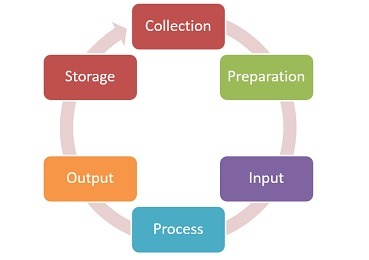
The concept of data processing encompasses various activities, including data collection, data entry, data cleaning, data transformation, data integration, data storage, data analysis, and data visualization. Let’s explore each of these steps:
- Data Collection: It involves gathering raw data from various sources such as surveys, sensors, databases, websites, or other data repositories. This data can be in structured, semi-structured, or unstructured formats.
- Data Entry: This step involves manually or electronically entering the collected data into a computer system. Data entry ensures that the information is accurately recorded and ready for processing.
- Data Cleaning: Raw data often contains errors, inconsistencies, missing values, or outliers. Data cleaning involves detecting and correcting these issues to ensure data accuracy and integrity. It may include tasks like removing duplicates, filling missing values, correcting formatting errors, and standardizing data.
- Data Transformation: Data transformation involves converting data from its original format to a format suitable for analysis. It may involve tasks such as aggregating data, splitting data into subsets, encoding categorical variables, or normalizing numerical data.
- Data Integration: In many cases, data comes from multiple sources and needs to be combined for analysis. Data integration involves merging different datasets based on common identifiers or attributes. This step ensures that data from different sources can be analyzed together to gain comprehensive insights.
- Data Storage: After processing and integration, the data needs to be stored in a structured manner for future access and retrieval. This storage can be in databases, data warehouses, or other storage systems, depending on the volume and nature of the data.
- Data Analysis: Data analysis involves applying various statistical, mathematical, or computational techniques to extract meaningful insights from the processed data. It includes tasks like descriptive statistics, data mining, machine learning, and predictive modeling. The goal is to uncover patterns, trends, correlations, or anomalies in the data.
- Data Visualization: Once the analysis is complete, data visualization techniques are used to present the findings in a visual format such as charts, graphs, or dashboards. Data visualization helps in understanding complex patterns, communicating insights effectively, and making data-driven decisions.
Data processing is a fundamental part of many fields, including business analytics, scientific research, finance, healthcare, marketing, and more. With the advancements in technology and the increasing availability of data, efficient and accurate data processing has become crucial for organizations to gain valuable insights and remain competitive in today’s data-driven world.
What is required Concept of data processing
To understand the concept of data processing, several key concepts are essential. Here are some fundamental concepts related to data processing:
- Data: Data refers to raw facts, figures, or information that are collected or generated. It can be in various forms, such as numbers, text, images, audio, or video.
- Data Processing: Data processing involves the transformation of raw data into a more meaningful and useful format. It includes activities like data collection, data entry, data cleaning, data transformation, data integration, data storage, data analysis, and data visualization.
- Data Quality: Data quality refers to the accuracy, completeness, consistency, reliability, and relevancy of data. High-quality data is crucial for reliable analysis and decision-making.
- Structured and Unstructured Data: Structured data refers to well-organized data that fits into predefined formats or databases, such as spreadsheets or relational databases. Unstructured data, on the other hand, does not have a predefined structure and can include text documents, social media posts, emails, or multimedia content.
- Data Cleaning: Data cleaning, also known as data cleansing or data scrubbing, is the process of identifying and correcting errors, inconsistencies, missing values, or outliers in the data. It ensures data accuracy and reliability.
- Data Transformation: Data transformation involves converting data from its original format to a format suitable for analysis. It includes tasks like data normalization, aggregation, filtering, encoding, or scaling.
- Data Integration: Data integration is the process of combining data from different sources or systems into a unified view. It allows organizations to analyze data from multiple sources collectively and gain comprehensive insights.
- Data Analysis: Data analysis involves applying various techniques and algorithms to extract meaningful insights from data. It includes descriptive statistics, exploratory data analysis, data mining, machine learning, and predictive modeling.
- Data Visualization: Data visualization is the presentation of data in visual formats such as charts, graphs, or dashboards. It helps to understand patterns, trends, and relationships in the data more easily and facilitates effective communication of insights.
- Data Security and Privacy: Data processing involves handling sensitive information, and ensuring data security and privacy is crucial. This includes protecting data from unauthorized access, implementing encryption techniques, complying with data protection regulations, and establishing appropriate access controls.
Understanding these concepts is essential for effective data processing, enabling organizations to derive valuable insights, make informed decisions, and gain a competitive advantage in today’s data-driven world.
Who is required Concept of data processing
Various individuals and roles are involved in the concept of data processing. Here are some key stakeholders who play important roles in the data processing process:
- Data Analysts: Data analysts are responsible for performing data processing tasks such as data cleaning, transformation, integration, analysis, and visualization. They have expertise in using analytical tools, statistical techniques, and programming languages to extract insights from data.
- Data Scientists: Data scientists are professionals who possess advanced knowledge of statistics, machine learning, and programming. They apply complex algorithms and models to analyze data, identify patterns, build predictive models, and derive actionable insights.
- Data Engineers: Data engineers are responsible for designing, developing, and maintaining the infrastructure and systems necessary for data processing. They work on data storage, data pipelines, data integration, and ensure the efficient processing and storage of large volumes of data.
- Database Administrators: Database administrators (DBAs) manage and maintain databases that store processed data. They ensure the performance, security, and integrity of the databases, including tasks such as data backup, recovery, and access control.
- IT Professionals: IT professionals play a crucial role in providing the necessary hardware, software, and network infrastructure to support data processing activities. They ensure the availability, reliability, and security of the technology systems used for data processing.
- Domain Experts: Subject matter experts who possess domain-specific knowledge play a vital role in data processing. They provide insights and context to interpret the processed data accurately and understand its implications in specific fields such as finance, healthcare, marketing, or manufacturing.
- Data Stewards: Data stewards are responsible for ensuring data quality, governance, and compliance with regulations. They define data standards, enforce data policies, and establish data management processes to maintain the integrity and reliability of processed data.
- Decision-Makers: Decision-makers, such as executives, managers, or stakeholders, rely on the insights derived from data processing to make informed decisions. They use the processed data to gain insights, identify trends, assess performance, and drive strategic initiatives.
Collaboration and coordination among these stakeholders are crucial to ensure efficient and effective data processing. Each role brings a unique perspective and expertise to the process, contributing to the overall success of data-driven initiatives within an organization.
When is required Concept of data processing
The concept of data processing is required in various situations and fields where there is a need to transform raw data into meaningful information. Here are some scenarios where data processing is essential:
- Business Analytics: Data processing is extensively used in business analytics to analyze sales data, customer behavior, market trends, and operational metrics. It helps organizations make data-driven decisions, optimize processes, identify growth opportunities, and improve overall performance.
- Scientific Research: Data processing is critical in scientific research to analyze experimental data, conduct statistical analyses, and validate hypotheses. It enables researchers to uncover patterns, correlations, and trends, leading to new discoveries and advancements in various fields such as biology, physics, chemistry, and environmental science.
- Finance and Banking: Data processing is crucial in the finance and banking industry for tasks such as risk analysis, fraud detection, credit scoring, portfolio management, and algorithmic trading. It helps financial institutions make informed decisions, assess market conditions, and ensure regulatory compliance.
- Healthcare: In the healthcare sector, data processing plays a vital role in patient care, medical research, and public health analysis. It involves processing electronic health records (EHRs), analyzing medical imaging data, conducting clinical trials, and monitoring disease outbreaks. Data processing helps improve diagnostics, treatment plans, and population health management.
- Marketing and Advertising: Data processing is essential for marketing and advertising campaigns. It involves analyzing customer demographics, purchase behavior, social media interactions, and campaign performance metrics. Data processing enables targeted marketing strategies, personalized advertising, and measuring the effectiveness of marketing efforts.
- Supply Chain and Logistics: Data processing is used to optimize supply chain operations, inventory management, and logistics planning. It involves analyzing data related to demand forecasting, order processing, transportation routes, and warehouse operations. Data processing helps improve efficiency, reduce costs, and enhance customer satisfaction in the supply chain.
- Internet of Things (IoT): With the growth of IoT devices and sensors, data processing is essential to handle the massive amounts of data generated by these interconnected devices. It involves real-time data processing, data aggregation, and analysis to enable smart home systems, industrial automation, and smart city initiatives.
- Social Sciences: Data processing is employed in social sciences to analyze survey data, conduct opinion polls, and study human behavior. It helps researchers understand societal trends, public sentiment, voting patterns, and social dynamics.
These are just a few examples highlighting the diverse applications of data processing. In essence, wherever there is a need to collect, analyze, and derive insights from data, the concept of data processing becomes essential.
Where is required Concept of data processing
The concept of data processing is required in various domains and industries where data plays a crucial role. Here are some common areas where data processing is necessary:
- Business Organizations: Data processing is essential for businesses of all sizes and across industries. It helps in analyzing customer data, sales figures, financial records, inventory management, and operational data. Data processing enables businesses to gain insights, optimize processes, make informed decisions, and improve overall performance.
- Scientific Research Institutions: Data processing is vital in scientific research institutions such as universities, research laboratories, and government agencies. Researchers use data processing techniques to analyze experimental data, conduct statistical analyses, build models, and generate insights. It aids in advancing knowledge, validating hypotheses, and making scientific breakthroughs.
- Healthcare Institutions: Healthcare organizations heavily rely on data processing for patient care, medical research, and public health analysis. It involves processing patient data, electronic health records (EHRs), medical imaging, genomics data, and clinical trial data. Data processing enables improved diagnostics, personalized treatment plans, disease surveillance, and medical research.
- Financial Institutions: Banks, insurance companies, and other financial institutions require data processing for tasks such as risk assessment, fraud detection, credit scoring, investment analysis, and regulatory compliance. Data processing enables accurate financial reporting, portfolio management, fraud prevention, and effective decision-making in the financial sector.
- Marketing and Advertising Agencies: Data processing is critical for marketing and advertising agencies to analyze customer behavior, demographic data, campaign performance, and market trends. It helps in targeted marketing, customer segmentation, campaign optimization, and measuring the effectiveness of marketing efforts.
- Government Organizations: Government agencies utilize data processing techniques for various purposes, including policy planning, public service delivery, public safety, and resource allocation. It involves analyzing census data, economic indicators, crime statistics, transportation data, and social welfare data. Data processing aids in evidence-based decision-making, policy formulation, and effective governance.
- Manufacturing and Supply Chain: Data processing is necessary in manufacturing and supply chain industries to optimize production, inventory management, quality control, and logistics. It involves analyzing data related to production output, equipment performance, supply chain efficiency, and customer demand. Data processing helps in streamlining operations, reducing costs, and ensuring timely delivery.
- Transportation and Logistics: Transportation companies and logistics providers rely on data processing for route optimization, fleet management, supply chain visibility, and demand forecasting. It involves processing data from GPS trackers, sensors, transportation networks, and customer orders. Data processing enables efficient planning, resource allocation, and real-time decision-making in transportation and logistics.
These are just a few examples, and data processing has wide-ranging applications in numerous other sectors, including telecommunications, energy, agriculture, e-commerce, research and development, and more. Wherever data is generated and needs to be analyzed for insights and decision-making, the concept of data processing is required.
How is required Concept of data processing
The concept of data processing is required to transform raw data into meaningful information and derive insights for various purposes. Here’s how data processing is essential:
- Extracting Insights: Raw data itself may not provide meaningful insights. Data processing techniques such as cleaning, transformation, integration, and analysis help extract valuable insights from the data. By processing the data, patterns, trends, correlations, and anomalies can be identified, leading to informed decision-making and actionable insights.
- Decision-Making: Data processing enables data-driven decision-making. By analyzing processed data, organizations can make informed choices based on evidence and trends. Whether it’s strategic planning, resource allocation, product development, or marketing campaigns, data processing supports decision-making at all levels of an organization.
- Performance Optimization: Data processing helps optimize performance in various domains. For example, in manufacturing, analyzing production data can identify bottlenecks and inefficiencies, leading to process improvements. In marketing, analyzing customer data can reveal preferences and behaviors, allowing for targeted marketing strategies. By processing data, organizations can identify areas for improvement and make data-backed optimizations.
- Problem Solving: Data processing aids in problem-solving by providing insights into the root causes of issues. By analyzing processed data, organizations can identify patterns or factors contributing to problems and take appropriate actions to address them. For example, analyzing customer complaints and service data can help identify recurring issues and improve customer satisfaction.
- Automation and Efficiency: Data processing plays a crucial role in automating tasks and improving operational efficiency. By automating data processing steps, organizations can streamline repetitive tasks, reduce manual errors, and enhance productivity. For instance, automated data cleaning and transformation workflows can save time and effort in data preparation.
- Personalization and Customer Experience: Data processing enables personalized experiences and targeted marketing. By analyzing customer data, organizations can understand individual preferences, behaviors, and needs, allowing them to offer personalized recommendations, tailored services, and customized experiences. This improves customer satisfaction and drives customer loyalty.
- Predictive Analytics: Data processing is integral to predictive analytics, which involves using historical data to make predictions about future events or trends. By processing and analyzing historical data, organizations can build models and algorithms that forecast outcomes, detect anomalies, and make proactive decisions. This helps organizations anticipate future needs, mitigate risks, and seize opportunities.
- Compliance and Governance: Data processing ensures compliance with regulations and data governance practices. By processing and managing data appropriately, organizations can adhere to data privacy laws, maintain data security, and establish data quality standards. Data processing helps in maintaining data integrity, traceability, and accountability.
In summary, the concept of data processing is required to extract insights, make informed decisions, optimize performance, solve problems, automate processes, personalize experiences, enable predictive analytics, ensure compliance, and enhance efficiency in various domains and industries. It is a fundamental step in unlocking the value and potential of data for organizations.
Case study on Concept of data processing
Case Study: Data Processing in Retail Sales Analysis
Introduction: A retail company operates multiple stores across different locations and wants to gain insights from their sales data to optimize their operations and improve profitability. They decide to implement a data processing system to analyze their sales data and extract meaningful information.
Objective: The objective is to process and analyze the retail company’s sales data to gain insights into customer behavior, product performance, and store operations. This will help the company make data-driven decisions to improve sales, optimize inventory management, and enhance customer satisfaction.
Data Processing Steps:
- Data Collection: The retail company collects sales data from each store, including transaction details such as purchase date, customer ID, product SKU, quantity sold, and price.
- Data Cleaning: The collected sales data is subjected to data cleaning to identify and resolve any data quality issues, such as missing values, inconsistencies, or duplicates. This step ensures the accuracy and reliability of the data.
- Data Transformation: The sales data is transformed into a format suitable for analysis. This may involve aggregating data at different levels, such as daily, weekly, or monthly sales, to identify trends and patterns. Additionally, customer-level data can be analyzed to understand individual purchasing behavior.
- Data Integration: The sales data from different stores is integrated to provide a unified view of sales performance across all locations. This allows for comprehensive analysis and comparison of store performance.
- Data Analysis: Various analytical techniques are applied to the processed data to gain insights. For example:
- Sales Trends: Analyzing sales data over time helps identify seasonal variations, peak sales periods, and overall growth trends. This information can be used to optimize inventory management and plan promotional activities.
- Customer Segmentation: Analyzing customer data enables the identification of different customer segments based on purchase behavior, demographics, or preferences. This information can be used to tailor marketing strategies and personalize customer experiences.
- Product Performance: Analyzing product sales data helps identify top-selling products, slow-moving items, and product performance across different store locations. This information guides inventory management decisions, such as stock replenishment and product assortment planning.
- Store Comparison: Comparing sales performance across different stores allows the company to identify high-performing stores, underperforming stores, and factors contributing to variations in sales. This helps in allocating resources effectively and improving overall store operations.
- Data Visualization: The insights derived from data analysis are presented visually using charts, graphs, or dashboards. Visualizations make it easier to understand and communicate the findings to stakeholders. For example, sales trends can be visualized using line charts, while store performance can be represented using maps or bar charts.
Benefits and Outcomes:
- Optimized Inventory Management: The retail company can use the insights gained from data processing to optimize inventory levels. By identifying sales patterns and trends, they can ensure stock availability during peak demand periods and reduce overstocking of slow-moving products.
- Improved Sales Strategies: With a better understanding of customer behavior and preferences, the retail company can develop targeted marketing strategies and personalized promotions. This enhances customer engagement, increases sales conversion rates, and fosters customer loyalty.
- Enhanced Store Operations: By analyzing store performance data, the company can identify operational inefficiencies and take corrective measures. This may include optimizing staffing levels, improving product placement, or identifying factors affecting store profitability.
- Data-Driven Decision Making: With reliable and insightful sales data, the retail company can make informed decisions based on data analysis rather than relying on intuition or guesswork. This leads to more effective decision-making and improved business outcomes.
Conclusion:
Implementing a data processing system for sales analysis enables the retail company to gain valuable insights into customer behavior, product performance, and store operations. By collecting, cleaning, transforming, integrating, analyzing, and visualizing sales data, the company can make data-driven decisions to optimize inventory management, improve sales strategies, enhance store operations, and ultimately increase profitability. The concept of data processing proves instrumental in turning raw sales data into actionable insights, empowering the retail company to stay competitive in a dynamic market.
White paper on Concept of data processing
Title: Unlocking Insights: The Concept of Data Processing
Abstract: This white paper explores the concept of data processing and its significance in today’s data-driven world. It provides an in-depth understanding of data processing, its stages, and its impact on organizations across various industries. By examining the key components and processes involved, this white paper sheds light on how data processing enables organizations to extract valuable insights, make informed decisions, and drive business success.
Table of Contents:
- Introduction
- The growing importance of data processing
- The role of data processing in unlocking insights
- Understanding Data Processing
- Definition and overview of data processing
- Key stages of data processing
- Data Processing Steps 3.1 Data Collection 3.2 Data Cleaning 3.3 Data Transformation 3.4 Data Integration 3.5 Data Analysis 3.6 Data Visualization
- Importance of Data Processing
- Extracting insights from raw data
- Enabling data-driven decision-making
- Enhancing operational efficiency
- Improving customer experience
- Facilitating predictive analytics
- Applications of Data Processing
- Business Analytics and Intelligence
- Scientific Research and Exploration
- Healthcare and Medical Research
- Finance and Banking
- Marketing and Advertising
- Supply Chain and Logistics
- Challenges in Data Processing
- Data quality and reliability
- Data privacy and security
- Data integration and compatibility
- Scalability and computational requirements
- Emerging Trends and Technologies
- Big Data and Cloud Computing
- Artificial Intelligence and Machine Learning
- Internet of Things (IoT) and Sensor Data
- Real-time Data Processing
- Edge Computing and Distributed Processing
- Best Practices in Data Processing
- Establishing data governance and standards
- Implementing data quality assurance measures
- Utilizing automated data processing tools
- Ensuring compliance with data regulations
- Conclusion
- The significance of data processing for organizations
- Harnessing the power of data processing for success
- References
The white paper provides a comprehensive overview of data processing, covering its stages, applications, challenges, emerging trends, and best practices. It aims to equip readers with a solid understanding of the concept and its implications for organizations seeking to leverage data to gain a competitive advantage. By embracing effective data processing strategies, organizations can unlock valuable insights, make informed decisions, and drive innovation in today’s data-driven landscape.