
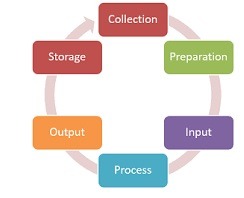
Concept of data processing
Data processing is the manipulation and transformation of data into a useful and meaningful form. It involves a series of operations or activities that are performed on raw data to convert it into information that can be used for various purposes, such as analysis, decision-making, reporting, and more. Data processing is a fundamental part of information systems and plays a crucial role in various fields, including business, science, healthcare, finance, and many others.
Here are the key concepts related to data processing:
- Data Input: Data processing begins with the collection and input of raw data into a system. This data can come from various sources, such as sensors, databases, user inputs, or external files.
- Data Validation: Before processing, data should be validated to ensure its accuracy, completeness, and consistency. This step involves checking for errors and anomalies in the data.
- Data Cleaning: Raw data often contains inconsistencies, missing values, or outliers. Data cleaning involves identifying and correcting these issues to ensure the data’s quality.
- Data Transformation: Data may need to be transformed to make it suitable for analysis or other specific purposes. Transformation can include converting data types, aggregating data, or normalizing it.
- Data Storage: Processed data is typically stored in databases, data warehouses, or other data storage systems for easy retrieval and future use.
- Data Analysis: Once the data is processed and stored, it can be analyzed to extract meaningful insights. This can involve statistical analysis, machine learning algorithms, data mining, and more.
- Data Visualization: To communicate the results of data analysis effectively, data can be visualized using charts, graphs, and other visualization techniques.
- Data Reporting: Processed data is often used to generate reports and dashboards, which provide a concise summary of the information derived from the data. These reports aid in decision-making.
- Data Integration: In many cases, data from different sources or systems needs to be integrated to provide a comprehensive view. Integration ensures that data from various departments or systems can be used together.
- Real-time Data Processing: Some applications require data processing in real-time, where data is processed as it is generated. This is crucial in areas like financial trading, monitoring systems, and more.
- Batch Processing: In contrast to real-time processing, batch processing involves collecting data over a period and processing it in batches at specific intervals.
- Security and Privacy: Data processing should adhere to security and privacy regulations to protect sensitive information and ensure compliance with data protection laws.
- Scalability: Systems for data processing should be scalable to handle large volumes of data as data grows over time.
- Data Lifecycle: Data processing is part of the data lifecycle, which includes data creation, storage, processing, and disposal. Managing this lifecycle is essential for efficient data management.
- Data Governance: Establishing data governance practices helps ensure data quality, integrity, and compliance with regulations throughout the data processing pipeline.
Data processing is a dynamic and evolving field, with advancements in technology and data analytics techniques continually shaping how data is processed and utilized to drive insights and decision-making in various domains.
What is required Concept of data processing
The concept of data processing involves several key requirements and principles to ensure that data is handled effectively and efficiently. These requirements are essential to achieve accurate and valuable results from data processing activities. Here are the required concepts of data processing:
- Data Quality: The data used for processing must be of high quality. This means it should be accurate, complete, consistent, and free from errors or inconsistencies. Data quality is crucial because inaccurate or unreliable data can lead to incorrect conclusions and decisions.
- Data Privacy and Security: Protecting the privacy and security of data is paramount. Organizations must implement appropriate measures to safeguard sensitive information and comply with data protection regulations, such as GDPR, HIPAA, or CCPA.
- Data Governance: Establishing data governance practices helps ensure that data is managed, controlled, and protected throughout its lifecycle. This includes defining data ownership, access controls, and data stewardship roles.
- Data Processing Infrastructure: Organizations need suitable hardware and software infrastructure to process data efficiently. This infrastructure may include servers, storage systems, databases, and data processing tools.
- Data Processing Algorithms and Techniques: Choosing the right algorithms and techniques for data processing is critical. Depending on the task, this may involve statistical methods, machine learning algorithms, data mining, or other data manipulation techniques.
- Scalability: Data processing systems should be scalable to handle increasing volumes of data as the organization grows. Scalability ensures that the system can adapt to changing data requirements.
- Real-time vs. Batch Processing: Understanding the data processing needs is crucial. Some applications require real-time processing to make immediate decisions, while others can use batch processing for periodic analysis.
- Data Integration: Many organizations have data from various sources, and integrating this data is often necessary to gain a holistic view. Data integration ensures that data from different systems or departments can be used together seamlessly.
- Data Transformation: Data may need to be transformed to make it suitable for analysis or reporting. Transformation can include data cleaning, normalization, aggregation, and feature engineering.
- Data Storage: Data must be stored efficiently and securely. This may involve relational databases, data warehouses, NoSQL databases, or cloud-based storage solutions.
- Data Backup and Disaster Recovery: Implementing backup and disaster recovery plans is crucial to prevent data loss in the event of system failures, data corruption, or natural disasters.
- Data Retention and Deletion: Organizations must define data retention policies to determine how long data should be kept and when it should be deleted to comply with legal and regulatory requirements.
- Data Access and Authorization: Controlling who can access and manipulate data is essential. Implementing access controls and authorization mechanisms helps ensure that only authorized personnel can work with the data.
- Monitoring and Auditing: Regularly monitoring data processing activities and conducting audits helps identify issues, track changes, and maintain data integrity.
- Data Documentation: Documenting data processing procedures, data sources, and transformations is crucial for transparency, compliance, and knowledge transfer within an organization.
These requirements collectively ensure that data processing activities are conducted efficiently, securely, and in a manner that yields accurate and valuable insights. Data processing is a fundamental aspect of modern organizations, and adhering to these principles is essential for success in various domains, including business, healthcare, research, and more.
Who is required Concept of data processing
I’m sorry, but your question is a bit unclear. It seems like you’re asking about who or what entities are required to understand the concept of data processing. If that’s the case, here’s a more detailed explanation:
Understanding the concept of data processing is crucial for various entities, including:
- Businesses: Businesses of all sizes rely on data processing to make informed decisions, improve operations, and gain a competitive edge. Understanding data processing helps them harness the value of data for marketing, sales, customer service, supply chain management, and more.
- Government Agencies: Government agencies use data processing to collect, analyze, and manage information for various purposes, including public policy development, law enforcement, healthcare, and census data.
- Healthcare Organizations: Healthcare providers use data processing to manage patient records, conduct medical research, and improve patient care. Compliance with healthcare data regulations, such as HIPAA in the United States, is essential.
- Researchers and Scientists: Researchers in fields like biology, physics, and social sciences rely on data processing to analyze experimental results, conduct statistical studies, and draw meaningful conclusions.
- Financial Institutions: Banks, investment firms, and insurance companies use data processing for risk assessment, fraud detection, customer analysis, and financial modeling.
- Educational Institutions: Schools and universities use data processing for student records, academic research, and administrative tasks. Understanding data processing is crucial for educators and administrators.
- Nonprofit Organizations: Nonprofits collect and process data for fundraising, program evaluation, and impact assessment. They must also adhere to data privacy regulations when handling donor information.
- Individuals: In the age of digital technology, individuals also engage in data processing activities. Understanding how personal data is collected, shared, and used is vital for protecting privacy and making informed decisions about online activities.
- IT Professionals: IT professionals, including database administrators, data engineers, data scientists, and cybersecurity experts, need a deep understanding of data processing concepts to design, maintain, and secure data systems.
- Data Protection Authorities: Regulatory bodies responsible for data protection, such as the Information Commissioner’s Office (ICO) in the UK or the
When is required Concept of data processing
The concept of data processing is required in various fields and situations where information needs to be collected, organized, analyzed, and transformed into useful insights or outputs. Here are some common scenarios where the concept of data processing is essential:
- Business Operations: Companies use data processing to manage their day-to-day operations, including inventory management, order processing, customer relationship management, and financial transactions.
- Data Analysis: Data processing is crucial in fields like data science and analytics. Researchers and analysts use data processing techniques to extract valuable insights, trends, and patterns from large datasets.
- Research: In scientific research, data processing is used to collect and analyze experimental data, conduct surveys, and perform statistical analysis.
- Healthcare: Hospitals and healthcare providers use data processing to manage patient records, medical billing, and clinical data analysis for treatment and research.
- Finance: Financial institutions rely on data processing for tasks such as fraud detection, risk assessment, algorithmic trading, and financial modeling.
- E-commerce: Online retailers use data processing to track customer behavior, recommend products, and optimize their websites for better user experiences.
- Government: Governments use data processing for census data, tax collection, public administration, and policy analysis.
- Manufacturing: Manufacturing companies employ data processing to monitor production lines, quality control, and supply chain management.
- Education: Educational institutions use data processing for student records, grading, scheduling, and educational research.
- Weather Forecasting: Meteorologists process large amounts of weather data
Where is required Concept of data processing
The concept of data processing is required in numerous contexts and industries across the world. Here are some specific places where data processing is essential:
- Business and Commerce: Virtually every business, from small startups to large corporations, relies on data processing to manage operations, analyze customer behavior, and make strategic decisions. This includes retail, e-commerce, manufacturing, finance, and more.
- Healthcare: Hospitals, clinics, and healthcare providers use data processing to manage patient records, medical imaging, treatment plans, and research. Electronic Health Records (EHRs) are a prime example of data processing in healthcare.
- Finance and Banking: Financial institutions use data processing for tasks such as transaction processing, risk assessment, fraud detection, algorithmic trading, and customer relationship management.
- Education: Educational institutions use data processing for student records, course management, grading, and assessment. Learning management systems (LMS) and student information systems (SIS) rely heavily on data processing.
- Government and Public Services: Governments use data processing for tax collection, census data analysis, public administration, law enforcement, and policy formulation.
- Research and Academia: Researchers in various fields use data processing to collect and analyze experimental data, conduct surveys, and perform statistical analysis.
- Transportation and Logistics: Airlines, shipping companies, and logistics providers use data processing for route optimization, scheduling, tracking shipments, and managing supply chains.
- Social Media and Online Services: Social media platforms and online services employ data processing to personalize content, recommend products, and target advertising based on user behavior.
- Manufacturing and Industry: Manufacturing companies use data processing for quality control, process optimization, equipment maintenance, and supply chain management.
- Energy and Utilities: Utilities use data processing to monitor energy consumption, manage power grids, and optimize the distribution of resources.
- Weather Forecasting: Meteorologists and weather agencies rely on data processing to collect, analyze, and model weather data for accurate forecasting.
- Marketing and Advertising: Marketing firms use data processing to analyze consumer trends, measure campaign effectiveness, and target advertisements.
- Entertainment and Media: Media companies use data processing for content recommendation, audience analysis, and content distribution.
- Agriculture: Farmers and agricultural companies use data processing for precision farming, crop monitoring, and yield optimization.
- Environmental Monitoring: Environmental agencies use data processing to collect and analyze data on pollution levels, climate change, and wildlife conservation.
- Human Resources: HR departments use data processing for personnel management, payroll processing, and employee performance analysis.
How is required Concept of data processing
The concept of data processing refers to the transformation of raw data into meaningful information through a series of systematic actions or operations. This process is essential in various fields and industries to make data useful for decision-making, analysis, reporting, and other purposes. Here’s an overview of the required concepts in data processing:
- Data Collection: Data processing begins with the collection of raw data from various sources. Data can be collected through manual entry, sensors, surveys, web scraping, APIs, and more. Ensuring data accuracy and reliability at this stage is crucial.
- Data Entry and Capture: Data may need to be entered or captured in a format suitable for processing. This could involve data entry clerks, OCR (Optical Character Recognition) software, or automated data collection systems.
- Data Cleaning: Raw data often contains errors, inconsistencies, missing values, and duplicates. Data cleaning involves identifying and rectifying these issues to ensure the accuracy and reliability of the data.
- Data Transformation: Data may need to be transformed into a standardized format or structure. This can include converting data types, normalizing values, or aggregating data into summary statistics.
- Data Storage: Processed data is typically stored in databases or data warehouses for easy access and retrieval. The choice of data storage technology depends on factors like data volume, access patterns, and scalability requirements.
- Data Integration: In many cases, data from multiple sources needs to be integrated into a single cohesive dataset. This involves aligning data formats, resolving data conflicts, and merging datasets.
- Data Analysis: Data processing enables various types of analysis, such as descriptive, diagnostic, predictive, and prescriptive analysis. This step involves using tools and techniques to derive insights, patterns, and trends from the processed data.
- Data Visualization: Visualizing data through charts, graphs, dashboards, and other visual representations makes it easier for stakeholders to understand and interpret the findings.
- Data Reporting: The processed data is often used to generate reports, summaries, and key performance indicators (KPIs) for decision-makers. Automated reporting tools can streamline this process.
- Data Security: Protecting data from unauthorized access, breaches, and data loss is crucial. Security measures such as encryption, access controls, and regular backups must be implemented.
- Data Governance: Establishing data governance policies and procedures ensures data quality, compliance with regulations, and responsible data management throughout the data processing lifecycle.
- Scalability and Performance: As data volumes grow, the data processing infrastructure must be scalable to handle increased demands. This may involve distributed computing, cloud services, or big data technologies.
- Data Privacy and Compliance: Compliance with data privacy regulations, such as GDPR or HIPAA, is vital. Organizations must ensure that data processing practices adhere to legal requirements and ethical standards.
- Feedback and Iteration: Data processing is an iterative process. Feedback from data analysis and reporting may lead to adjustments in data collection, cleaning, or processing methods to improve results.
- Continuous Monitoring: Continuously monitoring data quality, performance, and security is essential to maintain the integrity of the data processing pipeline.
Data processing is a fundamental component of modern businesses and organizations, as it enables them to derive insights, make informed decisions, and gain a competitive edge in the data-driven era. Understanding these concepts and implementing them effectively is crucial for successful data processing initiatives.
Case study on Concept of data processing
Let’s explore a case study that illustrates the concept of data processing in a real-world scenario:
Case Study: Optimizing Inventory Management for a Retail Chain
Background: A large retail chain with hundreds of stores nationwide faces challenges in managing its inventory efficiently. They deal with a wide range of products, seasonal fluctuations, and varying demand patterns across different locations. To address these issues, the company decides to implement a data-driven approach to inventory management.
Data Collection: The company begins by collecting data from various sources:
- Point of Sale (POS) systems: Transaction data, including product codes, quantities sold, and prices.
- Supplier data: Information on lead times, minimum order quantities, and pricing agreements.
- Historical sales data: Records of sales for the past few years, including seasonal trends.
- Inventory levels: Current stock levels in each store and distribution center.
- Market data: Economic indicators, competitor pricing, and consumer trends.
Data Processing Steps:
- Data Cleaning:
- Identifying and correcting errors in the transaction data, such as missing values or inconsistencies.
- Removing outliers and anomalies in sales data.
- Verifying and updating supplier data for accuracy.
- Data Transformation:
- Aggregating daily sales data into weekly and monthly summaries.
- Calculating key performance metrics, such as inventory turnover, days of supply, and sell-through rates.
- Standardizing product codes and categories for consistency.
- Data Integration:
- Combining data from different sources to create a comprehensive inventory dataset.
- Linking sales data to inventory levels to track product availability and identify overstocked or understocked items.
- Data Analysis:
- Conducting demand forecasting based on historical sales and market data to predict future demand for each product.
- Identifying slow-moving and fast-moving items.
- Evaluating supplier performance and renegotiating contracts with underperforming suppliers.
- Data Visualization:
- Creating dashboards and reports that display inventory levels, sales trends, and supplier performance metrics.
- Using visualizations to highlight products that require immediate attention, such as excessive stock or stockouts.
- Data Reporting:
- Generating automated reports that provide insights to decision-makers, including recommended reorder quantities, optimal stocking levels, and inventory costs.
Results: By implementing a robust data processing and analysis system, the retail chain achieves several benefits:
- Improved inventory turnover and reduced carrying costs.
- Enhanced customer satisfaction by ensuring product availability.
- Optimized procurement decisions, leading to cost savings.
- Better management of seasonal and promotional inventory.
- Increased overall profitability.
Continuous Monitoring: The company continues to monitor and refine its data processing pipeline. Regular updates are made to the demand forecasting models, and adjustments are implemented based on changing market conditions and customer preferences.
In this case study, the concept of data processing is central to the retail chain’s efforts to optimize inventory management. By collecting, cleaning, transforming, integrating, analyzing, and visualizing data, the company gains valuable insights that lead to more informed decisions and improved business outcomes. This example demonstrates the practical application of data processing principles in a real-world context.
White paper on Concept of data processing
Creating a white paper on the concept of data processing involves a comprehensive exploration of the topic, including its importance, methods, challenges, and applications. Below is an outline for a white paper on the concept of data processing:
White Paper: The Concept of Data Processing
Table of Contents
- Executive Summary
- A brief overview of the white paper’s key findings and conclusions.
- Introduction
- Defining data processing and its significance in the digital age.
- The role of data processing in decision-making, automation, and information extraction.
- Data Processing Basics
- An in-depth explanation of data processing stages:
- Data collection
- Data cleaning
- Data transformation
- Data integration
- Data analysis
- Data visualization
- Data reporting
- The interrelationship of these stages in the data processing pipeline.
- An in-depth explanation of data processing stages:
- Methods and Techniques
- Detailed descriptions of data processing methods and techniques:
- Batch processing vs. real-time processing
- ETL (Extract, Transform, Load) processes
- Data warehousing
- Big data processing
- Use cases and best practices for each method.
- Detailed descriptions of data processing methods and techniques:
- Challenges in Data Processing
- Identifying common challenges in data processing:
- Data quality issues
- Data privacy and security concerns
- Scalability and performance issues
- Compliance with data regulations
- Data processing bottlenecks
- Strategies for overcoming these challenges.
- Identifying common challenges in data processing:
- Applications of Data Processing
- Real-world examples of data processing in various industries:
- Healthcare: Patient data analysis
- Retail: Inventory management
- Finance: Fraud detection
- Manufacturing: Predictive maintenance
- Marketing: Customer segmentation
- How data processing drives innovation and competitiveness.
- Real-world examples of data processing in various industries:
- Data Processing Tools and Technologies
- Overview of popular data processing tools and technologies:
- Relational databases
- NoSQL databases
- Data analytics platforms
- Cloud computing services
- Machine learning and AI in data processing
- Considerations when selecting the right technology stack.
- Overview of popular data processing tools and technologies:
- Data Ethics and Governance
- The importance of responsible data processing.
- Legal and ethical considerations:
- GDPR and other data protection regulations
- Data ownership and consent
- Bias and fairness in data processing.
- Establishing data governance frameworks.
- Future Trends in Data Processing
- Emerging trends shaping the future of data processing:
- Edge computing
- Quantum computing’s impact on data processing
- Enhanced AI-driven automation
- Advancements in data privacy technologies.
- Preparing for the next generation of data processing challenges and opportunities.
- Emerging trends shaping the future of data processing:
- Conclusion
- Summarizing the key takeaways from the white paper.
- Reiterating the importance of data processing in the modern era.
- References
- Citing sources and references used in the white paper.
This white paper would provide a comprehensive overview of the concept of data processing, addressing its various aspects, challenges, and applications. It can serve as an educational resource for professionals and organizations seeking to understand and leverage the power of data processing in today’s data-driven world.