
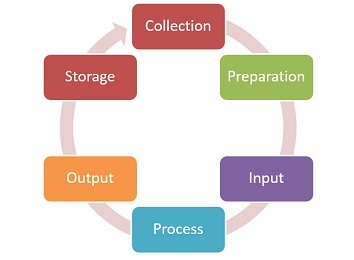
Concept of Data Processing
Data processing is the manipulation and transformation of raw data into meaningful information through a series of operations or activities. It involves the collection, storage, retrieval, transformation, and output of data to produce useful insights, support decision-making, or automate tasks. Data processing can take place manually or, more commonly today, with the assistance of computers and specialized software. Here are key concepts related to data processing:
- Data Input: This is the initial step in data processing where raw data is collected and entered into a system. Data can be in various forms, including text, numbers, images, audio, or video. Data input can be done manually, such as entering data into a spreadsheet, or automatically, such as capturing sensor data from IoT devices.
- Data Collection: Data collection involves systematically gathering data from various sources, such as surveys, sensors, databases, or web scraping. Data collection methods and tools vary depending on the nature of the data and the objectives of the data processing.
- Data Storage: Once collected, data needs to be stored for future use. Data can be stored in various forms, including databases, data warehouses, cloud storage, and physical media like hard drives or tapes. Proper data storage ensures data integrity and accessibility.
- Data Cleaning: Raw data often contains errors, inconsistencies, or missing values. Data cleaning involves identifying and rectifying these issues to ensure the accuracy and reliability of the data. Cleaning may include removing duplicates, correcting typos, and filling in missing values.
- Data Transformation: Data often needs to be transformed to make it suitable for analysis or reporting. This can involve converting data types, aggregating data, or creating new derived variables. Data transformation is a crucial step in data processing pipelines.
- Data Analysis: Data analysis involves examining the processed data to identify patterns, trends, correlations, and insights. Statistical analysis, machine learning, and data visualization techniques are commonly used to extract meaningful information from data.
- Data Output: The results of data processing are typically presented in a format that is understandable and useful to humans. This may involve creating reports, charts, dashboards, or visualizations. Data output is often used for decision-making and reporting purposes.
- Data Storage and Retrieval: Processed data may need to be stored for archival purposes or retrieved for future analysis. Effective data storage and retrieval systems ensure that historical data remains accessible when needed.
- Real-Time Data Processing: In some applications, data processing needs to happen in real time or near-real time, without delays. This is common in applications like financial trading, monitoring systems, and streaming media services.
- Batch Processing vs. Stream Processing: Data processing can be categorized into batch processing, where data is collected and processed in batches or groups, and stream processing, where data is processed continuously as it arrives. Stream processing is used for real-time applications.
- Security and Privacy: Data processing must adhere to security and privacy regulations to protect sensitive information. This includes encryption, access controls, and compliance with data protection laws like GDPR or HIPAA.
- Scalability: As data volumes grow, data processing systems must be scalable to handle the increased load efficiently. Scalability often involves distributed computing and parallel processing.
- Automation: Automation of data processing tasks is common, especially in business and industrial settings. Workflow automation tools and scripts can streamline data processing pipelines and reduce manual effort.
- Data Processing Pipelines: Data processing often follows a predefined sequence of steps known as a data processing pipeline. Each step in the pipeline contributes to the overall processing of data.
- Data Governance: Data governance refers to the policies, processes, and controls put in place to manage data quality, security, and compliance throughout the data processing lifecycle.
Data processing is a fundamental concept in the digital age, and it underpins various fields, including business intelligence, data science, machine learning, and information technology. Effective data processing enables organizations and individuals to make informed decisions, automate tasks, and extract valuable insights from the ever-increasing volume of data generated in today’s world.
What is required COncept of Data Processing
The concept of data processing refers to the series of actions or operations that are performed on data to convert it from raw, unorganized information into a meaningful and useful format. Data processing is a fundamental part of information systems and plays a crucial role in various domains, from business and science to everyday life. Here’s an overview of the required concepts in data processing:
- Data: Data is raw, unprocessed information that can take various forms, including text, numbers, images, audio, and video. It represents facts, observations, or measurements that have yet to be organized or analyzed.
- Data Processing Steps: Data processing involves a sequence of steps or operations to convert raw data into valuable information. These steps typically include data collection, data entry, data cleaning, data transformation, data analysis, and data presentation.
- Data Collection: This is the process of gathering data from various sources, such as sensors, surveys, databases, or web scraping. It’s the initial step in data processing and can be done manually or automatically.
- Data Entry: Data entry involves inputting collected data into a computer system or a database. This can be done manually by individuals or automatically through software applications and devices.
- Data Cleaning: Raw data often contains errors, inconsistencies, or missing values. Data cleaning, also known as data cleansing, is the process of identifying and correcting these issues to ensure data accuracy and reliability.
- Data Transformation: Data often needs to be transformed to make it suitable for analysis or reporting. This may involve converting data types, aggregating data, performing calculations, or creating new derived variables.
- Data Analysis: Data analysis is the process of examining processed data to discover patterns, trends, correlations, and insights. Statistical methods, machine learning algorithms, and data visualization techniques are commonly used for this purpose.
- Data Presentation: The results of data processing are typically presented in a format that is understandable and useful to humans. This can include reports, charts, graphs, dashboards, and visualizations.
- Batch Processing vs. Real-Time Processing: Data processing can occur in batch mode, where data is collected and processed in groups, or in real-time, where data is processed as it arrives. Real-time processing is critical for applications like financial transactions and monitoring systems.
- Data Storage: Processed data may need to be stored for future reference or analysis. Data storage solutions, such as databases or cloud storage, are used to maintain data integrity and accessibility.
- Data Governance: Data governance involves establishing policies, procedures, and controls to manage data quality, security, and compliance throughout the data processing lifecycle. It ensures that data is used responsibly and ethically.
- Data Security: Protecting data from unauthorized access, breaches, and cyberattacks is a critical aspect of data processing. Encryption, access controls, and cybersecurity measures are employed to safeguard data.
- Data Privacy: Data processing must comply with privacy regulations and protect the personal information of individuals. Data anonymization, consent management, and privacy policies are essential considerations.
- Scalability: Data processing systems must be scalable to handle increasing data volumes efficiently. Scalability often involves distributed computing and parallel processing.
- Automation: Automation of data processing tasks using scripts, workflows, and software tools can streamline processes, reduce manual errors, and improve efficiency.
- Data Processing Pipelines: Data processing often follows predefined sequences of steps known as data processing pipelines. Each step in the pipeline contributes to the overall processing of data.
- Data Integration: Combining data from multiple sources and formats to create a unified view of information is known as data integration. It’s essential for comprehensive analysis and reporting.
Data processing is a core concept in the information age, enabling organizations and individuals to extract valuable insights, make informed decisions, and automate tasks. It is a fundamental aspect of fields like data science, business intelligence, and information technology, and its importance continues to grow as the volume and complexity of data generated in the digital era increase.
Who is required Concept of Data Processing
The concept of data processing is required and relevant to a wide range of individuals, professionals, and organizations across various industries and domains. Here’s a breakdown of who requires an understanding of the concept of data processing:
- Data Scientists and Analysts: Data scientists and analysts use data processing techniques to extract meaningful insights from data. They work with raw data, clean and transform it, perform statistical analysis, and create data visualizations to make informed decisions.
- Business Professionals: Business executives, managers, and decision-makers rely on data processing to analyze market trends, customer behavior, and financial data. It helps them make strategic decisions and plan for the future.
- IT Professionals: Information technology professionals, including database administrators, system administrators, and software developers, work with data processing systems, databases, and software tools to ensure data is collected, stored, and processed effectively.
- Researchers and Scientists: Researchers in various fields, such as biology, physics, and social sciences, use data processing to analyze experimental results, conduct simulations, and perform statistical tests to advance their research.
- Healthcare Practitioners: Healthcare professionals use data processing to manage patient records, analyze medical data, and improve patient care through data-driven insights.
- Financial Analysts and Traders: Professionals in finance use data processing for market analysis, risk assessment, algorithmic trading, and investment decision-making.
- Educators and Students: Educators teach data processing concepts to students as part of data science, computer science, and business courses. Students learn how to work with data to solve real-world problems.
- Government Agencies: Government agencies use data processing to manage citizen data, conduct research, monitor public health, and make informed policy decisions.
- Marketing and Advertising Professionals: Marketers analyze customer data, perform segmentation, and track campaign performance through data processing techniques to optimize marketing strategies.
- Manufacturers and Engineers: Engineers use data processing in manufacturing for quality control, process optimization, and predictive maintenance, while product designers use it for simulations and testing.
- Retailers and E-commerce Businesses: Retailers use data processing to manage inventory, analyze sales data, personalize customer experiences, and optimize pricing.
- Media and Entertainment Industry: The media and entertainment industry relies on data processing for content recommendation systems, content delivery optimization, and audience analysis.
- Transportation and Logistics: Companies in the transportation and logistics sector use data processing for route optimization, tracking shipments, and managing supply chains.
- Energy and Utilities: The energy sector uses data processing for monitoring power grids, optimizing energy production, and analyzing consumption patterns.
- Environmental Scientists: Environmental scientists use data processing for analyzing climate data, monitoring environmental changes, and conducting simulations.
- Security and Law Enforcement: Law enforcement agencies use data processing for criminal investigations, surveillance, and threat analysis.
- Agriculture and Farming: Farmers and agricultural researchers use data processing for precision agriculture, crop monitoring, and yield optimization.
- Non-profit Organizations: Non-profit organizations use data processing to track donations, measure the impact of their programs, and make data-driven decisions.
In summary, the concept of data processing is required across a diverse range of professions and industries. It is a fundamental skill and knowledge area in the digital age, enabling individuals and organizations to harness the power of data for decision-making, problem-solving, and innovation.
When is required Concept of Data Processing
The concept of data processing is required in various situations and contexts across different industries and disciplines. Here are some common scenarios and instances where an understanding of data processing is necessary:
- Data-Driven Decision-Making: Organizations of all types rely on data processing to make informed decisions. This can include decisions related to marketing strategies, product development, resource allocation, and financial planning.
- Market Analysis: Businesses need data processing to analyze market trends, consumer behavior, and competitive landscapes. This helps them identify opportunities and develop effective marketing and sales strategies.
- Financial Management: Financial institutions, investment firms, and individual investors use data processing to analyze financial data, manage portfolios, and make investment decisions.
- Healthcare: Healthcare professionals use data processing to manage patient records, conduct medical research, and improve patient care through data-driven insights.
- Scientific Research: Researchers in various fields, such as physics, biology, and social sciences, rely on data processing to analyze experimental results, conduct simulations, and test hypotheses.
- Educational Institutions: Schools and universities teach data processing concepts to students studying computer science, data science, statistics, and related fields.
- Government and Policy Making: Government agencies use data processing for policy analysis, citizen data management, public health monitoring, and more.
- Environmental Monitoring: Scientists and environmental organizations use data processing to analyze environmental data, track climate changes, and assess the impact of human activities on ecosystems.
- Manufacturing and Quality Control: Manufacturers use data processing to ensure product quality, optimize production processes, and predict maintenance needs.
- Transportation and Logistics: Transportation companies use data processing for route optimization, tracking shipments, and managing supply chains.
- Energy Management: Energy companies use data processing to monitor power grids, optimize energy production, and analyze energy consumption patterns.
- Agriculture and Farming: Farmers and agricultural researchers use data processing for precision agriculture, crop management, and yield optimization.
- Law Enforcement and Security: Law enforcement agencies use data processing for criminal investigations, surveillance, and threat analysis.
- Media and Entertainment: Media companies use data processing to recommend content to users, optimize content delivery, and analyze audience behavior.
- Retail and E-commerce: Retailers and e-commerce businesses use data processing to manage inventory, analyze sales data, and personalize customer experiences.
- Non-profit Organizations: Non-profits use data processing to track donations, measure the impact of their programs, and make data-driven decisions to fulfill their missions effectively.
- Information Technology: IT professionals use data processing to manage databases, troubleshoot system issues, and develop software applications.
- Personal Use: Individuals use data processing for personal finance management, data analysis, and hobby-related projects.
In essence, data processing is required in nearly every sector and context where data is collected and used for decision-making, analysis, automation, and problem-solving. It is a fundamental concept in the digital age, enabling individuals and organizations to extract valuable insights and derive actionable information from data.
Where is required Concept of Data Processing
The concept of data processing is required in a wide range of locations and settings, reflecting its ubiquity in our increasingly data-driven world. Here are common places and environments where the concept of data processing is essential:
- Businesses and Corporations: Data processing is crucial in business operations for tasks like customer relationship management, financial analysis, inventory management, and marketing.
- Retail Stores: Retailers use data processing for inventory control, sales analysis, point-of-sale transactions, and customer relationship management.
- Financial Institutions: Banks, investment firms, and insurance companies rely on data processing for transactions, risk assessment, fraud detection, and compliance.
- Healthcare Facilities: Hospitals, clinics, and healthcare organizations use data processing for patient records, medical billing, diagnostic analysis, and medical research.
- Educational Institutions: Schools, colleges, and universities employ data processing for student records, grading, enrollment, and educational research.
- Government Offices: Government agencies at local, state, and federal levels use data processing for administrative tasks, public services, tax collection, and data-driven policy decisions.
- Manufacturing Plants: Manufacturing facilities employ data processing for quality control, supply chain management, production planning, and equipment maintenance.
- Transportation and Logistics: Airlines, shipping companies, and logistics providers use data processing for route optimization, package tracking, and fleet management.
- Energy and Utilities: Energy companies rely on data processing for grid management, energy production optimization, and customer billing.
- Research Laboratories: Scientific research facilities use data processing for data analysis, simulations, and experimental control.
- Telecommunication Hubs: Telecommunication companies use data processing to manage network infrastructure, provide communication services, and analyze network traffic.
- Data Centers: Data centers are dedicated facilities for data processing, storage, and server hosting, supporting various online services and cloud computing.
- Internet Cafes: Internet cafes offer public access to data processing resources for web browsing, gaming, and communication.
- Entertainment Venues: The entertainment industry employs data processing for content delivery, ticketing systems, and audience analytics in theaters, cinemas, and concert halls.
- Aerospace and Aviation: Aircraft and spacecraft are equipped with advanced computers for navigation, control systems, and monitoring.
- Remote and Rural Areas: Computers and mobile devices are used for data processing in remote and rural areas for internet connectivity, education, and telemedicine.
- Space Stations: Space stations like the International Space Station (ISS) rely on data processing for life support systems, experiments, and communication.
- Military and Defense: The military uses data processing for communication, logistics, reconnaissance, and weapon systems.
- Home Offices and Personal Spaces: Many individuals have home offices or personal spaces where they perform data processing tasks such as working, studying, and entertainment.
- Research Expeditions: Scientific research expeditions to remote locations use data processing for data collection, analysis, and communication.
In essence, the concept of data processing is required in a multitude of locations and settings, from everyday life to complex industrial operations. Its application is foundational to modern society, supporting numerous industries and activities that depend on the effective management, analysis, and utilization of data.
How is required Concept of Data Processing
The concept of data processing is required because it serves as the fundamental framework for managing and extracting value from the vast amounts of data generated in today’s digital world. The “how” of data processing involves a series of steps and techniques that transform raw data into meaningful information. Here’s how the concept of data processing is applied:
- Data Collection: Data is collected from various sources, such as sensors, databases, websites, forms, or devices. This can involve automated data capture or manual entry.
- Data Entry: Collected data is entered into a computer system or database. Data entry may be manual, automated through sensors, or facilitated by users through input devices.
- Data Preprocessing: Raw data often contains errors, inconsistencies, or missing values. Data preprocessing includes data cleaning to identify and rectify these issues, ensuring data quality.
- Data Transformation: Data may need to be transformed to make it suitable for analysis. This can involve converting data types, aggregating data, filtering irrelevant information, and creating new derived variables.
- Data Storage: Processed data is stored in databases, data warehouses, or other storage systems for future retrieval and analysis. Proper data storage ensures data integrity and accessibility.
- Data Analysis: Data analysis involves applying statistical, mathematical, and computational techniques to explore and uncover patterns, trends, and insights within the data. Tools like statistical software and programming languages are used for this purpose.
- Data Visualization: The results of data analysis are often presented in visual formats such as charts, graphs, and dashboards. Data visualization makes it easier to interpret and communicate findings.
- Data Interpretation: Data analysts and domain experts interpret the results of data analysis, drawing meaningful conclusions and making informed decisions based on the insights gained.
- Real-Time Processing: In some applications, data processing needs to occur in real-time or near-real-time to support immediate decision-making. This is common in areas like finance, healthcare, and industrial automation.
- Batch Processing: In other cases, data is processed in batches, where data is collected and processed in groups or at scheduled intervals. Batch processing is often used for data reporting and historical analysis.
- Machine Learning and Artificial Intelligence: Advanced data processing techniques involve machine learning and AI algorithms that can automatically learn patterns from data and make predictions or classifications.
- Automation: Automation of data processing tasks is common to streamline workflows, reduce manual errors, and improve efficiency. Workflow automation tools and scripts are employed for this purpose.
- Data Security: Protecting data from unauthorized access and breaches is critical. Data encryption, access controls, and cybersecurity measures are used to safeguard sensitive information.
- Data Privacy: Compliance with data protection regulations and ensuring the privacy of individuals’ data is paramount in data processing, requiring robust privacy policies and practices.
- Scalability: Data processing systems must be scalable to handle increasing data volumes efficiently. Scalability often involves distributed computing and parallel processing.
- Data Governance: Data governance encompasses policies, procedures, and controls to manage data quality, security, and compliance throughout the data processing lifecycle.
- Data Integration: Combining data from multiple sources and formats to create a unified view of information is known as data integration. It’s essential for comprehensive analysis and reporting.
- Performance Optimization: Data processing workflows and algorithms are continually optimized to improve processing speed and efficiency.
In summary, the concept of data processing is required to harness the power of data effectively. It encompasses a wide range of techniques and practices that enable organizations and individuals to transform raw data into valuable insights, drive informed decisions, and create innovative solutions. How data is processed depends on the specific goals and requirements of each data processing task, but it is an essential skill and capability in our data-driven world.
Case study on Concept of Data Processing
Case Study: Optimizing Inventory Management through Data Processing
Background: XYZ Retailers is a national retail chain with multiple stores across the country. They sell a wide range of products, from electronics to clothing. XYZ Retailers had been struggling with inventory management issues, including overstocked items in some locations, frequent stockouts in others, and inefficient restocking processes. To address these challenges, they decided to leverage data processing techniques to optimize their inventory management.
Challenges:
- Inventory Imbalances: Some stores had excess inventory of certain products, while others frequently ran out of stock, resulting in lost sales opportunities and increased holding costs.
- Manual Processes: Inventory data was managed manually, leading to errors and delays in restocking decisions.
- Demand Variability: Seasonal and regional variations in customer demand made it challenging to predict inventory needs accurately.
- Cost Optimization: XYZ Retailers aimed to reduce holding costs by stocking only what was necessary while ensuring products were available to meet customer demand.
Solution:
1. Data Collection:
- XYZ Retailers implemented an automated inventory tracking system that collected real-time data on sales, returns, and inventory levels at each store location.
2. Data Preprocessing:
- Raw inventory data was preprocessed to clean and standardize it. This involved identifying and correcting data entry errors, handling missing values, and ensuring consistency in data formats.
3. Data Analysis:
- Data analysts used historical sales data and statistical techniques to identify trends, seasonality, and demand patterns for different product categories in each store.
4. Demand Forecasting:
- Forecasting models were developed using machine learning algorithms to predict future demand for each product in every store. These models considered factors like historical sales, seasonality, promotions, and external factors like local events and holidays.
5. Inventory Optimization:
- Based on demand forecasts, an inventory optimization algorithm determined optimal reorder points, safety stock levels, and order quantities for each product. This ensured that products were replenished when needed without overstocking.
6. Real-Time Monitoring:
- The system provided real-time monitoring of inventory levels and alerted store managers and procurement teams when stock levels reached reorder points or when unusual sales patterns were detected.
7. Data Visualization:
- Dashboards and data visualizations were created to provide a clear overview of inventory performance, demand forecasts, and sales trends. This allowed store managers to make informed decisions.
Results:
1. Improved Inventory Turnover:
- By optimizing inventory levels and restocking processes, XYZ Retailers significantly improved inventory turnover rates, reducing holding costs.
2. Increased Sales:
- By avoiding stockouts and ensuring products were available when customers needed them, XYZ Retailers experienced increased sales and customer satisfaction.
3. Cost Reduction:
- Holding costs decreased as overstock situations were minimized, leading to cost savings.
4. Efficient Restocking:
- Manual restocking processes were replaced with automated reordering, reducing errors and delays.
5. Better Decision-Making:
- Store managers could make data-driven decisions based on demand forecasts and real-time inventory data.
Conclusion:
By leveraging data processing techniques, XYZ Retailers successfully addressed their inventory management challenges. Data collection, preprocessing, analysis, and optimization allowed them to improve inventory turnover, reduce holding costs, increase sales, and make more informed decisions. This case study illustrates how data processing can transform raw data into actionable insights, leading to tangible business improvements and cost savings.
Case Study: Optimizing Inventory Management through Data Processing
Background: XYZ Retailers is a national retail chain with multiple stores across the country. They sell a wide range of products, from electronics to clothing. XYZ Retailers had been struggling with inventory management issues, including overstocked items in some locations, frequent stockouts in others, and inefficient restocking processes. To address these challenges, they decided to leverage data processing techniques to optimize their inventory management.
Challenges:
- Inventory Imbalances: Some stores had excess inventory of certain products, while others frequently ran out of stock, resulting in lost sales opportunities and increased holding costs.
- Manual Processes: Inventory data was managed manually, leading to errors and delays in restocking decisions.
- Demand Variability: Seasonal and regional variations in customer demand made it challenging to predict inventory needs accurately.
- Cost Optimization: XYZ Retailers aimed to reduce holding costs by stocking only what was necessary while ensuring products were available to meet customer demand.
Solution:
1. Data Collection:
- XYZ Retailers implemented an automated inventory tracking system that collected real-time data on sales, returns, and inventory levels at each store location.
2. Data Preprocessing:
- Raw inventory data was preprocessed to clean and standardize it. This involved identifying and correcting data entry errors, handling missing values, and ensuring consistency in data formats.
3. Data Analysis:
- Data analysts used historical sales data and statistical techniques to identify trends, seasonality, and demand patterns for different product categories in each store.
4. Demand Forecasting:
- Forecasting models were developed using machine learning algorithms to predict future demand for each product in every store. These models considered factors like historical sales, seasonality, promotions, and external factors like local events and holidays.
5. Inventory Optimization:
- Based on demand forecasts, an inventory optimization algorithm determined optimal reorder points, safety stock levels, and order quantities for each product. This ensured that products were replenished when needed without overstocking.
6. Real-Time Monitoring:
- The system provided real-time monitoring of inventory levels and alerted store managers and procurement teams when stock levels reached reorder points or when unusual sales patterns were detected.
7. Data Visualization:
- Dashboards and data visualizations were created to provide a clear overview of inventory performance, demand forecasts, and sales trends. This allowed store managers to make informed decisions.
Results:
1. Improved Inventory Turnover:
- By optimizing inventory levels and restocking processes, XYZ Retailers significantly improved inventory turnover rates, reducing holding costs.
2. Increased Sales:
- By avoiding stockouts and ensuring products were available when customers needed them, XYZ Retailers experienced increased sales and customer satisfaction.
3. Cost Reduction:
- Holding costs decreased as overstock situations were minimized, leading to cost savings.
4. Efficient Restocking:
- Manual restocking processes were replaced with automated reordering, reducing errors and delays.
5. Better Decision-Making:
- Store managers could make data-driven decisions based on demand forecasts and real-time inventory data.
Conclusion:
By leveraging data processing techniques, XYZ Retailers successfully addressed their inventory management challenges. Data collection, preprocessing, analysis, and optimization allowed them to improve inventory turnover, reduce holding costs, increase sales, and make more informed decisions. This case study illustrates how data processing can transform raw data into actionable insights, leading to tangible business improvements and cost savings.
White Paper on Concept of Data Processing
White Paper: Understanding the Concept of Data Processing
Table of Contents
- Introduction
- Purpose of the White Paper
- Scope of Data Processing
- What is Data Processing?
- Defining Data Processing
- Historical Context
- The Digital Revolution
- Why Data Processing Matters
- The Significance of Data
- Business and Decision-Making
- Scientific Advancements
- Technological Innovation
- The Data Processing Lifecycle
- Data Collection
- Data Entry
- Data Preprocessing
- Data Transformation
- Data Analysis
- Data Visualization
- Data Interpretation
- Data Storage and Retrieval
- Data Security and Privacy
- Data Governance
- Data Integration
- Data Processing Techniques and Tools
- Manual vs. Automated Data Processing
- Batch Processing vs. Real-Time Processing
- Machine Learning and Artificial Intelligence
- Automation and Workflow Tools
- Data Analytics Platforms
- Data Visualization Software
- Applications of Data Processing
- Business and Finance
- Healthcare
- Scientific Research
- Government and Public Policy
- Education
- Manufacturing and Industry
- Marketing and Customer Insights
- Entertainment and Media
- Challenges and Considerations
- Data Quality and Accuracy
- Data Security and Privacy
- Scalability
- Regulatory Compliance
- Ethical Concerns
- Skill and Talent Shortage
- The Future of Data Processing
- Big Data and Data Analytics
- Artificial Intelligence and Machine Learning
- Edge Computing and IoT
- Privacy-Preserving Technologies
- Data Ethics and Responsible AI
- Conclusion
- The Continuing Evolution of Data Processing
- Empowering Businesses and Society
- Preparing for the Data-Driven Future
1. Introduction
Purpose of the White Paper
This white paper aims to provide a comprehensive understanding of the concept of data processing. It explores what data processing is, why it is essential in today’s digital age, the stages involved in data processing, the tools and techniques used, real-world applications, challenges, and considerations. Additionally, it delves into the future of data processing as technology continues to evolve.
Scope of Data Processing
Data processing is a fundamental concept in the realm of information technology, data science, and business intelligence. Its scope encompasses a wide range of activities involved in managing and deriving value from data, making it relevant to individuals, organizations, and industries worldwide.
2. What is Data Processing?
Defining Data Processing
Data processing refers to the systematic sequence of actions or operations applied to raw data to convert it into meaningful information. These operations include data collection, entry, preprocessing, transformation, analysis, visualization, interpretation, storage, retrieval, security, and governance. Data processing can occur manually or, more commonly today, with the assistance of computers and specialized software.
Historical Context
This section provides a brief historical overview of data processing, tracing its evolution from manual methods to the digital age. It highlights key milestones, such as the invention of early computing devices and the impact of the Information Age.
The Digital Revolution
The digital revolution transformed data processing by introducing computers, digital storage, and advanced algorithms. It explores how this revolution has reshaped industries, enabling the collection and analysis of vast amounts of data.
3. Why Data Processing Matters
The Significance of Data
This section underscores the importance of data as a valuable asset in contemporary society. It explains how data drives decision-making, innovation, and competitiveness in various sectors.
Business and Decision-Making
Businesses rely on data processing to make informed decisions, optimize operations, understand customer behavior, and gain a competitive edge. Real-world examples illustrate the impact of data-driven decision-making.
Scientific Advancements
Data processing plays a pivotal role in scientific research, enabling discoveries, simulations, and data-driven insights across diverse fields, including medicine, physics, and environmental science.
Technological Innovation
The advancement of technology is intrinsically linked to data processing, with applications ranging from artificial intelligence to the Internet of Things. This section explores the symbiotic relationship between data processing and technological innovation.
4. The Data Processing Lifecycle
This section provides an in-depth exploration of the stages involved in the data processing lifecycle, from data collection to data integration. Each stage is defined, and its significance is discussed.
5. Data Processing Techniques and Tools
Manual vs. Automated Data Processing
This section contrasts manual data processing with automated data processing, emphasizing the advantages and limitations of each approach.
Batch Processing vs. Real-Time Processing
Batch processing and real-time processing are compared, highlighting their use cases and importance in different applications.
Machine Learning and Artificial Intelligence
Machine learning and artificial intelligence are introduced as transformative technologies in data processing, driving predictive analytics and automation.
Automation and Workflow Tools
Automation tools and workflow management platforms are discussed as essential components for optimizing data processing pipelines.
Data Analytics Platforms
Data analytics platforms are explored, showcasing their capabilities in data analysis, visualization, and reporting.
Data Visualization Software
The role of data visualization software in translating complex data into easily understandable visuals is emphasized.
6. Applications of Data Processing
This section provides concrete examples of data processing applications across various industries and domains, including business, healthcare, scientific research, government, education, manufacturing, marketing, entertainment, and more.
7. Challenges and Considerations
Data Quality and Accuracy
The importance of data quality and accuracy is discussed, along with strategies for ensuring data integrity.
Data Security and Privacy
Data security and privacy considerations are explored, with an emphasis on safeguarding sensitive information and complying with data protection regulations.
Scalability
The challenge of handling increasingly large datasets and the need for scalable data processing solutions are addressed.
Regulatory Compliance
The importance of adhering to data-related regulations and standards is highlighted, including GDPR, HIPAA, and industry-specific compliance requirements.
Ethical Concerns
Ethical considerations related to data processing, including bias in algorithms and responsible AI, are examined.
Skill and Talent Shortage
The shortage of data processing professionals and the need for education and training initiatives are discussed.
8. The Future of Data Processing
This section explores emerging trends and future directions in data processing, including big data analytics, artificial intelligence, edge computing, privacy-preserving technologies, data ethics, and the evolving role of data processing in society.
9. Conclusion
The Continuing Evolution of Data Processing
The white paper concludes by emphasizing the enduring significance of data processing in an increasingly data-driven world.
Empowering Businesses and Society
It underscores how data processing empowers businesses and society by providing the tools