
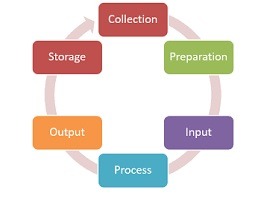
Concept of Data Processing
The concept of data processing refers to the manipulation and transformation of raw data into meaningful information through a series of structured actions and operations. This process is essential for extracting valuable insights, making informed decisions, and achieving specific goals. Data processing can occur in various domains, including business, science, healthcare, finance, and more. Here are the key elements and stages of the concept of data processing:
- Data Collection: The process begins with the collection of raw data from various sources, such as sensors, databases, surveys, forms, or external systems. Data collection can involve manual entry, automated data feeds, or data acquisition from the internet.
- Data Entry: In cases where data is collected manually, it needs to be entered into digital systems or databases. This step may introduce errors, making data validation crucial.
- Data Validation: Data is checked for accuracy, completeness, and consistency. Validation includes identifying and correcting errors, handling missing values, and ensuring data quality.
- Data Cleaning: Raw data often contains inconsistencies, duplicates, outliers, and other imperfections. Data cleaning involves the process of cleaning, transforming, and organizing data to make it suitable for analysis.
- Data Transformation: Data is converted into a structured format that is suitable for analysis. This may involve aggregating, summarizing, or encoding data, as well as handling data types like text, numerical, or categorical data.
- Data Storage: Processed data is typically stored in databases, data warehouses, or other storage systems for easy retrieval and future reference.
- Data Analysis: This stage involves the application of various analytical techniques, including statistical analysis, data mining, machine learning, and artificial intelligence, to extract insights, patterns, and relationships from the processed data.
- Data Visualization: Data is often presented visually through charts, graphs, dashboards, or reports to make it more understandable and actionable for decision-makers.
- Data Interpretation: The insights gained from data analysis are interpreted to make informed decisions, solve problems, or answer specific questions. Data interpretation is a critical step in translating data into actionable knowledge.
- Data Reporting: The results of data processing and analysis are communicated to stakeholders through reports, presentations, or other means. Reporting helps convey insights and recommendations effectively.
- Data Security and Privacy: Protecting data throughout the processing cycle is essential, especially when dealing with sensitive or personal information. Compliance with data protection regulations is crucial.
- Data Governance: Data governance involves implementing policies, procedures, and standards to ensure data quality, consistency, and integrity throughout the processing lifecycle.
- Real-time Data Processing: In some applications, data processing needs to occur in real-time or near-real-time to support immediate decision-making, such as in financial trading, online advertising, or monitoring industrial processes.
- Data Archiving: Processed data may be archived for long-term storage and historical reference, especially in industries with regulatory requirements.
- Continuous Improvement: Organizations should continually assess and refine their data processing methods and tools to adapt to changing business needs and technological advancements.
Effective data processing is a fundamental component of data-driven decision-making and is critical for organizations to gain insights, solve complex problems, and remain competitive in today’s data-rich environment. It enables organizations to unlock the value hidden within their data and leverage it for various purposes, from improving operations to understanding customer behavior and driving innovation.
What is required Concept of Data Processing
The concept of data processing encompasses several key requirements to ensure that the process is efficient, accurate, and valuable for organizations. Here are the fundamental requirements for data processing:
- Data Quality: High-quality data is essential for meaningful data processing. Data should be accurate, complete, consistent, and free from errors. Data quality is ensured through data validation and cleaning processes.
- Data Storage: Adequate storage infrastructure is necessary to hold the data before, during, and after processing. The choice of storage solutions depends on factors such as data volume, accessibility, and security requirements.
- Data Security: Protecting data from unauthorized access, breaches, and data loss is paramount. Security measures like encryption, access controls, and data backup are essential components of data processing.
- Data Privacy: Compliance with data privacy regulations, such as GDPR or HIPAA, is crucial when dealing with sensitive or personal information. Organizations must have processes in place to handle data in a privacy-compliant manner.
- Data Governance: Establishing data governance policies and practices ensures that data is managed consistently, and data quality is maintained throughout the processing cycle. This includes data stewardship and data management standards.
- Data Integration: Many organizations gather data from multiple sources. Data integration is the process of combining data from various sources into a unified view for analysis. It involves data transformation and often requires tools like ETL (Extract, Transform, Load) processes.
- Scalability: Data processing systems should be scalable to handle increasing data volumes or growing processing demands. Scalability can be achieved through hardware upgrades, cloud computing, or distributed computing frameworks.
- Data Processing Tools and Technologies: Employing the right tools and technologies, such as databases, data warehouses, analytics platforms, and data processing frameworks, is critical to efficiently process and analyze data.
- Data Analysis Skills: Skilled data analysts, data scientists, and domain experts are required to interpret and extract insights from processed data. These professionals should have expertise in statistical analysis, machine learning, and data visualization.
- Real-time Processing: In some applications, real-time data processing is necessary to respond quickly to events or make rapid decisions. This requires the use of real-time data processing technologies and algorithms.
- Data Backup and Recovery: Having robust backup and recovery mechanisms is essential to prevent data loss due to system failures, disasters, or other unforeseen events.
- Data Documentation: Proper documentation of data sources, processing steps, and analysis methods is necessary for reproducibility, auditability, and knowledge transfer within an organization.
- Data Accessibility: Data should be easily accessible to authorized users and applications when needed. Data accessibility ensures that insights can be used for decision-making in a timely manner.
- Data Ethics and Responsible AI: Ethical considerations should be taken into account when processing data, especially when using AI and machine learning algorithms. Fairness, transparency, and bias mitigation are critical aspects of responsible data processing.
- Cost Management: Managing the cost of data processing infrastructure, software licenses, and personnel is important to ensure that data processing remains cost-effective for the organization.
These requirements collectively contribute to the successful execution of data processing activities within an organization. Effective data processing not only supports decision-making but also enhances the organization’s ability to adapt to changing business conditions and gain a competitive edge.
Who is required Concept of Data Processing
The concept of data processing involves the participation of various stakeholders and roles within an organization. These individuals and teams are required to ensure that data processing activities are carried out effectively and efficiently. Here are some of the key stakeholders and their roles in the concept of data processing:
- Data Analysts: Data analysts are responsible for collecting, cleaning, validating, and analyzing data to extract insights. They use statistical techniques and data visualization tools to make data more understandable and useful for decision-makers.
- Data Scientists: Data scientists are experts in advanced analytics and machine learning. They develop models and algorithms to uncover hidden patterns, make predictions, and provide data-driven recommendations.
- Data Engineers: Data engineers design and maintain the data infrastructure required for data processing. They build data pipelines, ETL (Extract, Transform, Load) processes, and data warehouses to ensure data is available for analysis.
- Database Administrators: Database administrators manage and maintain databases that store the organization’s data. They ensure data integrity, security, and performance.
- Data Stewards: Data stewards are responsible for data governance. They establish data quality standards, metadata management practices, and data policies to ensure data consistency and compliance with regulations.
- IT and Infrastructure Teams: IT teams manage the hardware, software, and network infrastructure required for data processing. They ensure scalability, security, and reliability of data systems.
- Business Analysts: Business analysts bridge the gap between technical data processing and business objectives. They translate business requirements into data processing tasks and help interpret analysis results in a business context.
- Data Privacy Officers: Data privacy officers ensure that data processing activities comply with data protection regulations and privacy policies. They oversee data anonymization, consent management, and data access controls.
- Executives and Decision-Makers: Senior executives and decision-makers rely on processed data to make informed strategic decisions. They use insights generated from data analysis to guide the organization’s direction.
- Compliance and Legal Teams: These teams ensure that data processing activities adhere to industry-specific regulations, legal requirements, and contractual obligations.
- End Users: End users across various departments of the organization rely on processed data to perform their daily tasks and make operational decisions. They may use data reports, dashboards, or specific data tools tailored to their roles.
- Data Consumers: External partners, customers, or third-party organizations may also be consumers of processed data. Data sharing and collaboration with these entities may be required.
- Data Security Specialists: Data security specialists focus on protecting data from unauthorized access, breaches, and cyber threats. They implement security measures and monitor data security incidents.
- Data Quality Assurance Teams: These teams are responsible for ensuring that data is accurate, complete, and consistent. They conduct data quality checks and support data validation and cleaning efforts.
- Data Architects: Data architects design the overall data architecture, including data models and schema designs, to support efficient data processing and storage.
The effective collaboration and coordination of these stakeholders and roles are crucial to successfully implement the concept of data processing within an organization. Each role plays a unique part in the data processing pipeline, from data collection and storage to analysis and decision-making. Clear communication and alignment between these roles are essential for maximizing the value of data processing efforts.
When is Required Concept of Data Processing
The concept of data processing is required in various scenarios and across different industries whenever organizations or individuals want to turn raw data into valuable information. Here are some common situations and contexts in which data processing is necessary:
- Business Decision-Making: Organizations use data processing to analyze sales data, customer feedback, market trends, and financial metrics to make informed decisions about product development, marketing strategies, and resource allocation.
- Healthcare: Healthcare professionals process patient records, medical images, and clinical data to diagnose diseases, develop treatment plans, and improve patient outcomes. Data processing is also crucial for healthcare management and medical research.
- Finance and Banking: Banks and financial institutions process transaction data, detect fraudulent activities, and assess credit risk to manage financial operations and maintain security.
- Retail and E-commerce: Retailers use data processing to track inventory, optimize pricing, analyze customer behavior, and personalize shopping experiences.
- Manufacturing and Supply Chain: Manufacturers process data from sensors and production lines to improve manufacturing efficiency, quality control, and supply chain management.
- Marketing and Advertising: Marketers process customer demographics, behavior, and campaign performance data to tailor advertising and promotional efforts.
- Social Media and Internet Companies: Companies like social media platforms and search engines process vast amounts of user-generated data to provide personalized content and targeted advertising.
- Scientific Research: Researchers in various fields, such as astronomy, genomics, and climate science, process large datasets to draw conclusions and make discoveries.
- Education: Educational institutions process student performance data to monitor progress, identify areas of improvement, and enhance educational programs.
- Government and Public Sector: Government agencies use data processing for census data analysis, policy planning, law enforcement, and disaster response.
- Energy and Utilities: Energy companies process data from smart meters and sensors to optimize energy distribution, monitor equipment health, and reduce energy consumption.
- Transportation and Logistics: Transportation companies process data from GPS devices, traffic sensors, and logistics systems to optimize routes, reduce fuel consumption, and improve delivery times.
- Entertainment and Media: Media companies process viewer ratings, user preferences, and content consumption data to tailor content recommendations and improve user engagement.
- Environmental Monitoring: Environmental agencies and organizations process data from sensors and satellites to monitor air quality, weather patterns, and natural disasters.
- Agriculture: Farmers and agricultural organizations process data from IoT devices, drones, and weather stations to optimize crop yield, resource usage, and pest control.
- Security and Surveillance: Security agencies and organizations use data processing to analyze video feeds, sensor data, and threat intelligence to enhance security measures.
- Human Resources: HR departments process employee data for payroll processing, performance evaluation, and workforce planning.
- Nonprofit and Social Impact: Nonprofit organizations use data processing to measure the impact of their programs, allocate resources effectively, and demonstrate transparency to stakeholders.
In essence, the concept of data processing is required whenever there is data to be collected, analyzed, and transformed into actionable insights or information, regardless of the industry or sector. It plays a vital role in improving efficiency, making informed decisions, and driving innovation across various domains.
Where is required Concept of Data Processing
The concept of data processing is required in a wide range of industries and contexts where data is generated and needs to be converted into meaningful information for various purposes. Here are some specific locations or situations where data processing is necessary:
- Businesses: Most businesses, regardless of their industry, require data processing to make informed decisions, optimize operations, and improve customer experiences. This includes retail, finance, manufacturing, healthcare, and more.
- Hospitals and Healthcare Facilities: In healthcare settings, data processing is essential for patient record management, medical imaging analysis, clinical research, and treatment planning.
- Financial Institutions: Banks, credit card companies, and investment firms use data processing for transaction processing, fraud detection, risk assessment, and customer relationship management.
- Government Agencies: Government agencies use data processing for census data analysis, tax collection, law enforcement, public policy planning, and disaster response.
- Educational Institutions: Schools and universities use data processing for student enrollment, academic record keeping, grading, and educational research.
- Retail Stores: Retailers process sales data, inventory levels, and customer behavior to manage inventory, pricing, and marketing strategies.
- Online Platforms: Internet companies, including social media platforms and e-commerce websites, rely on data processing to deliver personalized content, target advertising, and analyze user engagement.
- Manufacturing Plants: Manufacturers use data processing to monitor equipment performance, optimize production processes, and ensure product quality.
- Transportation and Logistics Companies: These organizations use data processing for route optimization, fleet management, and tracking of goods and shipments.
- Agriculture: Farms and agricultural organizations process data from sensors and drones to optimize crop management, irrigation, and pest control.
- Energy and Utilities: Energy companies use data processing to monitor energy consumption, manage grids, and improve energy efficiency.
- Entertainment and Media: Media companies use data processing to analyze viewer preferences, content consumption, and advertising effectiveness.
- Environmental Monitoring: Environmental agencies process data from sensors and satellites to monitor climate change, air quality, and natural disasters.
- Security and Surveillance: Security companies and government agencies use data processing to analyze video feeds, sensor data, and threat intelligence for surveillance and security purposes.
- Nonprofit Organizations: Nonprofits use data processing to measure the impact of their programs, manage donor relationships, and allocate resources effectively.
- Human Resources: HR departments in organizations process employee data for payroll, performance management, and workforce planning.
- Research Institutions: Scientific research institutions use data processing for various research areas, including genomics, astronomy, and climate science.
- Telecommunications: Telecommunication companies process call data records and network performance data for billing, network optimization, and customer support.
- Real Estate: Real estate agencies and property management companies use data processing for property listings, market analysis, and client management.
- Travel and Hospitality: Travel agencies, airlines, and hotels use data processing for reservations, customer profiles, and pricing optimization.
These are just a few examples of where data processing is required. Essentially, any domain or industry that deals with data in some form can benefit from effective data processing to improve decision-making, efficiency, and competitiveness.
How is required Concept of Data Processing
The concept of data processing is required in various ways to address specific needs and objectives within organizations and industries. Here’s how the concept of data processing is required in practical terms:
- Decision-Making: Data processing provides the necessary information and insights to support informed decision-making. Executives and managers rely on processed data to understand market trends, customer behavior, and operational performance, allowing them to make strategic choices that can impact the organization’s success.
- Operational Efficiency: Data processing helps streamline and optimize operations by identifying inefficiencies, reducing errors, and automating repetitive tasks. This leads to cost savings, improved resource allocation, and enhanced productivity.
- Customer Insights: Businesses use data processing to analyze customer data, such as preferences, purchase history, and feedback, to tailor marketing strategies, product offerings, and customer service, ultimately improving customer satisfaction and loyalty.
- Risk Management: Financial institutions and insurance companies use data processing to assess and manage risk. They analyze data to detect fraudulent activities, assess creditworthiness, and make informed lending and investment decisions.
- Healthcare Diagnosis and Treatment: In healthcare, data processing assists in diagnosing diseases, predicting patient outcomes, and tailoring treatment plans. Medical professionals rely on processed medical data, including electronic health records and medical imaging, for better patient care.
- Scientific Discovery: Researchers in various fields use data processing to analyze large datasets generated from experiments, simulations, or observations. This enables discoveries, innovations, and advancements in science and technology.
- Supply Chain Optimization: Data processing aids in supply chain management by tracking inventory levels, demand forecasts, and logistics data. This helps organizations reduce costs, minimize stockouts, and improve supply chain visibility.
- Public Policy and Governance: Governments process data to develop and evaluate policies, allocate resources effectively, and monitor the well-being of citizens. Data processing is essential for census data analysis, crime mapping, and disaster response planning.
- Personalization: Online platforms, such as e-commerce websites and streaming services, use data processing to deliver personalized content and recommendations, enhancing user experiences and engagement.
- Environmental Monitoring: Environmental agencies process data from various sensors and satellites to monitor environmental changes, track climate patterns, and respond to natural disasters or environmental crises.
- Security and Surveillance: Security organizations use data processing for video analysis, facial recognition, and anomaly detection to enhance security measures and public safety.
- Educational Improvement: Educational institutions process student performance data to identify areas for improvement, allocate resources, and tailor educational programs to meet the needs of students effectively.
- Resource Management: Agriculture and energy sectors use data processing to manage resources efficiently, such as optimizing water usage in farming or regulating energy distribution in smart grids.
- Nonprofit Impact Measurement: Nonprofit organizations use data processing to assess the impact of their programs, allocate funds strategically, and report outcomes to donors and stakeholders.
- Telecommunications Optimization: Telecommunication companies use data processing to manage network traffic, improve network performance, and ensure billing accuracy.
In each of these scenarios, the concept of data processing is required to transform raw data into actionable insights, enabling organizations to achieve their specific goals, whether it’s improving customer experiences, mitigating risks, enhancing public services, or driving innovation and growth.
Case Study on Concept of Data Processing
Certainly! Let’s consider a case study that illustrates the concept of data processing in the context of a retail company.
Case Study: Optimizing Inventory Management through Data Processing
Background: XYZ Retail, a national retail chain with multiple stores across the country, is facing challenges in managing its inventory efficiently. They have a wide range of products, and maintaining the right inventory levels while avoiding overstocking or stockouts has been a persistent issue. They decide to implement data processing techniques to address these challenges.
Objective: XYZ Retail aims to optimize inventory management by leveraging data processing to make informed decisions about stock levels, purchasing, and replenishment.
Implementation:
- Data Collection: The first step is to gather data from various sources. XYZ Retail collects data on sales transactions, supplier orders, product returns, and customer feedback. They also capture data on seasonal trends, holidays, and market conditions.
- Data Integration: Data from various sources are integrated into a central data repository. This includes point-of-sale systems, inventory databases, supplier records, and external data sources such as weather forecasts and economic indicators.
- Data Cleaning and Validation: The collected data is subjected to thorough cleaning and validation processes. This includes identifying and rectifying errors, handling missing data, and ensuring data consistency.
- Data Analysis: Data analysts and data scientists use statistical analysis and machine learning algorithms to derive insights from the processed data. They analyze historical sales data to identify patterns, seasonality, and demand fluctuations.
- Demand Forecasting: Based on historical data and predictive models, XYZ Retail generates demand forecasts for each product category and store location. These forecasts help determine the expected demand for each item in the near future.
- Replenishment Planning: Using the demand forecasts, XYZ Retail develops replenishment plans. They set optimal reorder points, safety stock levels, and order quantities for each product to minimize the risk of stockouts while avoiding overstocking.
- Supplier Relationship Management: XYZ Retail shares demand forecasts with suppliers, fostering better communication and collaboration. Suppliers can adjust their production and delivery schedules based on these forecasts, reducing lead times.
- Inventory Monitoring: Real-time inventory monitoring systems are implemented in stores. These systems provide up-to-date information on stock levels, allowing staff to make quick decisions on restocking and inventory transfers between stores.
- Data Visualization: Data is presented in visually appealing dashboards that display key performance indicators, inventory turnover rates, and demand trends. This allows store managers and executives to monitor inventory health easily.
Results:
- Improved Inventory Accuracy: With data processing and demand forecasting, XYZ Retail achieves higher inventory accuracy, reducing instances of overstock and stockouts.
- Cost Savings: By optimizing stock levels and reducing excess inventory, the company saves costs associated with warehousing, carrying inventory, and markdowns for unsold products.
- Enhanced Customer Satisfaction: Customers experience fewer instances of product unavailability and shorter waiting times, leading to increased customer satisfaction.
- Better Supplier Relationships: Improved communication with suppliers results in smoother supply chains, reduced lead times, and more reliable deliveries.
- Data-Driven Decision-Making: XYZ Retail now makes data-driven decisions regarding inventory management, procurement, and pricing, resulting in increased profitability.
This case study demonstrates how the concept of data processing, when applied effectively, can help organizations optimize their operations and achieve tangible benefits such as cost savings, improved customer satisfaction, and better decision-making. In the retail industry, data processing plays a crucial role in managing complex inventories and responding to dynamic market conditions.
White Paper on Concept of Data Processing
Certainly! Below is a white paper on the concept of data processing, covering its importance, stages, technologies, challenges, and future trends.
White Paper on the Concept of Data Processing
Table of Contents:
- Introduction
- Importance of Data Processing
- Stages of Data Processing
- Technologies for Data Processing
- Challenges in Data Processing
- Future Trends in Data Processing
- Conclusion
1. Introduction
Data is often referred to as the “new oil” in the modern digital age. However, raw data, like crude oil, needs to be refined and processed to unlock its true value. Data processing is the critical mechanism that transforms raw data into meaningful information, insights, and knowledge that organizations can use to make informed decisions and gain a competitive edge.
This white paper explores the concept of data processing, emphasizing its importance, the stages involved, technologies used, challenges faced, and future trends in this dynamic field.
2. Importance of Data Processing
Data processing is essential for several reasons:
Informed Decision-Making: Data processing enables organizations to extract valuable insights from large datasets. This empowers decision-makers to make informed choices based on data-driven evidence.
Efficiency and Productivity: Properly processed data streamlines operations, reduces errors, and enhances productivity by automating tasks and identifying process improvements.
Competitive Advantage: Businesses that harness data effectively can gain a significant competitive advantage. They can optimize processes, identify market trends, and personalize customer experiences.
Scientific Advancements: Data processing is integral to scientific research, allowing researchers to analyze complex data sets, make discoveries, and drive innovation in fields such as medicine, climate science, and astronomy.
3. Stages of Data Processing
Data processing involves several stages:
Data Collection: Data is gathered from various sources, including sensors, databases, surveys, and social media. This stage is foundational as the quality and relevance of collected data impact subsequent processing steps.
Data Cleaning: Raw data often contains errors, missing values, and inconsistencies. Data cleaning involves identifying and rectifying these issues to ensure data accuracy.
Data Transformation: Data is converted into a suitable format for analysis. This may include data aggregation, normalization, or encoding.
Data Analysis: Statistical analysis, machine learning, and data mining techniques are applied to uncover patterns, relationships, and insights within the data.
Data Visualization: Data is presented in visual formats such as charts, graphs, and dashboards to facilitate understanding and decision-making.
Data Storage: Processed data may be stored in databases or data warehouses for future reference or analysis.
4. Technologies for Data Processing
Several technologies and tools are used in data processing:
Databases: Relational and NoSQL databases store structured data efficiently.
ETL (Extract, Transform, Load) Tools: These tools facilitate data integration and transformation.
Big Data Frameworks: Technologies like Apache Hadoop and Spark handle massive datasets and distributed processing.
Machine Learning and AI: These technologies automate data analysis and prediction tasks.
Data Visualization Tools: Tools like Tableau and Power BI help visualize data effectively.
5. Challenges in Data Processing
Data processing is not without its challenges:
Data Quality: Ensuring data accuracy and consistency is an ongoing challenge.
Data Security and Privacy: Protecting sensitive data from breaches and complying with privacy regulations is crucial.
Scalability: As data volumes grow, scaling data processing infrastructure becomes complex.
Data Integration: Integrating data from diverse sources can be challenging due to varying formats and structures.
Resource Constraints: Limited budgets and skilled personnel can hinder effective data processing.
6. Future Trends in Data Processing
The future of data processing is promising:
Real-time Processing: Real-time data processing will become more prevalent, enabling instant decision-making.
Edge Computing: Data processing will move closer to data sources, reducing latency and enhancing efficiency.
AI and Automation: AI and machine learning will automate more data processing tasks, improving accuracy and speed.
Blockchain for Data Security: Blockchain technology will enhance data security and traceability.
Quantum Computing: Quantum computing holds the potential to revolutionize data processing by solving complex problems more efficiently.
7. Conclusion
In conclusion, data processing is at the heart of modern decision-making and innovation. Organizations must recognize its importance, invest in appropriate technologies, and address challenges to unlock the full potential of their data. As data continues to grow in volume and complexity, mastering the concept of data processing will be a key differentiator in achieving success in the digital age.
This white paper provides an overview of the concept of data processing, emphasizing its significance, stages, technologies, challenges, and future trends. Understanding and effectively implementing data processing is crucial for organizations looking to harness the power of data in their operations and decision-making processes.