
Concept of Data Processing
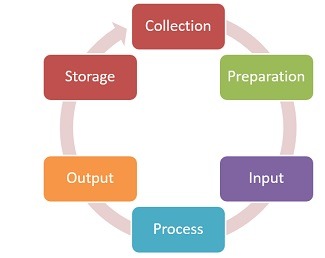
Data processing is the transformation of raw data into meaningful information through a series of actions or steps. It is a fundamental concept in computer science, information technology, and various other fields where data is collected, analyzed, and used for decision-making, problem-solving, and other purposes. Data processing typically involves several stages, each of which contributes to turning data into valuable insights or outcomes:
- Data Collection: The first step in data processing is gathering raw data from various sources. Data can come from structured sources (e.g., databases, spreadsheets) or unstructured sources (e.g., text documents, sensor readings). Data may be collected manually or automatically through sensors, devices, or online forms.
- Data Entry: In some cases, data needs to be manually entered into a computer system. This may involve data clerks entering information from paper forms or documents into digital databases.
- Data Cleaning: Raw data often contains errors, inconsistencies, missing values, or duplicates. Data cleaning or data cleansing involves identifying and rectifying these issues to ensure the data’s accuracy and reliability.
- Data Transformation: Data may need to be transformed into a suitable format for analysis. This can include converting data types, aggregating data, or reshaping data to meet specific analytical requirements.
- Data Storage: Processed data is typically stored in databases, data warehouses, or other storage systems for easy access and retrieval. Proper data storage ensures data security and allows for historical analysis.
- Data Analysis: This stage involves using various techniques and tools to analyze the data and extract insights. Data analysis may include statistical analysis, data mining, machine learning, and other methods to identify patterns, trends, and relationships within the data.
- Data Visualization: Data is often presented visually through charts, graphs, dashboards, and reports. Data visualization makes it easier for individuals to understand and interpret complex data sets.
- Decision-Making: The insights gained from data analysis drive decision-making processes. Organizations and individuals use processed data to make informed choices, solve problems, and optimize operations.
- Feedback and Iteration: Data processing is often an iterative process. Feedback from initial analyses may lead to further data collection, cleaning, and analysis, refining the results and improving decision-making over time.
- Data Security: Throughout the data processing cycle, data security is crucial. Measures are put in place to protect sensitive or confidential information from unauthorized access, breaches, or data loss.
Data processing can take place in various domains, including business, healthcare, finance, research, and more. With the advent of big data and advanced analytics, data processing has become increasingly complex, requiring specialized tools and expertise to handle vast amounts of data efficiently. Data processing plays a pivotal role in modern society, enabling data-driven decision-making, automation, and the development of innovative technologies.
What is required Concept of Data Processing
The concept of data processing is fundamental in the world of computing and information technology. To understand this concept, consider the following key points that are required:
- Definition of Data Processing:
- Data processing refers to the conversion of raw data into meaningful information through a series of operations, computations, and transformations. The goal is to extract insights, generate reports, and support decision-making.
- Types of Data Processing:
- Batch Processing: Data is collected and processed in groups or batches at scheduled intervals. It is commonly used for tasks that don’t require real-time results, such as payroll processing.
- Real-time (Online) Processing: Data is processed immediately as it is received, providing instant results. This is vital for applications like online banking or real-time monitoring.
- Data Processing Steps:
- Data Collection: Gather data from various sources, including sensors, databases, forms, or external systems.
- Data Cleaning: Identify and correct errors, inconsistencies, and missing values in the data.
- Data Transformation: Convert data into a suitable format for analysis, which may include data aggregation or normalization.
- Data Storage: Store processed data in databases or other storage systems for easy retrieval.
- Data Analysis: Use various techniques to analyze data and extract valuable insights.
- Data Visualization: Present data visually through charts, graphs, and reports to aid comprehension.
- Decision-Making: Utilize insights from data analysis for informed decision-making.
- Data Processing Technologies:
- Database Management Systems (DBMS): Systems like MySQL, PostgreSQL, and Oracle are used for storing and retrieving structured data.
- Big Data Technologies: Frameworks like Hadoop and Spark are designed to handle massive volumes of data and perform distributed data processing.
- Data Warehouses: These specialized databases store historical data for analytical purposes.
- Business Intelligence (BI) Tools: Software like Tableau, Power BI, and QlikView helps visualize and analyze data for business decision-making.
- Applications of Data Processing:
- Business: Organizations use data processing for tasks such as sales analysis, customer relationship management (CRM), and supply chain optimization.
- Healthcare: Patient records, medical diagnoses, and treatment planning rely on data processing.
- Finance: Financial institutions use data processing for risk assessment, fraud detection, and portfolio management.
- Scientific Research: Data processing is crucial for scientific experiments, simulations, and data analysis in fields like astronomy and genomics.
- Data Security and Privacy:
- Data processing must adhere to strict security and privacy standards to protect sensitive information from breaches or unauthorized access.
- Emerging Trends:
- With the rise of artificial intelligence (AI) and machine learning (ML), data processing is becoming more sophisticated, enabling automation, predictive analytics, and personalized recommendations.
- Edge computing allows data processing to occur closer to the data source, reducing latency in real-time applications.
Understanding the concept of data processing is essential in today’s digital age, as it underpins a wide range of applications and technologies that drive business, research, and everyday life. Proper data processing ensures that raw data is transformed into valuable insights, supporting informed decision-making and problem-solving.
Who is required Concept of Data Processing
The concept of data processing is relevant and required for a wide range of individuals and professionals in various fields and industries. Here’s a breakdown of who may require an understanding of data processing:
- Data Analysts and Data Scientists: These professionals are directly involved in data processing. They collect, clean, transform, analyze, and interpret data to extract meaningful insights. Their work is essential for making data-driven decisions and solving complex problems.
- Business Professionals: Managers, executives, and business analysts rely on data processing to monitor key performance indicators, track business trends, and formulate strategies. They use data insights to make informed decisions that impact the organization’s success.
- IT and Database Administrators: IT professionals are responsible for managing databases and ensuring data is stored securely, efficiently, and is accessible when needed. They play a crucial role in data processing infrastructure.
- Researchers and Scientists: In various scientific fields, researchers and scientists use data processing to analyze experimental results, conduct simulations, and draw conclusions from large datasets. This applies to fields such as biology, astronomy, physics, and social sciences.
- Healthcare Professionals: Doctors, nurses, and healthcare administrators rely on data processing for patient records, medical diagnoses, and treatment planning. Electronic health records (EHRs) are a prime example of data processing in healthcare.
- Financial Analysts and Professionals: Professionals in the finance sector use data processing for risk assessment, fraud detection, investment analysis, and financial reporting. Accurate data processing is critical for the stability of financial institutions.
- Engineers: Engineers use data processing in fields like mechanical engineering, civil engineering, and environmental engineering to analyze sensor data, conduct simulations, and optimize designs.
- Educators and Students: Educational institutions teach data processing concepts and skills in various disciplines, including computer science, data science, statistics, and business courses. Students require an understanding of data processing for academic and future career purposes.
- Government and Policy Analysts: Government agencies use data processing to make informed policy decisions, track demographic trends, and assess the impact of policies. Policymakers and analysts rely on data to inform public policy.
- Technology Enthusiasts and Consumers: Understanding data processing is valuable for individuals using technology in their daily lives. Consumers benefit from data processing when using search engines, social media, e-commerce platforms, and smart devices.
- Entrepreneurs and Startups: Entrepreneurs often use data processing to analyze market trends, customer behavior, and product performance. Data-driven decision-making is crucial for startup success.
- Legal and Compliance Professionals: Data processing must comply with various legal regulations, such as data protection laws. Legal and compliance experts ensure that data processing practices adhere to legal requirements.
In essence, the concept of data processing is required by anyone who interacts with data in their personal or professional life. In our increasingly data-driven world, having a basic understanding of data processing principles and techniques can be highly beneficial and enable more informed decision-making and problem-solving.
When is required Concept of Data Processing
The concept of data processing is required in various situations and contexts, including:
- Daily Business Operations: Data processing is a fundamental aspect of daily business operations for organizations of all sizes and across industries. Businesses use data processing to manage sales, inventory, payroll, customer information, and financial transactions.
- Financial Management: Data processing is crucial for financial institutions, including banks and investment firms, to manage customer accounts, conduct transactions, and perform risk analysis.
- Healthcare: In the healthcare sector, data processing is essential for managing patient records, medical billing, clinical research, and diagnostic procedures.
- Scientific Research: Researchers and scientists use data processing to analyze experimental data, simulate scenarios, and draw conclusions in various scientific fields.
- E-commerce and Retail: Online retailers rely on data processing for order management, customer analytics, and personalization of product recommendations.
- Manufacturing and Supply Chain Management: Manufacturers use data processing to optimize production processes, track inventory, and ensure the efficient flow of goods through the supply chain.
- Education: Educational institutions process student records, grades, and administrative data. Data processing is also used in educational research and analysis.
- Government and Public Services: Government agencies use data processing for census data, tax collection, social services, and policy analysis.
- Marketing and Advertising: Marketers use data processing to analyze consumer behavior, target advertising campaigns, and measure the effectiveness of marketing strategies.
- Transportation and Logistics: The transportation industry relies on data processing for route optimization, tracking shipments, and managing vehicle fleets.
- Energy and Utilities: Energy companies use data processing to monitor and manage power generation, distribution, and consumption.
- Environmental Monitoring: Environmental agencies use data processing for analyzing weather data, pollution levels, and climate trends.
- Security and Surveillance: Data processing is vital for processing and analyzing data from security cameras, sensors, and surveillance systems to enhance security and safety.
- Legal and Compliance: Legal professionals and regulatory bodies use data processing to review legal documents, analyze case data, and ensure compliance with laws and regulations.
- Personal Use: Individuals use data processing for various personal tasks, such as managing finances, maintaining personal records, and using online services and applications.
- Entertainment and Media: Media and entertainment companies use data processing for content creation, distribution, and audience analysis.
- Data Analytics and Data Science: Data professionals, including data analysts and data scientists, use advanced data processing techniques to extract insights, build models, and make data-driven decisions.
In summary, the concept of data processing is required in virtually every industry and aspect of modern life. It is a fundamental component of how businesses and organizations operate, make decisions, and provide services to individuals and communities.
Where is required Concept of Data Processing
The concept of data processing is required in various fields, industries, and contexts where data plays a crucial role. Here are some specific areas where an understanding of data processing is necessary:
- Business and Commerce:
- Data processing is essential for managing sales, inventory, customer information, and financial transactions in retail, e-commerce, and other business sectors.
- Finance and Banking:
- Financial institutions rely on data processing for managing accounts, conducting transactions, detecting fraud, and analyzing market trends.
- Healthcare:
- In the healthcare sector, data processing is used for electronic health records (EHR s), medical billing, patient management, and medical research.
- Scientific Research:
- Researchers in various scientific fields use data processing to analyze experimental results, simulate scenarios, and draw conclusions from data.
- Education:
- Educational institutions process student records, grades, and administrative data. Data processing is also used in educational research and analysis.
- Government and Public Services:
- Government agencies use data processing for census data, tax collection, social services, and policy analysis.
- Marketing and Advertising:
- Marketers use data processing to analyze consumer behavior, target advertising campaigns, and measure the effectiveness of marketing strategies.
- Transportation and Logistics:
- The transportation industry relies on data processing for route optimization, tracking shipments, and managing vehicle fleets.
- Energy and Utilities:
- Energy companies use data processing to monitor and manage power generation, distribution, and consumption.
- Environmental Monitoring:
- Environmental agencies use data processing for analyzing weather data, pollution levels, and climate trends.
- Security and Surveillance:
- Data processing is vital for processing and analyzing data from security cameras, sensors, and surveillance systems to enhance security and safety.
- Legal and Compliance:
- Legal professionals and regulatory bodies use data processing to review legal documents, analyze case data, and ensure compliance with laws and regulations.
- Personal Use:
- Individuals use data processing for various personal tasks, such as managing finances, maintaining personal records, and using online services and applications.
- Entertainment and Media:
- Media and entertainment companies use data processing for content creation, distribution, and audience analysis.
- Data Analytics and Data Science:
- Data professionals, including data analysts and data scientists, use advanced data processing techniques to extract insights, build models, and make data-driven decisions.
- Manufacturing and Industry:
- Manufacturing and industrial sectors use data processing for quality control, production optimization, and supply chain management.
- Agriculture:
- Data processing is used in agriculture for crop monitoring, yield prediction, and farm management.
- Aerospace and Defense:
- Aerospace and defense industries employ data processing for tasks like aircraft monitoring, simulation, and intelligence analysis.
The concept of data processing is pervasive in modern society and is integral to various fields and industries. It enables organizations and individuals to collect, analyze, and leverage data for decision-making, problem-solving, and innovation.
How is required Concept of Data Processing
The concept of data processing is required in numerous ways across various fields and industries to effectively manage and make use of data. Here’s how it is necessary:
- Business Operations:
- Data processing is essential for managing day-to-day business operations, including sales, inventory, customer relationships, and financial transactions.
- Data Analysis and Decision-Making:
- Organizations use data processing to analyze large datasets and extract valuable insights, enabling data-driven decision-making.
- Customer Service:
- Data processing helps companies understand customer needs, preferences, and behaviors, allowing them to provide better customer service and personalized experiences.
- Healthcare and Medicine:
- Data processing is crucial in healthcare for managing patient records, conducting medical research, and ensuring accurate diagnoses and treatment plans.
- Financial Services:
- In the finance sector, data processing is required for managing investments, risk assessment, fraud detection, and compliance with financial regulations.
- Research and Science:
- Researchers use data processing to analyze experimental results, conduct simulations, and draw conclusions in fields like physics, biology, and environmental science.
- Education:
- Educational institutions rely on data processing for managing student records, analyzing academic performance, and making data-driven decisions for curriculum improvement.
- Marketing and Advertising:
- Data processing helps marketers target specific audiences, track campaign performance, and refine marketing strategies based on customer data.
- Logistics and Supply Chain Management:
- Data processing optimizes supply chain operations by monitoring inventory levels, tracking shipments, and improving delivery routes.
- Transportation:
- In transportation, data processing is used for route optimization, traffic management, and real-time tracking of vehicles.
- Energy and Utilities:
- Energy companies use data processing to monitor power generation, predict energy demand, and optimize distribution networks.
- Government and Public Services:
- Government agencies use data processing for various tasks, such as census data analysis, tax collection, and policy evaluation.
- Entertainment and Media:
- The entertainment industry relies on data processing for content creation, audience analysis, and content recommendation systems.
- Security and Surveillance:
- Data processing is vital for analyzing security camera footage, sensor data, and threat detection in security and surveillance systems.
- Agriculture:
- Data processing helps farmers optimize crop yields, monitor soil conditions, and make informed decisions about irrigation and fertilization.
- Environmental Monitoring:
- Environmental agencies use data processing to analyze climate data, track pollution levels, and make environmental policy decisions.
- Legal and Compliance:
- Legal professionals use data processing for document review, case analysis, and compliance with legal regulations.
- Personal Use:
- Individuals use data processing for managing personal finances, organizing information, and interacting with various online services and apps.
In summary, data processing is a fundamental concept that is required across diverse fields and industries to harness the power of data for improved efficiency, informed decision-making, innovation, and better services. It underpins modern society’s ability to manage and derive value from the vast amount of data generated daily.
Case Study on Concept of Data Processing
Certainly! Let’s explore a case study on the concept of data processing in a real-world scenario.
Case Study: Optimizing Inventory Management with Data Processing
Background: Company XYZ is a retail chain with multiple stores across the country. They sell a wide range of products, from electronics to clothing. Over the years, they’ve faced challenges with managing their inventory efficiently. They often had excess stock of slow-moving items and shortages of popular products. This resulted in financial losses and customer dissatisfaction.
Challenges:
- Inefficient Inventory Management: The company struggled to predict customer demand accurately, leading to inventory imbalances.
- Manual Data Entry: Inventory data was collected manually, making it prone to errors and time-consuming.
- Limited Insights: The company lacked real-time insights into which products were selling well and which ones needed restocking.
- Space Utilization: Some stores had limited space, and optimizing shelf space for maximum profit was a challenge.
Solution: Company XY Z decided to implement a comprehensive data processing and analytics solution to address their inventory management challenges. Here’s how they approached it:
- Data Collection and Integration:
- They installed inventory management software that automatically collected data on sales, returns, and restocking from each store.
- Supplier data was integrated to monitor incoming inventory and delivery times.
- Data Cleaning and Transformation:
- Data was cleaned to remove duplicates and errors.
- Data transformation involved categorizing products, assigning attributes (e.g., size, color), and calculating inventory turnover rates.
- Data Analysis:
- Advanced analytics tools were used to analyze historical sales data to identify seasonal trends, popular products, and slow-moving items.
- Machine learning algorithms were applied to forecast demand accurately.
- Real-Time Monitoring:
- Dashboards were created to provide real-time insights into inventory levels, sales, and product performance.
- Alerts were set up to notify store managers when stock levels were low or exceeded capacity.
- Automated Reordering:
- The system automatically generated purchase orders to restock products as they approached low inventory thresholds.
- Reordering was optimized based on lead times, demand forecasts, and storage constraints.
Results: Company XYZ saw significant improvements in their inventory management:
- Reduced Stock outs: With accurate demand forecasting and automated reordering, stock outs were minimized, leading to increased sales and customer satisfaction.
- Lower Holding Costs: Excess inventory was reduced, resulting in lower holding costs and improved cash flow.
- Optimized Shelf Space: By analyzing product performance data, they optimized shelf space, ensuring that the most profitable items had prominent placement.
- Time Savings: Manual data entry and inventory tracking were greatly reduced, freeing up employees’ time for more strategic tasks.
- Improved Profitability: The company’s profitability increased due to better inventory turnover rates and reduced losses from excess inventory.
Conclusion: By implementing data processing and analytics, Company XYZ successfully transformed its inventory management practices, resulting in improved efficiency, profitability, and customer satisfaction. This case study demonstrates how data processing can be a powerful tool for addressing complex business challenges and making data-driven decisions.
White Paper on Concept of Data Processing
I can provide you with an outline for a white paper on the concept of data processing. You can use this outline as a starting point to create a comprehensive white paper on the topic. A white paper typically includes sections such as an introduction, background, analysis, and conclusion. Here’s a suggested structure:
Title: Understanding the Concept of Data Processing
Abstract:
- Provide a brief summary of the white paper’s main points and findings.
1. Introduction:
- Define data processing and its importance in today’s data-driven world.
- Highlight the relevance of data processing in various industries and sectors.
- Outline the structure and objectives of the white paper.
2. Background:
- Historical overview of data processing, from manual methods to modern computer-based systems.
- The evolution of data processing technologies and their impact on businesses and society.
3. Types of Data Processing:
- Explore different types of data processing, including batch processing, real-time processing, and distributed processing.
- Explain when and where each type is used and its advantages and disadvantages.
4. Data Processing Steps:
- Describe the typical stages involved in data processing, from data collection to data analysis.
- Discuss the importance of data cleaning, transformation, storage, analysis, and visualization.
5. Data Processing Technologies:
- Explore the technologies and tools used in data processing, such as databases, big data frameworks, and data analytics platforms.
- Highlight recent advancements and emerging trends in data processing technology.
6. Applications of Data Processing:
- Provide real-world examples of how data processing is used across various industries, including finance, healthcare, e-commerce, and more.
- Showcase the impact of data processing on decision-making and operational efficiency.
7. Data Security and Privacy:
- Discuss the importance of data security and privacy in data processing.
- Explain the measures and best practices for ensuring the confidentiality and integrity of data.
8. Challenges and Considerations:
- Identify common challenges in data processing, such as data quality issues, scalability concerns, and compliance with regulations.
- Offer strategies and solutions for addressing these challenges.
9. Future Trends in Data Processing:
- Predict the future of data processing, including the role of artificial intelligence, machine learning, edge computing, and quantum computing.
- Discuss how data processing will continue to evolve and shape industries.
10. Case Studies:
- Present case studies that illustrate successful implementations of data processing in various contexts.
- Highlight the benefits and outcomes achieved through effective data processing.
11. Conclusion:
- Summarize the key takeaways from the white paper.
- Emphasize the critical role of data processing in the digital age and its potential for driving innovation and business growth.
12. References:
- Provide a list of cited sources, research papers, and relevant literature for further reading.
Appendix:
- Include any additional charts, diagrams, or data processing examples that enhance the understanding of the topic.
This outline can serve as a roadmap for creating a detailed white paper on the concept of data processing. Ensure that each section is thoroughly researched and well-documented to provide valuable insights to your readers.