
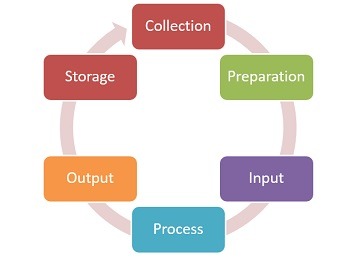
Concept of Data Processing
Data processing is the transformation of raw data into meaningful information through a process involving various operations. It plays a fundamental role in various fields, including business, science, and technology. Here are some key concepts related to data processing:
- Data: Data is raw, unorganized facts and figures. It can take the form of text, numbers, images, sound, and more. Data is the starting point for any data processing operation.
- Data Input: Data processing begins with the input of data into a system. This can be done manually by entering data, automatically through sensors and devices, or by importing data from various sources.
- Data Collection: Data can come from various sources, such as sensors, databases, forms, surveys, or online interactions. Effective data collection ensures that relevant and accurate information is available for processing.
- Data Cleaning: Raw data often contains errors, inconsistencies, and missing values. Data cleaning involves the identification and correction of these issues to ensure data accuracy.
- Data Transformation: Data transformation involves converting raw data into a format suitable for processing. This may include sorting, filtering, and formatting data to make it more manageable.
- Data Storage: Processed data is typically stored in databases, data warehouses, or other data storage systems. This allows for easy access and retrieval when needed.
- Data Processing Operations: Data processing operations include tasks such as calculation, summarizat ion, aggregation, filtering, and analysis. These operations are performed to derive insights, make decisions, or generate reports.
- Batch Processing: In batch processing, data is collected, processed, and stored in batches. It is typically performed at scheduled intervals, making it suitable for tasks that don’t require real-time processing.
- Real-time Processing: Real-time processing involves the immediate processing and analysis of data as it is generated. This is critical for applications like financial trading, industrial automation, and monitoring systems.
- Data Analysis: Data analysis aims to extract meaningful patterns, trends, and insights from processed data. Statistical analysis, machine learning, and data visualization are common techniques used in this phase.
- Decision-Making: The ultimate goal of data processing is to provide information that supports informed decision-making. Decision-makers use the processed data to make strategic, tactical, or operational decisions.
- Data Output: Processed data is often presented in a readable and understandable format. This can include reports, charts, graphs, dashboards, or other visualizations to convey the insights gained from the data.
- Data Security and Privacy: Data processing also involves considerations for data security and privacy. Sensitive data must be protected from unauthorized access or breaches, and data processing should comply with relevant regulations and standards.
- Data Life cycle: Data processing is part of a data’s life cycle, which includes stages like creation, storage, processing, analysis, and disposal. Understanding this life cycle is important for managing data effectively.
- Big Data: In modern contexts, big data refers to large and complex datasets that require specialized processing techniques and tools due to their size and complexity.
Data processing is an integral part of many fields, from business intelligence and scientific research to artificial intelligence and machine learning. It enables organizations and individuals to turn raw data into actionable insights and drive better decision-making.
What is required Concept of Data Processing
The required concepts for understanding data processing are fundamental principles that are essential to grasp in order to work effectively with data. These concepts provide the foundation for comprehending how data is handled, transformed, and analyzed. Here are some required concepts of data processing:
- Data: Data is raw, unprocessed facts or figures. It can take various forms, including text, numbers, images, audio, and video.
- Information: Information is data that has been processed, organized, and given meaning. It provides knowledge or insights that are useful for decision-making.
- Data Processing: Data processing is the set of activities and operations performed on data to transform it from raw, unstructured form into a more structured and useful format.
- Data Input: Data input is the initial step in data processing, involving the collection and entry of data into a system or database.
- Data Output: Data output is the presentation of processed data, typically in the form of reports, visualizations, or other formats that convey the results of data processing.
- Data Cleaning: Data cleaning, also known as data cleansing, is the process of identifying and correcting errors, inconsistencies, and inaccuracies in raw data.
- Data Transformation: Data transformation involves changing the format or structure of data to make it more suitable for analysis or storage.
- Data Storage: Data storage is where processed data is stored for easy retrieval and access. This can include databases, data warehouses, or cloud storage solutions.
- Data Analysis: Data analysis is the process of examining and interpreting data to uncover patterns, trends, and insights. Statistical analysis, machine learning, and data visualization are common techniques used in data analysis.
- Batch Processing: Batch processing is a method where data is collected, processed, and stored in batches, typically at scheduled intervals. It is suitable for tasks that do not require real-time processing.
- Real-time Processing: Real-time processing involves the immediate processing and analysis of data as it is generated. It is crucial for applications that demand real-time responses, such as financial transactions and sensor data.
- Data Security and Privacy: Data security and privacy measures are essential to protect sensitive data from unauthorized access, breaches, and ensure compliance with regulations.
- Data Life cycle: The data life cycle encompasses stages from data creation and storage to processing, analysis, and eventual disposal. Understanding this life cycle is important for data management.
- Big Data: Big data refers to large and complex datasets that require specialized processing techniques and tools due to their size and complexity.
- Data Governance: Data governance is the management and oversight of data to ensure data quality, security, and compliance with organizational policies and regulations.
- Metadata: Metadata provides information about data, such as its source, format, and meaning. It is essential for data cataloging and management.
- ETL (Extract, Transform, Load): ET L is a process used in data warehousing and business intelligence that involves extracting data from different sources, transforming it into a common format, and loading it into a data warehouse for analysis.
Understanding these concepts is crucial for anyone working with data, whether in data analysis, business intelligence, software development, or any other field where data plays a role. These concepts provide a solid foundation for effective data processing and utilization.
Who is required Concept of Data Processing
It seems like you’re looking for a clarification on the phrase “Who is required concept of data processing.” The phrase as it stands is not clear and may be missing some context. However, if you are asking about the individuals or roles that require an understanding of data processing concepts, here are some relevant roles:
- Data Analysts: Data analysts are responsible for collecting, processing, and analyzing data to provide actionable insights and support decision-making.
- Data Scientists: Data scientists use advanced statistical and machine learning techniques to analyze and extract insights from data.
- Database Administrators: Database administrators manage and maintain databases, ensuring data is organized, accessible, and secure.
- Software Developers: Developers create applications and systems that involve data processing, such as databases, data transformation, and data analysis tools.
- Business Analysts: Business analysts use data to identify business trends, patterns, and opportunities, supporting strategic planning and decision-making.
- Data Engineers: Data engineers build and maintain data pipelines, ET L processes, and data infrastructure for efficient data processing.
- IT Professionals: IT professionals ensure the security, performance, and availability of data processing systems and networks.
- Data Managers: Data managers oversee data quality, governance, and compliance within organizations.
- Machine Learning Engineers: These professionals design and build machine learning models that process and analyze data to make predictions and automate tasks.
- Chief Information Officers (CIO s) and Chief Data Officers (CDO s): High-level executives responsible for shaping an organization’s data strategy and ensuring that data processing aligns with business goals.
- Compliance and Privacy Officers: These roles are responsible for ensuring that data processing practices adhere to legal and regulatory requirements, particularly in industries with strict privacy laws.
- Research Scientists: In scientific research, data processing is critical for analyzing experimental data, simulations, and observations.
- Financial Analysts: Professionals in finance use data processing to analyze financial data, assess market trends, and make investment decisions.
- Healthcare Professionals: In healthcare, clinicians and researchers rely on data processing for patient records, medical research, and clinical decision support.
- Educators and Academics: Educators and researchers in educational institutions use data processing to conduct research, analyze student performance, and improve teaching methods.
- Environmental Scientists: Researchers in environmental science process data from various sensors and sources to study environmental changes and ecological trends.
In today’s data-driven world, many roles across various industries require an understanding of data processing concepts to effectively use data for decision-making, research, and problem-solving. The specific level of expertise required varies depending on the role and its focus on data analysis, data management, or data engineering.
When is required Concept of Data Processing
The understanding of data processing concepts is required in various situations and fields. Here are some scenarios when a knowledge of data processing concepts is essential:
- Business Decision-Making: In the business world, data processing concepts are needed to analyze market trends, customer behavior, and financial performance. This information helps organizations make informed decisions, develop strategies, and achieve their goals.
- Scientific Research: Researchers in various scientific disciplines rely on data processing to analyze experimental results, conduct simulations, and draw conclusions. Understanding data processing is crucial for the interpretation of scientific data.
- Healthcare and Medicine: In the healthcare industry, data processing is used to manage patient records, analyze medical images, and conduct clinical research. Healthcare professionals need data processing knowledge to provide quality patient care and improve medical outcomes.
- Finance and Investment: Financial analysts and investors use data processing to analyze economic data, stock market trends, and investment opportunities. This knowledge is essential for making sound financial decisions.
- Government and Public Policy: Government agencies and policymakers use data processing to analyze social, economic, and demographic data. This information informs public policy decisions and governance.
- Environmental Studies: Environmental scientists process data from sensors and research to monitor and study environmental changes, climate patterns, and ecological health.
- Manufacturing and Quality Control: Manufacturing industries use data processing to monitor and improve product quality, optimize production processes, and manage supply chains.
- Education and E-Learning: Educators use data processing to assess student performance, personalize learning experiences, and track educational outcomes in both traditional and online learning environments.
- Retail and E-Commerce: Retailers rely on data processing for inventory management, customer profiling, and market segmentation to optimize their sales and marketing strategies.
- Cyber security: Professionals in cyber security analyze data to detect and prevent security breaches, identify vulnerabilities, and protect sensitive information.
- Transportation and Logistics: The transportation and logistics industry uses data processing to optimize routes, track shipments, and enhance supply chain efficiency.
- Entertainment and Media: The entertainment industry uses data processing for content recommendation, audience analysis, and marketing strategies.
- Agriculture and Farming: In modern agriculture, data processing is used for precision farming, monitoring crop health, and optimizing resource allocation.
- Social Sciences and Psychology: Social scientists and psychologists process data to conduct surveys, studies, and experiments to better understand human behavior and social phenomena.
- Energy and Utilities: The energy sector uses data processing for energy management, grid optimization, and the integration of renewable energy sources.
- Emergency Services: Emergency response teams use data processing to gather and analyze information during crises for effective decision-making.
Understanding data processing concepts is a fundamental skill in the digital age. It enables professionals and researchers to collect, analyze, and interpret data to address complex challenges and make informed decisions in various domains.
Where is required Concept of Data Processing
The understanding of data processing concepts is required in a wide range of settings and industries. Here are some specific places and situations where knowledge of data processing concepts is essential:
- Business Organizations: Data processing is crucial for business operations, including sales and marketing, inventory management, financial analysis, and customer relationship management.
- Healthcare Facilities: Hospitals, clinics, and medical research centers require data processing for patient record management, diagnostic analysis, medical research, and billing.
- Financial Institutions: Banks, investment firms, and insurance companies use data processing for transaction processing, risk assessment, fraud detection, and customer service.
- Government Agencies: Government departments and agencies rely on data processing for census data analysis, public policy development, law enforcement, and regulatory compliance.
- Academic Institutions: Educational institutions use data processing for student record management, academic research, and administrative functions.
- E-commerce and Retail: Online retailers and physical stores use data processing for inventory management, sales analysis, customer personal ization, and supply chain management.
- Manufacturing and Industry: Manufacturing companies employ data processing for quality control, production planning, equipment maintenance, and supply chain optimization.
- Energy and Utilities: Energy companies and utilities use data processing for energy grid management, consumption analysis, and renewable energy integration.
- Transportation and Logistics: The transportation industry uses data processing for route optimization, fleet management, tracking shipments, and scheduling.
- Agriculture: Modern agriculture relies on data processing for precision farming, soil analysis, weather forecasting, and crop management.
- Environmental Monitoring: Environmental agencies and organizations use data processing to analyze data from sensors and satellites for climate monitoring and environmental conservation.
- Entertainment and Media: Media companies and entertainment platforms employ data processing for content recommendation, audience analysis, and digital marketing.
- Cyber security: Organizations across various sectors use data processing for threat detection, incident response, and network security.
- Scientific Research: Data processing is critical in scientific research fields such as astronomy, biology, physics, and geology for data analysis and experimentation.
- Emergency Services: Police, fire departments, and emergency response teams utilize data processing to manage information during crises and emergencies.
- Smart Cities: The concept of smart cities involves data processing for urban planning, traffic management, waste disposal, and public services optimization.
- Social Media and Technology Companies: Social media platforms and technology companies rely on data processing for user profiling, content recommendation, and targeted advertising.
- Human Resources: HR departments use data processing for employee records, payroll management, and workforce planning.
- Market Research and Analytics Firms: Companies specializing in market research and data analytics offer data processing services to clients in various industries.
- Environmental Agencies: Organizations focused on environmental conservation and sustainability utilize data processing for ecosystem analysis and climate change research.
Data processing concepts are fundamental for efficient operations, decision-making, and problem-solving in these diverse settings and many others. They enable organizations and individuals to make sense of data, extract valuable insights, and drive informed actions and strategies.
How is required Concept of Data Processing
The understanding of the concept of data processing is essential in various contexts and industries. Here’s how the concept of data processing is required:
- Business Operations: In the business world, data processing is crucial for day-to-day operations, including customer transactions, inventory management, financial reporting, and decision-making.
- Data Analysis and Decision-Making: Data processing is fundamental for businesses and organizations to analyze data, derive insights, and make informed decisions. It helps in understanding market trends, customer preferences, and operational efficiencies.
- Scientific Research: In scientific research, data processing is required to analyze experimental data, simulations, and observations. It is essential in fields like physics, chemistry, biology, and environmental science.
- Healthcare and Medicine: In healthcare, data processing is vital for managing patient records, medical diagnostics, drug development, and health outcomes analysis. It supports accurate diagnosis and treatment planning.
- Finance and Investment: Financial institutions rely on data processing for risk assessment, investment strategies, fraud detection, and customer service. Accurate financial data processing is critical for the industry.
- Government and Public Policy: Governments use data processing to analyze demographic data, economic trends, and public health information. It informs policy decisions and resource allocation.
- Education: Educational institutions use data processing for student records, assessment data, and personalized learning. It helps in improving educational outcomes and administrative efficiency.
- Environmental Sciences: Environmental researchers use data processing for monitoring environmental changes, climate patterns, and ecological health. It’s integral to environmental conservation and sustainability efforts.
- Entertainment and Media: Media and entertainment companies rely on data processing to analyze audience behavior, personalize content recommendations, and optimize marketing.
- Logistics and Transportation: The transportation industry uses data processing for route optimization, fleet management, tracking shipments, and scheduling.
- Safety and Security: Data processing is crucial for ensuring public safety and security. It supports law enforcement, emergency response, and disaster management.
- Personal ization and User Experience: Data processing is central to providing personalized experiences in areas like e-commerce, social media, and online services.
- Cyber security: The field of cyber security uses data processing to detect and prevent security threats, monitor network activity, and protect sensitive information.
- Smart Cities and Urban Planning: In the concept of smart cities, data processing is critical for optimizing infrastructure, traffic management, energy usage, and public services.
- Market Research and Analytics: Market research firms and companies involved in data analytics rely on data processing for understanding consumer behavior and market trends.
- Human Resources: HR departments use data processing for managing employee records, payroll, and workforce planning.
- Global Challenges: Addressing global challenges like climate change, pandemics, and poverty requires data processing to understand the issues, track progress, and develop solutions.
Understanding the concept of data processing is vital for data-driven decision-making, problem-solving, and achieving advancements in various fields. It empowers individuals, organizations, and societies to utilize data effectively and contribute to positive change.
Case Study on Concept of Data Processing
Certainly, let’s consider a case study that illustrates the importance of data processing in a real-world scenario.
Case Study: Data Processing in Healthcare
Background: A large healthcare system operates multiple hospitals, clinics, and medical facilities. They aim to improve patient care, streamline operations, and enhance overall efficiency through data processing.
Challenges: The healthcare system faces several challenges that highlight the importance of data processing:
- Vast Data Volume: Hospitals generate enormous amounts of data daily, including patient records, medical images, lab results, and administrative information.
- Data Variety: Data comes in various forms, such as text, images, and structured and unstructured data.
- Data Accuracy: Ensuring data accuracy and integrity is critical, as medical decisions rely on precise information.
- Patient Care: The healthcare system wants to provide better patient care by leveraging data for accurate diagnoses, treatment planning, and monitoring.
Solution:
- Electronic Health Records (EHR): Implementing an EH R system to digitize patient records, making them easily accessible to authorized healthcare providers. This system ensures data accuracy, reduces paperwork, and supports real-time data updates.
- Medical Imaging Processing: Incorporating advanced medical imaging processing technology to enhance the interpretation of medical images, such as X-rays, MRI s, and CT scans. This improves diagnosis accuracy and speeds up the process.
- Data Analytics: Utilizing data analytics tools to mine patient data for patterns, trends, and potential health risks. This helps in early disease detection, personalized treatment, and improving patient outcomes.
- Clinical Decision Support: Developing a clinical decision support system that assists healthcare providers with treatment recommendations and alerts for potential issues based on patient data and best practices.
- Tele medicine: Implementing tele medicine solutions that rely on data processing to enable remote consultations, patient monitoring, and follow-up care.
Results:
By focusing on data processing in healthcare, the healthcare system achieved the following results:
- Enhanced Patient Care: Data processing enabled healthcare providers to make more accurate diagnoses, create personalized treatment plans, and improve patient outcomes.
- Efficiency Gains: By eliminating manual record-keeping, the system improved administrative efficiency, reducing errors and speeding up processes.
- Cost Savings: Through better resource allocation and fewer medical errors, the healthcare system achieved cost savings and improved its overall financial health.
- Scalability: The system is better equipped to handle a growing volume of patients and data, thanks to scal able data processing solutions.
- Patient Satisfaction: Patients reported higher satisfaction levels due to improved care, reduced waiting times, and better access to medical professionals.
Creating a comprehensive white paper on the concept of data processing is a substantial undertaking. Below is an outline for a white paper on this topic, which you can expand upon to create a detailed document. White papers are typically several pages long and include in-depth research, analysis, and discussion of the subject matter.
White Paper on Concept of Data Processing
Title: Unlocking the Power of Data Processing: A Comprehensive Guide
Abstract:
- A brief summary of the white paper’s content.
- The significance of data processing in the digital age.
- A glimpse of the key concepts and findings.
Table of Contents:
- Introduction
- Setting the stage for the importance of data processing in the modern world.
- The objectives and scope of the white paper.
- Understanding Data Processing
- Defining data processing and its role in extracting meaningful information from raw data.
- A historical perspective on the evolution of data processing.
- Types of Data
- Differentiating between structured and unstructured data.
- The diverse forms of data, including text, numbers, images, audio, and video.
- Data Processing Operations
- Exploring the essential operations in data processing: collection, cleaning, transformation, analysis, and visualization.
- The significance of each operation in deriving insights.
- Data Storage and Management
- Discussing data storage solutions, including databases, data warehouses, and cloud storage.
- Data management best practices, including data governance and metadata.
- Real-Time Data Processing
- The importance of real-time data processing in applications such as finance, healthcare, and IoT.
- Key considerations and technologies for real-time processing.
- Data Security and Privacy
- The crucial aspect of data security and privacy in data processing.
- Strategies to protect data from unauthorized access, breaches, and compliance with regulations.
- Data Analytics and Machine Learning
- An in-depth look at data analytics and machine learning techniques for deriving insights and predictions.
- Real-world applications of these technologies.
- Challenges in Data Processing
- Identifying common challenges in data processing, including data quality issues, scalability concerns, and ethical considerations.
- Strategies to address these challenges.
- The Role of Big Data
- Exploring the concept of big data and its impact on data processing.
- Tools and technologies for managing and processing large datasets.
- Case Studies
- Real-world examples of data processing in various industries, including healthcare, finance, e-commerce, and more.
- How organizations have leveraged data processing for success.
- Future Trends in Data Processing
- Predictions for the future of data processing, including AI advancements, edge computing, and blockchain technology.
- How emerging trends will shape data processing practices.
- Conclusion
- Summarizing the key concepts discussed in the white paper.
- Reinforcing the importance of data processing in the digital age.
- References
- Citing sources, studies, and references used in the white paper.
- Appendices (if needed)
- Include additional information, data, or charts to support the content.
Remember to conduct thorough research, cite reliable sources, and use a professional writing style when creating your white paper on the concept of data processing.