
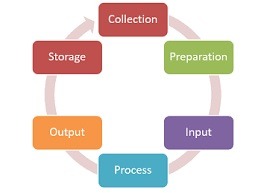
Concept of Data Processing
The concept of data processing involves the conversion of raw data into meaningful information through a series of operations and actions. Data processing is a fundamental component of computing and plays a crucial role in various domains, including business, science, research, and everyday life. Here are key aspects of the concept of data processing:
- Data Input: The process begins with the collection of raw data. Data can come from various sources, including sensors, manual entry, forms, databases, or external systems. This data can be in the form of text, numbers, images, audio, or any other data type.
- Data Storage: After data is collected, it is often stored in a structured format, typically in databases, files, or cloud storage, for easy access and retrieval. Data storage solutions can range from simple spreadsheets to complex database management systems.
- Data Processing Operations: Data processing involves a series of operations that manipulate and transform the data to extract meaningful information. These operations can include:
- Data Cleaning: Identifying and correcting errors or inconsistencies in the data, such as missing values or duplicate records.
- Data Transformation: Converting data into a suitable format for analysis, including normalization, aggregation, or encoding.
- Data Analysis: Applying statistical, mathematical, or computational methods to derive insights and patterns from the data.
- Data Visualization: Creating charts, graphs, and visual representations to make data more understandable.
- Data Mining: Discovering hidden patterns, trends, or relationships in large datasets.
- Data Integration: Combining data from different sources to create a unified dataset.
- Data Enrichment: Enhancing existing data with additional information from external sources.
- Data Reduction: Reducing the volume of data while preserving essential information.
- Data Output: The processed data is then presented in a useful format. This can include reports, charts, dashboards, or any other means of communicating the insights gained from data processing.
- Decision-Making: The information derived from data processing aids decision-making in various fields. Businesses use data to make strategic decisions, scientists use it for research, and individuals use it in everyday life.
- Feedback Loop: Data processing is often iterative. As more data is collected, and new insights are gained, adjustments may be made to improve the quality of data processing and the resulting information.
- Automation and Technology: Advances in technology, such as computer software and artificial intelligence, have significantly enhanced the efficiency and capabilities of data processing, enabling the handling of vast datasets and complex operations.
- Security and Privacy: Data processing also involves the critical aspects of data security and privacy, especially when handling sensitive or personal information. Compliance with data protection laws and regulations is essential.
- Big Data: In the modern era, big data processing has become a prominent concept, focusing on the management and analysis of enormous and diverse datasets that traditional data processing methods may struggle to handle effectively.
Overall, the concept of data processing is central to making sense of the ever-increasing volume of data generated in our digital world. It facilitates informed decision-making, problem-solving, and knowledge discovery across various industries and sectors.
What is required Concept of Data Processing
The required concept of data processing is a foundational understanding of the principles and key components involved in processing data. To effectively work with data, individuals and organizations should grasp the following essential concepts:
- Data: Data can be any raw facts, figures, or information. It may be in the form of text, numbers, images, audio, video, or more. Understanding the types and sources of data is fundamental.
- Data Collection: The process of gathering data from various sources, such as sensors, surveys, databases, or manual input.
- Data Storage: How data is organized and stored, including databases, file systems, and cloud storage. Understanding data storage methods is crucial for efficient data retrieval.
- Data Processing Operations: Recognizing that data processing involves operations like cleaning (data cleansing), transformation, analysis, visualization, integration, mining, and reduction. Each operation serves a specific purpose in making data usable.
- Data Analysis: The application of statistical, mathematical, or computational techniques to discover patterns, relationships, and insights within data. Data analysis methods may include descriptive, exploratory, and inferential techniques.
- Data Visualization: Creating visual representations of data using charts, graphs, and dashboards to make complex data more understandable and actionable.
- Data Integration: Combining data from different sources to create a unified and consistent dataset, which is especially important in business intelligence and analytics.
- Data Quality: Understanding the significance of data accuracy, completeness, consistency, and timeliness. Data quality management is essential to ensure reliable results.
- Data Security and Privacy: Recognizing the importance of protecting data against unauthorized access, breaches, and ensuring compliance with data protection laws and regulations.
- Data-driven Decision-Making: Realizing that data processing is a means to inform decision-making, enabling organizations and individuals to make informed choices based on data insights.
- Feedback Loop: Acknowledging that data processing is often an iterative process. As new data is collected and analyzed, feedback loops are essential to continually improve data quality and analysis.
- Technology and Automation: Understanding how technology, including software and artificial intelligence, plays a crucial role in automating data processing tasks and handling large datasets efficiently.
- Big Data: Recognizing the concept of big data, which focuses on the management and analysis of vast and diverse datasets that traditional data processing methods may struggle to handle effectively.
- Data Ethics: Appreciating the ethical considerations associated with data processing, including responsible data use, transparency, and fairness in algorithms and models.
- Data Management: Understanding data management practices, which include data governance, data modeling, and data architecture, to ensure data is well-organized and maintained.
A firm grasp of these required concepts is vital for effective data processing and analysis. It enables individuals and organizations to harness the power of data to make informed decisions, improve processes, and gain insights that can lead to competitive advantages and innovation.
Who is required Concept of Data Processing
It seems that your question might be unclear or incomplete. The concept of data processing is typically something that individuals, organizations, or professionals in various fields need to understand and apply when working with data.
If you could provide more context or clarify your question, I’d be happy to offer a more specific response. For instance, you could specify who or what entity needs to understand the concept of data processing, and in what context or for what purpose. This additional information would help provide a more precise answer.
When is required Concept of Data Processing
The concept of data processing is required in various situations and contexts, particularly in the following scenarios:
- Business Operations: Data processing is essential for businesses to manage customer information, financial records, sales data, inventory, and more. It’s used for decision-making, optimizing operations, and understanding customer behavior.
- Data Analysis and Research: Researchers and analysts require data processing to analyze scientific data, conduct market research, and draw meaningful conclusions from data sets.
- Healthcare: Healthcare professionals use data processing to manage patient records, diagnostic data, and medical histories. It’s crucial for patient care and medical research.
- Finance and Banking: Financial institutions rely on data processing for transactions, risk assessment, fraud detection, and investment analysis.
- Government and Public Services: Government agencies use data processing for various purposes, including census data, tax collection, social services, and public safety.
- E-commerce: Online retailers and platforms rely on data processing for managing product listings, user profiles, transaction data, and recommendations.
- Manufacturing: In manufacturing, data processing is vital for quality control, inventory management, and supply chain optimization.
- Transportation and Logistics: Companies in the transportation and logistics industry use data processing for tracking shipments, managing routes, and optimizing delivery schedules.
- Education: Educational institutions employ data processing for student records, grading, and performance assessments.
- Smart Devices and Io T: Devices in the Internet of Things (IoT) collect and process data from sensors and connected devices for various applications, from smart homes to industrial automation.
- Social Media and Content Delivery: Social media platforms and content providers rely on data processing for content recommendations, user analytics, and targeted advertising.
- Environmental Monitoring: Environmental agencies process data from sensors and satellites to monitor climate, weather, and natural resources.
- Law Enforcement: Law enforcement agencies use data processing for criminal investigations, evidence management, and crime mapping.
- Sports and Entertainment: Sports teams, broadcasters, and entertainment companies analyze data for player performance, fan engagement, and content distribution.
- Scientific Research: In scientific fields, data processing is integral to experiments, simulations, and data-driven discoveries.
- Agriculture: Farmers and agricultural companies process data for crop management, weather predictions, and precision agriculture.
In essence, the concept of data processing is required in almost every sector and industry to manage, analyze, and draw insights from data. It’s used to improve operations, make informed decisions, and drive innovation in various fields.
Where is required Concept of Data Processing
The concept of data processing is required in numerous places and scenarios across various industries and domains. Here are some key areas where the concept of data processing is essential:
- Businesses: Data processing is crucial for managing customer information, sales data, financial records, and more. It’s used for decision-making, optimizing operations, and understanding customer behavior.
- Healthcare: In the healthcare industry, data processing is vital for patient records, diagnostic data, and medical research. It’s used for patient care, clinical research, and epidemiological studies.
- Finance and Banking: Financial institutions rely on data processing for transactions, risk assessment, fraud detection, investment analysis, and compliance with regulatory requirements.
- Government and Public Services: Government agencies use data processing for purposes such as census data, tax collection, social services, and public safety.
- E-commerce: Online retailers and platforms use data processing for managing product listings, user profiles, transaction data, and recommendations to enhance the shopping experience.
- Manufacturing: In manufacturing, data processing is essential for quality control, inventory management, supply chain optimization, and production efficiency.
- Transportation and Logistics: Companies in the transportation and logistics industry employ data processing for tracking shipments, managing routes, and optimizing delivery schedules.
- Education: Educational institutions rely on data processing for student records, grading, performance assessments, and educational research.
- Smart Devices and Io T: Devices in the Internet of Things (Io T) collect and process data from sensors and connected devices for various applications, from smart homes to industrial automation.
- Social Media and Content Delivery: Social media platforms and content providers use data processing for content recommendations, user analytics, and targeted advertising.
- Environmental Monitoring: Environmental agencies process data from sensors and satellites to monitor climate, weather, and natural resources.
- Law Enforcement: Law enforcement agencies use data processing for criminal investigations, evidence management, crime mapping, and predictive policing.
- Sports and Entertainment: Sports teams, broadcasters, and entertainment companies analyze data for player performance, fan engagement, and content distribution.
- Scientific Research: Data processing is integral to experiments, simulations, and data-driven discoveries in various scientific fields.
- Agriculture: Farmers and agricultural companies process data for crop management, weather predictions, and precision agriculture.
- Customer Service and Support: Companies use data processing to provide better customer service, including personalized support and issue resolution.
- Energy and Utilities: The energy sector relies on data processing for grid management, energy consumption analysis, and predictive maintenance.
- Human Resources: HR departments use data processing for employee records, payroll processing, performance evaluations, and talent management.
In summary, the concept of data processing is essential in virtually every industry and domain where data is collected, managed, analyzed, and utilized to make informed decisions, enhance efficiency, and drive innovation.
How is required Concept of Data Processing
The concept of data processing is required and applied in various ways to address specific needs and objectives across different domains and industries. Here’s how the required concept of data processing is typically applied:
- Understanding Data Types: Data processing begins with recognizing the different types of data, whether it’s structured data (like databases), unstructured data (text or images), or semi-structured data (XML or JSO N). This understanding helps determine how to process and extract value from the data.
- Data Collection and Aggregation: Data is collected from various sources, such as sensors, databases, online forms, or APIs. It’s aggregated and organized to create a comprehensive dataset.
- Data Cleaning and Pre processing: Raw data often contains errors, inconsistencies, and missing values. Data cleaning involves identifying and rectifying these issues to ensure data quality.
- Data Transformation: Data may need to be transformed into a suitable format for analysis or other purposes. This can involve tasks like normalization, encoding, or feature engineering.
- Data Analysis: Analyzing data using statistical, mathematical, or computational techniques to extract insights and patterns, make predictions, and inform decision-making.
- Data Visualization: Representing data through charts, graphs, and other visual means to make it more accessible and understandable to both technical and non-technical audiences.
- Data Integration: Combining data from different sources to create a unified and complete dataset. Integration ensures that data is up-to-date and consistent.
- Data Mining and Machine Learning: Applying data mining and machine learning techniques to discover hidden patterns, trends, and relationships in large datasets, often for predictive modeling and classification.
- Data Storage and Management: Ensuring that data is stored securely and efficiently, whether in databases, data warehouses, or cloud storage solutions. Proper data management includes access control and data retention policies.
- Real-time Processing: Some applications require real-time data processing to make immediate decisions based on incoming data streams. This is common in industries like finance, healthcare, and Io T.
- Feedback and Continuous Improvement: Data processing often involves a feedback loop. Insights and results from data analysis may lead to adjustments in data collection methods, cleaning processes, or the models used for analysis.
- Data Privacy and Security: Addressing the protection and privacy of data is crucial, especially in the context of sensitive or personal information. Compliance with data protection laws and regulations is a fundamental aspect.
- Scalability: In environments dealing with big data, data processing solutions need to scale effectively to handle vast amounts of data.
- Optimization: Data processing workflows can be optimized for performance and efficiency, such as through parallel processing, distributed computing, or streamlining data flows.
- Customization: Depending on the specific needs and goals of an organization or project, data processing workflows may need to be customized and tailored to meet those requirements.
- Adaptation to Technology Trends: Staying updated with emerging technologies like artificial intelligence, data lakes, and cloud computing is crucial for keeping data processing practices efficient and competitive.
The way the required concept of data processing is applied can vary widely depending on the industry, goals, and specific use cases. The principles of data processing are versatile and can be adapted to various scenarios to harness the value of data effectively.
Case Study on Concept of Data Processing
Certainly, let’s consider a hypothetical case study that highlights the concept of data processing in a real-world context:
Title: “Optimizing Supply Chain Operations Through Data Processing”
Background: Company X is a global manufacturer of consumer electronics with a complex supply chain. They source components and materials from multiple suppliers worldwide, assemble products in various locations, and distribute them to a vast network of retailers. Company X is facing challenges with supply chain inefficiencies, increased costs, and inconsistent product delivery. To address these issues, they decide to leverage data processing techniques to optimize their supply chain operations.
Objectives:
- Streamline supply chain operations by using data to improve inventory management, reduce lead times, and enhance demand forecasting.
- Minimize operational costs while ensuring products are delivered on time.
- Increase overall supply chain transparency and responsiveness.
Approach:
1. Data Collection and Integration: Company X starts by collecting data from various sources in their supply chain, including suppliers’ inventories, production facilities, transportation routes, and historical sales data. They integrate this data into a centralized database for analysis.
2. Data Cleaning and Transformation: Raw data often contains errors, missing values, and inconsistencies. Company X’s data processing team cleans and pre processes the data to ensure its accuracy and consistency. They also transform data to a common format for analysis.
3. Data Analysis: Using statistical and machine learning techniques, Company X’s data analysts identify trends and patterns in the data. They create models to forecast demand, optimize inventory levels, and predict potential supply chain disruptions.
4. Real-time Data Processing: To address supply chain responsiveness, Company X implements real-time data processing. They use IoT sensors and data streams to monitor the condition and location of products in transit. Real-time alerts and analytics help identify and address issues promptly.
5. Data Visualization and Reporting: Company X utilizes data visualization tools to create dashboards and reports that provide a clear overview of supply chain performance. These tools help stakeholders make data-driven decisions and track KPI s in real time.
Results: By applying data processing techniques to their supply chain, Company X achieves the following outcomes:
- Reduced Costs: Improved demand forecasting and inventory management lead to a significant reduction in excess inventory and associated carrying costs.
- Faster Delivery: Real-time data processing and monitoring allow for quicker responses to disruptions, ensuring on-time product deliveries.
- Enhanced Transparency: Stakeholders have access to real-time data and reports, increasing supply chain visibility and facilitating proactive decision-making.
- Improved Customer Satisfaction: Reliable delivery times and consistent product availability lead to higher customer satisfaction.
Challenges: During the implementation of data processing techniques, Company X faced several challenges, including data security concerns, the need for employee training, and selecting appropriate data processing tools and platforms. They also had to address data privacy issues related to sharing sensitive supply chain data with partners.
In conclusion, this case study demonstrates how the concept of data processing can be applied to optimize supply chain operations, reduce costs, and improve customer satisfaction. By collecting, cleaning, analyzing, and visualizing data, Company X was able to make informed decisions and enhance the efficiency and transparency of their supply chain operations.
White Paper on Concept of Data Processing
Writing a white paper on the concept of data processing is a comprehensive task that involves a detailed exploration of the topic. Below is an outline for a white paper on this subject. You can expand on each section to create a comprehensive white paper.
Title: “Unlocking Insights: The Concept and Impact of Data Processing”
Abstract:
- A concise summary of the white paper’s content, objectives, and key findings.
Table of Contents:
- Introduction
- Define data processing and its significance in the modern world.
- Present the objectives and scope of the white paper.
- Types of Data and Data Sources
- Discuss the different types of data (structured, unstructured, semi-structured) and their sources.
- Highlight the diversity of data sources in today’s digital landscape.
- Data Processing Operations
- Explore the core operations involved in data processing, including data collection, cleaning, transformation, analysis, and visualization.
- Discuss the role of data integration and real-time processing.
- Data Processing Technologies
- Examine the technologies and tools used for data processing, such as databases, data warehouses, and big data platforms.
- Explain the significance of cloud computing and distributed computing.
- Data Analytics and Insights
- Delve into the various data analytics techniques and methodologies, including descriptive, predictive, and prescriptive analytics.
- Provide real-world examples of how data processing leads to actionable insights.
- Data Processing in Different Industries
- Showcase how data processing is applied in various sectors, including healthcare, finance, retail, manufacturing, and marketing.
- Include case studies to illustrate its impact on decision-making.
- Data Privacy and Security
- Address the critical issues of data privacy, security, and compliance.
- Discuss regulations like GDP R and the responsibilities of organizations.
- Challenges in Data Processing
- Identify common challenges, such as data quality, scalability, and talent shortages.
- Provide strategies to overcome these challenges.
- Future Trends and Innovations
- Explore emerging trends in data processing, including AI and machine learning, edge computing, and blockchain.
- Discuss the potential impact of quantum computing.
- Conclusion
- Summarize the key takeaways from the white paper.
- Reinforce the importance of data processing in harnessing the value of data.
- References
- Cite all the sources used in the white paper.