
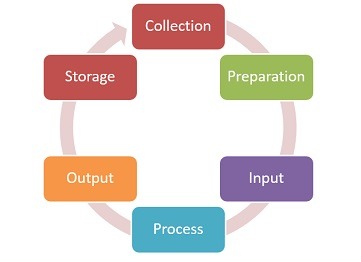
Concept of Data Processing
Data processing is the transformation of raw data into meaningful information through a series of operations, procedures, and algorithms. It is a fundamental aspect of computing and information management, and it is crucial for making data usable and valuable for decision-making, analysis, and various applications. The concept of data processing involves several key components:
- Data Input: Data processing begins with the collection and input of raw data into a system. This data can come from various sources, such as sensors, manual entry, databases, or external files. The accuracy and completeness of data input are essential for the quality of subsequent processing.
- Data Storage: After input, data is typically stored in databases, data warehouses, or other storage systems. Data storage ensures that the information is accessible when needed and can be efficiently managed and retrieved.
- Data Cleaning and Validation: Raw data often contains errors, inconsistencies, or missing values. Data processing includes data cleaning and validation, which involves identifying and rectifying errors to ensure data accuracy and reliability.
- Data Transformation: Data may need to be transformed to make it suitable for analysis or specific applications. This transformation can include data normalization, aggregation, or conversion into a different format or structure.
- Data Analysis: Data processing often involves data analysis, which includes the use of statistical, mathematical, or machine learning techniques to extract patterns, insights, and knowledge from the data.
- Data Visualization: Data visualization is an important aspect of data processing. It involves presenting data in graphical or visual formats, such as charts, graphs, and dashboards, to make complex information more understandable and actionable.
- Data Storage and Retrieval: Processed data is stored for future reference or analysis. Efficient data storage and retrieval systems are crucial for managing large volumes of processed data.
- Data Reporting: Processed data is often used to generate reports or summaries that can be used for decision-making or sharing insights with stakeholders.
- Data Integration: In many cases, data processing involves integrating data from multiple sources or systems to create a unified dataset. This is common in data warehousing and business intelligence applications.
- Real-Time Data Processing: Some applications require real-time or near-real-time data processing, where data is processed as it arrives, enabling immediate responses or actions based on incoming data.
- Security and Privacy: Data processing must also consider data security and privacy concerns. This involves measures to protect data from unauthorized access and ensure compliance with relevant data protection regulations.
- Scalability and Performance: Data processing systems must be designed to handle the scalability and performance requirements of the data being processed. This includes considerations of hardware, software, and data architecture.
Data processing is a fundamental concept in various domains, including business, science, healthcare, finance, and technology. It enables organizations and individuals to turn raw data into valuable insights, support decision-making, automate tasks, and improve efficiency. In the era of big data and advanced analytics, data processing has become increasingly complex and critical for innovation and competitiveness.
What is required Concept of Data Processing
The concept of data processing involves several key requirements and considerations to effectively manage and utilize data. These requirements ensure that data processing is accurate, efficient, and aligned with the goals of the organization or project. Here are the essential elements required for the concept of data processing:
- Clear Objectives: Data processing should have clear objectives and goals. Understand why you are processing data and what you aim to achieve through the process. This clarity is essential for shaping the entire data processing workflow.
- Data Collection: Accurate and relevant data collection is the starting point. Ensure that the data sources are well-defined, and data is collected in a consistent and structured manner.
- Data Quality: Ensure the quality of data by addressing issues such as errors, duplicates, missing values, and inconsistencies. Data cleaning and validation processes are crucial.
- Data Storage: Establish a data storage strategy. Determine where and how the data will be stored, taking into account factors like volume, security, and accessibility. Consider using databases, data warehouses, or cloud storage solutions.
- Data Transformation: Data often needs to be transformed to make it suitable for analysis or other applications. This may involve data normalization, aggregation, or conversion into a different format.
- Data Security: Implement security measures to protect data from unauthorized access, breaches, or data loss. Encryption, access controls, and cybersecurity best practices are vital components of data security.
- Data Analysis: Conduct data analysis to extract valuable insights. Use statistical, mathematical, or machine learning techniques to understand patterns, trends, and relationships within the data.
- Data Visualization: Present data in a visual and understandable format. Data visualization tools, such as charts, graphs, and dashboards, are essential for conveying complex information to stakeholders.
- Data Integration: Integrate data from multiple sources or systems to create a unified dataset. Data integration is crucial for holistic analysis and decision-making.
- Scalability and Performance: Design data processing systems to be scalable and high-performance. This is particularly important when dealing with large datasets or real-time processing requirements.
- Compliance and Privacy: Ensure that data processing complies with relevant regulations and privacy laws, especially when handling sensitive or personal data. Consider GDPR, HIPAA, or other applicable standards.
- Data Backup and Recovery: Establish data backup and recovery mechanisms to prevent data loss due to system failures, disasters, or human error.
- Documentation: Maintain comprehensive documentation of the data processing workflow. This documentation is valuable for future reference, troubleshooting, and collaboration among team members.
- Data Governance: Implement data governance practices to manage data as a valuable asset. This involves defining data ownership, access controls, and data stewardship.
- Monitoring and Auditing: Continuously monitor data processing activities and conduct regular audits to ensure data quality, security, and compliance.
- User Training: Train users and stakeholders involved in the data processing process to understand how to work with data effectively and responsibly.
- Feedback and Iteration: Encourage a feedback loop to improve data processing over time. Continuously seek ways to enhance the quality, efficiency, and value of data processing activities.
- Resource Allocation: Allocate the necessary resources, including hardware, software, and skilled personnel, to support data processing efforts effectively.
Effective data processing is essential for organizations to derive insights, make informed decisions, and achieve their objectives. By adhering to these requirements, organizations can ensure that their data processing efforts are efficient, secure, and aligned with their business goals.
Who is required Concept of Data Processing
The concept of data processing is relevant and required for various individuals, organizations, and professionals across a wide range of industries and sectors. Here are the key stakeholders who require a solid understanding of the concept of data processing:
- Data Analysts and Data Scientists: These professionals are at the forefront of data processing. They require a deep understanding of data processing techniques to clean, transform, and analyze data for generating insights, making predictions, and supporting decision-making.
- Database Administrators: Database administrators are responsible for managing and maintaining databases where data is stored. They require a strong grasp of data processing concepts to ensure data integrity, security, and accessibility.
- IT Managers and Chief Information Officers (CIOs): IT leaders need to understand data processing to make strategic decisions regarding data infrastructure, technology investments, and data governance.
- Business Analysts: Business analysts use data processing to extract valuable information from data, helping organizations make data-driven decisions and improve operations.
- Data Engineers: Data engineers design and build data pipelines and systems that support data processing. They require expertise in data processing to create efficient, reliable data flows.
- Compliance and Data Protection Officers: Professionals responsible for data compliance and privacy need to understand data processing to ensure that organizations adhere to relevant regulations, such as GDPR, HIPAA, or CCPA.
- Researchers: Researchers in various fields, including academia, require data processing skills to analyze research data and draw meaningful conclusions.
- Marketers: Marketing professionals use data processing to analyze customer behavior, segment audiences, and measure the effectiveness of marketing campaigns.
- Healthcare Professionals: In the healthcare industry, clinicians and healthcare administrators need to understand data processing for electronic health records (EHR) management, medical research, and patient care.
- Financial Analysts and Accountants: Professionals in finance use data processing for financial analysis, accounting, and auditing to ensure accuracy and compliance.
- Government Agencies: Government entities and agencies use data processing to manage and analyze data for policy development, public services, and decision-making.
- Manufacturers: Manufacturing organizations rely on data processing to optimize production, quality control, and supply chain management.
- Educational Institutions: Schools and universities require data processing for student records, research, and educational analytics.
- Startups and Entrepreneurs: Entrepreneurs and small business owners need to understand data processing to make informed decisions and manage their operations effectively.
- Consumers: Even individuals need a basic understanding of data processing, especially in the context of personal data privacy and the use of data in everyday life, such as online shopping or social media.
- Legal Professionals: Lawyers and legal experts may need to understand data processing concepts, especially in cases involving data breaches, intellectual property, or privacy issues.
In today’s data-driven world, the concept of data processing is integral to a wide range of professions and industries. Whether it’s for making strategic decisions, improving processes, conducting research, or ensuring data compliance, a solid understanding of data processing is required for individuals and organizations to thrive and remain competitive.
When is required Concept of Data Processing
The concept of data processing is required in various situations and contexts where data needs to be collected, transformed, analyzed, and used to make informed decisions or achieve specific objectives. Here are some common situations when the concept of data processing is necessary:
- Business Operations: Data processing is essential for day-to-day business operations, such as managing inventory, processing customer orders, and tracking sales and financial transactions.
- Data Analysis and Reporting: When organizations need to analyze data to gain insights, track performance, and generate reports, data processing is required. This includes market research, business intelligence, and performance analysis.
- Scientific Research: Researchers use data processing to analyze experimental data, conduct simulations, and draw conclusions. Data processing is essential in fields like biology, physics, and environmental science.
- Healthcare: In the healthcare industry, patient data processing is critical for electronic health records (EHRs), medical diagnoses, and treatment planning.
- Financial Services: Data processing is used in financial institutions for tasks like investment analysis, risk assessment, and fraud detection.
- Manufacturing and Quality Control: Manufacturers employ data processing to monitor production processes, ensure product quality, and maintain efficient supply chain management.
- Marketing and Advertising: Marketers use data processing for customer segmentation, ad targeting, and measuring campaign effectiveness.
- Education: Educational institutions process data related to student records, performance assessments, and educational research.
- Government and Public Services: Government agencies use data processing for public administration, policy development, and public safety initiatives.
- E-commerce: Online retailers rely on data processing for order management, customer reviews, and personalized recommendations.
- Energy and Utilities: The energy sector uses data processing to manage power grids, optimize energy distribution, and monitor resource usage.
- Transportation and Logistics: Transportation companies use data processing to track shipments, optimize routes, and manage fleets efficiently.
- Cybersecurity: Data processing is crucial for identifying and responding to cybersecurity threats, analyzing network traffic, and protecting sensitive data.
- Environmental Monitoring: Data processing is required for environmental data analysis, climate research, and pollution monitoring.
- Agriculture: In precision agriculture, data processing helps optimize crop management, monitor soil conditions, and increase agricultural efficiency.
- Personal Life: Individuals require data processing for everyday activities, such as online banking, social media interactions, fitness tracking, and online shopping.
- Emergencies and Disaster Response: Data processing is used in emergency response systems, disaster management, and humanitarian aid to coordinate resources and respond effectively to crises.
- Innovative Technologies: Emerging technologies like the Internet of Things (IoT), artificial intelligence (AI), and autonomous systems heavily rely on data processing for real-time decision-making and automation.
The concept of data processing is ubiquitous, and its importance continues to grow as organizations and individuals generate and use increasing amounts of data. It plays a crucial role in making data actionable, enabling better decision-making, and supporting a wide range of applications across various industries and domains.
Where is required Concept of Data Processing
The concept of data processing is required in a wide range of environments and industries where data is collected, transformed, and used for various purposes. Here are some specific areas and situations where the concept of data processing is essential:
- Business and Commerce:
- Inventory management
- Sales and customer order processing
- Financial transactions and accounting
- Market research and customer analytics
- Supply chain management
- Healthcare:
- Electronic health records (EHR) management
- Patient data analysis and diagnosis
- Medical imaging and diagnostics
- Clinical trials and medical research
- Finance and Banking:
- Investment analysis and portfolio management
- Risk assessment and fraud detection
- Credit scoring and loan approval
- Trading and financial market analysis
- Regulatory compliance and reporting
- Manufacturing and Quality Control:
- Process control and automation
- Quality assurance and defect detection
- Inventory control and production scheduling
- Predictive maintenance
- Science and Research:
- Data analysis in physics, chemistry, and biology
- Simulation and modeling
- Climate and environmental research
- Social and behavioral research
- Marketing and Advertising:
- Customer segmentation and targeting
- Campaign performance analysis
- A/B testing and optimization
- Content personalization
- Education:
- Student information systems
- Assessment and grading
- Learning analytics and research
- Education administration and reporting
- Government and Public Services:
- Census data processing
- Social services administration
- Public health and safety analysis
- Public infrastructure management
- E-commerce:
- Customer reviews and ratings
- Online order processing
- Inventory management
- Personalized product recommendations
- Transportation and Logistics:
- Fleet management and tracking
- Route optimization
- Supply chain visibility and coordination
- Package tracking and delivery scheduling
- Energy and Utilities:
- Grid management and optimization
- Energy consumption analysis
- Renewable energy integration
- Resource planning and forecasting
- Cybersecurity:
- Network traffic analysis and intrusion detection
- Security event monitoring
- Threat intelligence and incident response
- Environmental Monitoring:
- Pollution and air quality data analysis
- Climate change research
- Biodiversity and conservation efforts
- Agriculture:
- Precision agriculture and crop management
- Soil and weather data analysis
- Livestock management and monitoring
- Personal Life:
- Online banking and financial management
- Social media interactions and content recommendations
- Fitness tracking and health monitoring
- Personal productivity and organization tools
- Emergencies and Disaster Response:
- Coordination of resources and response efforts
- Crisis communication and public safety management
- Innovative Technologies:
- Internet of Things (IoT) data processing
- Artificial intelligence (AI) and machine learning applications
- Autonomous systems and robotics
The concept of data processing is integral to these and many other fields, as it enables the transformation of data into actionable information, insights, and decisions. It plays a vital role in improving efficiency, accuracy, and decision-making in a wide range of applications and industries.
How is required Concept of Data Processing
The concept of data processing is required and implemented through a series of steps and methods to effectively manage, analyze, and utilize data. Here’s how the concept of data processing is applied:
- Data Collection:
- Data processing begins with the collection of raw data from various sources, such as sensors, databases, forms, or external files.
- The data collection process must ensure the accuracy and completeness of the data.
- Data Entry and Input:
- Data is entered into a system, which may involve manual input or automated data capture through devices or sensors.
- Data entry should be accurate and follow standardized formats.
- Data Validation and Cleaning:
- Raw data often contains errors, inconsistencies, or missing values. Data validation and cleaning processes identify and correct these issues to ensure data accuracy and reliability.
- Data Transformation:
- Data may require transformation to make it suitable for analysis or specific applications.
- Transformations may include data normalization, aggregation, or conversion into a different format or structure.
- Data Storage:
- Processed data is stored in databases, data warehouses, or other storage systems for easy retrieval and management.
- Data storage solutions should be scalable, secure, and efficient.
- Data Analysis:
- Data processing involves data analysis to extract valuable insights and knowledge from the data.
- Data analysis techniques may include statistical analysis, data mining, machine learning, or modeling.
- Data Visualization:
- To make complex data more understandable, data visualization tools, such as charts, graphs, and dashboards, are used to present data in a visual format.
- Data Reporting:
- Processed data is used to generate reports or summaries that aid in decision-making, monitoring, and communication of insights to stakeholders.
- Data Integration:
- Data from various sources or systems may be integrated to create a unified dataset.
- Data integration is crucial for holistic analysis and decision-making.
- Data Security and Privacy:
- Implement security measures to protect data from unauthorized access, breaches, or data loss.
- Address privacy concerns, especially when handling sensitive or personal data, and ensure compliance with relevant data protection regulations.
- Data Backup and Recovery:
- Establish data backup and recovery mechanisms to prevent data loss due to system failures, disasters, or human error.
- Documentation:
- Maintain comprehensive documentation of the data processing workflow, including data sources, transformations, and analysis methods.
- Data Governance:
- Implement data governance practices to manage data as a valuable asset, defining data ownership, access controls, and data stewardship.
- Monitoring and Auditing:
- Continuously monitor data processing activities and conduct regular audits to ensure data quality, security, and compliance.
- User Training:
- Train users and stakeholders involved in the data processing process to understand how to work with data effectively and responsibly.
- Feedback and Iteration:
- Encourage a feedback loop to improve data processing over time. Continuously seek ways to enhance the quality, efficiency, and value of data processing activities.
- Resource Allocation:
- Allocate the necessary resources, including hardware, software, and skilled personnel, to support data processing efforts effectively.
Effective data processing is essential for organizations to derive insights, make informed decisions, and achieve their objectives. By following these steps and best practices, organizations can ensure that their data processing efforts are accurate, secure, and aligned with their business goals.
Case Study on Concept of Data Processing
Case Study: Data Processing in E-Commerce
Background: E-commerce has become a dominant force in the retail industry, with businesses and consumers relying on online platforms to buy and sell products. Data processing plays a crucial role in the success of e-commerce operations. This case study examines how data processing supports e-commerce, with a focus on a fictional e-commerce company, “Tech Mart.”
The Challenge: Tech Mart, an online electronics retailer, faced several challenges in managing its e-commerce operations, including:
- Managing Vast Amounts of Data: Tech Mart needed to handle a vast amount of data, including product listings, customer information, sales transactions, and website traffic.
- Data Accuracy: Ensuring the accuracy of product listings, pricing, and inventory levels was a constant challenge, given the dynamic nature of the electronics market.
- Personalization: Tech Mart wanted to provide a personalized shopping experience for its customers, which required the analysis of customer behavior and preferences.
- Inventory Management: Efficiently managing inventory, tracking stock levels, and restocking products in high demand was essential to avoid stock outs and overstock situations.
- Customer Service: Providing excellent customer service, including addressing inquiries, processing returns, and handling customer feedback, was a priority.
The Solution: Tech Mart implemented a comprehensive data processing strategy to address these challenges:
- Data Collection and Integration:
- Tech Mart collected data from various sources, including suppliers, the e-commerce website, and customer interactions.
- Data integration solutions were implemented to merge data from different sources into a central database.
- Data Cleaning and Validation:
- Data cleaning processes were applied to ensure accurate product listings, pricing, and inventory data.
- Validation checks were used to flag discrepancies or errors in the data.
- Personalization:
- Customer behavior data, including browsing history and purchase history, was processed to create personalized product recommendations and targeted marketing campaigns.
- Inventory Management:
- Data processing algorithms were used to monitor inventory levels and predict demand.
- Automatic reorder points and restocking triggers were implemented to maintain optimal stock levels.
- Customer Service:
- Customer service interactions, including emails, chat logs, and feedback forms, were processed for sentiment analysis and issue resolution.
- Customer profiles were updated in real-time to reflect preferences and past interactions.
Results: Tech Mart’s implementation of data processing solutions had a significant impact:
- Improved Data Accuracy: Product listings, pricing, and inventory data became more accurate, reducing customer frustration and errors in orders.
- Personalized Shopping Experience: Customers received tailored product recommendations, leading to increased sales and customer loyalty.
- Optimized Inventory: Stock outs and overstock situations were minimized, resulting in cost savings and improved customer satisfaction.
- Efficient Customer Service: Tech Mart was able to respond to customer inquiries more effectively and resolve issues faster, enhancing its reputation for excellent customer service.
- Sales Growth: The combination of accurate data, personalization, and optimized inventory management led to increased sales and revenue.
Conclusion: This case study demonstrates how effective data processing is a fundamental component of e-commerce success. TechMart’s strategic use of data processing enabled the company to overcome challenges and thrive in the competitive e-commerce market, ultimately leading to improved customer experiences and business growth. Data processing in e-commerce is not only a necessity but also a strategic advantage.
White Paper on Concept of Data Processing
Creating a white paper on the concept of data processing involves presenting a comprehensive overview of the principles, methods, and importance of data processing in various domains. Here’s an outline for such a white paper:
Title: Data Processing: Unleashing the Power of Information
Abstract: This white paper explores the concept of data processing, its significance, methods, and real-world applications. It delves into the critical role data processing plays in transforming raw data into actionable insights.
Table of Contents:
- Introduction
- Definition of Data Processing
- Importance and Relevance
- Data Processing in Practice
- Data Collection and Input
- Data Validation and Cleaning
- Data Transformation
- Data Storage and Retrieval
- Data Analysis
- Data Visualization
- Data Reporting
- Data Types and Sources
- Structured, Semi-Structured, and Unstructured Data
- Sources of Data (e.g., Sensors, Databases, IoT)
- Data Processing Methods
- Batch Processing vs. Real-Time Processing
- Manual vs. Automated Data Processing
- Data Integration and ETL (Extract, Transform, Load)
- Data Analysis and Insights
- Statistical Analysis
- Machine Learning and Predictive Analytics
- Data Mining
- Big Data Analytics
- Data Processing Tools and Technologies
- Databases and Data Warehouses
- Data Visualization Tools
- Business Intelligence Platforms
- Data Processing in the Cloud
- Data Security and Privacy
- Ensuring Data Security
- Data Privacy Regulations (e.g., GDPR, HIPAA)
- Data Processing in Industries
- E-commerce
- Healthcare
- Finance and Banking
- Manufacturing
- Marketing and Advertising
- Education
- Government
- Challenges and Considerations
- Data Quality and Accuracy
- Scalability and Performance
- Ethical and Privacy Concerns
- Regulatory Compliance
- Future Trends and Innovations
- Artificial Intelligence and Machine Learning
- Edge Computing and IoT
- Blockchain in Data Processing
- Data Processing for Sustainability
- Conclusion
- The Ubiquity of Data Processing
- The Ongoing Evolution of Data Processing
References: Cite sources and references for information used in the white paper.
Appendices: Include any additional data, charts, or case studies to support the content.
Disclaimer: Include a disclaimer stating the accuracy and reliability of the information provided and that the white paper is for informational purposes only.
This white paper should provide a comprehensive understanding of data processing, its applications, and the transformative role it plays in organizations across various industries. It serves as a valuable resource for professionals, researchers, and organizations looking to harness the power of data for informed decision-making and innovation.