
Concept of Data Processing
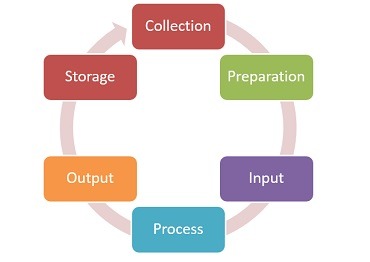
The concept of data processing refers to the manipulation and transformation of raw data into meaningful information through a series of operations and actions. Data processing involves the collection, storage, retrieval, transformation, and analysis of data to extract valuable insights, make informed decisions, and support various applications. Here are the key components and stages of data processing:
- Data Collection:
- The process begins with the collection of raw data from various sources. This data can be in the form of text, numbers, images, audio, video, or any other data type.
- Sources of data can include sensors, databases, forms, surveys, social media, websites, and more.
- Data Entry:
- After collecting data, it may need to be manually entered or input into a system. This step is essential for converting physical data into digital format.
- Data Storage:
- Data is stored in databases, data warehouses, or other storage systems to ensure it’s accessible when needed.
- Data storage can be structured (e.g., relational databases) or unstructured (e.g., text files).
- Data Processing:
- This is the core of data processing, involving various operations:
- Data Cleaning: Removing errors, duplicates, and inconsistencies.
- Data Transformation: Converting data into a usable format (e.g., date formatting, currency conversion).
- Data Aggregation: Combining data into summaries or overviews.
- Data Analysis: Using algorithms and techniques to extract insights and patterns.
- Data Integration: Combining data from different sources into a unified dataset.
- Data Validation: Ensuring data adheres to predefined rules and standards.
- This is the core of data processing, involving various operations:
- Data Analysis:
- Once data is processed, it can be analyzed to uncover trends, patterns, correlations, and other valuable information.
- Data analysis methods include statistical analysis, machine learning, data mining, and visualization techniques.
- Data Reporting:
- The results of data analysis are often presented through reports, dashboards, charts, and graphs to make the information more understandable and actionable.
- Data Storage and Retrieval:
- Processed and analyzed data is stored for future reference, and retrieval is essential for making informed decisions and responding to queries.
- Data Dissemination:
- The final stage involves sharing the insights and information with relevant stakeholders, which can include decision-makers, employees, customers, or the public.
- Feedback and Iteration:
- Continuous feedback and iteration are essential to refine the data processing pipeline, improve accuracy, and adapt to changing data needs.
Data processing is fundamental in various fields and industries, such as business, finance, healthcare, science, and technology. It enables organizations to extract knowledge from large datasets, make data-driven decisions, enhance productivity, improve customer experiences, and innovate in various domains. The evolution of technology, particularly with the advent of big data, artificial intelligence, and machine learning, has significantly transformed and advanced the field of data processing, enabling more sophisticated analysis and insights.
What is required Concept of Data Processing
The concept of data processing is required in numerous contexts where data needs to be transformed and analyzed to derive meaningful information and insights. Here are some key areas where the concept of data processing is essential:
- Business and Management:
- Data processing is required for business intelligence, market analysis, financial reporting, and decision-making processes.
- Scientific Research:
- Scientists process data to analyze experiments, simulations, and observations, helping advance research in various fields.
- Healthcare and Medicine:
- Patient records, medical images, and clinical data are processed to diagnose conditions, track patient outcomes, and improve healthcare services.
- Finance and Banking:
- Data processing is vital for fraud detection, risk assessment, investment analysis, and customer service in the financial sector.
- Manufacturing and Quality Control:
- In manufacturing, data processing ensures product quality, tracks production efficiency, and maintains safety standards.
- Marketing and Customer Analytics:
- Businesses rely on data processing to segment customers, target marketing campaigns, and measure the effectiveness of advertising.
- Environmental Monitoring:
- Data processing is used to analyze data from sensors and satellites for environmental monitoring, climate studies, and natural disaster prediction.
- Transportation and Logistics:
- Data processing helps optimize routes, track shipments, and manage logistics operations efficiently.
- Education and Learning Analytics:
- Educational institutions use data processing to assess student performance, personalize learning, and improve educational outcomes.
- Government and Public Policy:
- Governments use data processing to analyze demographics, public services, and policy impact for informed decision-making.
- Energy and Utilities:
- Data processing in this sector includes monitoring power generation, optimizing energy usage, and managing infrastructure.
- Agriculture and Farming:
- Farmers and agricultural businesses process data to monitor crop health, optimize planting, and manage resources efficiently.
- E-commerce and Retail:
- Online retailers use data processing for inventory management, sales analysis, and customer recommendations.
- Social Media and Web Analytics:
- Social media platforms and websites rely on data processing to analyze user behavior, deliver personalized content, and improve user experiences.
- Public Safety and Law Enforcement:
- Law enforcement agencies process data for criminal investigations, surveillance, and emergency response.
- Entertainment and Media:
- Media companies use data processing for content recommendation, audience engagement, and production optimization.
- Human Resources and Talent Management:
- HR departments use data processing to manage employee data, recruitment, and workforce planning.
- Personalization and Customer Service:
- Many applications and services rely on data processing to deliver personalized experiences and enhance customer service.
- Urban Planning and Smart Cities:
- Smart cities use data processing for traffic management, resource optimization, and sustainability initiatives.
- Research and Development:
- Data processing is required in R&D activities across industries, from product development to scientific discoveries.
The concept of data processing is integral to a wide range of fields and industries. It enables organizations and individuals to transform raw data into actionable insights, improve decision-making, enhance efficiency, and drive innovation. As technology continues to advance, the importance of data processing in various domains is expected to grow, making it a fundamental concept in today’s data-driven world.
Who is required Concept of Data Processing
The concept of data processing is required by a wide range of individuals, professionals, and roles across various fields and industries. Here are some examples of who requires an understanding of the concept of data processing:
- Data Analysts and Data Scientists: These professionals are directly involved in the collection, processing, and analysis of data to extract insights and make data-driven decisions.
- Information Technology (IT) Specialists: IT professionals, including database administrators, software developers, and network engineers, need to understand data processing for managing data systems, databases, and information flows.
- Business Analysts: Business analysts use data processing to examine business data, identify trends, and support strategic planning and decision-making.
- Managers and Executives: Managers and executives at all levels of an organization require an understanding of data processing to interpret reports and make informed decisions.
- Research Scientists and Academics: Professionals in the research and academic community use data processing in their work to analyze data from experiments, surveys, and studies.
- Healthcare Professionals: Doctors, nurses, and healthcare administrators rely on data processing to manage patient records, track health trends, and improve healthcare services.
- Financial Analysts and Economists: Professionals in the finance and economics fields use data processing for market analysis, investment decisions, and economic modeling.
- Engineers and Technicians: Engineers and technicians use data processing to analyze sensor data, troubleshoot equipment, and optimize manufacturing processes.
- Educators: Teachers and educational administrators use data processing to assess student performance, tailor instruction, and improve educational outcomes.
- Government Officials and Policymakers: Government leaders use data processing to inform public policy, allocate resources, and make decisions on various social and economic issues.
- Marketing and Sales Professionals: Professionals in marketing and sales use data processing to analyze customer behavior, target marketing campaigns, and measure the effectiveness of advertising.
- Environmental Scientists: Environmental scientists process data to monitor and address climate change, pollution, and natural resource management.
- Urban Planners and Architects: Professionals in urban planning use data processing to design sustainable cities, optimize traffic flow, and manage resources efficiently.
- Social Media Managers: Social media professionals rely on data processing to analyze user engagement, track content performance, and optimize social media strategies.
- Law Enforcement and Security Personnel: Professionals in law enforcement use data processing for criminal investigations, surveillance, and public safety.
- Farmers and Agriculture Professionals: Those in the agriculture industry use data processing to monitor crop health, optimize planting, and manage resources efficiently.
- Entrepreneurs and Start-up Founders: Entrepreneurs leverage data processing to make informed business decisions, analyze market trends, and develop data-driven business strategies.
- Human Resources Specialists: HR professionals use data processing for personnel management, recruitment, and workforce planning.
- IT Support and Helpdesk Personnel: IT support staff need to understand data processing to assist with technical issues and provide effective solutions.
- Individuals and Consumers: Everyday individuals require a basic understanding of data processing to make informed decisions, protect their digital privacy, and interpret information encountered in daily life.
The concept of data processing is relevant to a broad spectrum of roles and professions in today’s data-centric world. Whether you are a data analyst, healthcare provider, manager, educator, or any other professional, understanding data processing principles is essential for effective decision-making and problem-solving in your respective domain.
When is required Concept of Data Processing
The concept of data processing is required in a wide range of situations and scenarios where data is collected, analyzed, and used to make informed decisions, solve problems, or achieve specific goals. Here are some common situations when an understanding of data processing is required:
- Business Decision-Making: Business leaders and managers require data processing skills when evaluating market trends, financial data, and performance metrics to make strategic decisions.
- Data Analysis and Reporting: Data analysts and researchers use data processing techniques to clean, transform, and analyze data before presenting findings in reports or visualizations.
- Scientific Research: Researchers rely on data processing to analyze experimental results, perform statistical tests, and draw conclusions in various scientific disciplines.
- Healthcare and Medical Diagnostics: Healthcare professionals process patient data to diagnose illnesses, monitor treatment outcomes, and improve patient care.
- Financial Analysis: Financial analysts use data processing to assess investment opportunities, analyze stock market data, and manage financial portfolios.
- Marketing and Advertising: Marketers use data processing to analyze customer behavior, segment markets, and plan targeted advertising campaigns.
- Manufacturing and Quality Control: Quality control engineers process data to ensure product quality and optimize manufacturing processes.
- Environmental Monitoring: Environmental scientists use data processing for climate modeling, pollution analysis, and ecological studies.
- Urban Planning and Infrastructure Management: Urban planners and civil engineers use data processing to optimize city infrastructure, manage traffic flow, and plan sustainable urban development.
- Education and Learning Analytics: Educators and educational institutions employ data processing to assess student performance, personalize learning, and improve teaching methods.
- E-commerce and Retail: Online retailers use data processing to manage inventory, analyze sales data, and recommend products to customers.
- Public Policy and Governance: Government officials use data processing to inform public policies, allocate resources, and measure the impact of various initiatives.
- Energy and Utilities Management: Energy companies and utilities employ data processing to optimize energy distribution, monitor equipment performance, and reduce energy consumption.
- Social Media and User Engagement: Social media managers use data processing to analyze user engagement, track content performance, and develop social media strategies.
- Emergency Services and Public Safety: First responders and emergency services personnel process data to coordinate responses, manage crises, and ensure public safety.
- Agriculture and Farming: Farmers use data processing to monitor crop health, optimize planting schedules, and manage resources efficiently.
- Personal Finance and Budgeting: Individuals use data processing to track personal expenses, create budgets, and make financial decisions.
- Entrepreneurship and Start-ups: Entrepreneurs apply data processing to make informed business decisions, analyze market trends, and develop data-driven business strategies.
- IT Support and Troubleshooting: IT professionals require data processing skills to diagnose technical issues, resolve software problems, and maintain IT infrastructure.
- Cybersecurity and Data Protection: Data security professionals process data to detect and mitigate security threats, protect sensitive information, and ensure data privacy.
In these and many other contexts, the ability to process data effectively is essential for extracting valuable insights, optimizing processes, solving problems, and making informed decisions. Data processing skills are relevant in numerous domains and are increasingly important as the volume and complexity of data continue to grow in the digital age.
Where is required Concept of Data Processing
The concept of data processing is required in various locations and environments where data is generated, collected, and analyzed. Here are some specific locations and settings where the concept of data processing is essential:
- Business Offices and Corporate Settings:
- Data processing is integral to business operations, including financial management, customer relationship management, and decision-making processes.
- Data Centers and Server Farms:
- Large-scale data centers house servers and storage systems for processing and storing vast amounts of data, particularly in cloud computing and IT infrastructure.
- Laboratories and Research Facilities:
- Research institutions and laboratories use data processing for scientific experiments, data analysis, and research studies.
- Hospitals and Healthcare Facilities:
- Healthcare settings rely on data processing for electronic health records (EHRs), medical imaging, patient management, and diagnostics.
- Financial Institutions and Banks:
- Financial organizations use data processing for transactions, fraud detection, risk management, and customer services.
- Manufacturing Plants and Factories:
- Manufacturing facilities use data processing for quality control, production optimization, and machine monitoring.
- Educational Institutions and Schools:
- Schools and universities apply data processing in managing student records, conducting research, and improving educational outcomes.
- Government Offices and Agencies:
- Government entities employ data processing in policy analysis, public services, and data-driven decision-making.
- Agricultural Settings and Farms:
- In agriculture, data processing is used for crop management, resource allocation, and precision farming.
- Retail Stores and Supermarkets:
- Retailers use data processing for inventory management, sales analytics, and customer relationship management.
- Transportation and Logistics Hubs:
- Transportation and logistics centers rely on data processing for route optimization, shipment tracking, and inventory control.
- Energy and Utilities Plants:
- Energy companies process data for power generation, resource management, and infrastructure monitoring.
- Environmental Monitoring Stations:
- Environmental monitoring stations process data for climate studies, pollution control, and ecological research.
- Law Enforcement and Police Stations:
- Police and law enforcement agencies use data processing for criminal investigations, record management, and public safety.
- Oil and Gas Exploration Sites:
- In the energy sector, data processing supports exploration, drilling, and resource extraction.
- Entertainment and Media Studios:
- Entertainment companies employ data processing for content creation, audience analytics, and production optimization.
- Airports and Transportation Hubs:
- Airports use data processing for flight management, passenger tracking, and security.
- Social Media and Online Platforms:
- Social media companies and online platforms use data processing for user engagement, content recommendation, and analytics.
- Community Health Centers and Clinics:
- Healthcare facilities at the community level process data for patient care, public health, and disease tracking.
- Disaster Response and Emergency Services Centers:
- Emergency services centers use data processing for disaster management, resource allocation, and crisis response.
The concept of data processing is relevant in virtually any environment where data is generated or collected, and it plays a crucial role in optimizing operations, enhancing decision-making, and improving outcomes in these diverse settings.
How is required Concept of Data Processing
The concept of data processing is required in a specific way in various applications and industries. The manner in which data processing is needed can vary depending on the context and objectives. Here’s how the concept of data processing is required:
- Data Processing Methods and Techniques:
- Different data processing methods are required depending on the specific needs of a project or application. For example, batch processing is suitable for routine tasks, while real-time processing is necessary for immediate data updates and analysis.
- Data Processing Software and Tools:
- Professionals require knowledge of data processing software and tools such as databases, data analytics platforms, data integration tools, and programming languages (e.g., Python, R) to manipulate, analyze, and visualize data.
- Data Cleaning and Preprocessing:
- Data often contains errors, missing values, and inconsistencies that need to be cleaned and preprocessed before analysis. This includes handling outliers, data imputation, and standardizing data.
- Data Transformation and Feature Engineering:
- In data analysis and machine learning, data processing involves transforming raw data into a suitable format, creating new features, and encoding categorical variables for model training.
- Data Analysis and Modeling:
- Data scientists and analysts use data processing techniques to perform statistical analysis, build predictive models, and extract valuable insights from data.
- Data Integration and Warehousing:
- Data integration professionals require data processing to combine data from various sources into data warehouses for centralized storage and analysis.
- Data Visualization and Reporting:
- Communicating results effectively often requires data processing for creating visualizations, dashboards, and reports that convey the insights to stakeholders.
- Data Security and Privacy:
- In data processing, ensuring data security, encryption, and privacy compliance are critical to protect sensitive information and adhere to regulations.
- Data Mining and Pattern Recognition:
- Data processing is necessary for identifying patterns, trends, and anomalies in data through techniques like clustering, classification, and association rule mining.
- Real-time Data Processing:
- Industries like finance and e-commerce require real-time data processing to respond quickly to market changes, detect fraud, and make instant decisions.
- Big Data Processing:
- Handling large volumes of data, such as in big data applications, involves distributed data processing frameworks like Hadoop and Spark.
- Streaming Data Processing:
- Real-time data streams from sources like sensors and social media platforms require streaming data processing to analyze data as it arrives.
- Natural Language Processing (NLP):
- In NLP applications, data processing is essential for text analysis, sentiment analysis, language translation, and chatbot interactions.
- Image and Video Processing:
- Image and video data processing is needed for tasks like facial recognition, image classification, and video surveillance.
- Time Series Analysis:
- In fields like finance and weather forecasting, time series data processing is required to analyze data points over time to make predictions and identify trends.
- Database Management and SQL Queries:
- Database administrators and analysts use data processing techniques to manage and query databases efficiently.
- Cloud Computing and Serverless Data Processing:
- Leveraging cloud platforms for data processing, including AWS, Azure, and Google Cloud, is increasingly important for scalability and cost-effectiveness.
- AI and Machine Learning:
- Data processing is a fundamental component of AI and machine learning, involving data cleaning, feature engineering, model training, and evaluation.
- IoT (Internet of Things) Data Processing:
- IoT applications require data processing to collect, store, and analyze data from connected devices and sensors.
- Data Governance and Compliance:
- In regulated industries, data processing should adhere to governance and compliance standards, requiring careful handling of data.
In all of these contexts, the concept of data processing is required to extract meaningful information, make data-driven decisions, and support various applications, from healthcare and finance to research and entertainment. The specific methods, tools, and techniques employed vary depending on the nature of the data and the objectives of the project or application.
Case Study on Concept of Data Processing
Certainly, here’s a case study that illustrates the concept of data processing in a real-world scenario:
Case Study: Data Processing for Customer Personalization
Background: A global e-commerce company wanted to enhance its customer experience by providing personalized product recommendations to users. The company recognized that leveraging customer data was essential to achieve this goal.
Challenge: The e-commerce platform faced several challenges:
- They had a massive dataset of user interactions, including browsing history, purchase history, and demographic information.
- The data was unstructured and scattered across multiple databases, making it difficult to extract meaningful insights.
- They needed to process this data efficiently to offer real-time product recommendations to users.
Solution: To address these challenges, the company implemented a data processing solution that consisted of the following steps:
1. Data Collection:
- Customer data was collected from various sources, including website interactions, mobile apps, and customer surveys.
- Data collection was automated to ensure that every user interaction was captured.
2. Data Integration:
- The collected data was integrated into a centralized data warehouse, which allowed for easy access and analysis.
- This integration also involved data cleaning and standardization to ensure consistency.
3. Data Processing and Analysis:
- Data analysts and data scientists used data processing techniques to:
- Clean the data by removing duplicates and handling missing values.
- Transform the data by extracting relevant features, such as product categories, user preferences, and purchase history.
- Perform customer segmentation to group users with similar behaviors and preferences.
- Analyze the data to identify patterns and correlations, enabling the creation of personalized recommendations.
4. Real-time Processing:
- To provide real-time product recommendations, the company implemented streaming data processing. This involved processing user interactions as they occurred.
- Real-time data processing was enabled by using technologies like Apache Kafka and Apache Flink to ingest, process, and serve recommendations instantly.
5. Recommendation Engine:
- A recommendation engine was built using machine learning algorithms to generate personalized product recommendations for each user.
- The engine considered factors such as browsing history, purchase history, and user preferences.
6. Feedback Loop:
- To continually improve recommendations, the company established a feedback loop. User interactions with recommended products were tracked, and this data was fed back into the processing pipeline for ongoing analysis and model refinement.
Outcome: The implementation of data processing for customer personalization resulted in significant improvements in user engagement and conversion rates:
- Users received personalized product recommendations in real-time while browsing the e-commerce platform, leading to higher click-through rates and increased purchases.
- Customer satisfaction improved as users found products that were more relevant to their preferences and needs.
- The feedback loop allowed the company to fine-tune the recommendation engine over time, further enhancing the accuracy of product suggestions.
This case study demonstrates how data processing, including data collection, integration, cleaning, transformation, and real-time analysis, can be applied to offer personalized customer experiences in the e-commerce industry. The successful implementation of these data processing techniques led to improved customer engagement and increased sales, illustrating the value of data processing in enhancing business operations.
White Paper on Concept of Data Processing
Creating a comprehensive white paper on the concept of data processing is a substantial undertaking, as it encompasses a wide range of topics and applications. Below is an outline for a white paper on the concept of data processing, which you can expand upon to create a detailed and informative document:
Title: Demystifying Data Processing: A Comprehensive Guide
Abstract: Provide a concise overview of the white paper’s content and the importance of understanding data processing in today’s data-driven world.
1. Introduction
- Define the concept of data processing and its significance in various industries.
- Highlight the challenges and opportunities associated with data processing.
2. Types of Data Processing
- Discuss different types of data processing, including batch processing, real-time processing, and stream processing.
- Explain when and how each type is used in various applications.
3. Data Processing Stages
- Explore the stages of data processing, from data collection to reporting and analysis.
- Explain the role of data cleaning, transformation, and integration in the process.
4. Data Processing Tools and Technologies
- Discuss the key tools, software, and technologies used in data processing, such as databases, ETL (Extract, Transform, Load) tools, and data analytics platforms.
- Highlight emerging trends and technologies, including big data processing and cloud-based solutions.
5. Data Processing in Business and Industry
- Provide industry-specific examples of data processing, including healthcare, finance, manufacturing, and retail.
- Showcase how data processing improves decision-making and operational efficiency in these sectors.
6. Data Security and Privacy
- Address the importance of data security and privacy in data processing.
- Discuss best practices and compliance regulations, such as GDPR and HIPAA.
7. Data Processing for Machine Learning and AI
- Explain how data processing is a foundational step in machine learning and artificial intelligence.
- Discuss data preprocessing, feature engineering, and model training.
8. Real-world Case Studies
- Include a section with real-world case studies that demonstrate the impact of data processing in diverse fields and applications.
9. Challenges and Future Trends
- Identify common challenges in data processing, such as data quality, scalability, and data integration.
- Discuss future trends and innovations in data processing, such as edge computing and the Internet of Things (IoT).
10. Data Ethics and Responsible Data Processing – Explore the ethical considerations related to data processing, including bias and fairness in AI algorithms. – Discuss the responsibility of organizations in transparent and ethical data processing.
11. Conclusion
- Summarize the key takeaways from the white paper.
- Emphasize the critical role of data processing in modern data-driven enterprises.
12. References
- Provide citations and references to sources, studies, and resources used in the white paper.
13. Glossary (Optional)
- Include a glossary of key terms and concepts related to data processing for readers’ reference.
This white paper serves as a comprehensive guide to understanding the concept of data processing, its applications, and its impact across various industries. By following this outline and expanding on each section, you can create an informative and valuable resource for individuals and organizations looking to enhance their understanding of data processing concepts and practices.