
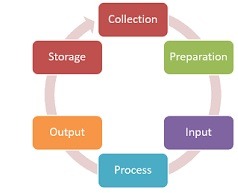
Concept of Data Processing
Data processing is the systematic manipulation and management of data to generate meaningful information and insights. It involves a series of operations, transformations, and computations that convert raw data into a more useful and structured form. Data processing plays a critical role in various fields, including business, science, research, and technology. Here are some key concepts related to data processing:
- Data: Data is raw, unorganized information, often in the form of text, numbers, images, or any other format. Data can come from various sources, such as sensors, databases, surveys, and digital devices.
- Data Entry: Data processing begins with data entry, where raw data is collected and input into a computer system. This can involve manual data entry or automated methods for data capture.
- Data Collection: Data can be collected through a range of methods, including surveys, sensors, online forms, and transactions. High-quality data collection is essential for accurate processing.
- Data Preprocessing: Raw data often requires preprocessing, which involves cleaning, validation, and transformation to ensure data quality and consistency. This step may also involve dealing with missing data and outliers.
- Data Storage: Processed data is typically stored in databases, data warehouses, or other storage systems. Proper data storage is crucial for easy retrieval and analysis.
- Data Transformation: Data may need to be transformed into a different format, such as converting currency values, changing data types, or normalizing data to facilitate analysis.
- Data Analysis: Data processing can involve various analytical techniques, including statistical analysis, data mining, and machine learning, to extract insights, patterns, and trends from the data.
- Data Visualization: Data is often presented in a visual format through charts, graphs, and dashboards to make complex information more understandable and actionable.
- Data Reporting: Processed data can be summarized and presented in reports, which provide insights and recommendations based on the analysis.
- Batch Processing: In batch processing, data is collected and processed in groups or batches at specified intervals. This is common in tasks like payroll processing and data backups.
- Real-time Processing: Real-time data processing involves the immediate analysis and response to incoming data, which is critical for applications like financial trading and online gaming.
- Parallel Processing: Parallel processing utilizes multiple processors or cores to perform data processing tasks simultaneously, increasing efficiency and speed.
- Distributed Processing: Distributed processing spreads data processing tasks across multiple computers or nodes in a network, enabling the processing of large datasets and reducing bottlenecks.
- Big Data Processing: Big data processing deals with the management and analysis of extremely large and complex datasets that traditional processing methods cannot handle effectively.
- Data Privacy and Security: Data processing must adhere to data privacy regulations, such as GDPR, and ensure data security through encryption, access control, and other measures.
- Data Lifecycle: Data processing is part of the broader data lifecycle, which includes data creation, storage, processing, analysis, and disposal.
- Data Integrity: Maintaining data accuracy and consistency is a critical aspect of data processing to ensure that results are reliable and trustworthy.
Data processing is a fundamental component of decision-making and problem-solving in various domains. It helps organizations and individuals extract meaningful information from raw data, enabling better-informed choices, improved operations, and a deeper understanding of the world around us.
What is required Concept of Data Processing
The concept of data processing involves several key requirements to effectively manage, manipulate, and extract valuable insights from data. These requirements are essential for ensuring the accuracy, security, and efficiency of data processing operations. Here are the fundamental requirements for the concept of data processing:
- Data Quality: High-quality data is essential for meaningful processing. Data must be accurate, complete, consistent, and free from errors or inconsistencies. Data quality assurance methods, such as data validation and cleaning, are crucial to meet this requirement.
- Data Collection: Data processing begins with the collection of relevant data. It’s necessary to define what data to collect, how to collect it, and the sources of data. The methods and tools used for data collection should be well-documented and reliable.
- Data Storage: Proper data storage infrastructure is required to ensure data is stored securely, efficiently, and is easily accessible. This includes considerations for data organization, indexing, and retrieval mechanisms. Storage solutions should align with the type and volume of data being processed.
- Data Security: Data security is a critical requirement to protect data from unauthorized access, breaches, and cyber threats. Implement security measures such as encryption, access controls, and regular security audits to safeguard sensitive information.
- Data Privacy and Compliance: Organizations must adhere to data privacy regulations and industry-specific compliance standards, such as GDPR or HIPAA. Compliance requirements impact how data is collected, processed, and stored, with a focus on user consent, data anonymization, and record-keeping.
- Data Processing Methods: Select appropriate data processing methods based on the nature of the data and the objectives of processing. This may involve batch processing, real-time processing, or distributed processing, among other techniques.
- Data Transformation: Data often needs to be transformed into a suitable format for analysis. Data transformation may include data cleansing, normalization, and feature engineering to prepare data for modeling or reporting.
- Data Analysis Tools: Utilize data analysis tools and techniques, such as statistical analysis, machine learning algorithms, and data visualization, to extract valuable insights from data. The choice of tools should align with the analysis goals.
- Data Integration: When working with diverse data sources, data integration is required to combine, correlate, and unify data from different systems or databases. Integration can involve ETL (Extract, Transform, Load) processes.
- Data Validation and Testing: Data processing systems should include validation and testing procedures to verify the accuracy of processed data and the reliability of processing algorithms. This ensures that results are trustworthy.
- Data Processing Speed: Depending on the application, data processing speed may be crucial. Real-time processing requires low latency and high-speed data processing, while batch processing may prioritize throughput.
- Scalability: Scalability is important to accommodate the growth of data volumes and processing requirements. Data processing systems should be designed to scale horizontally or vertically to handle increasing workloads.
- Data Governance: Establish data governance practices to define roles and responsibilities for data management, ensure data quality, and maintain data consistency across the organization.
- Data Retention and Archiving: Determine data retention policies, including data archiving and deletion, to manage data over its lifecycle and meet compliance requirements.
- Documentation: Proper documentation of data processing procedures, methods, and transformations is essential for transparency, collaboration, and troubleshooting.
- User Training: Users and data analysts should be trained in data processing tools and techniques to maximize the value of processed data.
- Continuous Improvement: The data processing process should be subject to continuous improvement through feedback, monitoring, and adjustment of processing methods and infrastructure.
Understanding and fulfilling these requirements is crucial for achieving effective and efficient data processing that leads to valuable insights, informed decision-making, and improved business operations.
Who is required Concept of Data Processing
The concept of data processing is relevant and necessary for various individuals, organizations, and roles across different sectors and industries. Here are some key stakeholders and who is required to understand and implement the concept of data processing:
- Data Analysts and Data Scientists: Data analysts and data scientists are at the forefront of data processing. They are responsible for extracting insights from data, utilizing various data processing techniques, and using data analysis tools to generate valuable information.
- Data Engineers: Data engineers design and maintain data processing pipelines, ETL (Extract, Transform, Load) processes, and data integration solutions. They play a crucial role in ensuring that data is processed efficiently and accurately.
- Database Administrators (DBAs): DBAs are responsible for managing and maintaining databases where data is stored. They need a deep understanding of data processing to optimize database performance, security, and reliability.
- IT Professionals: IT professionals in roles such as system administrators, network administrators, and cybersecurity experts play a critical role in ensuring that data processing systems are secure, available, and compliant with data protection regulations.
- Business Analysts: Business analysts use data processing to analyze business data, track key performance indicators (KPIs), and generate reports to support decision-making.
- Managers and Executives: Managers and executives need to understand the concept of data processing to make informed decisions and set strategic directions for the organization based on data-driven insights.
- Data Privacy and Compliance Officers: In organizations that handle sensitive or regulated data, data privacy and compliance officers ensure that data processing practices align with relevant regulations and standards, such as GDPR, HIPAA, or industry-specific compliance requirements.
- Software Developers: Software developers create applications and systems that involve data processing. They need to understand data processing concepts to build systems that efficiently handle and manipulate data.
- Data Stewards: Data stewards are responsible for data governance, including data quality, data lineage, and data policy enforcement. They ensure that data processing aligns with data governance standards.
- Legal and Compliance Teams: Legal and compliance professionals need to be aware of data processing practices to ensure that they comply with data protection and privacy laws, as well as contractual agreements related to data.
- End Users: Even end users, such as employees or customers, may interact with data processing systems. They should understand the importance of data accuracy and security in their interactions with data.
- Data Consumers: Various departments within an organization, such as marketing, finance, and human resources, require data for their specific needs. Data consumers should understand how data processing impacts their respective domains.
- Researchers and Scientists: Researchers and scientists in various fields use data processing to analyze data collected during experiments and studies. They require a sound understanding of data processing to draw valid conclusions.
- Educators and Trainers: Professionals involved in education and training should impart knowledge about data processing concepts to students and employees to enhance their data literacy.
- Government Agencies: Government agencies that deal with data collection, analysis, and reporting rely on data processing to make informed policy decisions and improve public services.
In summary, the concept of data processing is relevant and essential for a wide range of individuals and professionals across different roles and industries. Understanding data processing is critical for effectively managing, analyzing, and deriving value from data, while also ensuring data security, privacy, and compliance.
When is required Concept of Data Processing
The concept of data processing is required in a wide range of situations and contexts, as data is a fundamental component of modern life and business. Here are some common scenarios in which understanding and applying the concept of data processing is necessary:
- Business Operations: Data processing is essential for managing day-to-day business operations, including sales, inventory, payroll, and customer management.
- Financial Transactions: In the banking and financial sector, data processing is crucial for handling transactions, managing accounts, and detecting fraudulent activities.
- Healthcare: Electronic health records (EHRs), medical imaging, and patient data management all rely on data processing to ensure accurate patient care and compliance with healthcare regulations.
- E-commerce: Online retailers process vast amounts of data to manage products, sales, customer profiles, and website performance.
- Social Media: Social media platforms process user-generated content, interactions, and user behavior data to provide personalized content and improve user engagement.
- Manufacturing: Data processing is used to control production lines, manage supply chains, and monitor equipment performance.
- Transportation and Logistics: In logistics and transportation, data processing optimizes routes, tracks shipments, and ensures efficient operations.
- Education: Educational institutions process data on student enrollment, performance, and curriculum management.
- Government Services: Governments use data processing for managing citizen records, public services, and administrative tasks.
- Scientific Research: Data processing is central to scientific experiments, simulations, and data analysis in fields like physics, chemistry, and biology.
- Weather Forecasting: Meteorological agencies process large volumes of data from weather sensors and satellites to produce accurate weather forecasts.
- Law Enforcement: Police and security agencies process data to solve crimes, manage investigations, and maintain public safety.
- Market Research: Market researchers use data processing to analyze consumer behavior, trends, and preferences.
- Energy and Utilities: Energy companies process data to manage power grids, optimize energy generation, and monitor resource consumption.
- Environmental Monitoring: Data processing is essential for collecting, analyzing, and reporting data on environmental conditions and climate change.
- Space Exploration: Space agencies process data from space missions, telescopes, and satellites to gain insights about the universe.
- Agriculture: Farmers and agribusinesses use data processing to optimize crop management, monitor soil conditions, and improve yield.
- Entertainment and Media: The entertainment industry uses data processing to manage content distribution, user preferences, and audience analytics.
- Sports Analytics: Data processing in sports provides insights into player performance, game strategy, and fan engagement.
- Disaster Response: During natural disasters, data processing helps coordinate emergency response efforts and manage resources.
Data processing is required in virtually every industry and sector, as it is the foundation for informed decision-making, automation, efficiency, and innovation. As technology continues to advance, the need for data processing will only increase, further highlighting its importance in our daily lives and the global economy.
Where is required Concept of Data Processing
The concept of data processing is required in a multitude of locations, contexts, and environments across various sectors and industries. Here are some specific areas where the concept of data processing is essential:
- Businesses: Data processing is crucial for organizations of all sizes and across industries. Businesses use data processing to manage operations, analyze customer data, track sales, and make informed decisions.
- Financial Institutions: Banks, insurance companies, and financial institutions rely on data processing to handle transactions, manage customer accounts, and detect fraud.
- Healthcare: In healthcare, data processing is integral to electronic health records (EHRs), medical imaging, patient monitoring, and research, helping doctors make accurate diagnoses and provide optimal patient care.
- E-commerce: Online retailers use data processing to manage product catalogs, track sales, personalize user experiences, and optimize inventory.
- Social Media Platforms: Social media platforms process vast amounts of user-generated content, interactions, and behavioral data to provide personalized content and improve user engagement.
- Manufacturing and Industrial Operations: Manufacturers use data processing for production control, quality assurance, supply chain management, and equipment maintenance.
- Transportation and Logistics: The transportation and logistics industry relies on data processing to optimize routes, track shipments, and manage transportation networks efficiently.
- Government: Government agencies use data processing for citizen records, public services, policy analysis, and administrative tasks.
- Scientific Research: Data processing is essential for scientific experiments, simulations, data analysis, and modeling in fields such as physics, biology, and climate science.
- Environmental Monitoring: Environmental scientists process data to monitor and analyze information related to climate change, air and water quality, and conservation efforts.
- Meteorology: Meteorological agencies process data from various sources, such as weather sensors and satellites, to provide accurate weather forecasts and monitor weather patterns.
- Law Enforcement and Security: Law enforcement agencies process data to manage investigations, maintain public safety, and track criminal activities.
- Market Research and Advertising: Market researchers and advertising professionals use data processing to analyze consumer behavior, conduct surveys, and track marketing campaign performance.
- Energy and Utilities: Energy companies process data for power grid management, energy generation optimization, and resource consumption monitoring.
- Space Exploration: Space agencies process data from space missions, telescopes, and satellites to gain insights into the cosmos and the universe.
- Agriculture: Farmers and agribusinesses use data processing for precision agriculture, soil management, crop optimization, and livestock monitoring.
- Entertainment and Media: The entertainment industry processes data to manage content distribution, personalize user experiences, and analyze audience engagement.
- Sports Analytics: Sports teams and analysts use data processing to evaluate player performance, strategize during games, and engage fans through data-driven experiences.
- Disaster Response: During natural disasters, data processing is essential to coordinate emergency response efforts, allocate resources, and monitor disaster impacts.
- Education: Educational institutions process data related to student enrollment, academic performance, and curriculum management to enhance teaching and learning.
Data processing is a fundamental component of modern life and is integral to the operations and advancements in various industries. The concept of data processing is required in numerous locations and domains to facilitate informed decision-making, automation, and efficiency.
How is required Concept of Data Processing
The concept of data processing is required to ensure that data is effectively and efficiently managed, analyzed, and utilized. The “how” of data processing involves the methods, technologies, and practices used to process data. Here’s how the concept of data processing is implemented:
- Data Collection: Data processing begins with the collection of data from various sources, such as sensors, databases, online forms, transactions, and devices. Data can be collected manually or automatically, depending on the source.
- Data Entry and Input: Once data is collected, it needs to be entered into a computer system or database. Data entry can be done manually or automatically, with various tools and technologies used to ensure accuracy and completeness.
- Data Preprocessing: Raw data often requires preprocessing to clean, validate, and transform it into a more useful and structured form. This step includes handling missing data, removing duplicates, and addressing outliers.
- Data Storage: Processed data is typically stored in databases, data warehouses, or cloud storage. Data storage solutions must be chosen based on the type and volume of data, with considerations for data organization and retrieval mechanisms.
- Data Transformation: Data is often transformed into a different format or structure to prepare it for analysis. Data transformation may involve data cleansing, data normalization, and feature engineering to facilitate analysis and modeling.
- Data Analysis: Data processing involves various analytical techniques, including statistical analysis, data mining, and machine learning. Tools like statistical software, programming languages, and data analysis platforms are used to extract insights, patterns, and trends from data.
- Data Visualization: Processed data is often presented visually using charts, graphs, and dashboards to make complex information more understandable and actionable. Visualization tools and software are used to create informative and engaging visual representations.
- Data Reporting: Processed data is summarized and presented in reports, which provide insights and recommendations based on the analysis. Reporting tools and software are used to generate reports that are accessible to decision-makers.
- Data Validation and Testing: Data processing systems should include validation and testing procedures to verify the accuracy of processed data and the reliability of processing algorithms. This ensures that results are trustworthy.
- Data Security: Implement data security measures to protect data from unauthorized access, breaches, and cyber threats. Encryption, access controls, and security audits are common practices.
- Data Privacy and Compliance: Ensure that data processing practices align with data privacy regulations and industry-specific compliance standards. This may involve user consent, data anonymization, and record-keeping.
- Parallel and Distributed Processing: In cases where data volumes are substantial, parallel processing and distributed processing techniques are used to process data more efficiently and quickly.
- Real-time Processing: Some applications require real-time data processing, where data is processed immediately upon arrival. This is critical in fields like financial trading, online gaming, and monitoring systems.
- Big Data Processing: When dealing with extremely large and complex datasets, big data processing technologies and platforms, like Hadoop and Spark, are used to manage and analyze data effectively.
- Scalability: Data processing systems should be designed to scale, allowing for an increase in processing power and storage capacity as data volumes grow.
- Continuous Improvement: Data processing is an iterative process that benefits from feedback, monitoring, and adjustment of processing methods and infrastructure. Continuous improvement ensures that data processing remains efficient and relevant.
In summary, the concept of data processing is implemented through a series of methods, technologies, and practices that involve collecting, preprocessing, storing, transforming, analyzing, and reporting on data. Effective data processing is critical for informed decision-making, automation, and efficiency in various domains and industries.
Case Study on Concept of Data Processing
Certainly, here’s a case study that illustrates the concept of data processing in a real-world scenario:
Case Study: Data Processing in E-commerce
Introduction
In the modern e-commerce industry, data processing plays a crucial role in ensuring the success of businesses. This case study focuses on a fictional e-commerce company called “Tech Bazaar,” which operates a popular online electronics and gadgets store. Tech Bazaar uses various data processing techniques and tools to manage its operations, optimize user experiences, and drive business growth.
The Challenge
Tech Bazaar faced several challenges:
- High Volume of Data: The company collects a vast amount of data, including customer orders, website traffic, product information, and user reviews.
- Data Quality: Ensuring the accuracy and consistency of data is critical to provide reliable information to customers and make informed decisions.
- Personalization: Tech Bazaar aimed to personalize the shopping experience for users based on their preferences, browsing history, and purchase behavior.
- Inventory Management: Efficient inventory management was required to prevent overstock or stock outs.
Data Processing Solutions
1. Data Collection
- Order Data: Tech Bazaar collected data on customer orders, including product details, order time, payment method, and shipping information.
- Website Analytics: Web analytics tools tracked user behavior on the website, such as page views, click-through rates, and bounce rates.
- Customer Profiles: User profiles were created by collecting data on user registration, preferences, and past purchase history.
- Product Information: The company gathered data about products, including descriptions, prices, and availability.
2. Data Preprocessing
- Data preprocessing involved cleaning and validating data to remove duplicates, correct errors, and handle missing values.
- Customer reviews and feedback were analyzed for sentiment, and irrelevant or spam reviews were filtered out.
3. Data Storage
- Processed data was stored in a relational database for structured data and a NoSQL database for semi-structured data.
- Data was organized for efficient retrieval, and indexes were used for rapid data access.
4. Data Analysis
- TechBazaar employed data analysis tools to identify trends and patterns in customer behavior and sales data.
- Customer segmentation was performed to create personalized marketing campaigns and product recommendations.
5. Data Visualization
- Data was visualized using dashboards and charts to monitor key performance indicators (KPIs) such as conversion rates, revenue, and inventory levels.
6. Personalization
- Utilizing machine learning algorithms, personalized product recommendations were generated for individual users based on their browsing and purchase history.
- User interfaces displayed recommended products and offered tailored promotions.
7. Inventory Management
- Data processing algorithms forecasted demand and automatically adjusted inventory levels to prevent overstock or stock outs.
Results
Implementing data processing techniques allowed Tech Bazaar to achieve several outcomes:
- Improved User Experience: Personalized product recommendations led to increased user engagement and higher conversion rates.
- Better Inventory Management: Inventory optimization reduced carrying costs and improved overall supply chain efficiency.
- Data-Driven Decision-Making: Data analysis and visualization empowered the company to make informed decisions about marketing strategies and product offerings.
- Enhanced Customer Satisfaction: Filtering out irrelevant reviews and providing accurate product information boosted customer trust and satisfaction.
Conclusion
This case study demonstrates the critical role of data processing in the e-commerce industry. TechBazaar’s successful implementation of data processing techniques not only enhanced customer experiences but also increased operational efficiency and overall business performance. Data processing is a fundamental component of modern e-commerce, enabling companies to thrive in a competitive online marketplace.
White Paper on Concept of Data Processing
Creating a comprehensive white paper on the concept of data processing requires careful research and organization. Below is an outline to help you structure your white paper on this topic:
White Paper on the Concept of Data Processing
Table of Contents
- Abstract
- A concise summary of the key points covered in the white paper.
- Introduction
- An overview of the importance of data processing in today’s data-driven world.
- The purpose and scope of the white paper.
- Understanding Data Processing
- Defining data processing and its role in extracting meaningful information from data.
- The historical evolution of data processing.
- Key Concepts in Data Processing
- Data collection, entry, and preprocessing.
- Data storage and management.
- Data transformation and analysis.
- Data visualization and reporting.
- Types of Data Processing
- Batch processing.
- Real-time processing.
- Distributed processing.
- Parallel processing.
- Stream processing.
- Data Processing Technologies and Tools
- Data processing platforms and software.
- Data storage solutions.
- Data analysis tools.
- Data visualization software.
- Data Security and Privacy in Data Processing
- Ensuring data security.
- Data privacy and compliance with regulations (e.g., GDPR, HIPAA).
- Applications of Data Processing
- Business and industry applications.
- Healthcare and medical data processing.
- Scientific research and data analysis.
- Environmental monitoring and climate data processing.
- Government and public services.
- Challenges and Considerations
- Data quality and data governance.
- Scalability and handling big data.
- Ethical considerations and bias in data processing.
- Best Practices in Data Processing
- Data preprocessing and cleaning.
- Data analysis techniques.
- Effective data visualization.
- Data security best practices.
- Real-world Case Studies
- Highlight real-world examples of successful data processing implementations across various industries.
- The Future of Data Processing
- Emerging trends and innovations in data processing.
- The impact of artificial intelligence and machine learning.
- Conclusion
- Summarize the importance of data processing in modern society.
- Emphasize its role in informed decision-making and business efficiency.
- References
- Provide a comprehensive list of sources and citations used in the white paper.
Appendix (Optional)
- Include additional data, charts, diagrams, or detailed case studies to support the white paper’s content.
Remember to conduct thorough research and cite credible sources to support the information presented in your white paper. Providing real-world examples and practical insights can enhance the quality and relevance of your document.