
Concept of data processing
Data processing refers to the transformation and manipulation of raw data into meaningful information through various computational and analytical techniques. It involves a series of operations that convert data into a usable format, extract insights, and generate valuable outputs for decision-making, analysis, or further processing. Data processing plays a crucial role in various domains, including business, science, research, and technology, enabling organizations and individuals to derive insights, make informed decisions, and drive innovation.
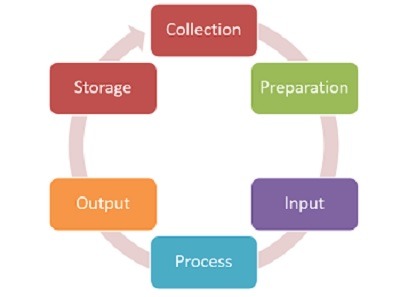
The process of data processing typically involves the following stages:
- Data Collection: The initial step in data processing is the collection of relevant and reliable data from various sources, including databases, sensors, surveys, or external systems. This data can be structured, semi-structured, or unstructured, and may include text, numbers, images, or multimedia.
- Data Entry: Once collected, the data needs to be entered into a computer system or database. This can be done manually by data entry operators or automated through technologies like optical character recognition (OCR) or data extraction tools.
- Data Cleaning and Validation: Raw data often contains errors, missing values, inconsistencies, or duplicates. In this stage, data is cleaned and validated to ensure accuracy, completeness, and consistency. Techniques like data cleansing, outlier detection, and data profiling are employed to identify and rectify anomalies.
- Data Transformation: After cleaning and validation, the data may undergo transformation to convert it into a more suitable format for analysis or further processing. This involves tasks like data normalization, aggregation, encoding, or data restructuring to meet specific requirements.
- Data Storage: Processed data is typically stored in databases, data warehouses, or data lakes for easy and efficient access. Various storage technologies like relational databases, No SQL databases, or cloud-based storage systems are used based on the nature and volume of data.
- Data Analysis: Once the data is in a suitable format, it can be analyzed to extract meaningful insights and patterns. This involves applying statistical, mathematical, or machine learning algorithms to explore relationships, identify trends, make predictions, or derive actionable insights.
- Data Visualization: The results of data analysis are often visualized using charts, graphs, dashboards, or other visual representations to communicate complex information in a more understandable and intuitive manner. Visualization aids in effective communication of insights and facilitates data-driven decision-making.
- Reporting and Presentation: The final processed data and insights are often summarized and presented in reports, presentations, or interactive dashboards to stakeholders, decision-makers, or end-users. These outputs help in understanding the findings, supporting decision-making, or driving business strategies.
- Iterative Process: Data processing is often an iterative process, where feedback from data analysis and insights informs further data collection, cleaning, and analysis. This iterative cycle helps refine the process, improve the quality of data, and enhance the accuracy and relevance of insights.
Data processing can involve different levels of complexity depending on the nature of data, the scale of processing, and the specific goals of the analysis. It can range from simple calculations and basic transformations to sophisticated techniques like natural language processing, image recognition, or big data analytics. The advancement of technologies like artificial intelligence, machine learning, and cloud computing has significantly expanded the capabilities and potential of data processing, enabling organizations to derive valuable insights from vast amounts of data in real-time.
Overall, data processing is a fundamental process in the data life cycle, enabling organizations and individuals to harness the power of data to gain insights, make informed decisions, solve complex problems, and drive innovation in various domains.
What is required Concept of Data processing
The concept of data processing encompasses several key components that are required for effective and efficient data processing. These components include:
- Data Collection: Gathering relevant and accurate data from various sources is the first step in the data processing pipeline. This involves identifying the sources, defining data requirements, and implementing mechanisms to collect and store the data.
- Data Integration: Data often comes from diverse sources and formats. Data integration involves combining data from different sources and systems into a unified and consistent format. This step ensures that the data is compatible and ready for further processing.
- Data Quality: Ensuring data quality is crucial for meaningful data processing. Data quality includes aspects such as accuracy, completeness, consistency, relevance, and timeliness. Data cleaning, validation, and standardization techniques are employed to improve data quality.
- Data Storage: Adequate storage infrastructure is required to efficiently manage and store the collected data. This may involve databases, data warehouses, data lakes, or cloud-based storage solutions. The storage infrastructure should be scal able, secure, and capable of handling the volume and velocity of incoming data.
- Data Processing Techniques: Various techniques and algorithms are applied to process and analyze the data. This can range from basic data transformations and calculations to advanced statistical methods, machine learning algorithms, or big data analytics. The selection of appropriate techniques depends on the specific goals and nature of the data.
- Computational Resources: Sufficient computational resources, including hardware and software, are essential for data processing. This may involve powerful processors, memory, storage, and specialized software tools or frameworks that facilitate efficient data processing and analysis.
- Data Privacy and Security: Data processing involves handling sensitive and confidential information, making data privacy and security critical considerations. Implementing robust security measures, encryption techniques, access controls, and complying with data protection regulations are necessary to protect the data throughout the processing pipeline.
- Data Governance: Data governance involves establishing policies, procedures, and guidelines for managing and controlling data processing activities. This includes defining data standards, data ownership, data stewardship, and ensuring compliance with data regulations.
- Data Visualization and Reporting: Communicating the processed data and insights effectively is essential for decision-making and understanding. Data visualization techniques, such as charts, graphs, and dashboards, aid in presenting complex information in a visually appealing and easily understandable manner.
- Continuous Improvement: Data processing is an iterative process that requires continuous improvement and refinement. Feedback from data analysis and user requirements should inform enhancements in data collection, processing techniques, and data quality measures.
These components collectively contribute to the successful implementation of data processing, enabling organizations to extract valuable insights, make informed decisions, and gain a competitive advantage through data-driven strategies. The understanding and integration of these components are crucial for establishing a robust data processing framework.
Who is required Concept of Data processing
The concept of data processing involves the participation of various individuals and roles with different responsibilities. Here are some key stakeholders involved in the process:
- Data Analysts/Scientists: Data analysts or data scientists play a crucial role in data processing. They are responsible for designing and executing data processing tasks, including data cleaning, transformation, analysis, and visualization. They possess the technical skills and domain knowledge to extract meaningful insights from data.
- Data Engineers: Data engineers are responsible for the technical aspects of data processing. They build and maintain the infrastructure required for data collection, storage, and processing. They also develop data pipelines, implement data integration processes, and ensure data quality and reliability.
- Data Managers: Data managers oversee the overall management and governance of data processing activities. They are responsible for establishing data collection policies, defining data standards, ensuring compliance with data protection regulations, and managing data quality and security.
- Domain Experts: Domain experts, such as subject matter experts or industry specialists, contribute their expertise to the data processing process. They provide insights into the context and interpretation of the data, helping to ensure that the analysis and processing are aligned with the specific domain requirements and objectives.
- IT Professionals: IT professionals, including system administrators, database administrators, and network administrators, are involved in setting up and maintaining the technical infrastructure required for data processing. They ensure the smooth operation of the systems, data storage, and network connectivity.
- Data Stewards: Data stewards are responsible for the management and oversight of data quality and governance. They define data policies, monitor data quality, enforce data standards, and ensure data privacy and security.
- Business Users/Decision-Makers: Business users or decision-makers are the ultimate beneficiaries of data processing. They rely on the insights and information derived from data processing to make informed decisions, drive business strategies, and achieve organizational goals.
- Legal and Compliance Experts: Legal and compliance experts provide guidance and ensure adherence to data protection laws, regulations, and industry standards. They help establish data processing practices that are compliant with applicable data privacy and security requirements.
Collaboration and coordination among these stakeholders are crucial for successful data processing. Each role contributes specific expertise, knowledge, and responsibilities to ensure the accuracy, quality, and relevance of the processed data.
When is required Concept of data processing
The concept of data processing is required in various scenarios and domains where there is a need to transform raw data into meaningful information. Here are some common situations where data processing is essential:
- Business Analytics: Organizations use data processing to analyze customer behavior, market trends, sales patterns, and financial data. By processing and analyzing this data, businesses can make data-driven decisions, optimize operations, improve marketing strategies, and identify new opportunities.
- Scientific Research: Data processing plays a vital role in scientific research across disciplines such as biology, physics, astronomy, and environmental sciences. Researchers collect and process data from experiments, simulations, or observations to gain insights, test hypotheses, and contribute to scientific knowledge.
- Healthcare and Medicine: In healthcare, data processing is used for patient records management, medical imaging analysis, clinical trials, and disease monitoring. Processing medical data allows for accurate diagnoses, treatment planning, and medical research.
- Financial Services: Banks, financial institutions, and investment firms rely on data processing to manage transactions, perform risk analysis, detect fraud, and generate financial reports. Real-time data processing is crucial for stock trading, algorithmic trading, and high-frequency trading.
- Marketing and Advertising: Data processing enables marketers to segment customers, analyze consumer behavior, personalize advertising campaigns, and measure the effectiveness of marketing strategies. Processing data from social media platforms, customer surveys, or website analytics helps optimize marketing efforts.
- Internet of Things (Io T): With the proliferation of Io T devices, data processing is necessary to handle the massive amounts of data generated by connected devices. Processing Io T data allows for real-time monitoring, predictive maintenance, and optimization of systems and processes.
- Government and Public Sector: Data processing is essential in areas such as census analysis, public health monitoring, crime analysis, urban planning, and transportation management. Governments use data processing to inform policy-making, resource allocation, and public service delivery.
- Machine Learning and Artificial Intelligence: Data processing forms the foundation for training and deploying machine learning models and AI systems. Large datasets are processed and transformed to train models, perform predictions, natural language processing, image recognition, and other AI applications.
- Education and Academia: Data processing is used in educational institutions to analyze student performance, track progress, personalize learning experiences, and evaluate educational interventions. Data processing techniques also enable research in the field of educational analytics and learning sciences.
These are just a few examples of when data processing is required. In essence, any situation where there is a need to convert raw data into actionable insights, support decision-making, or extract valuable information from data necessitates the concept of data processing.
Where is required Concept of data processing
The concept of data processing is required in various domains and industries where there is a need to handle and analyze data. Here are some common areas where data processing is essential:
- Business Organizations: Data processing is integral to business operations across industries. Companies use data processing to manage customer information, analyze sales data, optimize supply chains, conduct market research, and support decision-making processes.
- Healthcare Sector: Data processing is crucial in healthcare for managing patient records, analyzing medical images, processing clinical trial data, monitoring patient health, and facilitating medical research. It enables healthcare providers to improve patient care, diagnose diseases, and develop treatment plans.
- Financial Institutions: Banks, insurance companies, and other financial institutions rely on data processing for customer transactions, risk analysis, fraud detection, credit scoring, investment analysis, and regulatory reporting. Accurate and timely data processing is essential for financial decision-making and compliance.
- Scientific Research: Data processing plays a vital role in scientific research across disciplines such as astronomy, biology, physics, chemistry, and environmental sciences. Scientists process data from experiments, observations, simulations, and surveys to extract insights, test hypotheses, and advance scientific knowledge.
- Marketing and Advertising: Data processing is central to marketing and advertising activities. It involves processing customer data, analyzing consumer behavior, segmenting target audiences, personalizing marketing campaigns, and measuring campaign effectiveness. Data processing helps businesses make informed marketing decisions and optimize advertising strategies.
- Government and Public Sector: Data processing is crucial in the public sector for managing citizen data, analyzing demographic information, monitoring public health, conducting census analysis, optimizing transportation systems, and supporting evidence-based policy-making.
- Education and Academia: Data processing is used in educational institutions for managing student information, analyzing academic performance, conducting research studies, and improving teaching methodologies. It supports personalized learning, educational analytics, and educational research.
- Manufacturing and Supply Chain: Data processing is vital in manufacturing and supply chain management for monitoring production processes, analyzing quality control data, optimizing inventory management, and improving supply chain efficiency. It helps identify bottlenecks, reduce costs, and enhance productivity.
- Transportation and Logistics: Data processing is necessary in transportation and logistics for route optimization, fleet management, tracking shipments, managing inventory, and analyzing transportation data. It enables efficient logistics operations and enhances supply chain visibility.
- Social Media and Online Platforms: Data processing is central to social media platforms, online platforms, and e-commerce websites. It involves analyzing user data, personalizing content and recommendations, detecting spam or fraudulent activities, and understanding user behavior for targeted advertising.
These are just a few examples, and the concept of data processing is applicable in numerous other industries and domains. As data continues to grow in volume and complexity, the need for effective data processing becomes increasingly important in extracting valuable insights and driving informed decision-making.
How is required Concept of data data processing
The concept of data processing is required in various ways to ensure effective and efficient handling of data. Here are some key aspects of how data processing is required:
- Data Organization: Data processing helps in organizing and structuring data in a meaningful way. It involves cleaning, transforming, and formatting raw data to make it suitable for analysis and further processing. By organizing data, it becomes easier to access, retrieve, and interpret the information contained within it.
- Data Analysis: Data processing enables the analysis of data to uncover patterns, trends, and insights. Techniques such as statistical analysis, data mining, machine learning, and visualization are applied during the data processing phase to extract valuable information and draw meaningful conclusions from the data.
- Decision-Making: Data processing plays a crucial role in supporting decision-making processes. By processing and analyzing relevant data, organizations can make informed decisions based on evidence and insights rather than relying solely on intuition or guesswork. Data processing helps in identifying opportunities, predicting outcomes, evaluating risks, and measuring performance.
- Efficiency and Automation: Data processing helps automate repetitive tasks and streamline processes. By automating data entry, cleaning, and transformation, organizations can save time and resources, reduce human errors, and improve overall efficiency. This allows data processing tasks to be performed at a faster pace, enabling timely decision-making and actions.
- Data Integration: Data processing facilitates the integration of data from various sources. Organizations often have data scattered across multiple systems or departments. Data processing techniques allow for the integration of these disparate data sources, enabling a comprehensive view and analysis of the data.
- Data Privacy and Security: Data processing is essential for ensuring data privacy and security. During data processing, measures are implemented to protect sensitive information, such as personally identifiable information (PI I) or financial data. Techniques like data anonym ization, encryption, access controls, and audit trails are applied to safeguard data throughout the processing pipeline.
- Compliance and Regulations: Data processing is required to comply with various regulations and legal requirements. Organizations need to process data in a manner that adheres to data protection laws, industry standards, and privacy regulations. Data processing ensures compliance by implementing appropriate security measures, data governance practices, and consent management mechanisms.
- Scalability and Big Data: With the exponential growth of data, data processing becomes crucial for handling large volumes of data efficiently. Processing techniques, such as parallel computing, distributed systems, and cloud computing, enable organizations to scale their data processing capabilities to handle big data effectively.
- Continuous Improvement: Data processing involves a continuous improvement cycle. As organizations process and analyze data, they gain insights and feedback that can be used to refine data processing methods, enhance data quality, and improve decision-making processes. Continuous improvement in data processing leads to better insights and outcomes over time.
Overall, the concept of data processing is required to unlock the value of data, support decision-making, ensure data privacy and security, and drive efficiency and effectiveness in various domains and industries. It provides the foundation for leveraging data as a strategic asset and enables organizations to gain insights and make informed decisions for improved performance and innovation.
Case study on Concept of data processing
Title: Enhancing Customer Experience through Data Processing: A Case Study
Abstract: This case study focuses on how a retail company leveraged the concept of data processing to enhance customer experience and drive business growth. By effectively collecting, analyzing, and processing customer data, the company gained valuable insights that enabled personalized marketing, improved product recommendations, and optimized customer service interactions.
- Introduction: The retail company, a well-established e-commerce platform, recognized the importance of data in understanding customer preferences, behaviors, and needs. They aimed to utilize data processing techniques to improve customer experience, increase customer satisfaction, and boost sales.
- Data Collection and Integration: The company employed various data collection methods, including website analytics, customer surveys, purchase history, and social media monitoring. These diverse data sources were integrated using data integration tools, ensuring compatibility and consistency for further processing.
- Data Cleaning and Validation: To ensure data quality, the company performed data cleaning and validation processes. This involved removing duplicate records, correcting inaccuracies, and validating the data against predefined rules. Data cleansing improved the accuracy and reliability of subsequent data processing steps.
- Data Processing Techniques: The company applied various data processing techniques to extract valuable insights from the collected data. They used statistical analysis to identify customer segments based on demographics, purchase behavior, and browsing patterns. Machine learning algorithms were employed to generate personalized product recommendations, improving cross-selling and upselling opportunities.
- Personalized Marketing: Utilizing the insights derived from data processing, the company implemented personalized marketing campaigns. Customers received tailored promotions, discounts, and product recommendations based on their preferences and browsing history. This resulted in increased customer engagement, higher conversion rates, and improved customer loyalty.
- Customer Service Optimization: Data processing techniques were also utilized to optimize customer service interactions. By analyzing customer support tickets, chat logs, and customer feedback, the company identified common issues and pain points. This information was used to improve self-service options, enhance response times, and provide proactive support, ultimately leading to improved customer satisfaction.
- Continuous Improvement: The company adopted a continuous improvement approach to data processing. They regularly reviewed and refined their data processing methods based on feedback, new data sources, and emerging technologies. This iterative process allowed them to stay updated with evolving customer preferences and market trends.
- Results and Impact: Through effective data processing, the company achieved significant business results. Customer engagement and conversion rates increased by 20%, and customer satisfaction scores improved by 15%. Personalized marketing campaigns led to a 25% increase in average order value, and optimized customer service interactions reduced response times by 30%.
- Lessons Learned: This case study highlights the importance of data processing in enhancing customer experience. The key lessons learned include the need for robust data collection strategies, the significance of data quality and validation, the power of personalized marketing, and the impact of continuous improvement in data processing practices.
- Conclusion: By leveraging the concept of data processing, the retail company successfully enhanced customer experience, increased customer satisfaction, and drove business growth. The case study demonstrates the value of utilizing data as a strategic asset and highlights the potential for organizations to achieve a competitive advantage through effective data processing techniques.
White paper on Concept of Data processing
Title: The Concept of Data Processing: Unleashing the Power of Data
Abstract: This white paper explores the concept of data processing and its significance in today’s data-driven world. It delves into the fundamentals of data processing, including its definition, importance, and key techniques. The paper also highlights the benefits and challenges associated with data processing, along with real-world examples and best practices.
- Introduction: In the era of big data and digital transformation, organizations are increasingly recognizing the value of data. The concept of data processing forms the foundation for unlocking actionable insights, enabling informed decision-making, and driving business growth. This section provides an overview of the white paper’s objectives and structure.
- Understanding Data Processing: This section defines data processing and its role in converting raw data into meaningful information. It explores the data processing pipeline, encompassing data collection, cleaning, transformation, analysis, and visualization. The importance of data processing as a crucial step towards extracting value from data is emphasized.
- Key Techniques in Data Processing: The white paper explores various techniques employed in data processing. It covers data cleaning and validation, data integration, statistical analysis, machine learning, and data visualization. Each technique is explained in detail, highlighting its purpose and benefits in the data processing pipeline.
- Benefits of Data Processing: This section discusses the numerous benefits of effective data processing. It explores how data processing facilitates data-driven decision-making, enhances operational efficiency, improves customer experiences, enables predictive analytics, and supports innovation. Real-world examples illustrate the tangible advantages gained through data processing.
- Challenges and Considerations: Data processing is not without its challenges. This section addresses the common hurdles encountered in data processing, such as data quality issues, scalability, privacy concerns, and data security. Best practices and strategies for overcoming these challenges are presented to ensure successful data processing initiatives.
- Real-World Applications: To illustrate the practical applications of data processing, this section highlights real-world case studies across various industries. Examples include retail companies utilizing customer data for personalized marketing, healthcare organizations leveraging data processing for patient diagnosis, and financial institutions employing data processing for fraud detection.
- Best Practices in Data Processing: This section outlines key best practices for effective data processing. It covers aspects such as establishing data governance frameworks, ensuring data quality and integrity, leveraging automation and advanced technologies, fostering a data-driven culture, and complying with data protection regulations.
- The Future of Data Processing: This section explores emerging trends and advancements in data processing. It covers topics like real-time data processing, edge computing, artificial intelligence, and machine learning integration. The potential impact of these trends on data processing capabilities and future applications is discussed.
- Conclusion: The white paper concludes by summarizing the key points discussed throughout the document. It emphasizes the importance of data processing as a critical enabler for harnessing the value of data. It highlights the need for organizations to embrace data processing techniques and strategies to gain a competitive edge in the data-driven landscape.
- References: This section provides a list of references and resources used in compiling the white paper, allowing readers to further explore the topic of data processing.
The white paper aims to provide a comprehensive understanding of the concept of data processing, its significance, and its practical implications. It serves as a valuable resource for organizations and professionals seeking to leverage data effectively and unlock its full potential.