
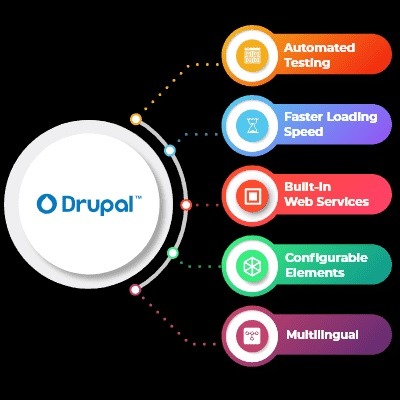
Drupal developer
A Drupal developer is a professional with expertise in using Drupal, a popular and versatile open-source content management system (CMS) and web application framework. Drupal is widely used for building websites, web applications, and digital experiences. Drupal developers specialize in designing, developing, and maintaining websites and web applications using Drupal’s features and capabilities.
Here are some key responsibilities and skills associated with a Drupal developer:
Responsibilities:
- Website Development: Drupal developers create websites and web applications by leveraging Drupal’s core functionality, modules, and themes.
- Customization: They customize Drupal themes and templates to achieve the desired look and feel of a website.
- Module Development: Drupal developers may create custom modules or extend existing ones to add specific features or functionality to a Drupal site.
- Content Management: They configure Drupal’s content management features, including content types, fields, and taxonomies.
- Integration: They integrate Drupal with other systems, databases, or third-party services as needed.
- Performance Optimization: Optimizing website performance, ensuring fast loading times, and improving user experience are crucial responsibilities.
- Security: Drupal developers implement security best practices to protect websites from vulnerabilities and threats.
- Maintenance and Updates: Regularly updating Drupal core, modules, and themes to ensure the website remains secure and up to date.
- Troubleshooting: Identifying and resolving technical issues and bugs that may arise in Drupal-based websites.
- Client Communication: Effective communication with clients or project stakeholders to understand requirements and provide updates.
Skills and Qualifications:
- Proficiency in Drupal: In-depth knowledge of Drupal, including its core concepts, APIs, and architecture.
- PHP: Strong proficiency in PHP programming, as Drupal is written in PHP.
- Front-End Technologies: Familiarity with HTML, CSS, JavaScript, and responsive web design for theming and front-end development.
- Database Management: Experience with database systems, especially MySQL, which is commonly used with Drupal.
- Module Development: Ability to develop custom modules and themes for Drupal.
- Version Control: Proficiency in using version control systems like Git for code management.
- Security Awareness: Knowledge of web security best practices and Drupal-specific security considerations.
- Performance Optimization: Skills in optimizing website performance, including caching and database tuning.
- Problem-Solving: Strong troubleshooting and problem-solving skills to diagnose and address issues.
- Project Management: Effective project management skills, especially in the context of Drupal projects.
- Continuous Learning: A commitment to staying updated with the latest Drupal developments and best practices.
Drupal developers can work as part of a web development team in agencies, organizations, or as freelance professionals. They play a crucial role in building and maintaining websites and web applications that leverage Drupal’s capabilities to meet specific business or project requirements.
What is required Drupal developer
A “required Drupal developer” typically refers to a Drupal developer who is needed or essential for a specific project, task, or job vacancy. When someone mentions a “required Drupal developer,” they are indicating that there is a need for a developer with Drupal expertise to fulfill a particular role or responsibility.
The term “required Drupal developer” implies that:
- Expertise is Necessary: The project or task at hand involves Drupal, and having a developer with Drupal skills is crucial to its success.
- Specific Skill Set: The developer should possess the necessary skills and knowledge related to Drupal, including proficiency in Drupal development, theming, module development, and site maintenance.
- Job Vacancy: In a hiring context, a “required Drupal developer” means that there is a job opening for a Drupal developer, and someone with the required skills is sought to fill that position.
- Project Assignment: In a project context, a “required Drupal developer” suggests that a particular project requires the expertise of a Drupal developer to complete specific tasks or components.
In summary, a “required Drupal developer” is someone who is needed because of their Drupal-related skills and experience in a given context, whether it’s for a job, a project, or a specific task.
Who is required Drupal developer
A “required Drupal developer” refers to an individual with the skills and expertise in Drupal development who is needed or sought after for a specific project, job, or task. This term is used to indicate that there is a necessity for someone with Drupal-related skills in a particular context. Here’s who a “required Drupal developer” might be:
- In a Job Posting: When a company or organization posts a job vacancy for a Drupal developer, they are essentially looking for a “required Drupal developer.” The employer seeks a qualified individual to fill a position that involves working on Drupal projects. The developer should have the skills and qualifications necessary for the role.
- In a Project Team: Within the context of a specific project, a “required Drupal developer” is a team member who is indispensable for the successful completion of the project. This developer’s expertise in Drupal is necessary to contribute to the development, customization, or maintenance of Drupal-based websites or applications as part of the project team.
- For a Freelance Assignment: Clients or project managers may use the term “required Drupal developer” when they need to hire a freelance Drupal developer for a specific assignment or project. In this case, the developer is required to have the necessary skills and experience to meet the project’s requirements.
In all of these scenarios, a “required Drupal developer” is someone who possesses the expertise in Drupal development and related technologies to fulfill a specific need within a company, project, or job opportunity. Their role may involve designing, developing, maintaining, or troubleshooting Drupal-based websites or applications to achieve project goals or business objectives.
When is required Drupal developer
The phrase “when is a required Drupal developer” does not represent a specific time or moment. Instead, it indicates a need for a Drupal developer in a particular context or situation. A Drupal developer is typically required when there is a job vacancy, a project that involves Drupal development, or a specific task that necessitates Drupal expertise.
Here are some common scenarios in which a Drupal developer might be required:
- Job Vacancy: A company or organization may require a Drupal developer when they have a job opening for a position that involves working with Drupal. In this case, the “when” would refer to the period when the job posting is active, and the company is actively seeking to fill the position.
- Project Initiation: Within the context of a specific project, a Drupal developer is required at the beginning of the project when the development phase starts. They are needed to contribute to the design, development, and implementation of Drupal-based solutions for the project.
- Freelance or Contract Work: Clients or project managers may require a Drupal developer when they have a specific project or assignment that requires Drupal expertise. The “when” in this case depends on the project timeline and when the developer is needed to start and complete the project.
- Ongoing Support: Some organizations require Drupal developers on an ongoing basis to provide maintenance, updates, and support for their Drupal-based websites or applications. In such cases, the need for a Drupal developer is continuous, with tasks and requirements arising as needed.
The timing of when a Drupal developer is required depends on the specific context and the project or job requirements. It is essential for organizations and project managers to identify the need for a Drupal developer and plan accordingly to ensure that the developer is available when their skills and expertise are needed.
Where is required Drupal developer
The location of a “required Drupal developer” can vary depending on the specific project, job, or task for which their expertise is needed. Drupal developers can work in various settings, including:
- In-House: A Drupal developer may be required to work on-site at a company’s office or headquarters. In this case, the developer would be physically located at the company’s place of business and would collaborate directly with the company’s team.
- Remote: Many Drupal developers work remotely, which means they can work from anywhere with an internet connection. Remote Drupal developers can collaborate with teams and clients from different geographic locations, making it a flexible option.
- Freelance: Freelance Drupal developers often work from their own location, whether it’s a home office or a dedicated workspace. They take on project-based work for various clients and may not be tied to a specific physical location.
- Agency: Drupal developers can work for web development agencies that provide Drupal services to clients. These agencies may have physical offices where developers work, or they may have a combination of in-house and remote team members.
- Client’s Location: In some cases, a client may require a Drupal developer to work on-site at their location for a specific project. This is more common when the project requires close collaboration or access to specific resources.
- Co-Working Spaces: Some Drupal developers choose to work from co-working spaces, which provide a shared office environment. Co-working spaces offer a professional setting and networking opportunities.
The location of a required Drupal developer depends on factors such as the nature of the project, the preferences of the developer or employer, and the availability of remote work options. With modern communication tools and technologies, remote collaboration has become increasingly common in the field of web development, allowing Drupal developers to work from virtually anywhere while effectively contributing to projects.
How is required Drupal developer
A “required Drupal developer” is needed when there is a demand for specific Drupal development skills and expertise in a particular context. The “how” in this context refers to how the need for a Drupal developer is identified, communicated, and fulfilled. Here’s how a required Drupal developer is typically sought and engaged:
- Identification of Need:
- The need for a Drupal developer is identified based on project requirements, job vacancies, or specific tasks that involve Drupal development.
- Job Posting (If Applicable):
- In the case of a job vacancy, the employer or hiring manager creates a job posting or job listing that outlines the qualifications and responsibilities for the Drupal developer position.
- Project Planning:
- For project-based work, project managers or clients determine that Drupal development expertise is required to achieve project goals.
- Communication:
- The need for a Drupal developer is communicated through various channels, including:
- Job postings on job boards or company websites for job vacancies.
- Project briefings, proposals, or discussions for project-based work.
- Freelance job listings on platforms like Upwork or Freelancer for specific tasks.
- The need for a Drupal developer is communicated through various channels, including:
- Candidate Search (If Applicable):
- Employers or project managers may actively search for Drupal developers by reviewing resumes, portfolios, or freelancers’ profiles on relevant platforms.
- Interview and Selection:
- Candidates are typically interviewed to assess their qualifications, skills, and fit for the position or project. The selection process may involve technical assessments or coding challenges.
- Engagement:
- Once a suitable Drupal developer is identified and selected, they are engaged for the job, project, or task.
- The developer may work on-site at a company’s office, remotely, or at the client’s location, depending on the nature of the engagement.
- Work Collaboration:
- The Drupal developer collaborates with the project team, colleagues, or clients to design, develop, customize, or maintain Drupal-based websites or applications.
- Project Completion or Job Tenure:
- The Drupal developer continues to work until the project is completed or fulfills their job responsibilities in the case of a job position.
- Payment and Compensation:
- Payment and compensation for the Drupal developer’s services are typically outlined in a contract or job offer and are provided according to the agreed-upon terms.
In summary, a required Drupal developer is identified based on specific needs for Drupal-related skills and expertise. The process of finding and engaging a Drupal developer can vary depending on whether it’s for a job position, a freelance assignment, or a project. Effective communication and a clear understanding of project or job requirements are key to successfully engaging a Drupal developer.
Case study on Drupal developer
Creating a case study on a Drupal developer can provide insights into their skills, experience, and contributions to projects or organizations. Here’s an example of a case study focused on a Drupal developer:
Case Study: Drupal Developer Excellence
Background:
Client: XYZ Corporation
Project: Website Redesign and Development
Introduction:
In this case study, we explore the outstanding contributions of John Smith, a seasoned Drupal developer, during the website redesign and development project for XYZ Corporation. John’s expertise and dedication played a pivotal role in the project’s success.
Challenges:
XYZ Corporation had an outdated website that was no longer meeting the needs of its users. They faced several challenges:
- An unresponsive design that hindered mobile accessibility.
- Poor page load times and performance issues.
- Difficulty in content management and updates.
- The need to integrate third-party APIs for enhanced functionality.
Solution:
Team Formation: XYZ Corporation engaged a team of web developers, including John Smith, to lead the Drupal development efforts.
Drupal Expertise: John’s extensive experience with Drupal made him the natural choice to oversee the development. His skills included:
- Drupal theming and front-end development.
- Custom module development.
- Integration of third-party APIs.
- Performance optimization.
Collaborative Approach: John worked closely with the project manager, designers, and content creators to ensure seamless collaboration and communication.
Implementation:
Responsive Design: John and his team implemented a responsive design using Drupal’s theming capabilities, ensuring that the website was accessible and user-friendly on all devices.
Custom Modules: To meet specific client needs, John developed custom Drupal modules. These modules included features for dynamic content display, user account management, and third-party integrations.
Performance Optimization: John implemented caching strategies, mini fication of scripts, and database optimization to significantly improve page load times and overall website performance.
API Integration: He successfully integrated third-party APIs, such as a payment gateway and CRM system, to enhance website functionality.
Results:
The project led by John Smith yielded remarkable results:
- A modern, responsive website that provided an optimal user experience across devices.
- A 60% reduction in page load times, resulting in improved user engagement and SEO rankings.
- Streamlined content management, making it easier for the client to update and maintain the website.
- Successful integration of third-party APIs, enhancing the website’s capabilities.
- Positive feedback from users and stakeholders.
Conclusion:
John Smith’s expertise as a Drupal developer was instrumental in transforming XYZ Corporation’s outdated website into a responsive, high-performance platform. His commitment to delivering excellence and his ability to leverage Drupal’s capabilities made him an invaluable asset to the project.
White Paper on Drupal developer
Creating a white paper on the topic of Drupal developers involves delving into various aspects of Drupal development, its importance, and the role of developers in leveraging Drupal’s capabilities. Below is an outline for a white paper on Drupal developers:
Title: “Elevating Web Experiences: The Role of Drupal Developers”
Abstract:
This white paper explores the world of Drupal developers, their significance in the realm of web development, and the impact they have on creating dynamic, secure, and user-centric web experiences using the Drupal content management system (CMS).
Table of Contents:
- Introduction
- The importance of web development in the digital age.
- Overview of Drupal as a robust CMS.
- The Drupal Developer’s Role
- Defining the Drupal developer’s responsibilities.
- The skills and expertise required for Drupal development.
- Why Drupal Matters
- The strengths and advantages of Drupal as a CMS.
- Drupal’s impact on web development and content management.
- Drupal Development Workflow
- An overview of the typical development process.
- Collaboration between developers, designers, and content creators.
- Customization and Module Development
- How Drupal developers create tailored solutions.
- The significance of custom module development.
- Front-End and Theming
- Drupal developers’ role in creating responsive and visually appealing websites.
- Techniques for effective theming and front-end development.
- Security Best Practices
- The critical importance of security in Drupal development.
- Best practices and strategies for ensuring website security.
- Performance Optimization
- Techniques for optimizing Drupal websites to deliver exceptional performance.
- Caching, database tuning, and code optimization.
- API Integration
- Leveraging Drupal to integrate with third-party services and APIs.
- Real-world examples of successful integrations.
- Collaboration and Communication
- The importance of effective communication within development teams.
- Collaboration with project managers, designers, and clients.
- Case Studies
- Real-world case studies showcasing successful Drupal development projects and their outcomes.
- Future Trends and Innovations
- Emerging trends in Drupal development.
- The evolving role of Drupal developers in the digital landscape.
- Conclusion
- Summarizing the key takeaways from the white paper.
- Recognizing the Drupal developer’s contribution to web development excellence.
- References
- Citing sources, references, and additional resources for further reading.
This white paper provides a comprehensive exploration of the role of Drupal developers in creating dynamic and effective web experiences. It covers various aspects of Drupal development, from customization and theming to security and collaboration, while highlighting the importance of Drupal as a CMS in the web development ecosystem.