
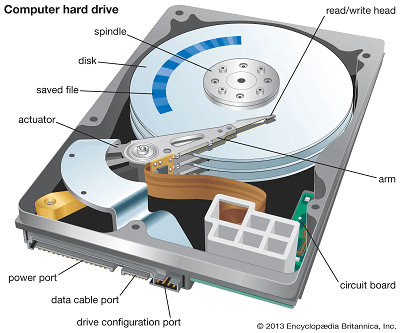
Hard disk case study
Hard disk drives (HDDs) are data storage devices that have been widely used in personal computers, servers, and other electronic devices. A case study on hard disk drives could focus on their history, evolution, and impact on the industry.
History and Evolution: The first HDD was introduced by IBM in 1956 and had a storage capacity of only 5MB. Over the years, HDDs have undergone significant advancements in terms of storage capacity, speed, and reliability. By the 1980s, HDDs had become an essential component of personal computers, and the storage capacity had increased to several hundred megabytes. In the 1990s and 2000s, the storage capacity of HDDs reached several terabytes, and the technology continued to evolve with advancements such as solid-state hybrid drives (SSHDs) and shingled magnetic recording (SMR) technology.
Impact on the Industry: HDDs have had a significant impact on the technology industry. They have enabled the storage of vast amounts of data in a small space, making them essential for servers and data centers. The ability to store and access data quickly has facilitated the growth of the internet, cloud computing, and the digital economy. The competition between HDD manufacturers, such as Western Digital and Seagate, has driven innovation and advancements in technology. However, the emergence of solid-state drives (SSDs) and other non-volatile storage technologies has challenged the dominance of HDDs.
Challenges and Future Developments: Despite their advantages, HDDs face several challenges, including the limitations of the traditional magnetic recording technology, which may not be able to support further increases in storage density. HDDs are also vulnerable to physical shocks and vibrations, and the moving parts in the drive can lead to mechanical failure. In response to these challenges, HDD manufacturers are developing new technologies, such as heat-assisted magnetic recording (HAMR) and microwave-assisted magnetic recording (MAMR), to increase storage capacity and improve reliability.
In conclusion, hard disk drives have been a crucial component of data storage for decades and have enabled the growth of the digital economy. However, the challenges and limitations of the traditional magnetic recording technology have led to the development of new technologies to overcome these challenges and maintain the relevance of HDDs in the future.