
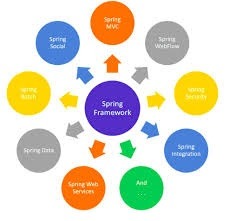
Integrating application with Spring Framework
Integrating an application with the Spring Framework involves leveraging Spring’s capabilities to enhance the functionality and manage various aspects of your application. Spring is a popular Java framework known for its comprehensive support for building enterprise-level applications. Here are the key steps and considerations for integrating an application with the Spring Framework:
1. Set Up the Spring Environment:
- Add Spring Framework dependencies to your project. You can use a build tool like Maven or Gradle to manage dependencies easily.
- Configure the Spring application context. This is typically done using XML configuration, Java configuration (using annotations), or a combination of both.
2. Create Spring Beans:
- Define the beans (components) of your application within the Spring context. Beans are Java objects managed by Spring and can include services, repositories, controllers, and more.
- Annotate Java classes with
@Component,@Service,@Repository, or@Controllerto declare them as Spring beans.
3. Dependency Injection:
- Use dependency injection to wire components together. Spring manages the relationships between beans and injects dependencies where needed.
- Employ constructor injection, setter injection, or field injection, depending on your preference and requirements.
4. AOP (Aspect-Oriented Programming):
- Use Spring’s AOP capabilities to modularize cross-cutting concerns, such as logging, security, and transaction management.
- Define aspects, pointcuts, and advice to encapsulate these concerns separately from your business logic.
5. Data Access:
- Integrate Spring with your data access layer using Spring Data or the JDBC template. Configure data source details and transactions.
- Use annotations like
@Repositoryand@Transactionalto simplify data access code.
6. Web Integration:
- If building a web application, integrate Spring with the web layer. You can use Spring MVC for this purpose.
- Configure web-related components such as controllers, views, and request mappings.
What is Required Integrating application with Spring Framework
Integrating an application with the Spring Framework requires several essential components and steps to ensure a successful integration. Here are the key requirements for integrating an application with the Spring Framework:
- Spring Framework Dependencies:
- Ensure that your project includes the necessary Spring Framework dependencies. You can manage these dependencies using build tools like Maven or Gradle.
- Application Setup:
- Set up your application project structure and environment according to your specific requirements. Ensure you have the necessary development tools, a suitable IDE, and a Java development kit (JDK) installed.
- Spring Configuration:
- Create a Spring application context configuration. This can be done using XML configuration files, Java configuration classes, or a combination of both. The configuration specifies how Spring should manage beans and application components.
- Defining Spring Beans:
- Define the beans (components) of your application within the Spring context. These beans are Java objects that Spring will manage. Annotate your Java classes with appropriate Spring annotations like
@Component,@Service,@Repository, or@Controllerto declare them as Spring beans.
- Define the beans (components) of your application within the Spring context. These beans are Java objects that Spring will manage. Annotate your Java classes with appropriate Spring annotations like
- Dependency Injection:
- Use dependency injection to wire components together. Spring manages the relationships between beans and injects dependencies where needed. You can use constructor injection, setter injection, or field injection based on your preference and requirements.
- Aspect-Oriented Programming (AOP):
- Utilize Spring’s AOP capabilities to modularize cross-cutting concerns such as logging, security, and transaction management. Define aspects, pointcuts, and advice to encapsulate these concerns separately from your business logic.
- Data Access Integration:
- If your application interacts with a database, integrate Spring with your data access layer. You can use Spring Data for simplified data access or the JDBC template for custom data access code. Configure data source details and transactions appropriately.
- Web Integration (If Applicable):
- For web applications, integrate Spring with the web layer using Spring MVC. Configure web-related components such as controllers, views, and request mappings. Ensure that your application can handle incoming web requests and generate responses.
- Spring Security (If Applicable):
- Implement security features using Spring Security if your application requires authentication and authorization. Configure security rules, user authentication, and access control.
- Testing and Quality Assurance:
- Implement unit testing, integration testing, and quality assurance practices to ensure the reliability and correctness of your Spring-integrated application.
- Documentation and Best Practices:
- Follow best practices for Spring development, including code organization, naming conventions, and documentation. Maintain clear and comprehensive documentation to aid in understanding and maintaining the application.
- Error Handling and Logging:
- Implement error handling and logging strategies to facilitate debugging and monitoring. Configure logging frameworks like Log4j or Logback to capture application logs.
- Performance Optimization (If Applicable):
- Optimize your application’s performance by considering caching strategies, database optimization, and other performance-enhancing techniques, as needed.
- Deployment and Scaling:
- Prepare your application for deployment to a production environment. Consider scalability and resource requirements based on expected usage patterns.
- Monitoring and Maintenance:
- Implement monitoring tools and practices to proactively identify and address issues in the production environment. Establish maintenance procedures for ongoing updates and enhancements.
By meeting these requirements and following best practices, you can successfully integrate your application with the Spring Framework, benefitting from Spring’s features and capabilities for building robust and maintainable applications.
Who is required Integrating application with Spring Framework
Integrating an application with the Spring Framework typically involves collaboration among various individuals and roles within a development team. The specific roles required may vary depending on the complexity of the project, but here are some key individuals and their responsibilities in the process of integrating an application with the Spring Framework:
- Software Developers/Engineers:
- Software developers are essential for writing the code that integrates the application with the Spring Framework. They create Spring beans, configure the application context, and implement dependency injection.
- Responsibilities may include defining and implementing the application’s architecture, designing and coding application components, and ensuring that Spring-related annotations and configurations are correctly applied.
- System Architects:
- System architects provide high-level design and architectural guidance for how the Spring Framework will be integrated into the application. They make decisions about the overall system structure and component interactions.
- Responsibilities may include designing the system’s architecture, selecting appropriate Spring modules, and defining the interaction between different parts of the application.
- Database Administrators (DBAs):
- If the application interacts with a database, DBAs play a crucial role in database schema design, optimization, and ensuring that the application’s data access layer is well-integrated with the database.
- Responsibilities may include designing database tables, optimizing queries, and collaborating with developers to ensure efficient data access.
- Quality Assurance (QA) and Testing Teams:
- QA engineers are responsible for testing the integrated application to ensure that it functions correctly and meets the specified requirements. They may perform unit testing, integration testing, and system testing.
- Responsibilities include creating test plans, executing test cases, reporting defects, and collaborating with developers to resolve issues.
- DevOps Engineers:
- DevOps engineers focus on automating deployment, continuous integration (CI), and continuous delivery (CD) pipelines. They ensure that the integrated application can be deployed and scaled efficiently in various environments.
- Responsibilities may include setting up deployment scripts, configuring CI/CD pipelines, and managing infrastructure as code.
- Project Managers:
- Project managers oversee the integration process, ensuring that it stays on schedule and within budget. They coordinate the efforts of various team members, track progress, and manage project risks.
- Responsibilities include project planning, resource allocation, and communication with stakeholders.
- Security Experts:
- Security experts are crucial for ensuring that the integrated application is secure against potential threats. They may assess security vulnerabilities, design security measures, and collaborate with developers to implement security features using Spring Security or other tools.
- Technical Writers:
- Technical writers create documentation that helps developers, administrators, and users understand how the integrated application works. This documentation may include setup guides, user manuals, and API documentation.
- Operations and Support Teams:
- Operations and support teams are responsible for maintaining the integrated application in production environments. They monitor the application, perform updates, and provide support to end-users when issues arise.
- Business Analysts (In Some Cases):
- Business analysts may be required to gather and document requirements from stakeholders, helping to ensure that the integration aligns with business needs.
Successful integration of an application with the Spring Framework often requires collaboration among these roles, with each team member contributing their expertise to achieve a well-integrated and functional system. Communication and coordination among team members are essential for a successful integration project.
When is Required Integrating application with Spring Framework
The decision to integrate an application with the Spring Framework is typically made during the early stages of the software development life cycle. The timing for integrating an application with the Spring Framework depends on various factors, including project requirements, architecture, and development methodologies. Here are some common scenarios when it is required to integrate an application with the Spring Framework:
- Project Initiation:
- Integration with the Spring Framework is often considered during the project initiation phase when project stakeholders define the technology stack, architecture, and development frameworks to be used.
- Choice of Technology Stack:
- If the project team decides to use Java as the primary programming language and is looking for a robust and comprehensive framework to simplify development, Spring Framework is a common choice. The decision to use Spring is made early in the project planning process.
- Architectural Design:
- Integration with Spring is typically part of the architectural design phase. System architects and technical leads evaluate the application’s architectural needs and decide how Spring will be incorporated into the system.
- Application Framework Selection:
- When choosing the application framework for development, teams often select Spring as the foundation for building various components of the application, such as the data access layer, business logic, and web layer.
- Development Kick-off:
- Once the project has been planned and the architecture has been designed, developers start coding the application. They create Spring beans, configure the application context, and define dependencies early in the development process.
- Dependency Injection and Inversion of Control (IoC):
- Dependency injection, a fundamental concept in Spring, is used from the beginning to inject dependencies and manage the application’s components. This is typically established as soon as application components are created.
- Data Access Layer Implementation:
- If the application interacts with a database, the integration with Spring’s data access technologies (e.g., Spring Data, JDBC template) is considered and implemented during the development of the data access layer.
- Web Layer Development (If Applicable):
- For web applications, the integration with Spring MVC or Spring WebFlux is an integral part of web layer development. This is started as soon as the web components are being developed.
- Security Implementation (If Applicable):
- If the application requires security features, such as authentication and authorization, Spring Security integration is planned and implemented as part of the application’s security design.
- Testing and Quality Assurance:
- Testing teams begin writing test cases and conducting testing as soon as application components are integrated with Spring. This helps ensure that Spring-related functionality is thoroughly tested.
- Deployment Preparation:
- Preparing the application for deployment involves configuring Spring for production environments. This is typically done as the project progresses and approaches deployment phases.
- Ongoing Maintenance and Updates:
- Integration with the Spring Framework is an ongoing process. As the application evolves, developers may continue to refine Spring configurations and adapt to changing requirements.
In summary, integrating an application with the Spring Framework is a critical decision made early in the project planning and design phases. It is essential to align the integration strategy with project goals, architectural needs, and the development timeline. The specific timing of integration activities may vary based on project requirements and development methodologies (e.g., agile, waterfall).
Where is required Integrating application with Spring Framework
The integration of an application with the Spring Framework can be required in various contexts and environments, depending on the specific needs of the project and the nature of the application. Here are some common scenarios and locations where integrating an application with the Spring Framework may be required:
- Enterprise Applications:
- Large enterprises often use the Spring Framework for building complex, mission-critical applications. These applications may be used internally by the organization for various purposes, such as customer relationship management (CRM), supply chain management, or financial systems.
- Web Applications:
- Many web applications, including e-commerce platforms, content management systems (CMS), and social media platforms, integrate with the Spring Framework to leverage its capabilities for building scalable and maintainable web solutions.
- Cloud-Based Applications:
- Applications deployed in cloud environments, such as Amazon Web Services (AWS), Microsoft Azure, or Google Cloud Platform (GCP), can benefit from Spring’s cloud-native features and integrations with cloud services.
- Microservices Architecture:
- In a microservices architecture, where applications are composed of small, loosely coupled services, Spring Boot, a part of the Spring Framework, is commonly used for building microservices due to its ease of development and deployment.
- Mobile Applications (Back-End):
- Mobile applications often have back-end components that handle data storage, processing, and communication with the mobile front-end. These back-end services may integrate with Spring to provide data access and business logic.
- E-commerce Platforms:
- E-commerce platforms, which require robust and scalable solutions for product catalog management, order processing, and customer accounts, often integrate with the Spring Framework.
- Financial Services:
- The financial industry relies on secure and high-performance systems. Applications in banking, trading, and insurance may integrate with Spring for developing transactional and data-intensive solutions.
- Healthcare and Medical Applications:
- Healthcare applications, including electronic health records (EHR) systems and telemedicine platforms, may integrate with Spring to manage patient data and ensure compliance with healthcare regulations.
- Education and Learning Management Systems:
- Educational institutions and e-learning platforms use Spring for building learning management systems (LMS) and educational content delivery systems.
- Government and Public Sector:
- Government agencies often require robust, secure, and scalable applications for citizen services, tax collection, and administrative tasks. Spring integration is common in such environments.
- Startups and Small Businesses:
- Even startups and small businesses may integrate with Spring when building applications that require scalability, maintainability, and rapid development.
- Retail and E-commerce:
- Retailers often use Spring for developing e-commerce platforms and point-of-sale (POS) systems that manage inventory, customer data, and online sales.
- Manufacturing and Industrial Applications:
- Manufacturing and industrial automation systems may integrate with Spring for managing production processes, quality control, and inventory management.
- Logistics and Supply Chain:
- Applications in logistics and supply chain management rely on Spring for tracking shipments, optimizing routes, and managing inventory.
- Nonprofit and NGO Sector:
- Nonprofit organizations and non-governmental organizations (NGOs) use Spring for building donation platforms, volunteer management systems, and campaign management tools.
- Research and Academia:
- Research institutions and academic organizations may integrate with Spring when developing research management systems, student information systems, and online course platforms.
In summary, the requirement for integrating an application with the Spring Framework can arise in a wide range of industries and application domains. Spring’s versatility, scalability, and extensive ecosystem make it suitable for diverse use cases and environments. The decision to integrate with Spring should align with the specific needs and goals of the project.
How is required Integrating application With Spring Framework
Integrating an application with the Spring Framework involves a series of steps and best practices to ensure a smooth and effective integration. Here is a high-level overview of how to integrate an application with the Spring Framework:
1. Project Setup:
- Begin by setting up your development environment, including installing the necessary tools, such as Java Development Kit (JDK), Integrated Development Environment (IDE), and a build tool like Maven or Gradle.
2. Define Project Requirements:
- Clearly define the requirements of your application, including its functionality, architecture, and components. Determine which parts of the application will benefit from Spring integration.
3. Add Spring Dependencies:
- In your project’s build configuration (e.g.,
pom.xmlfor Maven orbuild.gradlefor Gradle), specify the Spring Framework dependencies that your application requires. These dependencies may includespring-core,spring-context,spring-web(for web applications), and others as needed.
4. Configure Spring Context:
- Create a Spring application context configuration. This can be done using XML configuration files, Java configuration classes, or a combination of both. The Spring context defines how Spring manages beans and their relationships.
5. Define Spring Beans:
- Define the beans (components) of your application within the Spring context. Beans are Java objects managed by Spring. Annotate your Java classes with Spring annotations such as
@Component,@Service,@Repository, or@Controllerto declare them as Spring beans.
6. Dependency Injection:
- Use dependency injection to wire components together. Spring manages the relationships between beans and injects dependencies where needed. You can use constructor injection, setter injection, or field injection based on your preference and requirements.
7. Aspect-Oriented Programming (AOP):
- Utilize Spring’s AOP capabilities to modularize cross-cutting concerns such as logging, security, and transaction management. Define aspects, pointcuts, and advice to encapsulate these concerns separately from your business logic.
8. Data Access Integration (If Applicable):
- If your application interacts with a database, integrate Spring with your data access layer. You can use Spring Data for simplified data access or the JDBC template for custom data access code. Configure data source details and transactions appropriately.
9. Web Integration (If Applicable):
- For web applications, integrate Spring with the web layer. You can use Spring MVC or Spring WebFlux, depending on your requirements. Configure web-related components such as controllers, views, and request mappings.
10. Security Integration (If Applicable): – Implement security features using Spring Security if your application requires authentication and authorization. Configure security rules, user authentication, and access control.
11. Testing and Quality Assurance: – Implement unit testing, integration testing, and quality assurance practices to ensure the reliability and correctness of your Spring-integrated application.
12. Deployment Preparation: – Prepare your application for deployment to a production environment. Ensure that Spring configurations are suitable for production, and configure deployment settings as needed.
13. Documentation and Best Practices: – Follow best practices for Spring development, including code organization, naming conventions, and documentation. Maintain clear and comprehensive documentation to aid in understanding and maintaining the application.
14. Error Handling and Logging: – Implement error handling and logging strategies to facilitate debugging and monitoring. Configure logging frameworks like Log4j or Logback to capture application logs.
15. Performance Optimization (If Applicable): – Optimize your application’s performance by considering caching strategies, database optimization, and other performance-enhancing techniques, as needed.
16. Ongoing Maintenance and Updates: – Integration with the Spring Framework is an ongoing process. As the application evolves, developers may continue to refine Spring configurations and adapt to changing requirements.
By following these steps and best practices, you can successfully integrate your application with the Spring Framework, leveraging its features and capabilities to build robust and maintainable applications. The specific details of integration may vary depending on your project’s requirements and technology stack.
Case Study on Integrating application with Spring Framework
Certainly! Here’s a case study that illustrates the process of integrating an e-commerce web application with the Spring Framework:
Case Study: Integration of an E-commerce Web Application with Spring Framework
Background: XYZ Electronics is a growing e-commerce company that sells electronic products online. The company has a legacy e-commerce platform, but they want to modernize it to improve performance, scalability, and maintainability. They decide to integrate their existing application with the Spring Framework to achieve these goals.
Challenges:
- Performance Issues: The legacy platform experiences slow load times, especially during peak shopping seasons.
- Scalability: XYZ Electronics anticipates an increase in user traffic and needs a more scalable solution to handle higher loads.
- Maintainability: The existing codebase is complex and challenging to maintain and extend.
- Security: Ensuring secure payment processing and user data protection is a top priority.
Solution: XYZ Electronics decides to integrate their e-commerce web application with the Spring Framework to address these challenges and achieve their goals.
Implementation Steps:
- Project Setup:
- Set up a new Spring Boot project using the Spring Initializr, a tool that generates a basic project structure with Spring dependencies.
- Spring Boot Configuration:
- Configure the Spring Boot application properties, including database connection details, security settings, and caching configurations.
- Database Integration:
- Integrate Spring Data JPA to simplify data access and create repositories for interacting with the database.
- Migrate existing data from the legacy database to the new Spring-based database schema.
- Web Layer Integration:
- Implement Spring MVC for the web layer. Create controllers, views, and request mappings for product browsing, shopping cart management, and checkout processes.
- Configure Spring Security to handle user authentication and authorization securely.
- Dependency Injection:
- Refactor existing code to use Spring’s dependency injection, replacing manual object creation and management with Spring-managed beans.
- AOP for Logging:
- Implement Aspect-Oriented Programming (AOP) to handle logging. Create aspects and advice to log method invocations and monitor performance.
- Caching for Performance:
- Utilize Spring’s caching capabilities to cache frequently accessed data, such as product listings and user sessions, to improve application performance.
- Scalability and Load Balancing:
- Set up a load balancer to distribute incoming web traffic among multiple application instances for better scalability.
- Testing and Quality Assurance:
- Develop a suite of unit tests and integration tests to ensure the correctness of the Spring-integrated components.
- Perform load testing to assess the application’s performance under heavy user loads.
- Deployment:
- Deploy the Spring-integrated e-commerce application to a cloud-based infrastructure to ensure scalability and high availability.
Results:
- Performance Improvement: The new Spring-integrated e-commerce platform experiences significantly improved performance, with faster page load times, even during peak traffic periods.
- Scalability: The application can easily scale horizontally by adding more instances to handle increased user traffic without significant performance degradation.
- Maintainability: The codebase becomes more maintainable and modular, making it easier for developers to add new features and fix issues.
- Security: The integration with Spring Security ensures secure user authentication and data protection, increasing customer trust and compliance with security standards.
Conclusion: By integrating their legacy e-commerce web application with the Spring Framework, XYZ Electronics successfully modernized their platform, addressing performance, scalability, maintainability, and security challenges. The Spring Framework provided a robust foundation for building a high-performance, secure, and maintainable e-commerce solution, enabling the company to better serve its customers and accommodate future growth.
White Paper on Integrating application with Spring Framework
Creating a complete white paper on integrating an application with the Spring Framework is a comprehensive undertaking. Below is an outline for such a white paper, providing a structured framework that you can use to expand and create a detailed document.
Title: Integrating Applications with the Spring Framework: A Comprehensive Guide
Abstract:
- A brief overview of the white paper’s contents, highlighting the importance of integrating applications with the Spring Framework for improved performance, scalability, and maintainability.
Table of Contents:
- Introduction
- Overview of the Spring Framework and its significance in modern software development.
- The need for integrating applications with Spring.
- Why Choose the Spring Framework
- The advantages of using Spring for application integration.
- A comparison of Spring with other frameworks and technologies.
- Project Initiation and Planning
- Considerations before embarking on integration with Spring.
- Defining project goals, requirements, and objectives.
- Setting Up the Development Environment
- Configuring the development environment, including JDK, IDE, and build tools.
- Creating a new Spring Boot project using Spring Initializr.
- Spring Configuration
- Exploring the configuration options in Spring Boot.
- Customizing application properties and profiles.
- Database Integration with Spring Data
- Integrating with databases using Spring Data JPA.
- Repository pattern and data access best practices.
- Web Integration with Spring MVC
- Implementing the web layer with Spring MVC.
- Creating controllers, views, and handling HTTP requests.
- Dependency Injection and IoC
- Understanding the principles of Dependency Injection and Inversion of Control (IoC).
- Configuring Spring beans and managing dependencies.
- Aspect-Oriented Programming (AOP)
- Leveraging AOP for cross-cutting concerns.
- Logging, security, and transaction management with AOP.
- Caching for Performance
- Utilizing Spring’s caching mechanisms for performance optimization.
- Configuring and managing caches.
- Testing and Quality Assurance
- Developing unit tests and integration tests for Spring components.
- Conducting performance and load testing.
- Security Integration with Spring Security
- Implementing authentication and authorization with Spring Security.
- Protecting against common security vulnerabilities.
- Scalability and Deployment
- Preparing the application for production deployment.
- Scalability considerations and deployment strategies.
- Maintenance and Ongoing Development
- Best practices for maintaining a Spring-integrated application.
- Strategies for adding new features and enhancements.
- Case Studies
- Real-world examples of successful application integration with Spring, including outcomes and benefits.
- Conclusion
- Recap of the key takeaways from the white paper.
- The future of application integration with Spring and emerging trends.
- References
- Citations and sources used in the white paper.
- Appendices
- Additional resources, glossary of terms, and supplementary materials.
This outline provides a structured framework for your white paper on integrating applications with the Spring Framework. As you expand on each section, consider including examples, best practices, and real-world scenarios to make the content informative and engaging for your audience.