
KLiC 3D Modeling, 3D Texturing &KLiC 3D Lighting
COURTESY :- vrindawan.in
Wikipedia
In 3D computer graphics, 3D modeling is the process of developing a mathematical coordinate-based representation of any surface of an object (inanimate or living) in three dimensions via specialized software by manipulating edges, vertices, and polygons in a simulated 3D space.
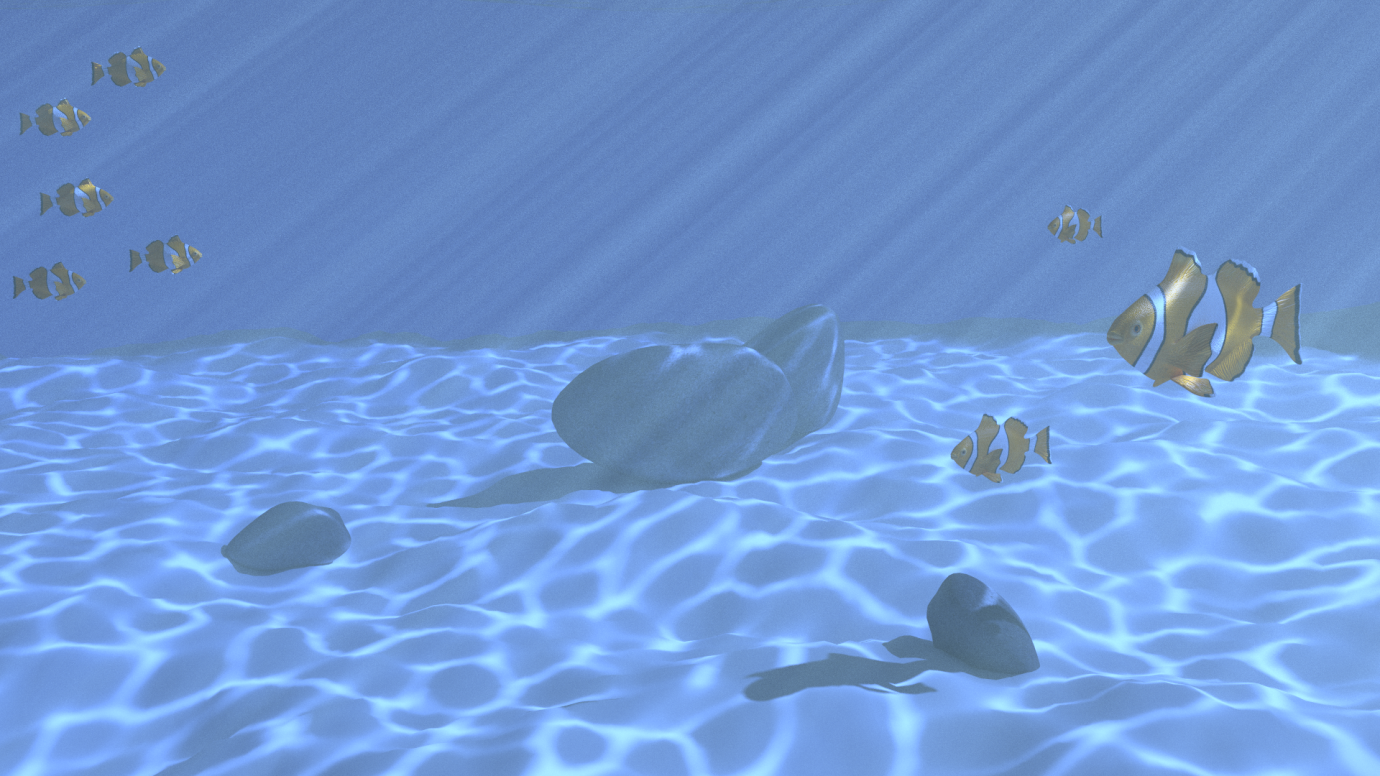
Three-dimensional (3D) models represent a physical body using a collection of points in 3D space, connected by various geometric entities such as triangles, lines, curved surfaces, etc. Being a collection of data (points and other information), 3D models can be created manually, algorithmically (procedural modeling), or by scanning. Their surfaces may be further defined with texture mapping.
The product is called a 3D model. Someone who works with 3D models may be referred to as a 3D artist or a 3D modeler.
A 3D Model can also be displayed as a two-dimensional image through a process called 3D rendering or used in a computer simulation of physical phenomena.
3D Models may be created automatically or manually. The manual modeling process of preparing geometric data for 3D computer graphics is similar to plastic arts such as sculpting. The 3D model can be physically created using 3D printing devices that form 2D layers of the model with three-dimensional material, one layer at a time. Without a 3D model, a 3D print is not possible.
3D modeling software is a class of 3D computer graphics software used to produce 3D models. Individual programs of this class, such as SketchUp, are called modeling applications.
3D models are now widely used anywhere in 3D graphics and CAD but their history predates the widespread use of 3D graphics on personal computers.
In the past, many computer games used pre-rendered images of 3D models as sprites before computers could render them in real-time. The designer can then see the model in various directions and views, this can help the designer see if the object is created as intended to compared to their original vision. Seeing the design this way can help the designer or company figure out changes or improvements needed to the product.

A modern render of the iconic Utah teapot model developed by Martin Newell (1975). The Utah teapot is one of the most common models used in 3D graphics education.
Almost all 3D models can be divided into two categories:
- Solid – These models define the volume of the object they represent (like a rock). Solid models are mostly used for engineering and medical simulations, and are usually built with constructive solid geometry
- Shell or boundary – These models represent the surface, i.e. the boundary of the object, not its volume (like an infinitesimally thin eggshell). Almost all visual models used in games and film are shell models.
Solid and shell modeling can create functionally identical objects. Differences between them are mostly variations in the way they are created and edited and conventions of use in various fields and differences in types of approximations between the model and reality.
Shell models must be manifold (having no holes or cracks in the shell) to be meaningful as a real object. In a shell model of a cube, the bottom and top surface of the cube must have a uniform thickness with no holes or cracks in the first and last layer printed. Polygonal meshes (and to a lesser extent subdivision surfaces) are by far the most common representation. Level sets are a useful representation for deforming surfaces which undergo many topological changes such as fluids.
The process of transforming representations of objects, such as the middle point coordinate of a sphere and a point on its circumference into a polygon representation of a sphere, is called tessellation. This step is used in polygon-based rendering, where objects are broken down from abstract representations (“primitives”) such as spheres, cones etc., to so-called meshes, which are nets of interconnected triangles. Meshes of triangles (instead of e.g. squares) are popular as they have proven to be easy to rasterize (the surface described by each triangle is planar, so the projection is always convex); . Polygon representations are not used in all rendering techniques, and in these cases the tessellation step is not included in the transition from abstract representation to rendered scene.
There are three popular ways to represent a model:
- Polygonal modeling – Points in 3D space, called vertices, are connected by line segments to form a polygon mesh. The vast majority of 3D models today are built as textured polygonal models, because they are flexible, because computers can render them so quickly. However, polygons are planar and can only approximate curved surfaces using many polygons.
- Curve modeling – Surfaces are defined by curves, which are influenced by weighted control points. The curve follows (but does not necessarily interpolate) the points. Increasing the weight for a point will pull the curve closer to that point. Curve types include nonuniform rational B-spline (NURBS), splines, patches, and geometric primitives
- Digital sculpting – Still a fairly new method of modeling, 3D sculpting has become very popular in the few years it has been around. There are currently three types of digital sculpting: Displacement, which is the most widely used among applications at this moment, uses a dense model (often generated by subdivision surfaces of a polygon control mesh) and stores new locations for the vertex positions through use of an image map that stores the adjusted locations. Volumetric, loosely based on voxels, has similar capabilities as displacement but does not suffer from polygon stretching when there are not enough polygons in a region to achieve a deformation. Dynamic tessellation, which is similar to voxel, divides the surface using triangulation to maintain a smooth surface and allow finer details. These methods allow for very artistic exploration as the model will have a new topology created over it once the models form and possibly details have been sculpted. The new mesh will usually have the original high resolution mesh information transferred into displacement data or normal map data if for a game engine.
- The modeling stage consists of shaping individual objects that are later used in the scene. There are a number of modeling techniques, including:
- Constructive solid geometry
- Implicit surfaces
- Subdivision surfaces
Modeling can be performed by means of a dedicated program (e.g., Blender, Cinema 4D, LightWave, Maya, Modo, 3ds Max) or an application component (Shaper, Lofter in 3ds Max) or some scene description language (as in POV-Ray). In some cases, there is no strict distinction between these phases; in such cases modeling is just part of the scene creation process (this is the case, for example, with Caligari trueSpace and Realsoft 3D).
3D models can also be created using the technique of Photogrammetry with dedicated programs such as RealityCapture, Metashape and 3DF Zephyr. Cleanup and further processing can be performed with applications such as MeshLab, the GigaMesh Software Framework, netfabb or MeshMixer. Photogrammetry creates models using algorithms to interpret the shape and texture of real-world objects and environments based on photographs taken from many angles of the subject.
Complex materials such as blowing sand, clouds, and liquid sprays are modeled with particle systems, and are a mass of 3D coordinates which have either points, polygons, texture splats, or sprites assigned to them.