
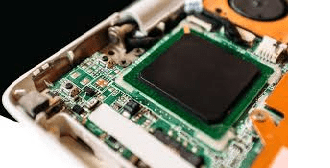
Mobile chip components
A mobile chip, also known as a system-on-a-chip (SoC), is an integrated circuit that contains various components such as processors, graphics processors, memory, and connectivity components. Here are some of the key components of a mobile chip:
- CPU: The CPU (Central Processing Unit) is the main processing unit of the mobile chip that executes instructions and controls the operations of the device. It is responsible for performing tasks such as running applications, managing memory, and handling input/output operations.
- GPU: The GPU (Graphics Processing Unit) is responsible for handling graphics-related tasks such as rendering images and videos, and running 3 D applications.
- RAM: RAM (Random Access Memory) is a type of volatile memory that is used to store data and instructions temporarily while the device is in operation. It provides fast access to data and enables the device to perform multiple tasks simultaneously.
- Flash Memory: Flash memory is a non-volatile type of memory that is used to store data permanently, even when the device is turned off. It is used to store the device’s operating system, applications, and user data.
- Modem: The modem is responsible for managing the device’s connectivity to cellular networks, Wi-F i, and other wireless communication technologies. It enables the device to make and receive phone calls, send and receive messages, and access the internet.
- Sensor Hub: The sensor hub is responsible for collecting data from various sensors on the device such as accelerometer s, gyroscopes, and magnetometers. It processes the data and provides information to the device’s applications.
- Power Management Unit (PM U): The power management unit is responsible for managing the power consumption of the device. It regulates the voltage and current supplied to the various components of the device to optimize battery life.
In conclusion, a mobile chip contains several key components that work together to enable the device to perform various functions such as processing data, displaying graphics, and connecting to networks. The integration of these components into a single chip helps to optimize performance, reduce power consumption, and improve overall efficiency.