
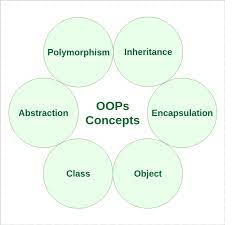
O op concepts and c++
Object-oriented programming (OO P) is a programming paradigm that focuses on using objects to represent data and methods to manipulate that data. C++ is a programming language that supports OO P concepts.
Some key OO P concepts in C++ include:
- Encapsulation: The idea of encapsulation is to group related data and functions together into a single unit, called a class. The class acts as a blueprint for creating objects, and the data and functions within the class are hidden from the outside world. This helps to protect the data from being accidentally modified, and also makes it easier to maintain and update the code.
- Inheritance: Inheritance allows a class to inherit properties and methods from another class. This helps to reduce code duplication and makes it easier to create complex systems. In C++, inheritance is implemented using the “extends” keyword.
- Poly morphism: Poly morphism allows objects of different classes to be treated as if they were of the same class. This can be useful when writing generic code that can work with a variety of different types of objects. In C++, poly morphism is implemented using virtual functions.
- Abstraction: Abstraction is the process of hiding unnecessary details and exposing only the essential features of an object. This makes it easier to use the object and helps to keep the code clean and concise.
Overall, using OO P concepts in C++ can help to make your code more organized, easier to maintain, and more reusable.