
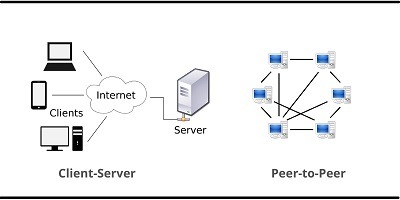
Peer-to-Peer Client
A Peer-to-Peer (P2P) client, often referred to as a P2P application or software, is a program that enables users to connect and share resources (such as files or data) directly with one another over a decentralized network. In a P2P network, there is no central server or intermediary, and each node (or user) can act as both a client and a server, sharing resources and services with others.
Here are some key features and characteristics of a P2P client:
1. Decentralization: P2P clients operate on a decentralized network where there is no single point of control or failure. This means that users can connect directly to each other without relying on a central server.
2. Resource Sharing: P2P clients are primarily used for sharing resources among users. This can include sharing files, data, or even computing power (as seen in distributed computing P2P networks).
3. Peer Discovery: P2P clients use various methods for discovering and connecting to other peers on the network. This can involve the use of peer discovery protocols or decentralized tracking mechanisms.
4. Direct Communication: P2P clients establish direct communication channels between peers, enabling them to exchange data and messages without intermediaries. This direct communication is often achieved using peer-to-peer protocols.
5. File Sharing: One of the most common uses of P2P clients is for file sharing. Users can share and download files (such as music, videos, and software) directly from other users’ devices.
6. Decentralized Indexing: Some P2P file-sharing systems use decentralized indexing or search mechanisms to help users discover content across the network without relying on a central search engine.
7. Security and Privacy: P2P networks can offer increased privacy and security as they do not rely on centralized servers that could be vulnerable to data breaches or censorship.
8. Scalability: P2P networks can be highly scalable because the addition of new peers does not strain a central server. Instead, each new peer can contribute resources to the network.
9. Examples: Common examples of P2P clients include BitTorrent clients (for peer-to-peer file sharing), cryptocurrency wallets (for peer-to-peer transactions), and certain messaging apps that use decentralized protocols.
10. Legality and Copyright: It’s important to note that while P2P technology has legitimate uses, it has also been associated with copyright infringement when used for sharing copyrighted materials without authorization. Many countries have laws regulating or prohibiting such activities.
P2P clients come in various forms, from simple file-sharing applications to complex blockchain-based systems. They have been used for a wide range of applications, including content distribution, communication, distributed computing, and more. The choice of a P2P client depends on the specific use case and requirements of the user or organization.
What is required Peer-to-Peer Client
The requirements for a Peer-to-Peer (P2P) client can vary depending on the specific use case and the type of P2P network or application it is intended for. However, here are some common requirements for a P2P client:
- Networking Capabilities:
- Support for peer discovery: The client should be able to discover and connect to other peers on the P2P network. This may involve using peer discovery protocols like DHT (Distributed Hash Table) or centralized trackers.
- Network transport protocols: The client should support common network protocols (e.g., TCP/IP, UDP) for communication with other peers.
- User Interface (UI):
- User-friendly interface: An intuitive UI that allows users to easily manage P2P connections, initiate or accept transfers, and monitor network activity.
- Search and discovery: If the P2P client is used for file sharing or content discovery, it should provide search and browse functionalities to help users find resources on the network.
- File or Resource Sharing:
- File sharing capabilities: If the client is designed for file sharing, it should support the uploading and downloading of files. This includes features like resuming interrupted downloads and managing shared files.
- Data integrity: Ensure that files or resources transferred between peers are not corrupted during transmission.
- Security and Privacy:
- Encryption: Implement encryption mechanisms (e.g., SSL/TLS) to secure communication between peers and protect data from eavesdropping.
- Authentication: Enable user authentication to ensure that only authorized users can access the P2P network or specific resources.
- Privacy controls: Provide options for users to control their privacy settings and choose which information is shared with other peers.
- Resource Management:
- Bandwidth control: Allow users to set upload and download bandwidth limits to manage network congestion and prioritize certain transfers.
- Queue management: Provide a queue system to manage multiple file transfers efficiently.
- Compatibility and Interoperability:
- Compatibility with different operating systems: Ensure that the P2P client can run on various platforms (e.g., Windows, macOS, Linux).
- Support for multiple P2P protocols: Depending on the network, the client may need to support specific P2P protocols (e.g., BitTorrent, Gnutella).
- Notifications and Alerts:
- Notify users of download or upload progress, completion, or any errors or issues that may arise during transfers.
- Updates and Maintenance:
- Regular updates: Continuously update and maintain the client to address security vulnerabilities and improve performance.
- User support: Provide resources for users to seek assistance, report issues, or get help with troubleshooting.
- Legal and Compliance Considerations:
- Compliance with copyright and intellectual property laws: If the P2P client is used for sharing copyrighted materials, it should incorporate mechanisms to respect copyright laws and discourage unauthorized sharing.
- Community and Reputation:
- Build a user community: Foster a user community where users can discuss the client, share tips, and provide feedback for improvement.
- Reputation management: Implement mechanisms to identify and mitigate malicious or abusive behavior on the network.
- Documentation and Tutorials:
- Provide comprehensive documentation, tutorials, and user guides to help users get started and make the most of the client’s features.
- Scalability:
- Design the client to be scalable so that it can handle a growing number of peers and resource-sharing activities as the network expands.
- Resource Efficiency:
- Optimize the client’s resource usage (e.g., CPU, memory, network bandwidth) to ensure it operates efficiently and does not negatively impact the user’s device or network.
- Open Source or Proprietary:
- Decide whether the P2P client will be open-source or proprietary and plan accordingly for development, licensing, and support.
- Backup and Recovery:
- Implement mechanisms for data backup and recovery in case of client failures or data loss.
The specific requirements for a P2P client may vary based on the intended use, whether it’s for file sharing, content distribution, communication, or another purpose. Additionally, it’s important to consider legal and ethical considerations, especially when the client is used for sharing digital content, to ensure compliance with relevant laws and regulations.
Who is required Peer-to-Peer Client
The “who” in the context of a Peer-to-Peer (P2P) client refers to the individuals, organizations, or entities that may require or use such a client. P2P clients are versatile and can be utilized by various parties depending on their needs and objectives. Here are some examples of who might require or use a P2P client:
- Individual Users:
- Many individual users require P2P clients for various purposes, such as sharing files, downloading content, or participating in decentralized networks. They might use P2P clients for activities like torrenting, sharing large files, or engaging in private messaging on P2P networks.
- Content Creators:
- Content creators, including musicians, filmmakers, and artists, may use P2P clients to distribute their work directly to their audience. P2P technology can be an efficient way to share digital content without relying on centralized distribution platforms.
- Small Businesses:
- Small businesses that need to share files or collaborate on projects with remote team members might require P2P clients for efficient and secure data transfer. This can be especially valuable for businesses with limited IT resources.
- Large Enterprises:
- Large enterprises might use P2P clients for specific applications, such as content delivery, load balancing, or data backup. P2P technology can help optimize data distribution within a large organization.
- Educational Institutions:
- Educational institutions, including schools and universities, may use P2P clients for distributing educational content, managing resources, or facilitating peer-to-peer communication among students and faculty.
- Research Communities:
- Researchers and scientific communities might employ P2P clients for sharing large datasets, collaborating on experiments, or participating in distributed computing projects.
- Blockchain and Cryptocurrency Enthusiasts:
- Individuals interested in cryptocurrencies often require P2P clients to run full nodes or interact with blockchain networks. P2P technology is fundamental to blockchain systems.
- Online Gamers:
- Some online gaming platforms use P2P technology for multiplayer gaming, enabling players to connect directly with one another for real-time gameplay.
- File-Sharing Communities:
- Communities formed around specific interests, hobbies, or shared content (e.g., open-source software, fan communities) might require P2P clients to facilitate resource sharing and collaboration.
- Privacy Advocates:
- Privacy-conscious individuals may opt for P2P clients that offer end-to-end encryption and decentralized communication to protect their online privacy.
- Legal Entities and Law Enforcement:
- Legal entities and law enforcement agencies may use P2P clients for investigative purposes, monitoring P2P networks for illegal activities or intellectual property violations.
- Governments and Nonprofits:
- Governments and nonprofits may use P2P technology for disaster recovery, data dissemination, or connecting remote regions with limited internet access.
- Content Distributors:
- Content distribution networks (CDNs) and streaming platforms may incorporate P2P clients into their infrastructure to reduce server loads and improve content delivery efficiency.
- IoT Devices:
- Internet of Things (IoT) devices can utilize P2P technology for direct device-to-device communication, enabling efficient data sharing among interconnected devices.
- Startups and Innovators:
- Startups and innovative companies may develop or use P2P clients as part of their unique business models or disruptive technologies.
The applicability of a P2P client can vary widely based on the specific use case and objectives of the user or organization. It’s important to consider legal, security, and ethical considerations when implementing or using P2P technology, especially in scenarios involving copyrighted content or sensitive data.
When is required Peer-to-Peer Client
A Peer-to-Peer (P2P) client may be required in various situations and use cases where decentralized communication, resource sharing, or collaboration is essential. Here are some scenarios and instances when a P2P client may be required:
- File Sharing and Distribution:
- When individuals or organizations need to share large files or distribute digital content efficiently without relying on centralized servers, such as in torrenting or sharing open-source software.
- Content Delivery Networks (CDNs):
- CDNs may use P2P clients to optimize content delivery by allowing users to share parts of the content they have already downloaded, reducing server load and improving download speeds.
- Messaging and Communication:
- P2P messaging apps and clients are required for secure and private communication, enabling users to send messages directly to each other without intermediaries.
- Blockchain and Cryptocurrency Transactions:
- To participate in blockchain networks and make cryptocurrency transactions, users need P2P clients to interact with the blockchain, validate transactions, and maintain a copy of the blockchain ledger.
- Distributed Computing and Volunteer Computing:
- Projects like SETI@home and Folding@home rely on P2P clients to harness the computational power of volunteers’ devices to solve complex scientific problems.
- Collaborative Editing and Document Sharing:
- Teams collaborating on documents or projects remotely may require P2P clients that allow real-time collaboration and sharing of files without the need for central servers.
- Anonymous and Decentralized Networks:
- Users seeking anonymity and censorship resistance may use P2P clients to access decentralized networks like Tor or I2P for secure and private browsing.
- Remote Desktop and Screen Sharing:
- P2P clients can facilitate remote desktop access and screen sharing between users, enabling technical support or collaboration on software-related tasks.
- IoT and Device-to-Device Communication:
- IoT devices often use P2P communication protocols to exchange data directly with each other, enabling smart home automation and industrial IoT applications.
- Gaming and Multiplayer Online Games:
- Some online gaming platforms use P2P technology for multiplayer gaming, allowing players to connect directly with one another for real-time gameplay without a central server.
- Decentralized Social Networks:
- Decentralized social media platforms use P2P technology to create censorship-resistant and privacy-focused alternatives to traditional social networks.
- Emergency and Disaster Communication:
- In scenarios where traditional communication infrastructure is compromised, P2P clients can enable emergency communication by establishing ad-hoc networks between nearby devices.
- Content Discovery and Search:
- Some P2P networks use specialized clients for content discovery and search, allowing users to find and access resources shared by others in a decentralized manner.
- Private and Secure Communication:
- Individuals and organizations concerned about privacy and security may use P2P clients for encrypted communication and data sharing.
- Edge Computing and Fog Computing:
- P2P clients can be used in edge and fog computing environments to distribute computing tasks and data processing across devices at the edge of the network.
- Decentralized Identity and Authentication:
- P2P technology can be employed in identity and authentication systems to give individuals more control over their digital identities.
The requirement for a P2P client arises when users or organizations seek the benefits of decentralized communication, data sharing, or collaboration, such as enhanced privacy, reduced reliance on central authorities, improved efficiency, and resilience in the face of network disruptions. The specific timing and need for a P2P client depend on the particular use case and the objectives of the user or organization.
Where is required Peer-to -Peer Client
The requirement for a Peer-to-Peer (P2P) client can arise in various locations or settings, depending on the specific use case and objectives. P2P clients are versatile and can be deployed in different environments where decentralized communication, resource sharing, or collaboration is needed. Here are some common places where a P2P client may be required:
- Home Environments:
- Many individuals use P2P clients in their homes for tasks like file sharing, online gaming, messaging, or accessing decentralized networks like Tor. P2P clients can operate on personal computers, smartphones, and other connected devices in residential settings.
- Businesses and Offices:
- Businesses may require P2P clients for various purposes, including secure messaging, collaborative document editing, peer-to-peer file sharing within the organization, or for tasks related to distributed computing. P2P clients can be deployed on workstations and servers in office environments.
- Data Centers:
- Data centers may employ P2P technology for tasks like content distribution or distributed computing to optimize resource usage and reduce server loads. P2P clients can run on servers within data center facilities.
- Educational Institutions:
- Schools, colleges, and universities may use P2P clients for content distribution, collaborative projects, or peer-to-peer messaging among students and faculty. P2P clients can operate on computers and mobile devices used in educational settings.
- Remote or Disconnected Locations:
- In remote or isolated areas with limited internet connectivity, P2P clients can be used to establish local networks and enable communication and resource sharing between devices even without internet access.
- IoT and Edge Computing Environments:
- Internet of Things (IoT) deployments and edge computing environments often rely on P2P communication protocols for device-to-device data exchange. P2P clients can be embedded in IoT devices and edge servers.
- Blockchain and Cryptocurrency Networks:
- P2P clients are required in blockchain and cryptocurrency networks to maintain a copy of the blockchain ledger, validate transactions, and participate in the network’s decentralized consensus mechanism. These clients can operate on blockchain nodes running in various locations.
- Emergency and Disaster Response:
- In emergency situations or disaster response scenarios, P2P clients can be used to establish ad-hoc communication networks between nearby devices or individuals, even when traditional communication infrastructure is unavailable.
- Content Distribution Networks (CDNs):
- CDNs that use P2P technology for content delivery can require P2P clients to be installed on end-user devices, such as computers and smart TVs, in homes and offices to facilitate efficient content distribution.
- Online Gaming Servers and Platforms:
- Online gaming platforms may utilize P2P technology for multiplayer gaming. P2P clients can be found on gaming consoles and gaming servers hosting multiplayer games.
- Decentralized Social Media and Content Platforms:
- Users of decentralized social media and content platforms may require P2P clients to access and interact with these platforms, which often operate in a distributed manner.
- Censorship-Resistant Networks:
- Individuals seeking to access censorship-resistant networks, such as Tor or I2P, may require P2P clients to access these networks, particularly in regions where internet censorship is prevalent.
The specific location or environment where a P2P client is required depends on the intended use case and the objectives of the users or organizations involved. P2P clients are adaptable and can function in diverse settings to enable decentralized communication, resource sharing, and collaboration.
How is required Peer-to -Peer Client
The implementation and operation of a Peer-to-Peer (P2P) client involve several key technical aspects and considerations. How a P2P client is required and functions can vary depending on the specific use case and the type of P2P network or application it serves. Here is an overview of how a P2P client is typically required and operates:
1. Network Setup and Initialization:
- The P2P client initiates by connecting to the P2P network. This typically involves bootstrapping, where the client seeks initial peer addresses from known sources or uses a distributed discovery protocol like Distributed Hash Table (DHT).
2. Peer Discovery:
- The client discovers other peers on the network using various methods, such as centralized trackers, decentralized DHT, or peer exchange protocols. Peer discovery is essential for establishing connections.
3. Establishing Connections:
- The P2P client establishes direct connections with other peers on the network. These connections can be outbound (initiated by the client) or inbound (peers connecting to the client). Establishing connections allows for data exchange and communication.
4. Data Exchange:
- Once connections are established, the client can exchange data with other peers. The type of data exchanged depends on the use case. For example, in file-sharing P2P networks, the data may be files or parts of files.
5. Data Verification and Integrity:
- Data integrity and authenticity are crucial. P2P clients often use checksums or cryptographic hashing to verify that received data has not been tampered with during transmission.
6. Resource Sharing:
- In some cases, P2P clients share resources with other peers. For instance, in file-sharing networks, clients may upload and share parts of the files they have downloaded.
7. Network Protocols:
- P2P clients rely on specific network protocols and communication standards to facilitate data exchange. These protocols can vary based on the P2P network type (e.g., BitTorrent, Gnutella, blockchain networks).
8. Security Measures:
- P2P clients often implement security measures to protect data and communication. This may include encryption of data in transit (e.g., SSL/TLS), identity verification, and prevention of malicious activity.
9. Data Management:
- P2P clients typically manage data, including downloading, uploading, and storage. Users may have control over data management settings.
10. User Interface (UI): – Many P2P clients offer a user-friendly interface to allow users to manage connections, initiate transfers, monitor network activity, and adjust settings.
11. Bandwidth and Resource Management: – P2P clients may include features for managing bandwidth usage, such as setting upload and download limits, scheduling transfers, and prioritizing specific downloads.
12. Community and Reputation Systems: – Some P2P networks incorporate community and reputation systems to identify and mitigate malicious or unreliable peers.
13. Maintenance and Updates: – P2P clients require maintenance, including updates to address security vulnerabilities, improve performance, and introduce new features.
14. Legal and Ethical Considerations: – P2P clients must consider legal and ethical aspects, particularly in scenarios involving copyrighted content, data privacy, and compliance with relevant laws and regulations.
15. Scalability: – P2P clients and networks should be designed for scalability, as they need to accommodate a growing number of peers and resource-sharing activities.
16. User Support and Documentation: – P2P client developers often provide user support channels and documentation to assist users in getting started, troubleshooting issues, and understanding how the client works.
The specific technical details of how a P2P client is required and operates can vary widely based on the P2P network’s design, objectives, and the technology stack used. It’s essential to consider the unique requirements and challenges of each P2P application or network when implementing a P2P client.
Case Study on Peer -to-Peer Client
ertainly! Here’s a fictional case study illustrating the implementation and impact of a Peer-to-Peer (P2P) client in a specific scenario:
Case Study: Peer-to-Peer File Sharing Client – Bit Share
Background: Bit Share is a P2P file-sharing client designed to facilitate efficient and decentralized file sharing among its users. The client employs the Bit Torrent protocol, a widely used P2P file-sharing protocol, to enable users to share and download large files, such as movies, music, and software, without relying on centralized servers.
Challenges: Bit Share faced several challenges in its quest to provide a reliable and efficient file-sharing platform:
- Scalability: As the user base grew, Bit Share needed to ensure that the network could handle a large number of peers efficiently.
- Data Integrity: Ensuring that downloaded files were complete and free from corruption was a priority.
- Legal Compliance: Bit Share needed to address concerns related to copyright infringement and ensure that its platform was not used for illegal file sharing.
- User Experience: The client aimed to provide a seamless and user-friendly experience for both novice and experienced users.
Solution: Bit Share took several steps to address these challenges:
- Network Optimization:
- Bit Share implemented a distributed tracking system and distributed hash table (DHT) for efficient peer discovery and improved scalability.
- The use of magnet links allowed users to start downloads without relying on centralized trackers.
- Data Verification:
- The client incorporated cryptographic hashing (SHA-1) to verify the integrity of downloaded files. Users could confirm that the files they downloaded matched the original content.
- Legal Compliance Measures:
- Bit Share actively encouraged users to share content that they had the legal right to distribute and provided resources on copyright laws and best practices.
- It cooperated with copyright holders to remove infringing content from the platform.
- User-Friendly Interface:
- Bit Share focused on improving its user interface to make it intuitive and accessible to users of varying technical backgrounds.
- Features like bandwidth control and scheduling were introduced to enhance the user experience.
Results: The implementation of these solutions yielded positive results for Bit Share:
- Scalability: Bit Share’s network became highly scalable, with millions of users able to share files efficiently. The distributed tracking and DHT systems ensured that the network could handle the load.
- Data Integrity: Users could trust that the files they downloaded were complete and unaltered, enhancing the overall reliability of the platform.
- Legal Compliance: Bit Share’s proactive approach to copyright compliance improved its reputation and reduced the prevalence of infringing content on the platform.
- User Experience: The user-friendly interface and performance optimizations made BitShare a preferred choice for file sharing among a wide range of users.
Conclusion: Bit Share’s success as a P2P file-sharing client demonstrates the potential of P2P technology in facilitating efficient and decentralized file sharing. By addressing scalability, data integrity, legal compliance, and user experience, Bit Share was able to provide a reliable and user-friendly platform for sharing large files while also complying with legal requirements. This case study highlights the importance of balancing technological innovation with legal and ethical considerations in P2P applications.
White Paper on Peer-to-Peer Client
Creating a comprehensive white paper on Peer-to-Peer (P2P) clients would require a detailed and structured document. Here’s an outline of topics you can include in your white paper, and you can expand on each section as needed:
Title: Leveraging Peer-to-Peer Technology: A White Paper on P2P Clients
Abstract:
- A brief summary of the white paper’s content and key takeaways.
Table of Contents:
1. Introduction
- Definition of P2P technology and its significance.
- Objectives and scope of the white paper.
2. Understanding P2P Clients
- Explanation of what P2P clients are and how they function.
- Different types of P2P clients (e.g., file-sharing, communication, blockchain clients).
3. Historical Overview
- A brief history of P2P technology and its evolution.
- Milestones and significant developments in P2P client applications.
4. P2P Networking Principles
- Explanation of P2P networking concepts, including decentralization, peer discovery, and data exchange.
- Overview of key protocols and technologies used in P2P networks (e.g., BitTorrent, DHT, blockchain).
5. Use Cases and Applications
- Exploration of various use cases for P2P clients in different domains:
- File sharing and distribution.
- Communication and messaging.
- Blockchain and cryptocurrency.
- Content delivery networks (CDNs).
- Distributed computing.
- Edge computing and IoT.
- Social networks and decentralized apps (dApps).
- Real-world examples of successful P2P client applications in each use case.
6. Benefits and Advantages
- Discussion of the benefits P2P clients offer, such as:
- Improved scalability.
- Enhanced data redundancy and resilience.
- Reduced reliance on central servers.
- Lower operational costs.
- Increased privacy and security.
7. Technical Components of P2P Clients
- In-depth examination of the technical aspects of P2P clients, including:
- Peer discovery mechanisms.
- Data transfer protocols.
- Security measures (e.g., encryption, authentication).
- Scalability and load balancing.
8. Legal and Ethical Considerations
- An overview of the legal and ethical challenges associated with P2P technology, such as copyright infringement, data privacy, and regulatory compliance.
- Strategies and best practices for addressing these challenges.
9. Case Studies
- Real-world case studies showcasing the successful implementation and impact of P2P clients in diverse industries and applications.
10. Future Trends and Innovations – Exploration of emerging trends and innovations in P2P technology, including: – Decentralized finance (DeFi) applications. – Decentralized autonomous organizations (DAOs). – Blockchain scalability solutions. – Peer-to-peer messaging and social platforms. – Edge and fog computing advancements. – IoT integration with P2P networks.
11. Conclusion
- Summary of key takeaways and the continued relevance of P2P clients in a connected world.
- Emphasis on the importance of responsible and ethical use of P2P technology.
12. References
- Citations and sources used throughout the white paper.
13. Glossary
- Definitions of key terms and concepts related to P2P technology.
14. Appendices
- Additional resources, charts, diagrams, and supplementary information.
When developing your white paper, ensure that it is well-researched, provides evidence-based insights, and includes real-world examples to support your points. Tailor the content to your target audience, whether they are technology professionals, decision-makers, or individuals interested in understanding P2P technology’s impact and potential.