
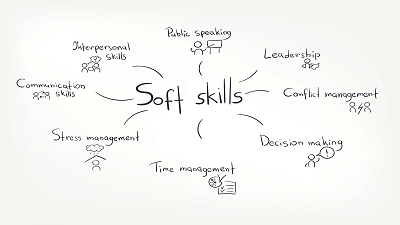
Soft skills
Soft skills are non-technical skills that are typically associated with a person’s emotional intelligence, communication abilities, and interpersonal relationships. They are personal attributes that enable individuals to interact effectively and harmoniously with others. Some common examples of soft skills include:
- Communication: The ability to convey information clearly and effectively, both verbally and in writing.
- Teamwork: The ability to work collaboratively with others towards a common goal, while respecting different perspectives and ideas.
- Leadership: The ability to inspire and guide others towards a shared vision, and to motivate and empower team members to achieve their goals.
- Problem-solving: The ability to identify, analyze, and solve complex problems through critical thinking and creative approaches.
- Time management: The ability to prioritize tasks and manage time effectively, in order to meet deadlines and achieve goals.
- Adaptability: The ability to adapt to new situations and challenges, and to remain flexible and open-minded in the face of change.
- Emotional intelligence: The ability to recognize, understand, and manage one’s own emotions, as well as the emotions of others.
- Conflict resolution: The ability to resolve conflicts and disputes in a constructive and positive manner.
Soft skills are essential in today’s workplace, as they can help individuals build strong relationships with their colleagues, clients, and customers, and can lead to greater job satisfaction and success.