
White Paper on I/O Ports, Graphic Cards
COURTESY :- vrindawan.in
Wikipedia
In computing, input/output (I/O, or informally io or IO) is the communication between an information processing system, such as a computer, and the outside world, possibly a human or another information processing system. Inputs are the signals or data received by the system and outputs are the signals or data sent from it. The term can also be used as part of an action; to “perform I/O” is to perform an input or output operation.
I/O devices are the pieces of hardware used by a human (or other system) to communicate with a computer. For instance, a keyboard or computer mouse is an input device for a computer, while monitors and printers are output devices. Devices for communication between computers, such as modems and network cards, typically perform both input and output operations. Any interaction with the system by a interactor is an input and the reaction the system responds is called the output.
The designation of a device as either input or output depends on perspective. Mice and keyboards take physical movements that the human user outputs and convert them into input signals that a computer can understand; the output from these devices is the computer’s input. Similarly, printers and monitors take signals that computers output as input, and they convert these signals into a representation that human users can understand. From the human user’s perspective, the process of reading or seeing these representations is receiving output; this type of interaction between computers and humans is studied in the field of human–computer interaction. A further complication is that a device traditionally considered an input device, e.g., card reader, keyboard, may accept control commands to, e.g., select stacker, display keyboard lights, while a device traditionally considered as an output device may provide status data, e.g., low toner, out of paper, paper jam.
In computer architecture, the combination of the CPU and main memory, to which the CPU can read or write directly using individual instructions, is considered the brain of a computer. Any transfer of information to or from the CPU/memory combo, for example by reading data from a disk drive, is considered I/O. The CPU and its supporting circuitry may provide memory-mapped I/O that is used in low-level computer programming, such as in the implementation of device drivers, or may provide access to I/O channels. An I/O algorithm is one designed to exploit locality and perform efficiently when exchanging data with a secondary storage device, such as a disk drive.
An I/O interface is required whenever the I/O device is driven by a processor. Typically a CPU communicates with devices via a bus. The interface must have the necessary logic to interpret the device address generated by the processor. Handshaking should be implemented by the interface using appropriate commands (like BUSY, READY, and WAIT), and the processor can communicate with an I/O device through the interface. If different data formats are being exchanged, the interface must be able to convert serial data to parallel form and vice versa. Because it would be a waste for a processor to be idle while it waits for data from an input device there must be provision for generating interrupts and the corresponding type numbers for further processing by the processor if required.
A computer that uses memory-mapped I/O accesses hardware by reading and writing to specific memory locations, using the same assembly language instructions that computer would normally use to access memory. An alternative method is via instruction-based I/O which requires that a CPU have specialized instructions for I/O. Both input and output devices have a data processing rate that can vary greatly. With some devices able to exchange data at very high speeds direct access to memory (DMA) without the continuous aid of a CPU is required.
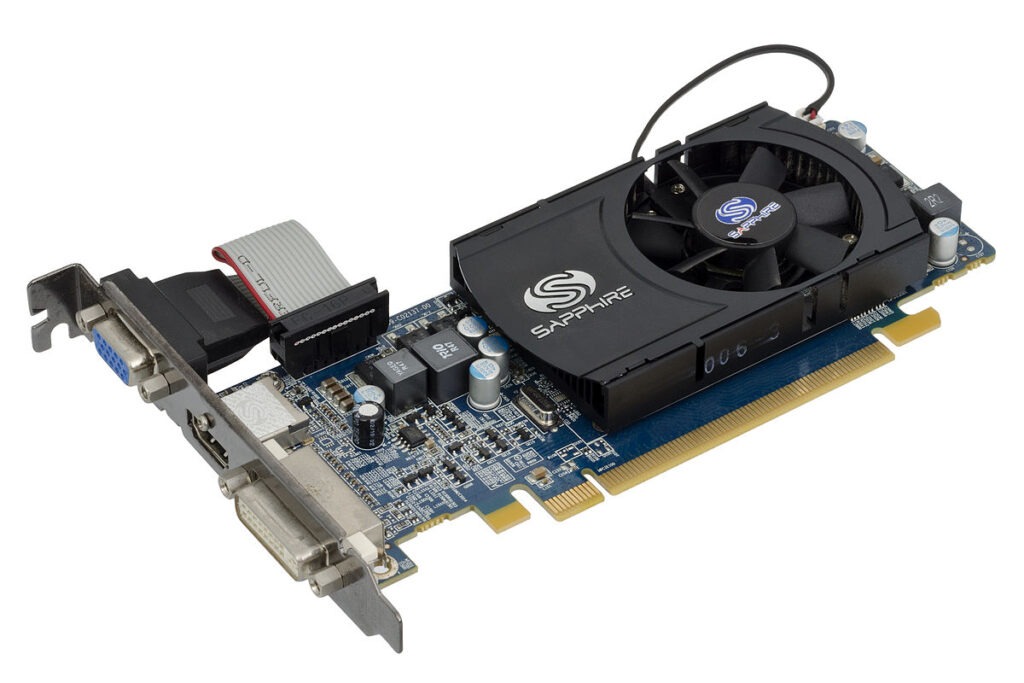
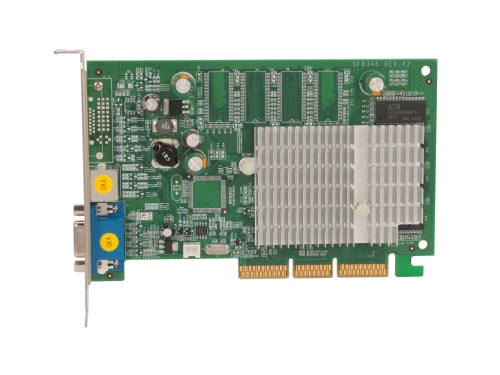
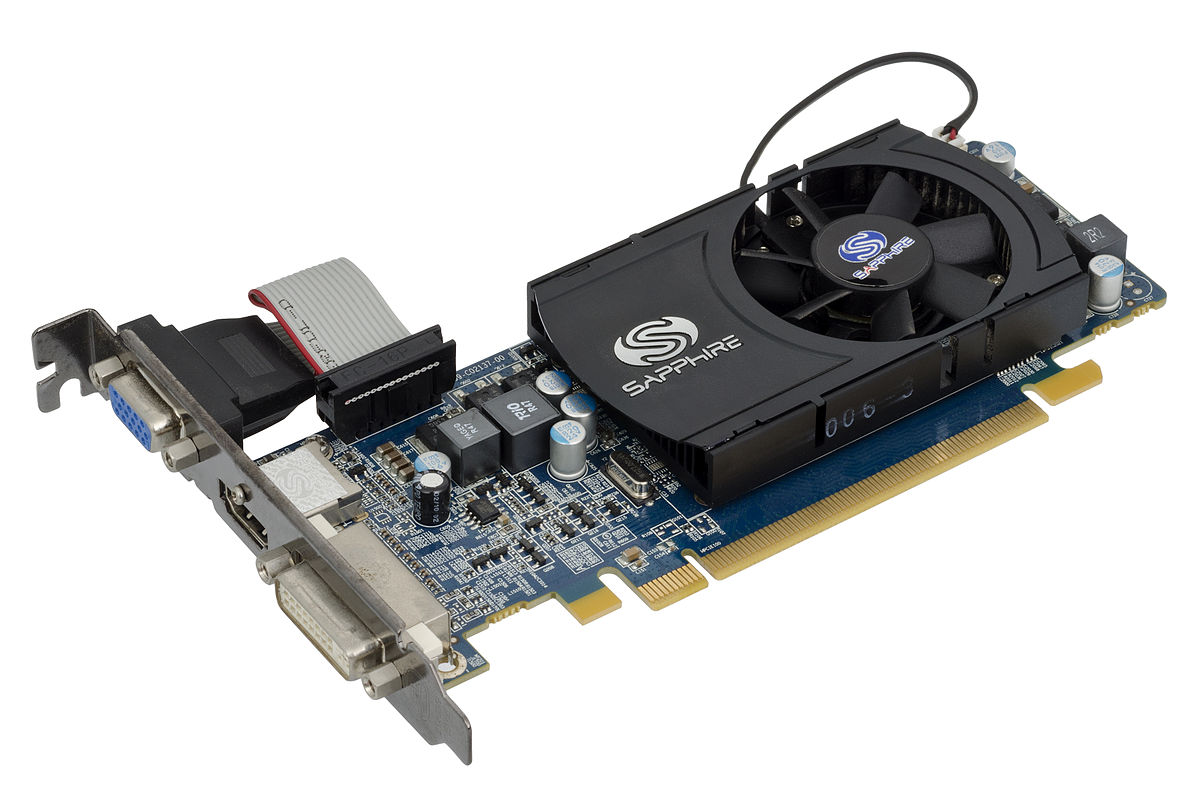
A graphics card (also called a video card, display card, graphics adapter, GPU, VGA card/VGA, video adapter, or display adapter) is an expansion card which generates a feed of output images to a display device, such as a computer monitor. Graphics cards are sometimes called discrete or dedicated graphics cards to emphasize their distinction to integrated graphics. A graphics processing unit that performs the necessary computations is the main component of a graphics card, but the acronym “GPU” is sometimes also used to refer to the graphics card as a whole.
Most graphics cards are not limited to simple display output. The graphics processing unit can be used for additional processing, which reduces the load from the central processing unit. Additionally, computing platforms such as Open CL and CUDA allows using graphics cards for general-purpose computing. Applications of general-purpose computing on graphics cards include AI training, cryptocurrency mining, and molecular simulation.
Usually, a graphics card comes in the form of a printed circuit board (expansion board) which are to be inserted into an expansion slot. Others may have dedicated enclosures, and they are connected to the computer via a docking station or a cable. These are known as external GPUs (eGPUs).
Graphics cards are often preferred over integrated graphics for increased performance.
Graphics cards historically supported different computer display standards as they evolved.
In the late 1980s the like of Radius produced graphics cards for the Apple Macintosh II with discrete 2D Quick Draw capabilities.
3dfx Interactive was one of the first companies to develop a consumer-facing GPU with 3D acceleration (with the Voodoo series) and the first to develop a graphical chipset dedicated to 3D, but without 2D support (which therefore required the presence of a 2D card to work).
Nowadays, the majority of modern graphics cards are built with either AMD-sourced or Nvidia-sourced graphics chips. Most graphics cards offer various functions such as 3D rendering, 2D graphics, MPEG-2/MPEG-4 decoding, TV output, and the ability to connect multiple monitors (multi-monitor). Graphics cards also have sound card capabilities to output sound along with video output for connected TVs or monitors with integrated speakers.
Within the industry, graphics cards are sometimes called graphics add-in-boards, abbreviated as AIBs, with the word “graphics” usually omitted.
As an alternative to the use of a graphics card, video hardware can be integrated into the motherboard, CPU, or a system-on-chip as integrated graphics. Motherboard-based implementations are sometimes called “on-board video”. Some motherboards support using both integrated graphics and the graphics card simultaneously to feed separate displays. The main advantages of integrated graphics are: a low cost, compactness, simplicity, and low energy consumption. Integrated graphics often has less performance than a graphics card because the graphics processing unit inside integrated graphics needs to share system resources with the CPU. On the other hand, a graphics card has a separate random access memory (RAM), cooling system, and dedicated power regulators. A graphics card can offload work and reduce memory-bus-contention from the CPU and system RAM, therefore the overall performance for a computer could improve in addition to increased performance in graphics processing. Such improvements to performance can be seen in video gaming, 3D animation, and video editing.
Both AMD and Intel have introduced CPUs and motherboard chipsets which support the integration of a GPU into the same die as the CPU. AMD advertises CPUs with integrated graphics under the trademark Accelerated Processing Unit (APU), while Intel brands similar technology under “Intel Graphics Technology”.
As the processing power of graphics cards increased, so did their demand for electrical power. Current high-performance graphics cards tend to consume large amounts of power. For example, the thermal design power (TDP) for the GeForce Titan RTX is 280 watts. When tested with video games, the GeForce RTX 2080 Ti Founder’s Edition averaged 300 watts of power consumption. While CPU and power supply manufacturers have recently aimed toward higher efficiency, power demands of graphics cards continued to rise, with the largest power consumption of any individual part in a computer. Although power supplies have also increased their power output, the bottleneck occurs in the PCI-Express connection, which is limited to supplying 75 watts.
Modern graphics cards with a power consumption of over 75 watts usually include a combination of six-pin (75 W) or eight-pin (150 W) sockets that connect directly to the power supply. Providing adequate cooling becomes a challenge in such computers. Computers with multiple graphics cards may require power supplies over 750 watts. Heat extraction becomes a major design consideration for computers with two or more high-end graphics cards.
As of the Nvidia GeForce RTX 30 series, Ampere architecture, a custom flashed RTX 3090 named “Hall of Fame” has been recorded to reach a peak power draw as high as 630 watts. A standard RTX 3090 can peak at up to 450 watts. The RTX 3080 can reach up to 350 watts, while a 3070 can reach a similar, if not slightly lower peak power draw. Ampere cards are the first cards to feature a pass through cooler design to dissipate as much heat as possible, especially with large power consumptions.
Some graphics cards can be linked together to allow scaling graphics processing across multiple cards. This is done using either the PCIe bus on the motherboard or, more commonly, a data bridge. Generally, the cards must be of the same model to be linked, and most low end cards are not able to be linked in this way. AMD and Nvidia both have proprietary scaling methods, Cross FireX for AMD, and SLI (since the Turing generation, superseded by NVLink) for Nvidia. Cards from different chip-set manufacturers or architectures cannot be used together for multi-card scaling. If graphics cards have different sizes of memory, the lowest value will be used, with the higher values disregarded. Currently, scaling on consumer-grade cards can be done using up to four cards. The use of four cards requires a large motherboard with a proper configuration. Nvidia’s GeForce GTX 590 graphics card can be configured in a four-card configuration. As stated above, users will want to stick to cards with the same performances for optimal use. Motherboards including ASUS Maximus 3 Extreme and Gigabyte GA EX58 Extreme are certified to work with this configuration. A large power supply is necessary to run the cards in SLI or CrossFireX. Power demands must be known before a proper supply is installed. For the four card configuration, a 1000+ watt supply is needed. With any relatively powerful graphics card, thermal management cannot be ignored. Graphics cards require well-vented chassis and good thermal solutions. Air or water cooling are usually required, though low end GPUs can use passive cooling. Larger configurations use water solutions or immersion cooling to achieve proper performance without thermal throttling.
SLI and Crossfire have become increasingly uncommon as most games do not fully utilize multiple GPUs, due to the fact that most users cannot afford them. Multiple GPUs are still used on supercomputers (like in Summit), on workstations to accelerate video and 3D rendering, visual effects, for simulations, and in training artificial intelligence.