

White Paper on WWW And Web Browser, E-Mail.
COURTESY :- vrindawan.in
Wikipedia
The World Wide Web (WWW), commonly known as the Web, is an information system enabling documents and other web resources to be accessed over the Internet.

Documents and downloadable media are made available to the network through web servers and can be accessed by programs such as web browsers. Servers and resources on the World Wide Web are identified and located through character strings called uniform resource locators (URLs). The original and still very common document type is a web page formatted in Hypertext Markup Language (HTML). This markup language supports plain text, images, embedded video and audio contents, and scripts (short programs) that implement complex user interaction. The HTML language also supports hyperlinks (embedded URLs) which provide immediate access to other web resources. Web navigation, or web surfing, is the common practice of following such hyperlinks across multiple websites. Web applications are web pages that function as application software. The information in the Web is transferred across the Internet using the Hypertext Transfer Protocol (HTTP).
Multiple web resources with a common theme and usually a common domain name make up a website. A single web server may provide multiple websites, while some websites, especially the most popular ones, may be provided by multiple servers. Website content is provided by a myriad of companies, organizations, government agencies, and individual users; and comprises an enormous amount of educational, entertainment, commercial, and government information.
The World Wide Web has become the world’s dominant software platform. It is the primary tool billions of people worldwide use to interact with the Internet.
The Web was originally conceived as a document management system. It was invented by Tim Berners-Lee at CERN in 1989 and opened to the public in 1991.
The Web was invented by English computer scientist Tim Berners-Lee at CERN, and originally conceived as a document management system. The first proposal was written in 1989, and a working system implemented by the end of 1990 including the World Wide Web browser and an HTTP server. The technology was released outside CERN to other research institutions starting in January 1991, and then to the general public on 23 August 1991. The Web was a success at CERN, and began to spread to other scientific and academic institutions. Within the next two years, there were 50 websites created.
CERN made the Web protocol and code available royalty free in 1993, enabling its widespread use. After the NCSA released Mosaic later that year, the Web became very popular with thousands of websites springing up in less than a year. Mosaic was a graphical browser that could display inline images and submit forms, and HTT Pd, a server that could process forms (see CGI). Marc Andreessen and Jim Clark founded Netscape the following year and released Navigator, which introduced Java and JavaScript to the Web. It quickly became the dominant browser. Netscape became a public company in 1995 which triggered a frenzy for the Web and started the dot-com bubble. Microsoft responded by developing its own browser, Internet Explorer. By bundling it with Windows, it became the dominant browser for 14 years.
Tim Berners-Lee founded the World Wide Web Consortium (W3C) which created XML in 1996 and recommended replacing HTML with stricter XHTML. In the meantime, developers began exploiting an IE feature called XML Http Request to make Ajax applications and launched the Web 2.0 revolution. Mozilla, Opera, and Apple rejected XHTML and created the WHATWG which developed HTML5. In 2009, the W3C conceded and abandoned XHTML and in 2019, ceded control of the HTML specification to the WHATWG.
The World Wide Web has been central to the development of the Information Age and is the primary tool billions of people use to interact on the Internet.
A web browser is application software for accessing websites. When a user requests a web page from a particular website, the browser retrieves its files from a web server and then displays the page on the user’s screen. Browsers are used on a range of devices, including desktops, laptops, tablets, and smartphones. In 2020, an estimated 4.9 billion people used a browser. The most used browser is Google Chrome, with a 65% global market share on all devices, followed by Safari with 18%.
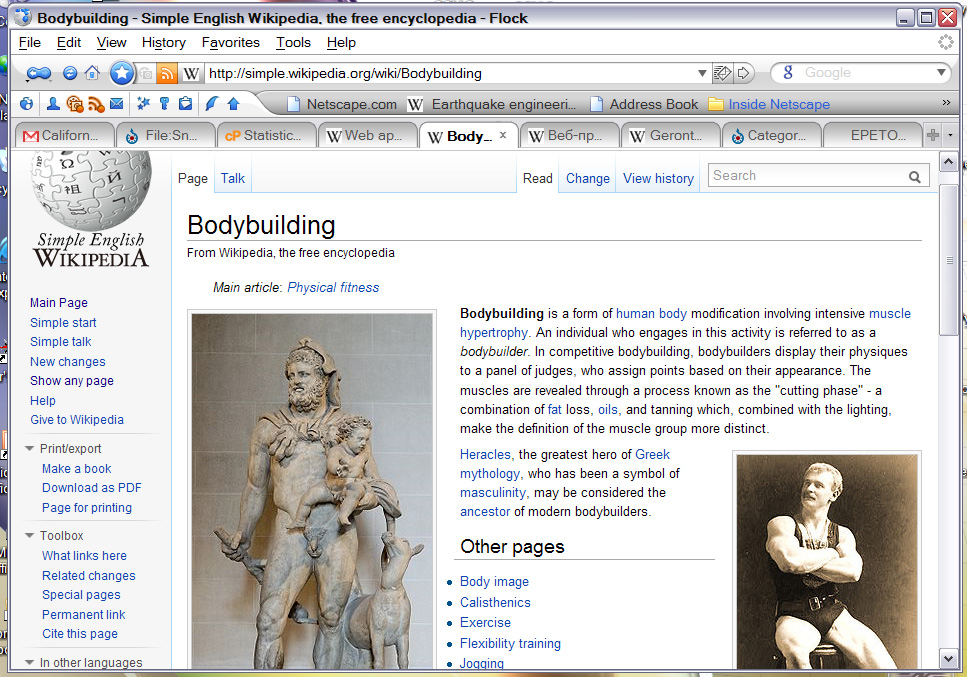
A web browser is not the same thing as a search engine, though the two are often confused. A search engine is a website that provides links to other websites. However, to connect to a website’s server and display its web pages, a user must have a web browser installed. In some technical contexts, browsers are referred to as user agents.
The purpose of a web browser is to fetch content from the World Wide Web or from local storage and display it on a user’s device. This process begins when the user inputs a Uniform Resource Locator (URL), such as https://en.wikipedia.org/, into the browser. Virtually all URLs are retrieved using the Hypertext Transfer Protocol (HTTP), a set of rules for the transfer of data. If the URL uses the secure mode of HTTP (HTTPS), the connection between the browser and the web server is encrypted for the purposes of communications security and information privacy.
Web pages usually contain hyperlinks to other pages and resources. Each link contains a URL, and when it is clicked or tapped, the browser navigates to the new resource. Most browsers use an internal cache of web page resources to improve loading times for subsequent visits to the same page. The cache can store many items, such as large images, so they do not need to be downloaded from the server again. Cached items are usually only stored for as long as the web server stipulates in its HTTP response messages.
During the course of browsing, cookies received from various websites are stored by the browser. Some of them contain login credentials or site preferences. However, others are used for tracking user behavior over long periods of time, so browsers typically provide a section in the menu for deleting cookies. Finer-grained management of cookies usually requires a browser extension.
Electronic mail (email or e-mail) is a method of exchanging messages (“mail”) between people using electronic devices. Email was thus conceived as the electronic (digital) version of, or counterpart to, mail, at a time when “mail” meant only physical mail (hence e- + mail). Email later became a ubiquitous (very widely used) communication medium, to the point that in current use, an email address is often treated as a basic and necessary part of many processes in business, commerce, government, education, entertainment, and other spheres of daily life in most countries. Email is the medium, and each message sent therewith is called an email (mass/count distinction).
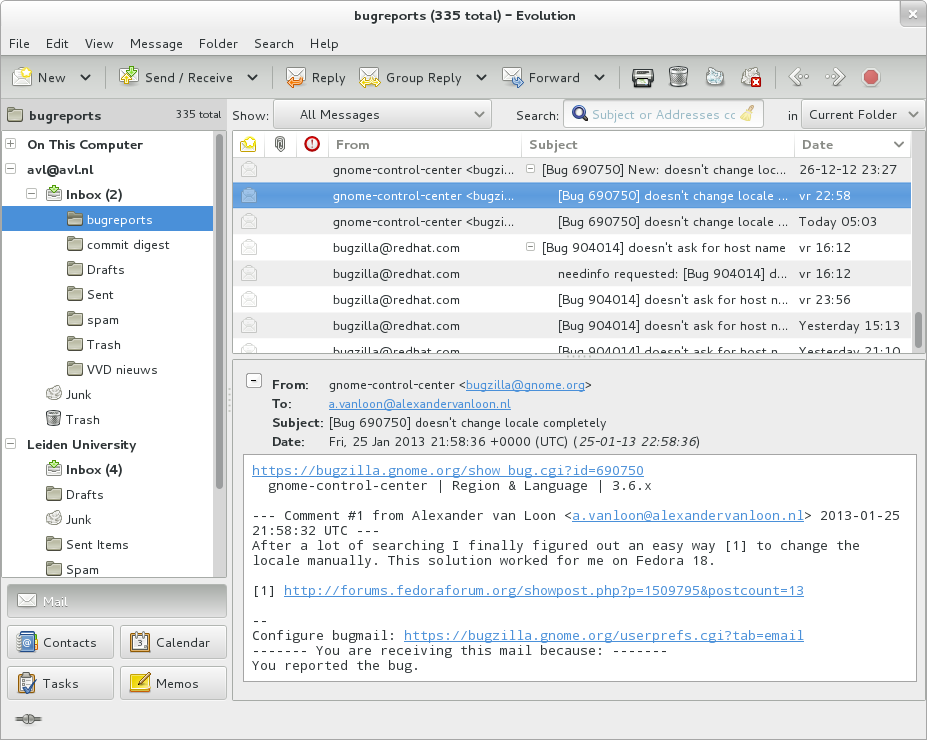
Email operates across computer networks, primarily the Internet, and also local area networks. Today’s email systems are based on a store-and-forward model. Email servers accept, forward, deliver, and store messages. Neither the users nor their computers are required to be online simultaneously; they need to connect, typically to a mail server or a web mail interface to send or receive messages or download it.
Originally an ASCII text-only communications medium, Internet email was extended by Multipurpose Internet Mail Extensions (MIME) to carry text in other character sets and multimedia content attachments. International email, with internationalized email addresses using UTF-8, is standardized but not widely adopted.
The term electronic mail has been in use with its modern meaning since 1975, and variations of the shorter E-mail have been in use since 1979:
- email is now the common form, and recommended by style guides. It is the form required by IETF Requests for Comments (RFC) and working groups. This spelling also appears in most dictionaries.
- e-mail is the form favored in edited published American English and British English writing as reflected in the Corpus of Contemporary American English data, but is falling out of favor in some style guides.
- E-mail is sometimes used. The original usage in June 1979 occurred in the journal Electronics in reference to the United States Postal Service initiative called E-COM, which was developed in the late 1970s and operated in the early 1980s.
- Email is also used.
- EMAIL was used by CompuServe starting in April 1981, which popularized the term.
- EMail is a traditional form used in RFCs for the “Author’s Address”.
The service is often simply referred to as mail, and a single piece of electronic mail is called a message. The conventions for fields within emails — the “To,” “From,” “CC,” “BCC” etc. — began with RFC-680 in 1975.
An Internet email consists of an envelope and content; the content consists of a header and a body.
Computer-based messaging between users of the same system became possible after the advent of time-sharing in the early 1960s, with a notable implementation by MIT’s CTSS project in 1965. Most developers of early mainframes and minicomputers developed similar, but generally incompatible, mail applications. In 1971 the first ARPANET network mail was sent, introducing the now-familiar address syntax with the ‘@’ symbol designating the user’s system address. Over a series of RFCs, conventions were refined for sending mail messages over the File Transfer Protocol.
Proprietary electronic mail systems soon began to emerge. IBM, CompuServe and Xerox used in-house mail systems in the 1970s; CompuServe sold a commercial intra office mail product from 1978 and IBM and Xerox from 1981. DEC’s ALL-IN-1 and Hewlett-Packard’s HP MAIL (later HP DeskManager) were released in 1982; development work on the former began in the late 1970s and the latter became the world’s largest selling email system.
The Simple Mail Transfer Protocol (SMTP) protocol was implemented on the ARPANET in 1983. LAN email systems emerged in the mid 1980s. For a time in the late 1980s and early 1990s, it seemed likely that either a proprietary commercial system or the X.400 email system, part of the Government Open Systems Interconnection Profile (GOSIP), would predominate. However, once the final restrictions on carrying commercial traffic over the Internet ended in 1995, a combination of factors made the current Internet suite of SMTP, POP3 and IMAP email protocols the standard.