
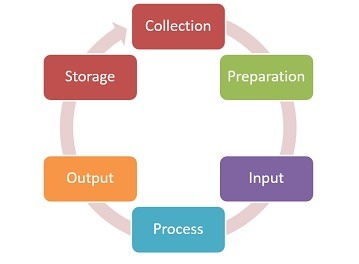
Concept of Data Processing:
Data processing is a systematic and ordered transformation of raw data into meaningful information through a series of operations. This transformation is achieved using various methods, tools, and techniques to organize, analyze, and interpret data. The concept of data processing involves several key components:
- Input:
- Definition: Input refers to the raw data or information that is collected or received and needs to be processed.
- Source: Data can be sourced from various channels such as manual entry, sensors, forms, surveys, databases, or external systems.
- Processing:
- Definition: Processing involves the manipulation and transformation of raw data into a more meaningful form.
- Operations: Processing operations include sorting, filtering, calculating, summarizing, and validating data. These operations are performed through algorithms and software applications.
- Storage:
- Definition: Storage is the retention of processed data for future reference or analysis.
- Media: Processed data is stored in databases, data warehouses, or other storage media such as hard drives, cloud storage, or archival systems.
- Output:
- Definition: Output is the result of processed data, presented in a format that is understandable and usable.
- Formats: Outputs can take various forms, including reports, charts, graphs, visualizations, or alerts, depending on the intended audience and purpose.
- Feedback:
- Definition: Feedback involves the return of processed information to the system for further analysis or improvement.
- Continuous Improvement: By analyzing outputs and user feedback, the data processing system can be refined and optimized for better performance.
Modes of Data Processing:
- Batch Processing:
- Definition: Data is collected, processed, and outputted in groups or batches.
- Characteristics: Suitable for non-time-sensitive tasks, performed at scheduled intervals.
- Real-time Processing:
- Definition: Data is processed immediately as it is received.
- Characteristics: Ideal for time-sensitive applications, such as online transactions or monitoring systems.
- Online Processing:
- Definition: Data is processed interactively in real-time with user input.
- Characteristics: Common in systems where immediate responses are required, such as online banking or reservation systems.
Stages of Data Processing:
- Data Collection:
- Gathering raw data from various sources, which can include manual entry, sensors, databases, or external systems.
- Data Cleaning:
- Identifying and correcting errors or inconsistencies in the raw data to ensure accuracy and reliability.
- Data Transformation:
- Converting raw data into a suitable format for analysis. This may involve sorting, filtering, and aggregating data.
- Data Analysis:
- Examining processed data to discover patterns, trends, and insights. This stage often involves statistical analysis and visualization.
- Data Presentation:
- Communicating the results of data analysis through reports, charts, dashboards, or other formats.
- Data Storage:
- Archiving processed data for future reference or analysis. This stage involves choosing appropriate storage solutions and ensuring data security.
Importance of Data Processing:
- Informed Decision-Making:
- Effective data processing enables organizations and individuals to make informed decisions based on accurate and relevant information.
- Efficiency and Productivity:
- Automation of data processing tasks enhances efficiency and productivity, allowing for quicker and more reliable results.
- Business Intelligence:
- Data processing forms the foundation of business intelligence, providing insights into market trends, customer behavior, and operational efficiency.
- Scientific Research:
- In scientific research, data processing is essential for analyzing experimental results, validating hypotheses, and drawing meaningful conclusions.
- Improved Accuracy:
- Data processing minimizes errors and inconsistencies, ensuring the accuracy and reliability of processed information.
In summary, the concept of data processing is integral to converting raw data into actionable insights, driving informed decision-making and facilitating various applications across diverse fields.
What is required Concept of Data Processing
The concept of data processing is fundamental in various fields and industries, as it involves the systematic transformation of raw data into meaningful information. Here’s what is required to understand the concept of data processing:
- Understanding of Raw Data:
- Recognize that data processing begins with raw data, which can come from diverse sources such as sensors, surveys, databases, or manual entry.
- Awareness of Data Processing Operations:
- Understand the basic operations involved in data processing, including sorting, filtering, calculating, summarizing, and validating data. These operations are performed using algorithms and software applications.
- Appreciation of Input, Processing, Output, and Feedback Cycle:
- Acknowledge the four essential stages in the data processing cycle: input, processing, output, and feedback. This cycle represents the flow of data through the system.
- Recognition of Data Storage Importance:
- Understand the significance of data storage, where processed data is stored for future reference or analysis. This involves choosing appropriate storage solutions and ensuring data security.
- Understanding Different Modes of Data Processing:
- Recognize the various modes of data processing, such as batch processing, real-time processing, and online processing. Understand the characteristics and applications of each mode.
- Awareness of Stages of Data Processing:
- Be familiar with the stages of data processing, including data collection, cleaning, transformation, analysis, presentation, and storage. Recognize the importance of each stage in producing reliable and actionable results.
- Knowledge of Data Processing in Different Contexts:
- Understand how data processing is applied in different contexts, such as business, scientific research, healthcare, finance, and more. Recognize the specific requirements and challenges in each domain.
- Understanding of Data Cleaning and Quality Assurance:
- Acknowledge the importance of data cleaning and quality assurance to ensure the accuracy and reliability of processed information. Recognize common issues in raw data and methods to address them.
- Awareness of Data Security and Privacy:
- Understand the importance of data security and privacy in the context of data processing. Recognize the need to implement measures to protect sensitive information from unauthorized access and breaches.
- Appreciation of Real-world Applications:
- Explore real-world applications of data processing in everyday life, business operations, scientific research, and decision-making processes. Recognize how data processing contributes to efficiency, productivity, and informed decision-making.
- Understanding of Business Intelligence and Analytics:
- Acknowledge the role of data processing in business intelligence and analytics. Understand how processed data is used to derive insights, identify trends, and support strategic decision-making.
In summary, a comprehensive understanding of the concept of data processing requires knowledge of its fundamental principles, stages, modes, and applications across different domains. This understanding is crucial for individuals and organizations seeking to leverage data for informed decision-making and improved efficiency.
The understanding of the concept of data processing is crucial for a wide range of individuals and professionals across various fields. Here are some groups of people who are required to have a grasp of the concept of data processing:
- Data Analysts and Scientists:
- Professionals responsible for analyzing and interpreting data to extract meaningful insights. They use data processing techniques to clean, transform, and analyze raw data for decision-making.
- Information Technology (IT) Professionals:
- IT specialists, including software developers, system administrators, and database administrators, need a solid understanding of data processing concepts to design, implement, and maintain systems that handle and process data efficiently.
- Business Professionals:
- Individuals in business roles, such as managers, executives, and strategists, benefit from understanding data processing to make informed decisions based on accurate and timely information.
- Researchers and Scientists:
- Researchers in various scientific disciplines rely on data processing to analyze experimental results, conduct statistical analyses, and draw meaningful conclusions.
- Educators and Students:
- Teachers and students in fields related to computer science, data science, business, and research need to comprehend data processing concepts as part of their academic curriculum and future professional roles.
- Healthcare Professionals:
- In healthcare, clinicians, researchers, and administrators use data processing to manage patient records, conduct research studies, and improve healthcare outcomes through data-driven decision-making.
- Finance and Accounting Professionals:
- Finance and accounting professionals utilize data processing to handle financial transactions, analyze economic trends, and generate financial reports for decision-making.
- Government and Policy Analysts:
- Professionals working in government and policy analysis use data processing to analyze socioeconomic data, assess policy impacts, and make evidence-based recommendations.
- Marketing and Sales Professionals:
- Marketing and sales teams leverage data processing to analyze customer behavior, track sales trends, and create targeted marketing strategies to enhance business performance.
- Human Resources (HR) Professionals:
- HR professionals use data processing to manage employee records, analyze workforce trends, and make informed decisions related to personnel management.
- Entrepreneurs and Small Business Owners:
- Individuals running their businesses need to understand data processing to manage customer data, track sales, and optimize business operations.
- Consumers and General Public:
- Everyday individuals benefit from understanding data processing concepts, especially in terms of privacy and security, as it empowers them to make informed decisions about how their personal data is handled.
In essence, the concept of data processing is applicable across a broad spectrum of professions and industries, reflecting its importance in today’s data-driven world. It empowers individuals to leverage data for informed decision-making, efficiency, and innovation in various aspects of their personal and professional lives.