
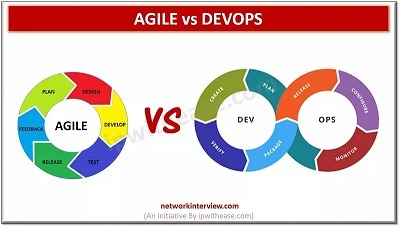
Agile and dev ops
Agile and DevOps are two complementary approaches to software development and project management that aim to increase efficiency, collaboration, and speed in delivering high-quality software products. While Agile focuses on iterative development and adaptive planning, DevOps focuses on the integration of development and operations teams to streamline software delivery and deployment. Let’s explore each concept further:
Agile: Agile is an iterative and incremental approach to software development that emphasizes flexibility, collaboration, and customer-centricity. It promotes adaptive planning, frequent feedback, and continuous improvement. The core principles of Agile include:
- Customer collaboration over contract negotiation: Agile teams prioritize close collaboration with customers and stakeholders to understand their needs and deliver value.
- Individuals and interactions over processes and tools: Agile values effective communication and collaboration within self-organizing teams over relying solely on tools and processes.
- Working software over comprehensive documentation: Agile emphasizes delivering functional software incrementally and continuously, focusing on working solutions rather than extensive documentation.
- Responding to change over following a plan: Agile embraces change and encourages flexibility in adapting to evolving requirements throughout the development process.
Agile methodologies, such as Scrum, Kanban, and Lean, provide frameworks and practices for implementing Agile principles. These methodologies typically involve breaking down work into smaller iterations (sprints) and prioritizing the most valuable features or user stories to deliver within each iteration. Regular feedback and reflection sessions, such as sprint reviews and retrospectives, help teams continuously improve their processes.
DevOps: DevOps is a set of practices that aim to bridge the gap between development and operations teams, enabling collaboration, automation, and faster software delivery cycles. DevOps emphasizes the breaking down of silos between these traditionally separate teams and promotes a culture of shared responsibility and continuous integration and delivery. The key principles of DevOps include:
- Collaboration and communication: DevOps encourages close collaboration between developers, operations personnel, and other stakeholders to align goals and ensure efficient software delivery.
- Automation: DevOps promotes automating manual tasks, such as build, testing, and deployment processes, to achieve faster and more reliable software releases.
- Continuous integration and delivery: DevOps emphasizes integrating code changes frequently and deploying software in small, manageable increments to reduce risks and enable faster feedback loops.
- Infrastructure as code: DevOps treats infrastructure configuration and management as code, enabling consistent and repeatable deployment environments through automation.
DevOps practices leverage tools and technologies such as version control systems, continuous integration/delivery (CI/CD) pipelines, configuration management tools, and monitoring systems to streamline the software development lifecycle and ensure reliable and scalable deployments.
Agile and DevOps Integration: Agile and DevOps are complementary approaches that work well together. Agile focuses on delivering value incrementally and responding to changing requirements, while DevOps focuses on streamlining the software delivery and deployment process. By integrating Agile and DevOps practices, organizations can achieve faster time-to-market, increased collaboration, and improved software quality. Key areas of integration include:
- Continuous integration and delivery: Agile teams can leverage DevOps practices to automate the build, testing, and deployment processes, enabling more frequent and reliable software releases.
- Cross-functional teams: Agile teams can include operations personnel, ensuring that infrastructure and operational requirements are considered from the early stages of development.
- Shared accountability: Agile and DevOps promote a culture of shared responsibility, where both development and operations teams take ownership of software quality, performance, and deployment.
- Feedback loops: Agile teams can benefit from the rapid feedback provided by DevOps practices, allowing for quick identification and resolution of issues and continuous improvement.
Overall, Agile and DevOps share the common goal of delivering high-quality software efficiently and effectively. By embracing the principles and practices of both approaches, organizations can foster a culture of collaboration, innovation, and continuous improvement in their software development and delivery processes.
What is required Agile and Dev ops
To effectively implement Agile and DevOps methodologies, several requirements and considerations should be taken into account. Here are some key requirements for Agile and DevOps:
Agile:
- Team Collaboration: Agile requires cross-functional teams that collaborate closely and communicate effectively. Strong teamwork and shared ownership are crucial for Agile success.
- Agile Mindset: Individuals and teams need to embrace the Agile values and principles, such as adaptability, collaboration, and customer focus. They should be open to change and willing to continuously improve their processes.
- Product Backlog: A prioritized product backlog containing user stories or requirements is required for Agile projects. It provides a clear roadmap of features to be developed, allowing teams to plan and deliver value incrementally.
- Iterative Development: Agile projects are divided into iterations (sprints) of fixed time durations, during which the team develops, tests, and delivers potentially shippable increments of the product. This iterative approach enables feedback and adaptability.
- Continuous Integration: Continuous integration is the practice of merging code changes into a shared repository frequently. It requires an automated build and testing process to detect integration issues early on.
DevOps:
- Collaboration and Communication: Effective collaboration and communication between development, operations, and other stakeholders are fundamental to DevOps. Silos must be broken down, and a culture of shared responsibility and collaboration should be fostered.
- Automation: DevOps emphasizes automation to streamline and standardize processes. Automation tools for infrastructure provisioning, configuration management, testing, and deployment are essential to achieve reliable and repeatable results.
- Continuous Integration and Delivery (CI/CD): Organizations should establish CI/CD pipelines that enable frequent integration, testing, and deployment of code changes. This requires an automated release process and robust testing strategies.
- Infrastructure as Code (IaC): Infrastructure configuration and management should be treated as code, enabling the automation and version control of infrastructure resources. Tools like configuration management systems and infrastructure orchestration frameworks are necessary.
- Monitoring and Feedback: Continuous monitoring of applications and infrastructure helps identify performance issues, bottlenecks, and failures. Feedback from monitoring should inform improvements and drive continuous learning and optimization.
- Security and Compliance: DevOps should consider security and compliance requirements from the early stages of development. Security controls, vulnerability scanning, and compliance checks should be integrated into the pipeline.
Both Agile and DevOps require a supportive organizational culture that values continuous improvement, learning, and risk-taking. Leadership support, investment in training and skill development, and a focus on creating an environment of trust and psychological safety are also crucial for successful adoption.
It’s important to note that Agile and DevOps are not one-size-fits-all approaches. Organizations should tailor the methodologies to suit their specific needs, size, and industry. Continuous evaluation, adaptation, and learning are key to refining Agile and DevOps practices and optimizing their benefits.
Who is required Agile and Dev ops
The successful implementation of Agile and DevOps requires the involvement and collaboration of various stakeholders within an organization. Here are the key roles involved:
- Development Team: The development team consists of software developers, engineers, testers, and other technical professionals responsible for creating and delivering software solutions. They actively participate in Agile and DevOps practices, such as iterative development, continuous integration, and continuous delivery.
- Operations Team: The operations team, also known as IT operations or sysadmins, is responsible for managing and maintaining the infrastructure, systems, and networks required for software deployment and operations. In DevOps, the operations team collaborates closely with the development team to ensure smooth and reliable software releases.
- Product Owner: The product owner represents the interests of the stakeholders and customers. They work closely with the development team to prioritize and manage the product backlog, define user stories, and provide feedback during development iterations. The product owner plays a crucial role in Agile and DevOps by ensuring that the delivered software meets the needs and expectations of the users.
- Scrum Master: In Agile, the scrum master acts as a facilitator and coach for the development team, ensuring that Agile principles and practices are followed. They help remove obstacles, facilitate communication, and promote collaboration within the team. While the scrum master is specific to the Scrum framework, a similar role may exist in other Agile methodologies.
- Project Managers: Project managers, in an Agile and DevOps context, provide support and guidance to ensure successful implementation. They help align Agile and DevOps practices with organizational goals, manage project timelines and resources, and facilitate communication between teams and stakeholders.
- Leadership and Management: Leadership support is essential for the successful adoption of Agile and DevOps. Executives and managers play a critical role in fostering a culture of collaboration, continuous improvement, and learning. They provide resources, support training initiatives, and align organizational goals with Agile and DevOps practices.
- Quality Assurance (QA) Team: The QA team is responsible for testing and ensuring the quality of software releases. In Agile and DevOps, QA professionals work closely with the development team to integrate testing early in the development process and automate testing procedures, aligning with the continuous integration and delivery practices.
- Business Stakeholders: Business stakeholders, such as product managers, marketing representatives, and customer support, provide valuable input on business requirements, priorities, and user feedback. Their involvement is crucial for understanding market needs, validating product features, and ensuring customer satisfaction.
- Security and Compliance Teams: Security and compliance professionals play a vital role in ensuring that Agile and DevOps practices align with security and regulatory requirements. They help identify potential risks, implement security controls, and ensure compliance measures are integrated into the software development and deployment processes.
- Continuous Improvement Champions: These individuals or teams promote a culture of continuous improvement by facilitating retrospectives, sharing best practices, and driving initiatives to enhance Agile and DevOps processes. They help identify areas for improvement and drive organizational learning.
It is important to have collaboration and effective communication among these stakeholders to ensure the successful implementation and adoption of Agile and DevOps methodologies. The involvement of each role is essential for embracing a holistic and collaborative approach to software development and delivery.
When is required Agile and Dev ops
Agile and DevOps methodologies are required in various scenarios and circumstances within the software development and IT operations domains. Here are some situations where Agile and DevOps become particularly important:
- Fast-paced and Dynamic Environments: Agile and DevOps are well-suited for environments where there is a need for quick adaptation to changing requirements and market demands. In industries such as technology, software development, and digital services, Agile and DevOps can help organizations keep up with the fast pace of innovation and deliver solutions efficiently.
- Complex and Large-scale Projects: Agile and DevOps are beneficial for managing complex projects with multiple stakeholders, intricate requirements, and interdependent components. The iterative and collaborative nature of Agile and DevOps allows for continuous feedback, early detection of issues, and flexibility in adapting to evolving project complexities.
- Continuous Delivery and Deployment: When organizations aim for frequent and reliable software releases, DevOps practices become crucial. DevOps streamlines the software development lifecycle, enabling continuous integration, testing, and delivery. This is particularly relevant for organizations providing Software-as-a-Service (SaaS), web applications, and mobile applications.
- Collaboration between Development and Operations: Agile and DevOps promote collaboration and breaking down silos between development and operations teams. This becomes essential in environments where coordination and alignment between these traditionally separate teams are necessary for successful software delivery, deployment, and ongoing maintenance.
- Quality and User Satisfaction: Agile and DevOps methodologies focus on delivering high-quality software that meets user expectations. The iterative development cycles of Agile ensure regular user feedback and continuous improvement, while DevOps practices emphasize automated testing, monitoring, and efficient deployment, leading to improved quality and user satisfaction.
- Scalability and Efficiency: Agile and DevOps enable organizations to scale their software development and deployment processes efficiently. By automating tasks, optimizing resources, and ensuring consistent delivery practices, Agile and DevOps support organizations in scaling their operations while maintaining efficiency and quality.
- Innovation and Competitive Advantage: In highly competitive industries, organizations need to continuously innovate and deliver value to stay ahead. Agile and DevOps foster a culture of innovation, collaboration, and rapid iteration, allowing organizations to respond quickly to market changes, incorporate user feedback, and maintain a competitive edge.
- Continuous Improvement and Learning: Agile and DevOps encourage a culture of continuous improvement and learning. Organizations that value continuous improvement, embrace feedback, and are committed to refining their processes benefit from Agile and DevOps, as these methodologies provide frameworks for ongoing learning, reflection, and optimization.
It’s important to note that Agile and DevOps are not limited to specific industries or project sizes. The applicability of these methodologies depends on the nature of the project, organizational goals, and the need for agility, collaboration, and efficient software delivery.
Where is required Agile and Dev ops
Agile and DevOps methodologies are required in various industries and sectors where software development, IT operations, and delivering high-quality software solutions are essential. Here are some key areas where Agile and DevOps are particularly important:
- Software Development: Agile and DevOps are most commonly associated with software development projects. They are necessary in industries such as technology, software engineering, mobile app development, web development, and custom software development. These methodologies help streamline the development process, improve collaboration, and deliver high-quality software products efficiently.
- IT Operations: DevOps practices are crucial for IT operations teams responsible for managing and maintaining infrastructure, networks, and systems. DevOps enables these teams to automate repetitive tasks, standardize configurations, and ensure reliable and scalable deployments. It enhances collaboration between development and operations, resulting in smoother operations and faster incident resolution.
- Digital Services and E-commerce: Agile and DevOps are essential in industries focused on digital services and e-commerce. These sectors require continuous software delivery and frequent updates to meet evolving customer expectations. Agile and DevOps enable organizations to quickly adapt to market demands, enhance user experiences, and achieve competitive advantage.
- Cloud Computing and Infrastructure: Organizations leveraging cloud computing infrastructure can benefit greatly from Agile and DevOps methodologies. DevOps practices, such as infrastructure as code (IaC) and continuous deployment, align well with cloud environments. Agile enables iterative development and faster release cycles for cloud-based applications and services.
- Startups and Entrepreneurial Ventures: Startups and entrepreneurial ventures often operate in a fast-paced and resource-constrained environment. Agile and DevOps provide frameworks for efficient development, rapid iterations, and continuous deployment. They enable startups to deliver minimum viable products (MVPs) quickly, gather user feedback, and iterate based on market responses.
- Financial Services and Fintech: Agile and DevOps are increasingly adopted in the financial services industry, including banking, insurance, and fintech. These sectors require agility to respond to regulatory changes, deliver secure and reliable financial software, and meet customer expectations for digital services and transactions.
- Telecommunications and Media: Agile and DevOps are important in the telecommunications and media industries, which rely heavily on software systems for network management, content delivery, and customer experiences. These methodologies enable organizations to deliver new features, update services, and ensure high availability while maintaining quality and performance.
- Healthcare and Life Sciences: Agile and DevOps have started gaining traction in the healthcare and life sciences sectors. They support the development of healthcare software applications, medical devices, and digital health solutions. Agile and DevOps practices enable faster delivery of healthcare technologies while ensuring compliance with regulations and maintaining data privacy and security.
It’s important to note that Agile and DevOps can be adapted and applied to various industries and sectors. The specific requirements and challenges of each industry may influence the implementation and tailoring of these methodologies to suit the unique needs of the organization and its projects.
How is required Agile and Dev ops
Agile and DevOps are required to address the challenges and needs of modern software development and IT operations. Here are some ways in which Agile and DevOps are necessary:
- Faster Time-to-Market: In today’s fast-paced business environment, organizations need to deliver software solutions quickly to gain a competitive edge. Agile and DevOps enable faster time-to-market by emphasizing iterative development, frequent releases, and continuous integration and delivery. These methodologies help organizations respond to market demands promptly and deliver value to customers in a timely manner.
- Collaboration and Communication: Agile and DevOps promote collaboration and effective communication between development, operations, and other stakeholders involved in the software development lifecycle. Agile methodologies facilitate cross-functional teams and promote face-to-face interactions, leading to better understanding, knowledge sharing, and alignment of goals. DevOps breaks down silos between development and operations, fostering collaboration and shared responsibilities, resulting in improved efficiency and faster problem resolution.
- Flexibility and Adaptability: Agile methodologies, with their iterative and incremental approach, enable organizations to adapt to changing requirements, customer feedback, and market dynamics. Agile allows for continuous feedback and incorporates changes throughout the development process, ensuring that the final product meets customer expectations. DevOps complements Agile by providing the infrastructure and processes for seamless deployment and adaptation of software solutions.
- Continuous Improvement: Agile and DevOps promote a culture of continuous improvement. Agile methodologies encourage retrospectives, where teams reflect on their processes and identify areas for improvement. DevOps emphasizes the use of automation, monitoring, and feedback loops to continuously optimize software delivery and operations. Both methodologies foster a mindset of learning, innovation, and the pursuit of excellence.
- Enhanced Quality and Stability: Agile and DevOps methodologies prioritize software quality and stability. Agile practices, such as test-driven development and continuous testing, ensure that software is thoroughly tested at each stage of development. DevOps emphasizes automated testing, continuous integration, and deployment pipelines to maintain the stability and reliability of software systems. These practices help identify and address issues early, resulting in higher-quality software products.
- Scalability and Efficiency: Agile and DevOps enable organizations to scale their software development and operations efficiently. Agile methodologies, with their focus on small, cross-functional teams and iterative development, allow for scalable processes and enhanced productivity. DevOps practices, such as infrastructure as code and automated deployment pipelines, enable organizations to scale their operations and handle increased workloads effectively.
- Risk Mitigation: Agile and DevOps help mitigate risks associated with software development and operations. By promoting incremental development, continuous testing, and frequent releases, Agile reduces the risks of project delays and cost overruns. DevOps practices, such as automated deployments and infrastructure monitoring, mitigate risks related to system failures, downtime, and security vulnerabilities.
- Customer Satisfaction: Agile and DevOps methodologies prioritize customer satisfaction by delivering software solutions that meet customer needs and expectations. Frequent customer feedback, iterative development, and continuous deployment enable organizations to incorporate customer input and make necessary adjustments during the development process. This leads to improved customer satisfaction and enhances the overall user experience.
By adopting Agile and DevOps practices, organizations can achieve greater efficiency, collaboration, and agility in their software development and operations. These methodologies provide a framework for delivering high-quality software solutions, responding to market changes, and driving business success in the digital age.
Case study on Agile and Dev ops
Title: Agile and DevOps Transformation: Case Study of XYZ Software Company
Abstract: This case study examines the Agile and DevOps transformation journey of XYZ Software Company, a mid-sized technology firm specializing in software development and delivery. The company faced challenges in meeting customer demands, delivering software on time, and maintaining quality. To address these challenges, XYZ Software Company embarked on an Agile and DevOps transformation initiative. The case study explores the process, challenges faced, and the outcomes achieved through the adoption of Agile and DevOps practices. It highlights the key strategies, tools, and cultural changes implemented during the transformation. The case study provides insights into how Agile and DevOps can drive efficiency, collaboration, and high-quality software delivery within an organization.
- Introduction: 1.1 Background of XYZ Software Company 1.2 Need for Agile and DevOps Transformation
- Challenges Faced: 2.1 Inefficient Software Delivery Process 2.2 Lack of Collaboration between Development and Operations 2.3 Difficulty in Meeting Customer Expectations
- Agile and DevOps Transformation Strategy: 3.1 Formation of Agile Transformation Team 3.2 Identification and Prioritization of Agile and DevOps Practices 3.3 Adoption of Agile Methodology (Scrum) for Software Development 3.4 Implementation of Continuous Integration and Delivery Practices 3.5 Cultural Changes and Team Empowerment
- Implementation Process: 4.1 Agile Team Structure and Roles 4.2 Sprint Planning and Backlog Management 4.3 Continuous Integration and Automated Testing 4.4 Infrastructure as Code and DevOps Toolchain Implementation 4.5 Collaboration and Communication Improvements
- Results and Outcomes: 5.1 Improved Time-to-Market and Delivery Speed 5.2 Enhanced Collaboration between Development and Operations 5.3 Higher Customer Satisfaction and Product Quality 5.4 Increased Efficiency and Productivity 5.5 Reduction in Defects and Production Incidents
- Challenges and Lessons Learned: 6.1 Cultural Resistance and Change Management 6.2 Skill Development and Training Needs 6.3 Maintaining Momentum and Continuous Improvement
- Key Takeaways and Recommendations: 7.1 Importance of Cultural Transformation and Collaboration 7.2 Alignment of Agile and DevOps Practices for Effective Results 7.3 Continuous Learning and Improvement as Essential Elements
- Conclusion: 8.1 Summary of Agile and DevOps Transformation Journey 8.2 Benefits and Impacts of Agile and DevOps Adoption
References
Appendix: Agile and DevOps Transformation Timeline and Metrics
White paper on Agile and Dev ops
Title: Unlocking Business Agility with Agile and DevOps: A Comprehensive Guide
Abstract: This white paper provides an in-depth exploration of Agile and DevOps methodologies and their synergistic relationship in driving business agility. It delves into the core principles, benefits, and challenges associated with Agile and DevOps, while also discussing how organizations can successfully integrate these methodologies to enhance software development and delivery practices. The paper explores the cultural, organizational, and technical aspects of adopting Agile and DevOps, offering practical guidance and best practices for organizations embarking on their transformation journeys. It also showcases real-world case studies and success stories to illustrate the transformative power of Agile and DevOps in diverse industries. By embracing Agile and DevOps, organizations can achieve faster time-to-market, improved collaboration, enhanced software quality, and ultimately gain a competitive edge in the digital landscape.
Table of Contents:
- Introduction 1.1 The Evolution of Agile and DevOps 1.2 The Need for Agile and DevOps in the Digital Age
- Understanding Agile Methodologies 2.1 Agile Manifesto and Principles 2.2 Scrum, Kanban, and Lean: Key Agile Frameworks 2.3 Agile Ceremonies and Artifacts 2.4 Scaling Agile: SAF e, LeSS, and Nexus
- Embracing DevOps Culture and Practices 3.1 DevOps Principles and Values 3.2 Continuous Integration, Delivery, and Deployment 3.3 Infrastructure as Code and Configuration Management 3.4 Monitoring, Logging, and Continuous Improvement 3.5 Security and Compliance in DevOps
- Synergy Between Agile and DevOps 4.1 Collaboration and Communication between Development and Operations 4.2 Agile Development and DevOps Operations: Overlapping Processes 4.3 CI/CD Pipelines: Bridging the Gap between Agile and DevOps 4.4 Automation: Enabling Agile and DevOps Success
- Agile and DevOps Transformation Roadmap 5.1 Assessing Organizational Readiness for Agile and DevOps 5.2 Building a Culture of Collaboration and Continuous Improvement 5.3 Agile and DevOps Team Structure and Roles 5.4 Adopting Agile and DevOps Tools and Technologies 5.5 Overcoming Challenges and Sustaining Transformation Momentum
- Case Studies: Successful Agile and DevOps Implementations 6.1 Agile and DevOps Transformation in a Large Financial Institution 6.2 DevOps for Continuous Delivery in a SaaS Startup 6.3 Agile Development and DevOps Operations in an E-commerce Company
- Benefits and Outcomes of Agile and DevOps Adoption 7.1 Accelerated Time-to-Market and Competitive Advantage 7.2 Enhanced Collaboration and Cross-functional Teams 7.3 Improved Software Quality and Customer Satisfaction 7.4 Agility in Responding to Market Changes and Customer Needs
- Overcoming Challenges and Ensuring Success 8.1 Addressing Cultural Resistance and Organizational Change 8.2 Investing in Skill Development and Training 8.3 Establishing Metrics and Measuring Progress 8.4 Ensuring Leadership Support and Alignment
- Conclusion 9.1 The Future of Agile and DevOps 9.2 Key Takeaways for Agile and DevOps Adoption