
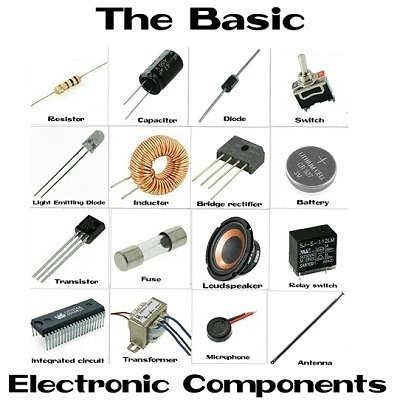
Components
In the context of electronics and technology, “components” refer to individual parts or elements that are used to build more complex systems or devices. Components can be both active and passive, and they serve specific functions within a larger system. Here are some common types of components found in various electronic devices:
- Active Components:
- Transistors: Active semiconductor devices that amplify or switch electronic signals. They are the building blocks of digital circuits.
- Diodes: Semiconductor devices that allow current to flow in one direction, used in rectification and switching applications.
- Integrated Circuits (ICs): Miniature circuits that contain multiple transistors, resistors, capacitors, and other components, performing complex functions in a single package.
- Operational Amplifiers (Op-Amps): High-gain voltage amplifiers used in signal conditioning, filtering, and other analog applications.
- Microprocessors: Complex ICs that serve as the CPU in computers and other digital devices, executing instructions and performing calculations.
- Passive Components:
- Resistors: Components that resist the flow of electric current, used for voltage division, current limiting, and signal termination.
- Capacitors: Components that store and release electrical energy, used for smoothing power supplies, coupling signals, and filtering noise.
- Inductors: Components that store energy in a magnetic field when current flows through them, used in filtering and energy storage applications.
- Transformers: Two or more inductors wound on a shared magnetic core, used for voltage conversion and isolation in power supplies and communication circuits.
- Electromechanical Components:
- Relays: Electromechanical switches that use an electromagnetic coil to control the position of one or more switch contacts.
- Switches: Devices that open or close electrical circuits manually or automatically based on physical interaction or electronic signals.
- Connectors: Interfaces that facilitate electrical connections between various components or devices.
- Sensors:
- Temperature Sensors: Devices that detect and measure temperature changes in their environment.
- Pressure Sensors: Components that measure pressure in gases or liquids.
- Proximity Sensors: Sensors that detect the presence or absence of an object without physical contact.
- Motion Sensors: Components that detect movement, acceleration, or orientation.
- Displays:
- LEDs (Light Emitting Diodes): Emit light when current flows through them, used in indicators, displays, and lighting applications.
- LCDs (Liquid Crystal Displays): Flat-panel displays that use liquid crystals to modulate light and create images.
- Power Supplies:
- Voltage Regulators: Components that stabilize and regulate voltage levels in electronic circuits.
- Power Converters: Devices that convert electrical energy from one form to another (e.g., DC to AC, AC to DC).
These are just a few examples of the many components used in electronics and technology. Each component plays a crucial role in the overall functionality of electronic devices, ranging from small consumer gadgets to large industrial systems. The combination and integration of these components create sophisticated electronic systems that power the modern world.
What is required Components
The required components for a particular system or device depend on its purpose, functionality, and specifications. Different electronic systems have unique requirements, and the components chosen should align with the intended use and performance expectations. Here are some examples of required components for various systems:
- Personal Computer (PC):
- Central Processing Unit (CPU)
- Motherboard
- Random Access Memory (RAM)
- Storage Drive (e.g., Hard Disk Drive or Solid-State Drive)
- Power Supply Unit (PSU)
- Graphics Processing Unit (GPU) or Integrated Graphics
- Display (Monitor)
- Keyboard and Mouse
- Chassis/Casing
- Cooling System (Fans, Heatsinks)
- Smartphone:
- System-on-Chip (SoC) or Mobile Processor
- Memory (RAM and Flash Storage)
- Display (Touchscreen)
- Battery
- Camera Modules (Front and Rear)
- Wireless Connectivity (Wi-Fi, Bluetooth, Cellular)
- Sensors (Accelerometer, Gyroscope, Proximity, etc.)
- Digital Camera:
- Image Sensor
- Image Processor
- Lens and Aperture Mechanism
- LCD or Electronic Viewfinder
- Storage Media (SD Card, etc.)
- Battery
- Home Theater System:
- Audio Amplifier
- Surround Sound Speakers
- Subwoofer
- AV Receiver or Sound bar
- Display (TV or Projector)
- Source Devices (e.g., Blu-ray Player, Streaming Devices)
- Industrial Control System:
- Programmable Logic Controller (PLC) or Microcontroller
- Sensors (Temperature, Pressure, Proximity, etc.)
- Actuators (Motors, Valves, etc.)
- Human-Machine Interface (HMI)
- Communication Modules (Ethernet, RS-232, etc.)
- Robotics System:
- Microcontroller or Microprocessor
- Sensors (Ultrasonic, Infrared, etc.)
- Motors and Servos
- Motor Drivers
- Power Supply
- Chassis and Mechanical Structure
- Automobile:
- Engine Control Unit (ECU)
- Anti-lock Braking System (ABS)
- Airbag Control Module
- Infotainment System (Touchscreen, Audio, Navigation)
- Sensors (Speed, Temperature, Position, etc.)
- Actuators (Fuel Injectors, Brakes, etc.)
- Network Switch:
- Central Processing Unit (CPU)
- Ethernet Ports
- Memory (RAM and Flash)
- Power Supply
- Cooling System
- Management Interface (Web Interface or Command-Line Interface)
The required components for any specific system should be carefully chosen based on the system’s intended functionality, performance requirements, and budget constraints. Additionally, considerations such as power consumption, form factor, and compatibility with other components should be taken into account during the selection process.
As of my last update in September 2021, it’s not entirely clear what you mean by “required components.” It could refer to various things depending on the context. Here are a few interpretations:
- Required Components in a System: In the context of a system or technology, “required components” typically refer to the essential parts or elements necessary for the system to function correctly. For example, in a computer system, the required components might include a central processing unit (CPU), memory (RAM), storage (hard drive or SSD), power supply, and a motherboard.
- Required Components for a Task: When referring to a specific task or project, “required components” could be the necessary resources, tools, or materials needed to accomplish the task successfully. For instance, if you’re building a bookshelf, the required components might be wood planks, screws, a saw, and a drill.
- Required Components in a Legal or Regulatory Context: In some situations, “required components” might refer to the essential elements or qualifications necessary to meet legal or regulatory standards. For example, a company seeking government approval for a product may need to provide certain required components of documentation, safety testing, and compliance reports.
- Required Components in Software Development: In software development, “required components” can mean the libraries, modules, or dependencies that a software application needs to function correctly. For example, a web application might require a web server, a database management system, and specific programming libraries.
For a more specific answer, please clarify the context or provide additional information so that I can give you a more accurate response.
When is required Components
It appears that there might be a slight misunderstanding in your question, as “When is required Components” is not a complete sentence or question. However, I’ll try to provide some guidance based on the different interpretations of your inquiry:
- Required Components in a System: The required components for a system are typically determined during the design and planning phase of a project. They are identified based on the specific objectives and functionalities the system needs to achieve. The decision on required components is made before the implementation phase begins.
- Required Components for a Task: The required components for a task are determined based on the nature of the task or project. When planning a task, you should identify the necessary resources, tools, and materials required to complete it successfully. These components should be acquired before starting the task.
- Required Components in a Legal or Regulatory Context: The required components to meet legal or regulatory standards depend on the specific laws or regulations governing the activity in question. Compliance with these requirements is typically necessary before starting or conducting the activity.
- Required Components in Software Development: In software development, the required components (such as libraries or dependencies) are determined based on the functionality and features the software needs to offer. Developers specify these components during the design phase and acquire or integrate them before the coding and testing stages.
If you have a specific context or scenario in mind, please provide more information so that I can give you a more accurate and relevant answer.
Where is required Components
The location or whereabouts of required components can vary depending on the context. Here are some common scenarios:
- Required Components in a System: In a physical system, such as a computer or a machine, the required components are typically assembled together in a designated location. For example, in a computer, the components like the CPU, RAM, storage drives, and motherboard are all housed within the computer case.
- Required Components for a Task: The required components for a task are usually gathered and organized in the workspace where the task will be carried out. For instance, if the task is to bake a cake, the required ingredients and baking utensils are usually placed in the kitchen.
- Required Components in a Legal or Regulatory Context: The required components to meet legal or regulatory standards are often documented and kept as part of compliance records. These records may be stored physically in a designated file or electronically in a secure database.
- Required Components in Software Development: In software development, the required components, such as libraries or dependencies, are typically stored within the project’s codebase or version control system. Developers ensure that these components are accessible and properly integrated into the software during the development process.
In general, required components are organized and kept in a way that facilitates easy access and use when they are needed. The specific location may vary based on the nature of the components and the context in which they are used.
Who is required Components
The phrase “required components” is quite generic and can be applied to various contexts. Without specific context, I can provide a general answer covering different areas where this term might be relevant:
- Computer Hardware Components: Required components of a computer system typically include a central processing unit (CPU), random access memory (RAM), storage devices (hard drive or solid-state drive), motherboard, power supply, and input/output devices (monitor, keyboard, mouse, etc.).
- Software Components: Required components in software development may refer to essential libraries, modules, or dependencies that must be present for a program to function correctly. This could be specific programming language libraries, frameworks, or runtime environments.
- Engineering or Construction Projects: In engineering or construction, required components may refer to essential parts, materials, or subsystems that are necessary for building a structure or implementing a system. For example, constructing a bridge would require steel beams, concrete, and various support structures as essential components.
- Automobiles: In the context of a vehicle, required components are essential parts necessary for the proper functioning of the vehicle, such as engine, transmission, wheels, brakes, etc.
- Academic Requirements: In education, required components could refer to essential elements that students need to include in their assignments or projects, like specific sections, references, or calculations.
- Business Processes: In business operations, required components may refer to necessary steps or elements in a process to achieve a specific outcome. For instance, the required components for a sales process might include lead generation, customer engagement, product demonstration, and closing the deal.
Please provide more context if you have a specific field or domain in mind, so I can give a more tailored response.
Case study on Components
Title: Understanding Components in the Automotive Industry
Abstract: This case study explores the significance and complexity of components in the automotive industry. Components are the building blocks of vehicles, and their design, quality, and integration play a crucial role in the overall performance and safety of automobiles. The study focuses on a leading automotive manufacturer, Auto Tech Inc., and analyzes how they manage component development, sourcing, and assembly to produce high-quality vehicles. Additionally, the case study examines the challenges faced by Auto Tech Inc. in the ever-evolving automotive landscape and the strategies they employ to remain competitive.
Introduction: The automotive industry is highly competitive, with consumers demanding reliable, efficient, and technologically advanced vehicles. Components are essential elements of any automobile, ranging from simple nuts and bolts to complex electronic systems. The quality and performance of these components significantly impact the vehicle’s safety, durability, and overall driving experience. This case study delves into the processes and challenges faced by Auto Tech Inc. in managing components, from design to production.
Company Profile: Auto Tech Inc. Auto Tech Inc. is a global leader in the automotive industry, renowned for manufacturing high-quality vehicles across various segments, including sedans, SUVs, and electric vehicles. The company’s commitment to innovation and advanced engineering has earned it a solid reputation worldwide. Auto Tech’s vehicles are known for their cutting-edge technology, safety features, and superior performance.
Component Development: Auto Tech Inc. follows a comprehensive component development process, starting from research and design to prototyping and testing. The company employs a team of skilled engineers and designers who collaborate to create components that align with the latest technological advancements and market demands. These components undergo rigorous testing to ensure compliance with safety and performance standards.
Component Sourcing: Auto Tech Inc. sources components from a vast network of suppliers globally. The procurement team meticulously evaluates suppliers based on factors like quality, reliability, cost-effectiveness, and capacity. The company maintains strong relationships with its suppliers, fostering a spirit of collaboration to encourage continuous improvement. Additionally, Auto Tech Inc. keeps a keen eye on the supply chain to prevent any disruptions that may impact production.
Component Assembly: Once the components are sourced, Auto Tech Inc. employs advanced manufacturing processes and automated assembly lines to ensure precision and consistency during vehicle production. Strict quality control measures are implemented at every stage to identify and address any issues that may arise during assembly. The integration of components is a highly synchronized process, emphasizing efficiency without compromising on quality.
Challenges Faced by Auto Tech Inc.: Despite its reputation as a leader in the automotive industry, Auto Tech Inc. faces various challenges:
- Supply Chain Disruptions: The automotive industry is susceptible to supply chain disruptions caused by global events like natural disasters, geopolitical tensions, or pandemics. Auto Tech Inc. actively works on building resilience in its supply chain to minimize such disruptions.
- Emerging Technologies: Rapid technological advancements in the automotive industry demand continuous innovation. Auto Tech Inc. invests heavily in research and development to stay ahead in the race of incorporating cutting-edge technologies into their vehicles.
- Regulatory Compliance: Stricter safety and environmental regulations pose compliance challenges for Auto Tech Inc. Ensuring all components meet the required standards can be demanding, both in terms of time and resources.
- Competition: The automotive market is fiercely competitive, with new entrants and established players vying for market share. Auto Tech Inc. focuses on differentiation through unique features and exceptional customer experiences.
Strategies for Success: Auto Tech Inc. employs several strategies to maintain its position as a leading automotive manufacturer:
- Continuous Innovation: Emphasizing research and development, Auto Tech Inc. constantly explores new technologies and designs to improve vehicle components and performance.
- Collaboration with Suppliers: Nurturing strong relationships with suppliers fosters trust and reliability, enabling Auto Tech Inc. to access high-quality components consistently.
- Diversification: The company expands its product portfolio, including electric and hybrid vehicles, to cater to evolving market demands and adapt to changing consumer preferences.
- Investment in Human Capital: Auto Tech Inc. recognizes the importance of its employees and invests in their skills development, fostering a culture of excellence and innovation.
Conclusion: Components play a pivotal role in the automotive industry, and Auto Tech Inc. exemplifies how meticulous management of component development, sourcing, and assembly can lead to the production of high-quality vehicles. Facing challenges head-on and adopting strategic approaches to stay competitive enables the company to thrive in the dynamic automotive landscape. By prioritizing innovation, collaboration, and customer experience, Auto Tech Inc. maintains its position as a global leader in the automotive industry.
White paper on Components
Title: The Essential Role of Components in Modern Engineering: A Comprehensive White Paper
Abstract: This white paper delves into the crucial role that components play in modern engineering across various industries. Components are fundamental building blocks that form the backbone of complex systems, ranging from consumer electronics to aerospace technology. The paper highlights the significance of components in design, manufacturing, and overall system performance. It further explores the challenges and advancements in component technologies, emphasizing their impact on innovation and sustainability. The white paper also discusses strategies for efficient component management and collaboration among stakeholders to optimize system performance and reliability.
1. Introduction: The Foundation of Modern Engineering Components are discrete parts or elements that are combined to create larger systems or products. They are integral to modern engineering and are used in a wide range of applications, including electronics, machinery, automotive, aerospace, and more. This section outlines the importance of components in engineering and sets the stage for a comprehensive exploration of their significance.
2. The Role of Components in System Design Components are not just simple building blocks; they significantly influence the design process. This section discusses how engineering teams select and integrate components based on specific requirements, considering factors like functionality, compatibility, performance, and cost. It also addresses the importance of standardization and modularity in component design for efficient system integration.
3. Component Manufacturing Techniques and Materials Manufacturing processes and materials used in component production greatly impact their quality, durability, and cost. This section provides an overview of various manufacturing techniques, such as injection molding, CNC machining, and additive manufacturing, and how they are employed to create components with precision and consistency. Furthermore, it explores the selection of materials based on mechanical, thermal, and electrical properties, emphasizing the importance of material engineering in component development.
4. Advancements in Component Technologies As technology advances, components continue to evolve, becoming more efficient, compact, and intelligent. This section showcases some of the recent breakthroughs in component technologies, including miniaturization, nanotechnology, MEMS (Microelectromechanical Systems), and smart components enabled by IoT (Internet of Things). It discusses how these advancements open up new possibilities in product design and functionality.
5. Challenges in Component Management Managing components throughout their lifecycle presents several challenges for engineers and manufacturers. This section addresses issues such as supply chain disruptions, obsolescence, counterfeit components, and the need to comply with industry standards and regulations. Additionally, it highlights the importance of thorough testing and quality control to ensure component reliability and safety.
6. Sustainable Component Development and Circular Economy In the context of increasing environmental concerns, this section explores the concept of sustainable component development and the importance of adopting a circular economy approach. It discusses strategies for recycling, reusing, and remanufacturing components to reduce waste and resource consumption, contributing to a greener and more sustainable future.
7. Collaboration and Integration in Component Ecosystem Effective collaboration among stakeholders, including designers, manufacturers, suppliers, and end-users, is crucial for successful component integration. This section examines the benefits of cross-disciplinary collaboration, data sharing, and standardized communication protocols to optimize system performance and reliability.
8. Conclusion The white paper concludes by reiterating the vital role of components in modern engineering and how advancements in component technologies continue to drive innovation in various industries. It emphasizes the need for sustainable practices, efficient management, and collaborative efforts to harness the full potential of components in creating cutting-edge and sustainable systems that shape the future of engineering.