
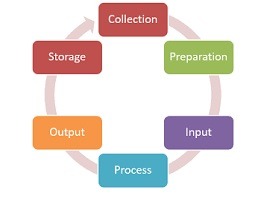
Concept of data processing
Data processing is the transformation of raw data into meaningful information through a series of structured steps or operations. This process is crucial in various fields and industries, including business, science, healthcare, finance, and many others, as it enables organizations and individuals to make informed decisions, analyze trends, and extract valuable insights from the data they collect. Here’s a breakdown of the concept of data processing:
- Data Collection: Data processing begins with the collection of raw data from various sources. These sources can include sensors, databases, surveys, websites, social media, and more. The data can be in the form of text, numbers, images, videos, or any other data type.
- Data Entry: Once collected, data may need to be manually entered into a computer system. This step can involve data entry personnel or automated systems, depending on the source and volume of data.
- Data Cleaning: Raw data often contains errors, inconsistencies, and missing values. Data cleaning involves identifying and rectifying these issues to ensure the data’s quality and accuracy. Common tasks include removing duplicates, correcting typos, and filling in missing information.
- Data Transformation: Data may need to be transformed into a suitable format for analysis. This can involve converting data types, aggregating data, and normalizing data so that it can be effectively analyzed and processed.
- Data Storage: Processed data is typically stored in databases or data warehouses for easy access and retrieval. Proper data storage methods are essential to maintain data integrity and security.
- Data Analysis: Data processing often includes analytical tasks to extract insights and generate useful information. Techniques such as statistical analysis, machine learning, data mining, and visualization are used to uncover patterns, trends, and correlations within the data.
- Data Interpretation: Once analyzed, the data is interpreted to derive meaningful conclusions and insights. This step involves understanding the implications of the data and how it relates to the problem or question at hand.
- Data Presentation: The results of data processing are often presented in a visual and understandable format, such as charts, graphs, reports, or dashboards. Effective data presentation is crucial for conveying information to decision-makers and stakeholders.
- Data Storage and Archiving: Processed data is typically stored for future reference, auditing, or compliance purposes. Long-term storage and archiving ensure data traceability and historical records.
- Data Security: Data processing must adhere to strict security measures to protect sensitive information from unauthorized access, breaches, or leaks. This includes encryption, access control, and data backup strategies.
- Data Governance: Organizations establish data governance policies and practices to ensure data quality, privacy, compliance, and ethical use throughout the data processing lifecycle.
- Feedback Loop: Data processing is often iterative, with feedback loops that allow organizations to refine their processes based on the insights and outcomes derived from previous data processing cycles.
In summary, data processing encompasses a series of systematic steps that involve collecting, cleaning, transforming, analyzing, and presenting data to turn raw information into valuable insights and knowledge. This process plays a fundamental role in decision-making, problem-solving, and enhancing efficiency across various domains.
What is required Concept of data processing
The concept of data processing requires several key components and considerations to effectively manage and extract value from data. Here are the essential elements required for the concept of data processing:
- Data Sources: Identify and collect data from various sources, such as sensors, databases, applications, external feeds, surveys, and more. Understanding where your data comes from is crucial for processing it effectively.
- Data Types: Recognize and categorize the types of data you’re dealing with. Data can be structured (e.g., databases, spreadsheets), semi-structured (e.g., JSON, XML), or unstructured (e.g., text, images, videos). Understanding data types helps in choosing appropriate processing methods.
- Data Quality: Ensure data quality by addressing issues like accuracy, completeness, consistency, and timeliness. Data cleaning and validation processes are essential for maintaining data quality.
- Data Transformation: Transform data into a suitable format for analysis. This may involve data normalization, aggregation, filtering, or enrichment to
Who is required Concept of data processing
The concept of data processing involves various stakeholders and roles within an organization to ensure that data is effectively collected, processed, and utilized for the benefit of the organization. Here are some key individuals and roles that are typically required to implement the concept of data processing:
- Data Analysts: Data analysts are responsible for extracting insights from data through various analytical techniques. They clean, transform, and analyze data to generate actionable information and reports.
- Data Scientists: Data scientists are experts in using advanced statistical and machine learning techniques to gain deeper insights from data. They develop predictive models and algorithms to solve complex problems.
- Data Engineers: Data engineers design and maintain the data infrastructure, including data pipelines, databases, and data warehouses. They ensure data is collected, stored, and processed efficiently.
- Data Architects: Data architects design the overall data architecture of an organization, ensuring that data flows smoothly between systems and that data is stored and accessed in a structured and efficient manner
When is required Concept of data processing
The concept of data processing is required in various situations and contexts across different industries and domains. Here are some common scenarios and situations when the concept of data processing is essential:
- Business Decision-Making: Organizations use data processing to analyze customer behavior, market trends, and financial performance to make informed business decisions. For example, retailers may process sales data to determine inventory levels and pricing strategies.
- Financial Analysis: Banks and financial institutions use data processing to assess credit risk, detect fraudulent transactions, and manage investment portfolios.
- Healthcare: Healthcare providers process patient data to diagnose diseases, track treatment outcomes, and improve patient care. Electronic health records (EHRs) are a prime example of data processing in healthcare.
- Scientific Research: Researchers collect and process data to conduct experiments, analyze results, and make scientific discoveries. Fields like genomics, climate science, and particle physics heavily rely on data processing.
- Manufacturing and Quality Control: Manufacturers use data processing to monitor and control production processes, ensuring product quality and minimizing defects.
- Customer Service and Support: Companies employ data processing to analyze customer feedback, troubleshoot issues, and enhance customer support services.
- Marketing and Advertising: Marketers process data to target specific customer segments, measure campaign effectiveness, and personalize marketing efforts.
- Supply Chain Management: Supply chain professionals use data processing to optimize inventory management, logistics, and distribution.
- Social Media and Online Platforms: Social media platforms and online services process user-generated content, analyze user behavior, and provide personalized recommendations.
- Smart Cities and IoT: In smart city initiatives, data processing is crucial for managing traffic, energy consumption, and public services by analyzing data from sensors and connected devices.
- Environmental Monitoring: Environmental agencies process data from sensors and satellites to monitor air quality, track climate change, and manage natural resources.
- Emergency Response: Emergency services use data processing to analyze real-time data, such as location data from mobile phones, to respond to emergencies effectively.
- E-commerce: Online retailers process user data to improve the shopping experience, recommend products, and optimize pricing and inventory.
- Legal and Compliance: Legal professionals use data processing to review documents, extract relevant information, and conduct
Where is required Concept of data processing
The concept of data processing is required in various locations or environments where data is collected, stored, analyzed, and utilized to support decision-making, operations, and services. Here are some specific places and contexts where data processing is essential:
- Businesses and Corporations: Private companies across industries rely on data processing to improve operations, make strategic decisions, and enhance customer experiences. This includes retail stores, financial institutions, technology firms, and manufacturing companies.
- Government Agencies: Government organizations at local, regional, and national levels use data processing to manage public services, collect tax revenue, analyze demographics, and enforce regulations.
- Healthcare Facilities: Hospitals, clinics, and healthcare providers utilize data processing for patient records, medical research, and treatment planning.
- Educational Institutions: Schools, colleges, and universities employ data processing for student enrollment, grading, curriculum development, and administrative tasks.
- Research Institutions: Scientific research organizations and laboratories rely on data processing for experiments, simulations, and data analysis in fields like astronomy, genetics, and climate science.
- Financial Institutions: Banks, credit unions, and investment firms process financial data for transactions, risk assessment, and portfolio management.
- Retail and E-commerce: Retailers and online marketplaces use data processing for inventory management, pricing strategies, and personalized customer experiences.
- Transportation and Logistics: Airlines, shipping companies, and logistics providers depend on data processing for route optimization, tracking shipments, and managing transportation networks.
- Energy and Utilities: Energy companies process data to monitor power grids, optimize energy distribution, and improve resource allocation.
- Telecommunications: Telecommunication providers process data for network management, billing, and customer support.
- Smart Cities: Cities and urban areas utilize data processing in initiatives to enhance public services, manage traffic, and improve infrastructure.
- Agriculture: Farms and agricultural organizations process data for precision farming, crop monitoring, and livestock management.
- Social Media Platforms: Social media companies process user-generated content, analyze user behavior, and provide personalized recommendations.
- Environmental Monitoring: Environmental agencies process data from sensors and satellites to monitor environmental conditions, track climate change, and manage natural resources.
- Emergency Services: Emergency response agencies process real-time data to coordinate and respond to emergencies, such as natural disasters or accidents.
- Entertainment Industry: Streaming platforms and entertainment companies use data processing for content recommendations, audience analysis
How is required Concept of data processing
The concept of data processing is necessary for efficiently and effectively managing and extracting value from data. The “how” of data processing involves the practical steps and techniques for implementing data processing workflows. Here’s a breakdown of how the concept of data processing is put into practice:
- Data Collection:
- Identify the sources of data: Determine where the data originates, whether it’s generated internally or comes from external sources.
- Set up data collection methods: Implement data collection mechanisms, which could include sensors, surveys, databases, web scraping, or application logs.
- Establish data collection schedules: Define how frequently data should be collected and ensure that it aligns with the organization’s needs.
- Data Entry:
- Choose data entry methods: Decide whether data entry will be manual or automated, and select appropriate tools and personnel.
- Implement data entry protocols: Set guidelines and standards for data entry to maintain consistency and accuracy.
- Data Cleaning:
- Identify data quality issues: Use data profiling and exploration techniques to discover errors, missing values, and inconsistencies.
- Develop data cleaning procedures: Create scripts or workflows to clean and preprocess data, including removing duplicates, handling missing values, and correcting errors.
- Data Transformation:
- Determine transformation requirements: Define the necessary transformations, such
Case study on Concept of data processing
Certainly! Let’s explore a hypothetical case study that illustrates the concept of data processing in the context of a retail business.
Case Study: Optimizing Inventory Management Through Data Processing
Background: ABC Electronics is a mid-sized retail chain that sells consumer electronics, including smartphones, laptops, and home appliances. The company operates several physical stores and an e-commerce platform. ABC Electronics faces challenges with inventory management, including overstocked items, stock outs, and inefficient restocking processes. To address these issues, they decide to leverage data processing techniques.
Data Processing Steps:
1. Data Collection:
- ABC Electronics collects data from various sources, including sales transactions, point-of-sale (POS) systems, and supplier records.
- They also gather external data, such as market trends and competitor pricing, to gain a comprehensive view of the market.
2. Data Cleaning:
- The collected data contains errors, such as duplicate records and missing information. ABC Electronics uses data cleaning tools to remove duplicates and fills in missing data.
- They also standardize product names and categories for consistency.
3. Data Transformation:
- Data transformation involves converting raw sales data into a format suitable for analysis.
- ABC Electronics aggregates daily sales data into weekly and monthly reports to identify trends and seasonal patterns.
- They calculate sales velocity (how quickly items sell) for each product.
4. Data Storage:
- The cleaned and transformed data is stored in a centralized data warehouse for easy access and retrieval.
- Data is organized by product, store location, and time period.
5. Data Analysis:
- ABC Electronics employs data analysts to perform various analyses, including demand forecasting, inventory turnover rates, and
White paper on Concept of data processing
Creating a full white paper on the concept of data processing is beyond the scope of this platform due to its length and complexity. However, I can provide you with an outline and an introduction to help you get started on writing your own white paper on this topic.
White Paper: The Concept of Data Processing
Introduction
In an increasingly data-centric world, the concept of data processing has become integral to our daily lives and the functioning of organizations across various industries. Data processing involves a series of structured steps and operations that transform raw data into meaningful information, enabling informed decision-making, analysis, and insights. This white paper explores the fundamental concepts, principles, and applications of data processing.
Table of Contents
I. Executive Summary
- A brief overview of the white paper’s key points and findings.
II. Introduction to Data Processing
- Defining data processing.
- Historical context and evolution.
- The role of data in the modern era.
III. Key Components of Data Processing A. Data Collection – Identifying data sources. – Methods of data collection. – Data quality considerations.
B. Data Entry – Manual vs. automated data entry. – Best practices for accurate data entry.
C. Data Cleaning – Identifying data quality issues. – Techniques for data cleaning and validation.
D. Data Transformation – Normalization, aggregation, and other transformation techniques. – Preparing data for analysis.
E. Data Storage – Choosing data storage solutions. – Data warehouses, data lakes, and databases.
F. Data Analysis – Statistical analysis, machine learning, and data mining. – Tools and techniques for data analysis.
G. Data Interpretation – Extracting insights and meaningful conclusions. – The role of domain expertise.
H. Data Presentation – Data visualization, reports, and dashboards. – Effective communication of data insights.
I. Data Security – Protecting data from unauthorized access. – Compliance with data protection regulations.
J. Data Governance – Establishing data governance policies. – Roles and responsibilities in data management.
K. Data Lifecycle Management – Data retention, archiving, and disposal policies. – Managing data throughout its lifecycle.
L. Feedback Loop – Continuous improvement in data processing. – Adapting to changing data requirements.
M. Data Ethics – Ethical considerations in data processing. – Privacy and ethical guidelines.
IV. Applications of Data Processing
- Case studies showcasing real-world applications in various industries.
V. Challenges and Considerations
- Common challenges in data processing.
- Emerging trends and technologies.
VI. Conclusion
- The importance of data processing in today’s world.
- The future of data processing and its impact on society.
VII. References
- Citations and sources for further reading.
This outline provides a structured framework for your white paper on the concept of data processing. You can expand on each section with detailed explanations, examples, and relevant data to create a comprehensive document that educates readers about the significance and intricacies of data processing in the modern age.