
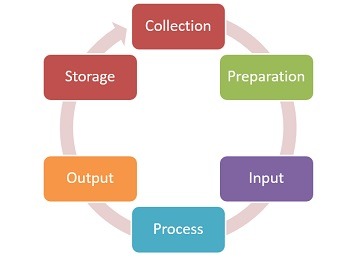
Concept of Data Processing
The concept of data processing refers to the manipulation, transformation, and organization of raw data into meaningful information. Data processing involves various operations and stages that help convert data into a format that is usable and valuable for decision-making, analysis, and reporting. This concept is fundamental in the fields of computer science, information technology, and data science. Here are the key aspects of data processing:
- Data Collection: Data processing begins with the collection of raw data. This data can come from various sources, such as sensors, surveys, databases, websites, or user interactions. Collecting accurate and relevant data is crucial to ensure the quality of the information produced.
- Data Entry: Once data is collected, it may need to be manually entered into a digital format, such as a database or spreadsheet, for further processing. Data entry involves accurately transcribing data from physical sources or other formats into a digital form.
- Data Cleaning: Raw data often contains errors, inconsistencies, or missing values. Data cleaning is the process of identifying and correcting these issues to ensure data accuracy and reliability. It may involve removing duplicates, filling in missing data, and resolving discrepancies.
- Data Transformation: Data is often transformed to prepare it for analysis or reporting. This can include converting data types (e.g., from text to numerical), scaling data, and normalizing data to make it suitable for specific algorithms or models.
- Data Integration: In many cases, data comes from multiple sources or systems. Data integration involves combining data from different sources into a unified dataset, allowing for a comprehensive analysis.
- Data Aggregation: Aggregation involves summarizing or grouping data to create meaningful insights. Aggregated data is often used for reporting and decision-making. Examples include calculating averages, totals, or percentages.
- Data Analysis: Data analysis is the process of examining data to extract valuable insights and patterns. It can involve various techniques, such as statistical analysis, machine learning, and data visualization, to discover trends, correlations, and outliers.
- Data Reporting: After analysis, the processed data is presented in a format that is easy to understand and interpret. Data reports and visualizations, such as charts and graphs, are created to communicate findings effectively.
- Data Storage: Processed data is typically stored in databases, data warehouses, or other storage systems for future reference and retrieval. Data storage ensures that historical data is accessible for ongoing analysis and reporting.
- Data Security: Data processing also involves safeguarding data against unauthorized access, data breaches, and other security risks. Security measures, such as encryption and access controls, are implemented to protect sensitive information.
- Real-time Data Processing: In some applications, such as financial transactions or industrial automation, data must be processed in real-time to make immediate decisions. Real-time data processing systems process and respond to data within milliseconds or seconds.
- Batch Processing: Batch processing is used for handling large volumes of data at scheduled intervals. It is common in data warehousing and ETL (Extract, Transform, Load) processes, where data is processed in batches rather than in real-time.
- Big Data Processing: With the advent of big data, specialized tools and technologies have been developed to process and analyze massive datasets efficiently. This includes distributed computing frameworks like Hadoop and Spark.
Overall, data processing is a critical step in the data lifecycle, enabling organizations and individuals to turn raw data into actionable insights, informed decisions, and valuable knowledge. It plays a central role in various fields, including business intelligence, scientific research, finance, healthcare, and more.
What is required Concept of Data Processing
The concept of data processing encompasses several key requirements and considerations to effectively manage, manipulate, and derive value from data. Here are the essential elements required for understanding the concept of data processing:
- Data Sources: Data processing begins with data sources. These can include various inputs such as sensors, databases, user interactions, social media feeds, and more. It is crucial to identify and access the relevant data sources for the intended analysis or application.
- Data Collection: Gathering data from the sources is the initial step. This involves establishing data collection mechanisms and protocols to ensure data is systematically and accurately captured.
- Data Quality: High-quality data is essential. Data should be accurate, complete, consistent, and free from errors or biases. Data quality checks and cleaning processes are necessary to maintain data integrity.
- Data Storage: Storing data efficiently and securely is a requirement. Depending on the volume and nature of data, organizations may use databases, data warehouses, or cloud storage solutions to ensure data is accessible and protected.
- Data Transformation: Data may need to be transformed to make it suitable for analysis or application. This can involve data normalization, conversion, and restructuring to ensure data consistency and compatibility.
- Data Integration: When dealing with multiple data sources, integrating data is essential. Data integration involves combining data from diverse sources into a unified and coherent dataset.
- Data Analysis: Data processing often includes data analysis, which can range from basic statistical calculations to complex machine learning algorithms. The choice of analysis method depends on the research question or problem being addressed.
- Data Visualization: To communicate insights effectively, data is often visualized using charts, graphs, dashboards, and other visual aids. Data visualization helps in presenting complex data in a comprehensible manner.
- Data Reporting: Reporting involves summarizing and presenting findings and insights from data analysis. Well-designed reports and summaries help stakeholders make informed decisions.
- Data Security: Protecting data from unauthorized access, breaches, and cyber threats is a critical requirement. Robust data security measures, including encryption and access controls, should be in place.
- Data Privacy: Compliance with data privacy regulations, such as GDPR (General Data Protection Regulation) and HIPAA (Health Insurance Portability and Accountability Act), is mandatory when dealing with sensitive personal or medical data.
- Real-time Processing: In applications requiring real-time decision-making, data processing must occur with minimal latency. Real-time processing systems ensure timely responses to data inputs.
- Scalability: As data volumes grow, systems must be scalable to handle increased processing demands. Scalability is crucial to accommodate expanding datasets and user requirements.
- Data Governance: Establishing data governance practices, including data ownership, metadata management, and data lifecycle management, helps maintain data consistency and compliance.
- Ethical Considerations: Ethical data processing involves respecting privacy, avoiding bias, and ensuring fairness when using data for decision-making, particularly in AI and machine learning applications.
- Regulatory Compliance: Compliance with relevant laws and regulations is essential, especially in industries like finance, healthcare, and e-commerce, where data processing is subject to specific legal requirements.
- Monitoring and Optimization: Continuous monitoring of data processing systems and processes is necessary to identify bottlenecks, errors, or performance issues. Optimization efforts can enhance efficiency and reliability.
- Documentation: Documenting data processing workflows, methodologies, and decisions is essential for transparency, auditability, and reproducibility of results.
In summary, the concept of data processing requires a systematic and structured approach to manage data effectively. It encompasses various stages, from data collection and transformation to analysis and reporting, while considering data quality, security, and ethical considerations. Adhering to best practices and regulatory requirements is crucial for successful data processing.
Who is required Concept of Data Processing
The concept of data processing is relevant and necessary for a wide range of individuals, organizations, and professionals who work with data or rely on data-driven decision-making. Here are some key stakeholders who require an understanding of the concept of data processing:
- Data Analysts: Data analysts are responsible for collecting, cleaning, analyzing, and visualizing data to extract insights and support decision-making. They require a deep understanding of data processing techniques and tools.
- Data Scientists: Data scientists work with complex datasets to develop predictive models and machine learning algorithms. They rely on data processing to prepare and transform data for analysis.
- IT Professionals: IT professionals, including database administrators and system administrators, are responsible for managing data storage systems, ensuring data security, and optimizing data processing infrastructure.
- Business Analysts: Business analysts use data processing to identify trends, patterns, and opportunities that can drive business strategies and decision-making.
- Data Engineers: Data engineers design and maintain data pipelines and ETL (Extract, Transform, Load) processes to ensure data flows smoothly and is processed efficiently.
- Researchers: Researchers in various fields, including academia and industry, use data processing to analyze research data and draw meaningful conclusions.
- Managers and Executives: Managers and executives across industries rely on data processing to make informed decisions, set goals, and monitor key performance indicators (KPIs).
- Data Privacy and Compliance Officers: Professionals responsible for data privacy and regulatory compliance ensure that data processing practices adhere to legal and ethical standards.
- Software Developers: Developers of data-driven applications, websites, and software solutions need to understand data processing concepts to integrate data effectively into their products.
- Healthcare Professionals: In healthcare, doctors, nurses, and medical researchers rely on data processing to analyze patient records, conduct clinical trials, and improve patient care.
- Financial Analysts: Financial analysts use data processing to analyze market data, assess investment opportunities, and manage financial portfolios.
- Educators and Students: Students pursuing careers in data science, computer science, and related fields, as well as educators teaching these subjects, require a foundational understanding of data processing.
- Government and Public Sector: Government agencies and public sector organizations use data processing to analyze demographic data, track public health trends, and inform policy decisions.
- Business Owners: Small and large business owners need to understand data processing to make data-driven decisions, optimize operations, and enhance customer experiences.
- Nonprofit Organizations: Nonprofits use data processing to analyze donor information, measure the impact of their programs, and make informed decisions about resource allocation.
- Consumers: In an era of data-driven products and services, consumers benefit from a basic understanding of data processing to protect their privacy and make informed choices.
In today’s data-driven world, nearly everyone interacts with data in some capacity, whether as a data producer, consumer, or decision-maker. As a result, an awareness of data processing concepts and best practices is increasingly valuable for individuals and professionals across various domains.
When is required Concept of Data Processing
The concept of data processing is required in a wide range of situations and contexts, depending on the need to manage, analyze, and make decisions based on data. Here are some common scenarios when an understanding of data processing is necessary:
- Business Decision-Making: In the business world, data processing is essential for making informed decisions. Business leaders and managers rely on data processing to analyze market trends, customer behavior, and financial performance to formulate strategies and set goals.
- Data Analysis and Research: Researchers and analysts require data processing skills to collect, clean, and analyze data for research purposes. Whether in academia, healthcare, social sciences, or industry, data processing supports evidence-based findings and conclusions.
- Information Technology (IT) and Data Management: IT professionals and data managers are responsible for designing and maintaining data processing systems. They ensure that data is stored, retrieved, and processed efficiently while adhering to security and privacy protocols.
- Data Science and Machine Learning: Data scientists and machine learning practitioners heavily rely on data processing to prepare datasets for training models, assess model performance, and derive actionable insights.
- Finance and Investment: Financial analysts and investors use data processing to analyze market data, track portfolio performance, and make investment decisions.
- Healthcare and Medicine: Healthcare professionals process patient data, medical records, and clinical trial results to diagnose, treat patients, and advance medical research.
- Education: Educators and students studying data-related fields, such as computer science, statistics, and data analysis, need a solid understanding of data processing concepts to conduct research and build analytical skills.
- Government and Public Policy: Government agencies and policymakers use data processing to inform public policy decisions, allocate resources, and track societal trends.
- Marketing and Customer Analytics: Marketing professionals use data processing to analyze customer data, target audiences, and measure the effectiveness of marketing campaigns.
- E-commerce and Online Services: Online businesses rely on data processing to personalize user experiences, track user behavior, and optimize product recommendations.
- Manufacturing and Supply Chain Management: Manufacturers use data processing to monitor production processes, manage inventory, and improve operational efficiency.
- Environmental Monitoring: Environmental scientists process data from sensors and satellites to track climate change, pollution levels, and natural disasters.
- Security and Fraud Detection: Security professionals use data processing to detect and respond to security threats, identify anomalies, and protect sensitive information.
- Entertainment and Media: Media companies use data processing to analyze audience preferences, develop content recommendations, and improve user engagement.
- Transportation and Logistics: The transportation industry relies on data processing to optimize routes, monitor vehicle performance, and enhance safety.
- Energy and Utilities: Energy providers use data processing to optimize energy distribution, monitor consumption patterns, and implement sustainable practices.
- Human Resources: HR professionals use data processing to manage employee records, track performance metrics, and make data-driven decisions in talent management.
In essence, the concept of data processing is required wherever data is generated, collected, or used for decision-making, analysis, or automation. It is a fundamental aspect of modern life, affecting various industries and professions across the board.
Where is required Concept Of Data Processing
The concept of data processing is required in a wide range of domains and industries, reflecting its ubiquitous importance in modern society. Here are some specific areas where the concept of data processing is particularly crucial:
- Business and Commerce:
- Market Research: Analyzing consumer data to identify market trends and preferences.
- Financial Analysis: Processing financial data for budgeting, forecasting, and investment decisions.
- Inventory Management: Tracking and managing product inventory levels and supply chains.
- Customer Relationship Management (CRM): Using customer data for personalized marketing and customer support.
- Healthcare and Medicine:
- Patient Records: Managing electronic health records (EHRs) and processing patient data for diagnosis and treatment.
- Clinical Research: Analyzing medical data to develop treatments, drugs, and medical devices.
- Telemedicine: Processing patient data for remote healthcare consultations.
- Education:
- Student Assessment: Grading, analyzing, and tracking student performance and academic data.
- Learning Analytics: Analyzing educational data to improve teaching methods and student outcomes.
- Information Technology (IT):
- Network Security: Detecting and responding to security threats by processing network data.
- System Monitoring: Monitoring system performance and logs for maintenance and troubleshooting.
- Government and Public Sector:
- Census and Demographics: Processing population data for government planning and resource allocation.
- Public Policy: Analyzing data to inform policy decisions and monitor public programs.
- Law Enforcement: Processing criminal data for investigations and crime prevention.
- Science and Research:
- Astronomy: Processing astronomical data from telescopes and satellites.
- Genomics: Analyzing genetic data for medical and biological research.
- Climate Science: Processing climate and environmental data for climate modeling and research.
- Transportation and Logistics:
- Traffic Management: Analyzing traffic data for optimizing routes and traffic flow.
- Package Tracking: Processing data to track the movement of packages in logistics and shipping.
- Energy and Utilities:
- Smart Grids: Monitoring and managing energy data in electrical grids for efficiency and sustainability.
- Environmental Monitoring: Processing data related to air quality, pollution, and resource usage.
- Entertainment and Media:
- Streaming Services: Processing user data for content recommendations and personalization.
- Game Development: Analyzing player behavior and game data for game design and improvements.
- Marketing and Advertising:
- Digital Marketing: Processing data from online campaigns to optimize advertising strategies.
- Social Media Analysis: Analyzing social media data to gauge public sentiment and trends.
- Manufacturing and Industry:
- Quality Control: Processing data from sensors and machines for quality assurance.
- Predictive Maintenance: Using data to predict equipment failures and reduce downtime.
- Financial Services:
- Risk Assessment: Analyzing financial data to assess credit risk and investment opportunities.
- Fraud Detection: Detecting fraudulent transactions through data analysis.
- Telecommunications:
- Network Management: Processing network data to ensure efficient data transmission and network health.
- Customer Billing: Generating customer invoices and processing billing data.
- Sports Analytics:
- Player Performance Analysis: Processing sports data for player statistics, game strategy, and scouting.
- Social Sciences:
- Surveys and Polls: Analyzing survey data to draw conclusions about social trends and public opinion.
- Retail and E-commerce:
- Inventory and Stock Management: Processing sales and inventory data for restocking and pricing decisions.
- Personalized Shopping: Analyzing customer data to offer personalized shopping recommendations.
- Human Resources:
- Recruitment and Talent Management: Analyzing applicant and employee data for hiring and development decisions.
- Payroll Processing: Calculating employee salaries and benefits.
In virtually every sector and industry, data processing is essential for decision-making, optimization, and innovation. The ability to collect, process, and analyze data effectively has become a competitive advantage and a driver of success in the modern world.
How is required Concept of Data Processing
The concept of data processing is essential for managing, analyzing, and deriving value from data effectively. Here’s how the concept of data processing is required and applied:
- Data Collection: Data processing begins with data collection. It involves the gathering of raw data from various sources, such as sensors, databases, surveys, or user interactions. Accurate and relevant data collection is the foundation of effective data processing.
- Data Entry: In some cases, data needs to be manually entered into digital formats. Data entry ensures that information is accurately transcribed from physical sources or other formats into digital databases or spreadsheets.
- Data Cleaning: Raw data often contains errors, inconsistencies, or missing values. Data cleaning is the process of identifying and correcting these issues to ensure data accuracy and reliability. It may involve removing duplicates, filling in missing data, and resolving discrepancies.
- Data Transformation: Data processing often requires the transformation of data to prepare it for analysis or application. This can include converting data types (e.g., from text to numerical), scaling data, and normalizing data to make it suitable for specific algorithms or models.
- Data Integration: When dealing with multiple data sources, data integration is crucial. It involves combining data from different sources into a unified dataset, allowing for a comprehensive analysis.
- Data Aggregation: Aggregation involves summarizing or grouping data to create meaningful insights. Aggregated data is often used for reporting and decision-making. Examples include calculating averages, totals, or percentages.
- Data Analysis: Data processing often includes data analysis, which can range from basic statistical calculations to complex machine learning algorithms. The choice of analysis method depends on the research question or problem being addressed.
- Data Visualization: To communicate insights effectively, data is often visualized using charts, graphs, dashboards, and other visual aids. Data visualization helps in presenting complex data in a comprehensible manner.
- Data Reporting: After analysis, the processed data is presented in a format that is easy to understand and interpret. Data reports and visualizations, such as charts and graphs, are created to communicate findings effectively.
- Data Storage: Processed data is typically stored in databases, data warehouses, or other storage systems for future reference and retrieval. Data storage ensures that historical data is accessible for ongoing analysis and reporting.
- Data Security: Protecting data from unauthorized access, data breaches, and other security risks is a critical requirement. Security measures, such as encryption and access controls, are implemented to protect sensitive information.
- Real-time Data Processing: In some applications, such as financial transactions or industrial automation, data must be processed in real-time to make immediate decisions. Real-time data processing systems process and respond to data within milliseconds or seconds.
- Batch Processing: Batch processing is used for handling large volumes of data at scheduled intervals. It is common in data warehousing and ETL (Extract, Transform, Load) processes, where data is processed in batches rather than in real-time.
- Big Data Processing: With the advent of big data, specialized tools and technologies have been developed to process and analyze massive datasets efficiently. This includes distributed computing frameworks like Hadoop and Spark.
- Continuous Monitoring and Optimization: Continuous monitoring of data processing systems and processes is necessary to identify bottlenecks, errors, or performance issues. Optimization efforts can enhance efficiency and reliability.
- Documentation: Documenting data processing workflows, methodologies, and decisions is essential for transparency, auditability, and reproducibility of results.
In summary, data processing is a multifaceted concept that encompasses a wide range of operations and techniques to manage data effectively. It is a critical step in the data lifecycle, enabling organizations and individuals to turn raw data into actionable insights, informed decisions, and valuable knowledge.
Case Study on Concept of Data Processing
Case Study: Optimizing Inventory Management with Data Processing
Background: XYZ Retailers is a leading chain of stores with outlets across the country. The company offers a wide range of products, including electronics, clothing, and groceries. XYZ Retailers had been experiencing challenges with inventory management, leading to stockouts of popular items and overstocking of others. To address these issues, the company decided to implement a data processing solution to optimize their inventory management.
Phase 1: Data Collection and Integration (Months 1-3)
- XYZ Retailers began by collecting data from various sources, including point-of-sale systems, supplier data feeds, and historical sales records.
- They integrated these data sources into a centralized data warehouse, ensuring that data was regularly updated.
Phase 2: Data Cleaning and Transformation (Months 4-6)
- The company recognized that the collected data was inconsistent, containing missing values and errors. Data cleaning processes were implemented to address these issues.
- Data transformation involved normalizing product descriptions, converting units of measurement, and aggregating data by store location and product category.
Phase 3: Data Analysis and Modeling (Months 7-9)
- Data analysts and data scientists at XYZ Retailers used the processed data to perform a thorough analysis of historical sales trends, customer preferences, and seasonal variations.
- Machine learning models were developed to forecast demand for each product at individual store locations.
Phase 4: Real-time Data Processing (Months 10-12)
- The company implemented a real-time data processing system that continuously monitored sales transactions and adjusted inventory levels in real-time.
- When inventory reached predefined thresholds, automated reorder requests were sent to suppliers.
Phase 5: Data Visualization and Reporting (Months 13-15)
- Data visualization dashboards were created to provide real-time insights into inventory levels, sales performance, and demand forecasts.
- Weekly and monthly reports were generated to guide decision-making and inventory restocking strategies.
Phase 6: Continuous Improvement (Ongoing)
- XYZ Retailers continually monitored the performance of the data processing system and made incremental improvements.
- Feedback from store managers and staff played a crucial role in fine-tuning inventory management practices.
Outcome:
The implementation of data processing for inventory management had several positive outcomes for XYZ Retailers:
- Reduced Stockouts: With accurate demand forecasting and real-time inventory adjustments, the company significantly reduced instances of stockouts, ensuring that popular items were consistently available to customers.
- Lowered Holding Costs: The data-driven approach allowed the company to optimize inventory levels, reducing holding costs associated with excess stock.
- Improved Customer Satisfaction: Customers experienced fewer disappointments due to out-of-stock items, leading to increased satisfaction and loyalty.
- Increased Sales and Profits: By having the right products in stock at the right time, XYZ Retailers saw an increase in sales and overall profitability.
- Data-Driven Decision-Making: The company embraced a data-driven culture, where decisions were based on real-time insights and historical data analysis.
- Scalability: The data processing solution was designed to scale with the company’s growth, accommodating an expanding number of stores and product lines.
Overall, the case study illustrates how the concept of data processing, from data collection and cleaning to analysis and real-time adjustments, can lead to significant improvements in inventory management, customer satisfaction, and business performance. It showcases the practical application of data processing techniques in solving real-world business challenges.
White Paper on Concept of Data Processing
White Paper on the Concept of Data Processing
Executive Summary
This white paper explores the fundamental concept of data processing, its significance in the digital age, and its pervasive impact across various sectors. Data processing refers to the systematic transformation of raw data into meaningful information through a series of operations. In an era characterized by data abundance and technological advancements, understanding data processing is crucial for individuals, organizations, and societies seeking to harness the power of data for decision-making, innovation, and progress.
Table of Contents
- Introduction
- The Data Revolution
- The Role of Data Processing
- Understanding Data Processing
- Definition and Core Operations
- Historical Evolution of Data Processing
- Data Processing Techniques
- Data Collection and Acquisition
- Data Cleaning and Quality Assurance
- Data Transformation and Integration
- Data Analysis and Insights
- Data Visualization and Reporting
- Applications of Data Processing
- Business and Commerce
- Healthcare and Medicine
- Science and Research
- Government and Public Policy
- Education and Academia
- Technology and Innovation
- Challenges and Considerations
- Data Privacy and Security
- Ethical Implications
- Data Bias and Fairness
- Legal and Regulatory Compliance
- The Future of Data Processing
- Big Data and Scalability
- Artificial Intelligence and Machine Learning
- Edge Computing and Real-time Processing
- Human-Machine Collaboration
- Conclusion
- The Imperative of Data Processing
- Empowering Decision-Makers and Innovators
1. Introduction
The Data Revolution
The world is currently undergoing a data revolution, driven by the exponential growth in data generation and storage capacity. Every digital interaction, from online purchases to social media posts, contributes to the vast reservoir of data available today. This proliferation of data presents both opportunities and challenges, and data processing lies at the heart of harnessing its potential.
The Role of Data Processing
Data processing is the linchpin that transforms raw data into valuable insights, actionable information, and knowledge. It involves a sequence of operations that range from data collection and cleaning to analysis and visualization. This white paper delves into the concept of data processing, exploring its essential components, techniques, applications, and the implications of its use.
2. Understanding Data Processing
Definition and Core Operations
At its core, data processing encompasses the organized and systematic manipulation of data to extract meaningful information. It comprises a series of operations, including data collection, cleaning, transformation, analysis, and reporting. These operations are carried out using a variety of tools, technologies, and methodologies.
Historical Evolution of Data Processing
The history of data processing traces back to early mechanical devices and punch cards. Over the years, it has evolved from manual and batch processing methods to today’s sophisticated real-time and distributed data processing technologies. Understanding this evolution provides valuable insights into the modern data processing landscape.
3. Data Processing Techniques
Data Collection and Acquisition
Data collection involves the gathering of raw data from diverse sources, such as sensors, databases, surveys, and web scraping. It encompasses strategies for ensuring data accuracy, completeness, and timeliness.
Data Cleaning and Quality Assurance
Data is often riddled with errors, inconsistencies, and missing values. Data cleaning processes aim to rectify these issues, ensuring data quality and reliability. Quality assurance techniques are crucial to validate and maintain data integrity.
Data Transformation and Integration
Data transformation techniques prepare data for analysis by converting formats, aggregating information, and handling outliers. Data integration combines data from multiple sources to create a unified dataset, enabling comprehensive analysis.
Data Analysis and Insights
Data analysis employs statistical, mathematical, and computational techniques to uncover patterns, trends, and insights within the data. It supports decision-making and informs strategies across various domains.
Data Visualization and Reporting
Effective communication of insights is achieved through data visualization and reporting. Visualizations, such as charts and graphs, facilitate the interpretation of complex data, making it accessible to a wider audience.
4. Applications of Data Processing
Data processing finds applications in virtually every sector:
- Business and Commerce: From market analysis to supply chain optimization, businesses rely on data processing to gain a competitive edge.
- Healthcare and Medicine: Data processing supports diagnosis, treatment, and medical research through the analysis of patient data and clinical studies.
- Science and Research: Researchers leverage data processing to analyze scientific data, from genomics to climate science.
- Government and Public Policy: Governments use data processing for census, demographic analysis, and informed policymaking.
- Education and Academia: Data processing aids in tracking student performance, educational research, and academic administration.
- Technology and Innovation: Innovations like artificial intelligence and machine learning thrive on data processing techniques.
5. Challenges and Considerations
While data processing offers immense benefits, it also raises significant challenges and ethical considerations:
- Data Privacy and Security: Protecting sensitive data from breaches and unauthorized access is paramount.
- Ethical Implications: The use of data must be ethical, respecting individuals’ rights and minimizing harm.
- Data Bias and Fairness: Bias in data and algorithms can perpetuate discrimination, requiring vigilance to ensure fairness.
- Legal and Regulatory Compliance: Compliance with data protection laws and regulations is essential to avoid legal repercussions.
6. The Future of Data Processing
The future of data processing is marked by several key trends:
- Big Data and Scalability: Data processing systems must scale to handle the ever-increasing volume of data.
- Artificial Intelligence and Machine Learning: Advanced algorithms are automating data analysis, enabling predictive and prescriptive insights.
- Edge Computing and Real-time Processing: Real-time data processing at the edge is becoming critical in applications like IoT and autonomous systems.
- Human-Machine Collaboration: Combining human expertise with machine capabilities leads to more sophisticated data processing.
7. Conclusion
In conclusion, the concept of data processing is integral to our data-driven world. It empowers decision-makers, researchers, and innovators to transform raw data into knowledge and insights. As data continues to shape our future, understanding and harnessing the power of data processing is not only essential but transformative, propelling us toward a more informed and innovative society.
This white paper provides a comprehensive overview of the concept of data processing, highlighting its importance, techniques, applications, challenges, and future trends. It underscores the pivotal role of data processing in unlocking the potential of data for the betterment of individuals and society as a whole.