
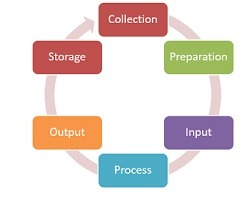
Concept of Data Processing
Data processing is the transformation of raw data into meaningful information through various operations and techniques. It plays a crucial role in extracting useful insights, making informed decisions, and automating tasks in a wide range of fields, including business, science, healthcare, and technology. Here are the key concepts associated with data processing:
- Data Collection: The process begins with the collection of raw data from various sources such as sensors, databases, surveys, social media, or any other data-generating systems. This data can be structured (e.g., databases and spreadsheets) or unstructured (e.g., text documents and images).
- Data Cleaning: Raw data is often messy and may contain errors, missing values, or inconsistencies. Data cleaning involves identifying and rectifying these issues to ensure the data’s accuracy and reliability.
- Data Transformation: This step involves converting raw data into a suitable format for analysis. It includes tasks like data normalization, aggregation, and encoding categorical variables into numerical values.
- Data Integration: In many cases, data is collected from multiple sources and needs to be integrated into a single, unified dataset. This process ensures that data from different sources can be analyzed together effectively.
- Data Storage: Processed data is typically stored in databases, data warehouses, or other storage systems. Data should be organized and indexed for efficient retrieval.
- Data Analysis: Data analysis involves applying statistical, mathematical, or machine learning techniques to extract insights, patterns, and trends from the processed data. This step can include descriptive, diagnostic, predictive, or prescriptive analytics, depending on the goals.
- Data Visualization: Data visualization techniques are used to represent the analyzed data visually. Charts, graphs, dashboards, and other visualization tools help communicate findings and insights to stakeholders effectively.
- Data Reporting: The results of data analysis are often documented in reports or presentations, which can include key findings, recommendations, and actionable insights.
- Data Mining: Data mining is the process of discovering patterns, associations, or anomalies in large datasets that may not be apparent through traditional analysis. It often involves the use of machine learning algorithms.
- Data Security: Ensuring the security and privacy of data is critical throughout the data processing pipeline. This involves measures like encryption, access controls, and compliance with data protection regulations (e.g., GDPR).
- Real-time Data Processing: In some cases, data must be processed and analyzed in real-time as it is generated. This is common in applications like IoT (Internet of Things) and financial trading systems.
- Batch Processing: Alternatively, data can be processed in batches, where a group of data is collected and processed at regular intervals. Batch processing is suitable for applications that don’t require immediate analysis.
- Scalability: As data volumes grow, data processing systems must be able to scale to handle the increased workload. Scalability is achieved through various means, such as distributed computing and cloud resources.
- Data Governance: Data governance encompasses policies, procedures, and best practices for managing data throughout its lifecycle. It includes data quality management, data lineage, and metadata management.
- Data Lifecycle: Data has a lifecycle that includes creation, storage, processing, archiving, and, in some cases, deletion. Managing data throughout this lifecycle is essential for compliance and efficiency.
Data processing is a fundamental aspect of modern business and scientific endeavors, enabling organizations to gain valuable insights, make informed decisions, and drive innovation. It continues to evolve with advancements in technology, including big data processing, artificial intelligence, and machine learning.
What is required Concept of Data Processing
The concept of data processing requires several key elements and considerations to ensure that data is effectively transformed into meaningful information. Here are the essential requirements for successful data processing:
- Data: Data processing starts with the availability of raw data. This data can come from various sources, such as sensors, databases, surveys, or digital interactions. The quality, accuracy, and relevance of the data are crucial considerations.
- Data Collection: Data must be collected systematically and consistently from the relevant sources. This may involve data capture tools, sensors, databases, web scraping, or other means depending on the nature of the data.
- Data Cleaning and Preprocessing: Raw data often contains errors, missing values, inconsistencies, or outliers. Data cleaning and preprocessing involve identifying and addressing these issues to ensure data quality.
- Data Transformation: Data may need to be transformed into a suitable format for analysis. This can include tasks like normalization (scaling data to a common range), encoding categorical variables, and feature engineering (creating new features from existing data).
- Data Integration: In many cases, data comes from multiple sources and needs to be integrated into a single dataset for analysis. This integration process should handle data from different sources efficiently and maintain data consistency.
- Data Storage: Processed data should be stored in a secure and organized manner. Databases, data warehouses, or cloud storage solutions are commonly used for this purpose.
- Data Analysis: Data analysis involves applying appropriate statistical, mathematical, or machine learning techniques to extract insights, patterns, and knowledge from the processed data.
- Data Visualization: Visual representations of data, such as charts, graphs, and dashboards, help communicate insights effectively to stakeholders.
- Data Reporting: Results of data analysis should be documented in reports or presentations, highlighting key findings, recommendations, and actionable insights.
- Data Security: Data security measures, including encryption, access controls, and compliance with data protection regulations, must be in place to protect sensitive information.
- Real-time or Batch Processing: Depending on the application, data processing systems may need to operate in real-time or batch mode. Real-time processing handles data as it’s generated, while batch processing works on predefined chunks of data.
- Scalability: Data processing systems should be able to scale to handle increasing data volumes and workloads. This often involves distributed computing and cloud resources.
- Data Governance: Establishing data governance practices ensures that data is managed throughout its lifecycle, including aspects like data quality management, metadata management, and compliance.
- Data Lifecycle Management: Data has a lifecycle that includes creation, storage, processing, archiving, and, in some cases, deletion. Managing data throughout this lifecycle is essential for regulatory compliance and resource efficiency.
- Resource Allocation: Adequate hardware and software resources must be allocated to support data processing tasks efficiently. This includes computing power, storage capacity, and network bandwidth.
- Quality Control: Continuous monitoring and quality control mechanisms should be in place to identify and address data quality issues as they arise.
- Data Privacy and Ethics: Considerations for data privacy and ethical use of data are essential. Compliance with data privacy laws and ethical guidelines is crucial to protect individuals’ rights and maintain trust.
- Documentation: Documenting data processing steps, methodologies, and decisions is essential for reproducibility, auditability, and knowledge sharing.
Effective data processing is a multifaceted process that requires careful planning, the right tools and technologies, and a clear understanding of the data’s context and purpose. It should align with the organization’s goals and objectives, delivering actionable insights and value from the data collected.
Who is required Concept of Data Processing
The concept of data processing is essential for a wide range of individuals, professionals, and organizations across various industries and sectors. Here are some of the key stakeholders who require an understanding of data processing:
- Data Scientists and Analysts: Data scientists and analysts are responsible for extracting valuable insights from data. They need to understand data processing techniques, including data cleaning, transformation, and analysis, to derive meaningful information from raw data.
- Database Administrators: Database administrators manage and maintain databases where data is stored. They need to ensure data integrity, security, and efficient data retrieval, all of which are crucial aspects of data processing.
- IT Professionals: IT professionals, including software engineers and system administrators, play a vital role in implementing and maintaining data processing systems. They are responsible for setting up the infrastructure, ensuring data flows smoothly, and troubleshooting any technical issues.
- Business Managers and Executives: Business leaders need a basic understanding of data processing concepts to make informed decisions. They rely on data-driven insights to strategize, optimize operations, and plan for the future.
- Data Engineers: Data engineers are responsible for designing and building data pipelines that collect, process, and store data. They need to be well-versed in data processing techniques to create efficient and scalable data processing workflows.
- Compliance and Legal Experts: Professionals in compliance and legal roles are responsible for ensuring that data processing activities comply with relevant regulations, such as GDPR, HIPAA, or industry-specific standards.
- Data Privacy Officers: Data privacy officers focus on protecting individuals’ privacy rights and ensuring that personal data is processed in a lawful and ethical manner. They play a critical role in data processing, especially in industries handling sensitive information.
- Researchers and Academics: Researchers across various fields use data processing techniques to analyze research data, conduct experiments, and draw conclusions. Understanding data processing is crucial for producing valid research results.
- Data Owners and Custodians: Organizations often have individuals or teams responsible for data ownership and custodianship. They oversee data throughout its lifecycle, from collection to archiving or deletion, and ensure it’s processed appropriately.
- Data Consumers: Anyone who relies on data for decision-making, whether in a personal or professional capacity, benefits from understanding data processing concepts. This includes students, consumers, and professionals in various roles.
- Data Entry and Collection Personnel: Individuals responsible for data entry and collection need to understand data processing basics to ensure they collect accurate and consistent data.
- Data Service Providers: Companies that offer data-related services, such as cloud storage, data analytics, or data consulting, require expertise in data processing to deliver value to their clients.
- Healthcare Professionals: In the healthcare industry, doctors, nurses, and healthcare administrators rely on data processing for patient records, diagnostics, and treatment planning.
- Financial Analysts: Financial professionals use data processing for tasks like risk assessment, investment analysis, and fraud detection.
- Manufacturers and Engineers: Engineers and manufacturers use data processing to monitor and optimize production processes, quality control, and equipment maintenance.
- Government Agencies: Government agencies collect, process, and analyze data for policy-making, law enforcement, public services, and various administrative tasks.
- Marketing and Sales Professionals: Marketing and sales teams use data processing to segment customers, analyze market trends, and tailor marketing strategies.
- Environmental Scientists: Environmental scientists process data from various sources, including sensors and satellites, to monitor and understand environmental changes.
In today’s data-driven world, virtually every industry and profession can benefit from an understanding of data processing concepts. Proficiency in data processing is not limited to a specific group but is increasingly becoming a fundamental skill that empowers individuals and organizations to make informed decisions and solve complex problems.
When is required Concept of Data Processing
The concept of data processing is required in a wide range of situations and scenarios across various fields and industries. Here are some common situations when a solid understanding of data processing is essential:
- Business Decision-Making: In the business world, data processing is crucial for making informed decisions. Companies analyze customer data, sales figures, market trends, and financial metrics to determine strategies, optimize operations, and drive growth.
- Healthcare: In healthcare, data processing is used for patient record management, medical research, disease diagnosis, and treatment planning. Electronic health records (EHRs) rely on effective data processing.
- Finance and Investment: Financial analysts and investment professionals use data processing to assess market trends, manage portfolios, evaluate risk, and make investment decisions.
- Manufacturing and Quality Control: Manufacturers use data processing to monitor and optimize production processes, maintain quality control, and ensure the efficient operation of machinery and equipment.
- Marketing and Advertising: Marketers analyze consumer behavior data, demographics, and campaign performance to target their audiences effectively and maximize the return on advertising investments.
- E-commerce and Retail: Online retailers process vast amounts of data related to customer preferences, shopping habits, and inventory management to enhance the customer experience and optimize supply chains.
- Education: Educational institutions use data processing to track student progress, manage course enrollment, and improve teaching methods through data-driven insights.
- Government and Public Policy: Government agencies use data processing for census data analysis, crime statistics, economic forecasting, and policy development.
- Environmental Science: Environmental scientists process data from sensors, satellites, and other sources to monitor climate change, pollution levels, and wildlife habitats.
- Transportation and Logistics: Data processing helps optimize routes, track shipments, and improve transportation efficiency in industries like logistics and shipping.
- Energy and Utilities: Utility companies use data processing to monitor and manage power grids, water distribution, and energy consumption patterns.
- Human Resources: HR departments process employee data for payroll, performance evaluations, and workforce planning.
- Scientific Research: Researchers in various scientific disciplines use data processing for experiments, simulations, data collection, and analysis.
- Social Media and Online Platforms: Social media companies and online platforms process user data to personalize content, target advertisements, and improve user experiences.
- Security and Fraud Detection: Security systems and financial institutions employ data processing techniques to detect anomalies, identify potential security threats, and prevent fraud.
- Agriculture: Farmers and agricultural scientists use data processing to optimize crop yields, monitor soil conditions, and manage irrigation systems.
- Entertainment and Media: The entertainment industry uses data processing for content recommendation, audience analysis, and production planning.
- Emergency Services: Police, fire departments, and emergency responders use data processing to coordinate responses, allocate resources, and analyze incident data.
In essence, the concept of data processing is required whenever there is a need to collect, clean, transform, analyze, and derive insights from data. It is a fundamental aspect of modern life, influencing decision-making, innovation, and problem-solving in countless domains.
Where is required Concept of Data Processing
The concept of data processing is required in a wide array of places and industries where data is generated and used. Here are some key areas where data processing is essential:
- Businesses: Virtually all businesses, regardless of their size or industry, rely on data processing for tasks such as customer relationship management, sales forecasting, inventory management, and financial analysis.
- Healthcare: Hospitals, clinics, and healthcare organizations use data processing for electronic health records (EHRs), medical imaging, patient billing, and clinical research.
- Finance and Banking: Banks and financial institutions depend on data processing for transaction processing, risk assessment, fraud detection, and algorithmic trading.
- E-commerce: Online retailers utilize data processing to personalize recommendations, analyze customer behavior, optimize pricing, and manage supply chains.
- Manufacturing: Manufacturers employ data processing for quality control, production scheduling, predictive maintenance, and supply chain management.
- Transportation and Logistics: Transportation companies process data for route optimization, real-time tracking, demand forecasting, and fleet management.
- Agriculture: Farmers and agribusinesses use data processing for precision agriculture, crop monitoring, soil analysis, and yield optimization.
- Government: Government agencies use data processing for a wide range of applications, including census data analysis, public safety, tax collection, and urban planning.
- Education: Educational institutions process data for student enrollment, academic performance analysis, and course planning.
- Energy and Utilities: Utility companies rely on data processing for smart grid management, energy consumption analysis, and maintenance scheduling.
- Environmental Monitoring: Environmental organizations and researchers process data from sensors and satellites for climate modeling, pollution monitoring, and wildlife conservation.
- Social Media and Tech Companies: Social media platforms and tech giants use data processing for user analytics, content recommendation, and targeted advertising.
- Entertainment: The entertainment industry processes data for content distribution, audience engagement analysis, and personalized content recommendations.
- Security and Law Enforcement: Security systems and law enforcement agencies process data for surveillance, threat detection, and criminal investigations.
- Telecommunications: Telecom companies rely on data processing for call routing, network management, and customer billing.
- Research and Academia: Researchers across various fields use data processing for experiments, simulations, data analysis, and academic research.
- Human Resources: HR departments process employee data for payroll, benefits administration, talent management, and workforce planning.
- Emergency Services: Police, fire departments, and emergency responders use data processing for incident response coordination, resource allocation, and historical incident analysis.
- Marketing and Advertising: Marketing agencies use data processing for customer segmentation, campaign performance analysis, and advertising budget optimization.
- Nonprofits and NGOs: Nonprofit organizations utilize data processing for fundraising, donor management, program evaluation, and impact assessment.
In essence, data processing is required wherever there is data to be collected, cleaned, transformed, analyzed, and used to make decisions, improve processes, or gain insights. It is a fundamental component of modern life and plays a critical role in numerous industries and applications.
How is required Concept of Data Processing
The concept of data processing is required in various ways to meet different needs and objectives in a wide range of applications and industries. Here’s how the concept of data processing is required:
- Information Extraction: Data processing is required to extract valuable information and insights from raw data. This information can be used for decision-making, problem-solving, and improving processes.
- Data Quality Assurance: Data processing is essential for ensuring the quality and accuracy of data. This involves cleaning, validating, and transforming data to remove errors and inconsistencies.
- Automation: In many industries, data processing is used to automate repetitive tasks and processes. This not only increases efficiency but also reduces the risk of human error.
- Pattern Recognition: Data processing techniques, such as machine learning, are required for recognizing patterns, trends, and anomalies in data. This is valuable for predictive maintenance, fraud detection, and market analysis.
- Real-time Decision-Making: Some applications, like financial trading or autonomous vehicles, require real-time data processing to make split-second decisions based on incoming data streams.
- Optimization: Businesses and industries use data processing to optimize various aspects of their operations, such as supply chain management, resource allocation, and production processes.
- Personalization: Data processing is used to create personalized experiences for users, whether in e-commerce (product recommendations), content streaming (movie suggestions), or social media (news feed customization).
- Research and Analysis: In academia and scientific research, data processing is required for conducting experiments, simulations, and data analysis. It helps researchers draw conclusions and make discoveries.
- Healthcare Diagnosis: Data processing plays a critical role in medical diagnostics, where patient data, imaging, and test results are processed to aid in diagnosis and treatment planning.
- Environmental Monitoring: Environmental scientists and organizations use data processing to analyze environmental data, including temperature, pollution levels, and climate patterns.
- Predictive Maintenance: Industries like manufacturing and aviation use data processing to predict when equipment or machinery is likely to fail so that maintenance can be scheduled proactively.
- Risk Assessment: In finance and insurance, data processing is required for assessing risk, pricing policies, and underwriting decisions.
- Customer Insights: Businesses use data processing to gain insights into customer behavior, preferences, and demographics to tailor marketing strategies and product offerings.
- Supply Chain Management: Data processing helps optimize inventory management, demand forecasting, and distribution logistics in supply chain operations.
- Fraud Detection: Financial institutions and online platforms use data processing to detect fraudulent activities and protect against unauthorized access.
- Energy Efficiency: Utilities and smart grid systems rely on data processing to monitor energy consumption and optimize power distribution.
- Traffic Management: In transportation, data processing is used to manage traffic flow, optimize routes, and improve road safety.
- Emergency Response: Data processing aids in emergency response by providing real-time information on incidents, resource allocation, and evacuation plans.
- Policy Development: Governments use data processing to analyze data on demographics, economics, and social trends to inform policy development.
- Quality Control: Data processing is used in quality control processes to ensure that products and services meet specified standards.
The requirements for data processing vary depending on the specific goals and applications in each of these areas. Still, the underlying concept of transforming raw data into actionable information is fundamental to all of them.
Case Study on Concept of Data Processing
Certainly! Let’s consider a case study in the context of a retail business to illustrate the concept of data processing:
Case Study: Optimizing Inventory Management with Data Processing
Background: ABC Retail, a mid-sized retail chain with multiple stores, faced challenges in managing its inventory efficiently. They often experienced stock outs of popular products, leading to lost sales opportunities, while also carrying excessive stock of slow-moving items, tying up capital unnecessarily. To address these issues, they decided to implement data processing techniques.
Objectives:
- Optimize inventory levels to minimize stock outs and overstock situations.
- Improve demand forecasting accuracy.
- Enhance supply chain efficiency.
Data Collection: ABC Retail collected data from various sources, including sales transactions, supplier information, historical sales data, and external factors like holidays and economic indicators. They also implemented RFID technology for real-time tracking of inventory levels in stores.
Data Processing Steps:
- Data Cleaning and Integration: Raw data was cleaned to remove errors, missing values, and inconsistencies. Data from different sources, such as the point of sale systems and supplier databases, were integrated into a unified dataset.
- Data Transformation: ABC Retail transformed data by normalizing sales figures to account for seasonality and trends. They also encoded categorical variables like product categories and store locations into numerical values for analysis.
- Demand Forecasting: Utilizing historical sales data, ABC Retail employed time series forecasting techniques to predict future demand for each product in each store. This involved statistical models and machine learning algorithms to account for factors like promotions and external events.
- Inventory Replenishment: Based on the demand forecasts and current inventory levels (monitored through RFID tracking), ABC Retail automated the replenishment process. When inventory levels fell below a certain threshold, reorders were triggered automatically with suppliers.
- Data Visualization and Reporting: Data was visualized through dashboards that displayed real-time inventory levels, sales trends, and supplier performance. Reports were generated for stakeholders, including store managers and the procurement team.
Results:
- Reduced Stock outs: With improved demand forecasting and automated replenishment, ABC Retail significantly reduced stock outs of popular products, resulting in increased sales revenue.
- Lower Inventory Holding Costs: The retailer was able to reduce excess inventory levels, leading to lower holding costs and improved cash flow.
- Improved Supplier Relationships: By sharing sales data and forecasts with suppliers, ABC Retail enhanced its supplier relationships and negotiated more favorable terms.
- Enhanced Customer Satisfaction: Fewer stock outs meant improved customer satisfaction and loyalty, as customers could consistently find the products they wanted.
- Operational Efficiency: Automation of inventory management reduced the workload on store staff and improved overall operational efficiency.
Conclusion: This case study illustrates how data processing techniques can be applied to optimize inventory management in a retail setting. By collecting, cleaning, and analyzing data, ABC Retail was able to make data-driven decisions, reduce stock outs, lower costs, and enhance customer satisfaction.
Data processing, when used effectively, can transform raw data into actionable insights, driving improvements and efficiencies across various aspects of a business.
White Paper on Concept of Data Processing
Creating a comprehensive white paper on the concept of data processing requires a detailed examination of the subject, its importance, applications, and best practices. Below is an outline for a white paper on the concept of data processing:
White Paper on the Concept of Data Processing
Abstract
The concept of data processing is at the heart of modern business, technology, and science. This white paper explores the fundamental principles, processes, and applications of data processing, highlighting its critical role in decision-making, innovation, and problem-solving.
Table of Contents
- Introduction
- Definition of Data Processing
- Importance of Data Processing
- Purpose and Scope of the White Paper
- Foundations of Data Processing
- Historical Evolution of Data Processing
- Key Concepts and Terminology
- Data Types: Structured vs. Unstructured
- Data Processing Stages
- Data Collection
- Data Cleaning and Preprocessing
- Data Transformation
- Data Integration
- Data Storage
- Data Analysis
- Data Visualization
- Data Reporting
- Data Processing Techniques and Technologies
- Batch Processing vs. Real-time Processing
- Data Warehousing
- Big Data Processing
- Machine Learning and Artificial Intelligence
- Cloud Computing
- Edge Computing
- Applications of Data Processing
- Business and Marketing
- Healthcare
- Finance and Banking
- Manufacturing and Industry
- Environmental Monitoring
- Social Media and Entertainment
- Government and Public Policy
- Data Processing Best Practices
- Data Quality Assurance
- Data Security and Privacy
- Scalability and Resource Management
- Data Governance
- Ethics in Data Processing
- Challenges and Considerations
- Data Volume, Velocity, and Variety
- Data Privacy Regulations (e.g., GDPR)
- Ethical Concerns
- Technological Challenges
- Scalability Issues
- Case Studies
- Real-world examples of successful data processing implementations
- Future Trends in Data Processing
- Artificial Intelligence and Machine Learning
- Edge Computing
- Blockchain in Data Processing
- Quantum Computing
- Conclusion
- Recap of Key Concepts
- The Ongoing Evolution of Data Processing
- The Importance of Data Processing in a Data-Driven World
- References
This white paper provides an in-depth exploration of the concept of data processing, offering insights into its historical development, practical applications, best practices, challenges, and future trends. It serves as a valuable resource for individuals and organizations seeking to harness the power of data processing in their operations, decision-making, and innovation efforts.