
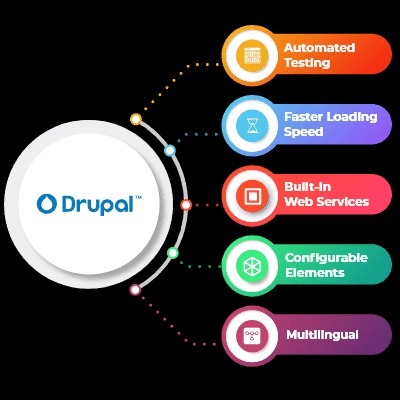
A Drupal developer is a professional with expertise in designing, developing, and maintaining websites or web applications using the Drupal content management system (CMS). Drupal is a robust and highly customizable open-source CMS that enables developers to create diverse and scalable digital solutions. Here are key aspects of the role and responsibilities of a Drupal developer:
Role and Responsibilities:
- Website Development:
- Design, develop, and maintain websites or web applications using Drupal, adhering to best practices in coding and Drupal development standards.
- Custom Module Development:
- Create custom Drupal modules to extend the functionality of the CMS and meet specific project requirements.
- Theme Development:
- Develop custom themes or modify existing ones to achieve the desired look and feel of the website. This involves working with HTML, CSS, JavaScript, and PHP.
- Integration of Third-Party Modules:
- Integrate and configure third-party Drupal modules to enhance the functionality of the website, such as e-commerce, social media integration, and SEO tools.
- Content Management:
- Set up and configure Drupal’s content management features, enabling clients or content editors to easily manage and update website content.
- Database Management:
- Work with Drupal’s database architecture to ensure efficient storage and retrieval of data. This may involve MySQL database management.
- Security and Performance Optimization:
- Implement security best practices to protect the website from vulnerabilities. Optimize website performance through caching, code optimization, and other techniques.
- Version Control:
- Use version control systems like Git to manage and track changes in the codebase collaboratively.
- Responsive Design:
- Ensure that Drupal websites are responsive and provide a seamless user experience across various devices and screen sizes.
- Collaboration and Communication:
- Collaborate with cross-functional teams, including designers, project managers, and other developers. Communicate effectively to understand project requirements and provide updates on progress.
- Troubleshooting and Debugging:
- Identify and resolve issues and bugs in the Drupal website. Conduct thorough testing to ensure the functionality and performance of the site.
- Stay Updated on Drupal Updates and Trends:
- Keep abreast of the latest Drupal updates, security patches, and industry trends. Apply updates to maintain the security and compatibility of Drupal websites.
A Drupal developer is required to possess a combination of technical skills, experience, and knowledge to effectively develop, customize, and maintain websites or web applications using the Drupal content management system (CMS). Here are the key requirements for a Drupal developer:
- Technical Skills:
- PHP: Proficiency in PHP, as Drupal is built on PHP. Knowledge of PHP frameworks is beneficial.
- HTML/CSS: Strong skills in HTML and CSS for theming and front-end development.
- JavaScript: Understanding of JavaScript for implementing interactive features and behaviors on the client side.
- MySQL/Database Management: Knowledge of database management systems, especially MySQL, for efficient data storage and retrieval.
- Drupal-Specific Skills:
- Drupal Theming: Ability to create and customize Drupal themes to achieve specific design requirements.
- Module Development: Experience in creating custom Drupal modules to extend the functionality of the CMS.
- Site Building: Proficiency in configuring and building websites using Drupal’s site-building tools.
- Views and Panels: Familiarity with Drupal Views and Panels for creating dynamic and flexible content displays.
- Version Control:
- Experience with version control systems, especially Git, for collaborative development and code management.
- Responsive Design:
- Understanding of responsive design principles to ensure websites are accessible and optimized across various devices and screen sizes.
- Security Best Practices:
- Knowledge of Drupal security best practices to implement measures that protect websites from vulnerabilities.
- Performance Optimization:
- Skills in optimizing website performance through caching, code optimization, and other techniques.
- Troubleshooting and Debugging:
- Ability to identify and resolve issues, bugs, and errors in Drupal websites through effective troubleshooting and debugging.
- API Integration:
- Experience with integrating third-party APIs to enhance website functionality.
- Testing:
- Thorough testing skills to ensure the functionality, compatibility, and performance of Drupal websites.
- Communication and Collaboration:
- Strong communication skills to collaborate with cross-functional teams, clients, and other stakeholders. The ability to understand project requirements and provide updates on progress is crucial.
- Project Management:
- Familiarity with project management methodologies and tools to contribute effectively to project planning, execution, and delivery.
- Continuous Learning:
- A commitment to staying updated on the latest Drupal updates, security patches, and industry trends. Drupal developers should be open to continuous learning and adapting to new technologies.
Having a strong portfolio showcasing past Drupal projects, contributions to the Drupal community, and relevant certifications (such as Acquia certifications) can further strengthen a Drupal developer’s profile. Practical experience with other web technologies and frameworks may also be beneficial.
Various entities and organizations require Drupal developers to fulfill their web development needs. Here are some examples of who might require the services of a Drupal developer:
- Web Development Agencies:
- Companies specializing in web development often require Drupal developers to work on client projects. These agencies may handle a diverse range of projects, from small business websites to large-scale enterprise solutions.
- E-commerce Companies:
- Businesses operating e-commerce platforms may hire Drupal developers to create and maintain their online shopping websites. Drupal’s flexibility allows for the customization of e-commerce functionalities.
- Government Organizations:
- Government agencies that prioritize security and scalability may hire Drupal developers to build and maintain their websites. Drupal’s robust features make it suitable for government projects.
- Healthcare Institutions:
- Healthcare organizations seeking secure and compliant web solutions may hire Drupal developers for projects such as patient portals, informational websites, and internal applications.
- Educational Institutions:
- Colleges, universities, and other educational institutions may hire Drupal developers to create and maintain their websites, student portals, and e-learning platforms.
- Technology Companies:
- Technology-focused companies may use Drupal for their corporate websites, intranets, and internal communication platforms. Drupal developers contribute to the development and maintenance of these systems.
- Nonprofit Organizations:
- Nonprofits and NGOs may choose Drupal for their websites due to its open-source nature and community support. Drupal developers are required to build and maintain websites that support the mission and goals of nonprofit organizations.
- Media and Publishing Houses:
- Media companies, news organizations, and publishers may hire Drupal developers to create and manage their online platforms. Drupal’s content management capabilities are well-suited for media-rich websites.
- Digital Marketing Agencies:
- Agencies focused on digital marketing may require Drupal developers to create websites that align with clients’ marketing strategies. Drupal developers contribute to implementing SEO best practices and other digital marketing features.
- Startups:
- Startups with limited resources may choose Drupal for its flexibility and cost-effectiveness. Drupal developers in startups may work on building the initial website or web application and contribute to its ongoing development.
- Freelance Opportunities:
- Drupal developers may work as freelancers, offering their services to clients on a project-by-project basis. This allows for flexibility and the opportunity to work on a variety of projects.
- Consulting Firms:
- Consulting firms that provide technology or digital solutions may have a need for Drupal developers to contribute to client projects, offering expertise in Drupal development and customization.
In summary, any organization or project seeking a robust, customizable, and scalable web solution may require the services of a Drupal developer. The demand for Drupal developers is diverse and spans across various industries and sectors.
A Drupal developer is typically required in various situations and scenarios where there is a need for designing, developing, maintaining, or enhancing websites or web applications using the Drupal content management system (CMS). Here are some common situations when the expertise of a Drupal developer is required:
- Website Development or Redesign:
- When an organization plans to develop a new website or redesign an existing one, a Drupal developer is needed to create a custom, feature-rich, and visually appealing website.
- Custom Module Development:
- If specific functionalities are not available through existing Drupal modules, a Drupal developer is required to create custom modules to meet the unique requirements of a website or web application.
- E-commerce Implementation:
- Organizations looking to launch or enhance an e-commerce platform often require Drupal developers to integrate e-commerce functionalities, payment gateways, and optimize the online shopping experience.
- Content Management System (CMS) Migration:
- When an organization is migrating from another CMS to Drupal or upgrading to a newer version of Drupal, a Drupal developer is needed to ensure a smooth transition of content and functionality.
- Website Maintenance and Support:
- Ongoing maintenance, updates, and support for a Drupal website are essential. Drupal developers are required to address issues, apply security patches, and keep the website up-to-date.
- Custom Theming and Design:
- When organizations require a unique and customized visual design for their website, a Drupal developer with theming expertise is needed to implement the desired look and feel.
- Integration with Third-Party Systems:
- Organizations often need to integrate their Drupal websites with third-party systems, such as CRM software, marketing tools, or external databases. A Drupal developer is required for seamless integration.
- Intranet or Extranet Development:
- For organizations looking to build internal communication platforms, intranets, or extranets, Drupal developers are required to create secure and efficient collaborative environments.
- Community Portals and Social Platforms:
- Projects that involve building community portals, social networking platforms, or collaborative online spaces often require Drupal developers to implement social features and user engagement functionalities.
- Government and Public Sector Projects:
- Government agencies or public sector projects that prioritize security, scalability, and accessibility often choose Drupal. Drupal developers are required for the development and maintenance of government websites.
- Educational Platforms:
- Educational institutions requiring websites for academic purposes, student portals, or e-learning platforms often turn to Drupal developers for the development of feature-rich and scalable solutions.
- Healthcare Applications:
- Healthcare organizations that need secure and compliant web applications, patient portals, or information-sharing platforms may require the expertise of Drupal developers.
In summary, Drupal developers are required in various scenarios, including website development, customization, maintenance, and integration projects across different industries and sectors. The demand for Drupal developers is driven by the need for flexible, scalable, and customizable web solutions that Drupal can provide.
Drupal developers are required in various industries and sectors where the development, maintenance, and customization of websites or web applications using the Drupal content management system (CMS) are essential. Here are some specific contexts where Drupal developers are often needed:
- Web Development Agencies:
- Drupal developers are often employed by web development agencies that handle a diverse range of client projects. These agencies may work on projects for businesses, nonprofits, government entities, and more.
- E-commerce Companies:
- Businesses with e-commerce platforms or those planning to launch online stores may require Drupal developers to implement and customize e-commerce functionalities.
- Government Organizations:
- Government agencies often choose Drupal for their websites due to its security features and scalability. Drupal developers are needed to create and maintain government websites.
- Healthcare Institutions:
- Healthcare organizations may require Drupal developers to build and maintain websites, patient portals, and other healthcare-related applications that prioritize security and compliance.
- Educational Institutions:
- Colleges and universities often use Drupal for their websites, student portals, and e-learning platforms. Drupal developers are needed to create and maintain these educational platforms.
- Technology Companies:
- Technology-focused companies may use Drupal for their corporate websites, intranets, and internal communication platforms. Drupal developers contribute to the development and maintenance of these systems.
- Digital Marketing Agencies:
- Agencies specializing in digital marketing may require Drupal developers to create websites that align with clients’ marketing strategies and incorporate SEO best practices.
- Nonprofit Organizations:
- Nonprofits and NGOs may choose Drupal for their websites due to its open-source nature. Drupal developers are needed to build and maintain websites that support the mission and goals of nonprofit organizations.
- Media and Publishing Houses:
- Media companies, news organizations, and publishers may require Drupal developers to create and manage their online platforms, ensuring effective content management and delivery.
- Startups:
- Startups with limited resources may choose Drupal as a cost-effective and customizable CMS. Drupal developers in startups may work on building the initial website or web application and contribute to its ongoing development.
- Freelance Opportunities:
- Drupal developers may also work as freelancers, offering their services to clients on a project-by-project basis. This allows for flexibility and the opportunity to work on a variety of projects.
- Consulting Firms:
- Consulting firms that provide technology or digital solutions may hire Drupal developers to contribute to client projects, offering expertise in Drupal development and customization.
The demand for Drupal developers is widespread, and their expertise is valued in organizations of varying sizes and across different industries. The choice of Drupal is often driven by its flexibility, scalability, and the ability to create customized web solutions tailored to specific needs.
How is required Drupal developer
The expertise required for a Drupal developer encompasses a combination of technical skills, problem-solving abilities, and effective collaboration. Here’s an overview of the skills and qualities that are typically required for a Drupal developer:
- Technical Proficiency:
- PHP: Proficient in PHP, the programming language on which Drupal is built.
- HTML/CSS: Strong skills in HTML and CSS for theming and front-end development.
- JavaScript: Knowledge of JavaScript for implementing interactive features.
- MySQL/Database Management: Familiarity with database management systems, especially MySQL.
- Drupal-Specific Skills:
- Drupal Theming: Ability to create and customize Drupal themes to achieve specific design requirements.
- Module Development: Experience in developing custom Drupal modules to extend the functionality of the CMS.
- Site Building: Proficiency in using Drupal’s site-building tools to configure websites.
- Views and Panels: Familiarity with Drupal Views and Panels for creating dynamic content displays.
- Version Control:
- Experience with version control systems, especially Git, for collaborative development and code management.
- Responsive Design:
- Understanding and implementation of responsive design principles to ensure websites are accessible and optimized across various devices.
- Security Best Practices:
- Knowledge of Drupal security best practices to implement measures that protect websites from vulnerabilities.
- Performance Optimization:
- Skills in optimizing website performance through caching, code optimization, and other techniques.
- Troubleshooting and Debugging:
- Ability to identify and resolve issues, bugs, and errors in Drupal websites through effective troubleshooting and debugging.
- API Integration:
- Experience with integrating third-party APIs to enhance website functionality.
- Testing:
- Thorough testing skills to ensure the functionality, compatibility, and performance of Drupal websites.
- Communication and Collaboration:
- Strong communication skills to collaborate with cross-functional teams, clients, and other stakeholders. The ability to understand project requirements and provide updates on progress is crucial.
- Project Management:
- Familiarity with project management methodologies and tools to contribute effectively to project planning, execution, and delivery.
- Continuous Learning:
- A commitment to staying updated on the latest Drupal updates, security patches, and industry trends. Drupal developers should be open to continuous learning and adapting to new technologies.
- Problem-Solving and Analytical Skills:
- Strong problem-solving skills and analytical thinking to address complex challenges in Drupal development.
- Creativity and Attention to Detail:
- Creativity in theming and design aspects and attention to detail to ensure a polished and visually appealing user experience.
- Customer Focus:
- Understanding and aligning with the needs of clients or end-users to deliver solutions that meet their requirements and expectations.
- Time Management:
- Efficient time management to meet project deadlines and milestones.
While formal education in computer science or a related field is beneficial, practical experience, a strong portfolio showcasing past Drupal projects, and contributions to the Drupal community are highly valued by employers. Certifications, such as those offered by Acquia, can also enhance a Drupal developer’s credentials.
Title: “Revitalizing Online Presence: A Drupal Developer’s Impact”
Background: XYZ Enterprises, a leading e-commerce company, faced challenges with its outdated and inefficient website. To address these issues and enhance the overall online experience, the company decided to bring in a skilled Drupal developer. This case study illustrates the pivotal role of the Drupal developer in transforming XYZ Enterprises’ online presence.
Challenges:
- Outdated Website: The existing website had an outdated design, lacked responsiveness, and struggled with slow loading times.
- Limited Functionality: The website lacked essential e-commerce features and struggled to accommodate the growing product catalog.
- Security Concerns: Outdated modules and an old Drupal version posed security risks, demanding immediate attention.
Objectives:
- Modernize Design and Theme:
- Revamp the website’s design for a modern and user-friendly interface.
- Implement a responsive theme to enhance accessibility across various devices.
- Enhance E-commerce Functionality:
- Integrate and customize e-commerce functionalities to improve the overall shopping experience.
- Optimize the product catalog for easier navigation and management.
- Update Drupal Core and Modules:
- Upgrade to the latest Drupal version to address security vulnerabilities.
- Update and optimize existing Drupal modules for improved performance.
- Implement SEO Best Practices:
- Improve on-site SEO by implementing best practices to enhance visibility in search engine results.
Role of the Drupal Developer:
1. Planning and Analysis:
- Collaborated with XYZ Enterprises’ stakeholders to understand business goals, target audience, and specific requirements.
- Conducted a comprehensive analysis of the existing website, identifying pain points and areas for improvement.
2. Design and Theming:
- Developed a modern and responsive Drupal theme aligned with the company’s branding.
- Ensured a seamless user experience across desktops, tablets, and mobile devices.
3. E-commerce Integration:
- Implemented and customized Drupal Commerce to enhance e-commerce functionality.
- Streamlined the product catalog, implemented product filters, and optimized the checkout process.
4. Drupal Core and Module Updates:
- Upgraded the Drupal core to the latest stable version, addressing security concerns.
- Updated and optimized existing modules, ensuring compatibility and improved performance.
5. SEO Implementation:
- Implemented SEO best practices, including meta tags, clean URLs, and sitemap generation.
- Conducted keyword research and optimization to improve search engine rankings.
6. Performance Optimization:
- Implemented caching strategies and other performance optimization techniques to reduce page load times.
- Conducted thorough testing to ensure the website’s performance met industry standards.
Results:
- Modern and Responsive Design:
- The revamped website featured a modern design, improving the overall visual appeal and user experience.
- Enhanced E-commerce Functionality:
- The implementation of Drupal Commerce resulted in a more robust and user-friendly online shopping experience.
- The optimized product catalog and streamlined checkout process contributed to increased conversion rates.
- Improved Security:
- Upgrading to the latest Drupal version and applying security patches addressed potential vulnerabilities, ensuring a secure online environment.
- Search Engine Visibility:
- SEO implementation led to improved search engine rankings, increasing organic traffic to the website.
- Positive User Feedback:
- Users provided positive feedback on the website’s new design, improved functionality, and faster performance.
Conclusion: The Drupal developer played a pivotal role in revitalizing XYZ Enterprises’ online presence. Through strategic planning, design improvements, e-commerce enhancements, and performance optimization, the Drupal developer successfully addressed the company’s challenges and contributed to a more competitive and user-friendly website. The project’s success showcased the importance of skilled Drupal developers in achieving transformative results for online businesses.
Title: “Empowering Digital Experiences: The Role of Drupal Developers in Web Innovation”
Abstract:
This white paper delves into the crucial role of Drupal developers in shaping the digital landscape, focusing on the significance of Drupal as a robust content management system (CMS). It explores the key responsibilities, skills, and contributions of Drupal developers, highlighting their impact on delivering scalable, secure, and feature-rich web solutions.
1. Introduction: The Evolution of Web Development
- An overview of the evolution of web development and the increasing importance of content management systems.
- The role of Drupal as a leading open-source CMS in empowering organizations to create dynamic and flexible websites.
2. Drupal: A Powerhouse for Web Development
- Exploring the key features and advantages of Drupal as a content management system.
- The flexibility, scalability, and customization capabilities that make Drupal a preferred choice for diverse web projects.
3. The Drupal Developer’s Toolbox: Skills and Competencies
- Technical proficiency required for Drupal development, including PHP, HTML, CSS, and JavaScript.
- Drupal-specific skills such as theming, module development, and site building.
- The importance of version control systems like Git in collaborative development.
4. Drupal in Action: Case Studies and Success Stories
- Real-world case studies showcasing diverse projects where Drupal developers played a pivotal role.
- Success stories from industries such as e-commerce, healthcare, government, and education.
5. The Development Lifecycle: Best Practices and Methodologies
- An exploration of the Drupal development lifecycle, from planning and analysis to deployment.
- Best practices and methodologies employed by Drupal developers for efficient project execution.
6. Drupal and User Experience: Crafting Engaging Digital Journeys
- The role of Drupal developers in creating seamless and engaging user experiences.
- Considerations for responsive design, accessibility, and performance optimization.
7. Continuous Learning and Community Engagement
- The importance of continuous learning for Drupal developers to stay updated on the latest technologies and trends.
- The vibrant Drupal community and the value of community engagement for knowledge sharing.
8. Future Trends and Innovations in Drupal Development
- Exploring emerging trends in Drupal development, including headless CMS, decoupled architectures, and integration with emerging technologies.
9. Challenges and Solutions: Navigating the Drupal Development Landscape
- Common challenges faced by Drupal developers and strategies for overcoming them.
- Balancing customization with maintainability and scalability considerations.
10. Conclusion: The Impact of Drupal Developers on the Digital Frontier
- Summarizing the key contributions of Drupal developers to the digital landscape.
- The role of Drupal in enabling organizations to deliver innovative and user-centric web solutions.
11. References:
- A comprehensive list of references, including Drupal documentation, case studies, industry reports, and relevant literature supporting the concepts presented in the white paper.
This white paper aims to provide insights into the world of Drupal development, showcasing the skills, challenges, and successes of Drupal developers as they contribute to building the next generation of digital experiences.